How to Choose the Best Vacuum for Fine Dust with Confidence
To choose the best vacuum for fine dust, you must prioritize a certified HEPA filtration system paired with a completely sealed internal housing. Standard vacuums often leak microscopic particles through their gaskets back into your br...
To choose the best vacuum for fine dust, you must prioritize a certified HEPA filtration system paired with a completely sealed internal housing. Standard vacuums often leak microscopic particles through their gaskets back into your breathing zone. For 2026, the gold standard remains bagged models with self-sealing entries and a high Cubic Feet per Minute (CFM) rating to ensure particles are permanently contained.
Contents
The Science of Fine Dust and Respiratory Health
Fine dust is not merely a nuisance; it is a significant health hazard categorized by particle size. Most household dust consists of skin cells, pet dander, and fabric fibers, but "fine dust" typically refers to particles smaller than 2.5 microns (PM2.5). These are invisible to the naked eye but small enough to bypass the body's natural defenses in the nose and throat, lodging deep within the lungs or even entering the bloodstream.
In environments involving renovation, fine dust might include crystalline silica from drywall or mortar, which is highly abrasive and hazardous. According to the Occupational Safety and Health Administration (OSHA), exposure to respirable crystalline silica can lead to silicosis and other chronic lung diseases. Even in a standard residential setting, fine dust often contains allergens like mold spores and dust mite excrement. A vacuum that lacks the sophisticated filtration required to trap these particles essentially acts as a dust redistributor, pulling heavy debris from the floor and aerosolizing fine toxins into the air you breathe.
The Core Necessity: HEPA Filtration vs. "HEPA-Like"
When shopping for a vacuum in 2026, the term "HEPA" is frequently used as a marketing buzzword. However, to choose with confidence, you must understand the technical distinction between "True HEPA" and "HEPA-type" filters. A True HEPA filter is a High-Efficiency Particulate Air filter that has been tested and certified to remove at least 99.97% of all particles as small as 0.3 microns.
The 0.3-micron size is used as the benchmark because it is the "Most Penetrating Particle Size" (MPPS). Particles larger than this are easily caught by the filter fibers, and particles smaller than this move in erratic patterns (Brownian motion), making them easier to trap. It is the 0.3-micron particle that is hardest to catch. If a vacuum is labeled "HEPA-type," "HEPA-like," or "99% filtration," it does not meet the rigorous Department of Energy (DOE) standards for HEPA filtration. For those dealing with severe allergies or construction dust, looking for H13 or H14 medical-grade HEPA ratings provides an even higher level of security, trapping up to 99.995% of particles.
The Critical Role of a Sealed System
A high-quality HEPA filter is functionally useless if the vacuum itself is not a "Sealed System." In an unsealed vacuum, air takes the path of least resistance. This means that as pressure builds up inside the machine, fine dust can leak out through tiny gaps in the plastic housing, around the motor vents, or through the seams where the hose attaches.
A "Certified Sealed System" means that the entire path of the air—from the nozzle through the motor and out the exhaust—is airtight and protected by rubber gaskets or O-rings. When you use a sealed system vacuum, every cubic inch of air sucked into the machine is forced to pass through the HEPA filter before it exits back into the room. This is the single most important feature for anyone cleaning fine dust like drywall residue, flour, or soot. Without it, the vacuum essentially becomes a "dust cannon," projecting fine particles back into the environment at high velocity.
Bagged vs. Bagless: The Case for Containment
While bagless vacuums have dominated the consumer market for years due to the convenience of not buying replacements, they are generally inferior for fine dust management. The process of emptying a bagless canister almost always results in a "dust cloud" that re-contaminates the room and the user’s lungs. Furthermore, the cyclones in bagless vacuums can struggle with the sheer volume of fine particles, which quickly clog the primary filters and reduce suction.
Bagged vacuums provide an extra layer of filtration. High-quality synthetic dust bags (often made of 5 to 9 layers of material) act as a pre-filter, trapping the bulk of the fine dust before it ever reaches the HEPA filter. Many modern bags in 2026 feature self-sealing mechanisms that snap shut when the vacuum is opened, ensuring that the captured dust remains trapped during disposal. For those prioritizing air quality, a bagged system is the only way to ensure a "zero-exposure" maintenance routine.
Understanding Performance Metrics: CFM and Water Lift
To move fine dust effectively, a vacuum needs specific types of power. Many manufacturers focus on "Amps" or "Watts," but these measure electrical consumption, not cleaning performance. To judge a vacuum's ability to handle fine particles, look for two specific metrics:
- Cubic Feet per Minute (CFM): This measures the volume of air moving through the vacuum. High CFM is essential for picking up dust from a distance and moving it through the hose. For fine dust on hard floors or during tool-actuated sanding, high CFM is the priority.
- Water Lift (Static Suction): This measures the vacuum's ability to lift weight. High water lift is necessary when cleaning deep-pile carpets or when the filters begin to get loaded with dust. It represents the "pulling power" that overcomes the resistance of the filter media.
In 2026, a high-end vacuum for fine dust should offer at least 100 CFM and 90 inches of water lift. Industrial-grade extractors often exceed 130 CFM, which is recommended if you are vacuuming heavy amounts of masonry or drywall dust.
Comparing Vacuum Classes for Fine Dust
The following table compares the different tiers of vacuums suitable for fine dust, helping you match the machine to your specific environment.
| Vacuum Tier | Filtration Grade | Best Use Case | Key Benefit |
|---|---|---|---|
| Residential HEPA | HEPA H13 (99.97%) | General cleaning, pet dander, pollen. | Lightweight, quiet, and user-friendly. |
| Allergy-Grade | Sealed HEPA H14 (99.99%) | Severe asthma, mold spores, lead dust. | Total containment; no air leakage. |
| M-Class (Medium) | 99.9% Efficiency | Drywall dust, wood dust, silica. | Filter cleaning systems prevent clogging. |
| H-Class (High) | 99.995% Efficiency | Asbestos, carcinogens, toxic dust. | Highest safety rating; strictly regulated. |
Specialized Needs: Construction and Renovation
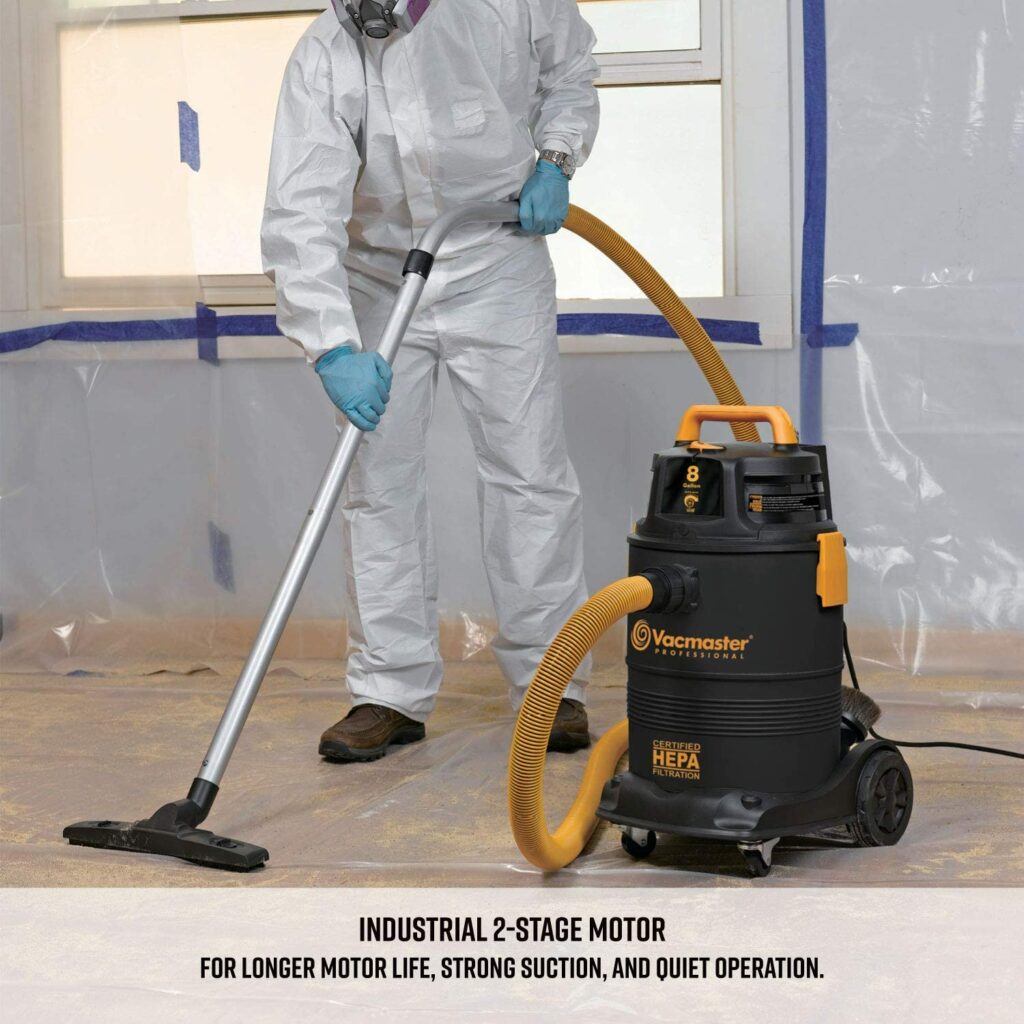
If your goal is to clean up after a home renovation, a standard household vacuum—even one with a HEPA filter—will likely be destroyed by fine construction dust. Drywall dust is extremely abrasive and can burn out a standard residential motor in a matter of minutes by bypassing the internal cooling fans.
For these tasks, you require a "Dust Extractor" or a shop vacuum specifically rated for fine dust. These machines often include "Automatic Filter Cleaning" (AFC). This technology uses a pulse of air to periodically knock dust off the filter while the machine is running, preventing the fine particles from "blinding" the filter and dropping the suction to zero. Brands like Miele and Sebo lead the residential market, while Festool and Nilfisk are the benchmarks for dust extraction in construction contexts.
Maintenance Protocols for Peak Performance
Even the best vacuum for fine dust will fail if it is not maintained correctly. Fine dust is relentless; it finds any weakness in the system.
- Filter Replacement: HEPA filters are not permanent. Over time, fine dust becomes deeply embedded in the pleats, and no amount of "tapping" will remove it. In 2026, most high-end vacuums include a pressure-drop sensor that alerts you when the filter is no longer performing at peak efficiency.
- Gasket Inspection: Periodically check the rubber seals around the filter housing and the bag compartment. If these gaskets become dry or cracked, the vacuum is no longer a "sealed system."
- Bag Changes: Do not wait for the bag to be 100% full. For fine dust, once a bag is 75% full, the pores in the bag material are likely clogged, significantly reducing the air movement (CFM) required to keep the motor cool and the suction high.
Frequently Asked Questions
Can I just put a HEPA filter in my old vacuum?
No, simply inserting a HEPA filter into a vacuum not designed for it is ineffective. A HEPA filter creates significant air resistance. If the motor is not powerful enough, it will overheat. More importantly, if the vacuum's housing is not airtight (a sealed system), the air will simply leak out of the sides of the machine rather than being forced through the dense HEPA material.
Is a "washable" HEPA filter as good as a replaceable one?
Generally, no. While some manufacturers offer "washable" HEPA filters, the process of washing can often create microscopic tears in the filter media or cause the fibers to bunch together. This either reduces the filtration efficiency or permanently lowers the airflow. For critical fine dust applications, replaceable, factory-certified filters are superior.
Why does my vacuum smell when I pick up fine dust?
A smell during vacuuming usually indicates that fine particles or gases are passing through the filters and being heated by the motor, or that the vacuum is not a sealed system. If you are picking up organic fine dust (like flour or pet dander) and it lingers in the exhaust, your filtration is failing. Upgrading to a vacuum with a charcoal-layered HEPA filter can help neutralize odors while trapping particles.
How do I know if a vacuum is truly "Sealed"?
Look for specific testing certifications such as the Allergy Standards Limited (ASL) certification or third-party laboratory results. A quick home test involves running the vacuum in a dark room with a high-intensity flashlight pointed at the exhaust and seams; if you see "sparkling" particles in the beam, the system is not sealed.
What is the best vacuum for drywall dust specifically?
The best vacuum for drywall dust is an "M-Class" or "H-Class" dust extractor with an automatic pulse-cleaning filter. These are designed to handle the high volume and abrasive nature of gypsum and silica without clogging or motor failure. Standard household vacuums should never be used for significant amounts of drywall dust.
Final Recommendation
For the average homeowner looking to handle household fine dust, allergens, and pet dander with confidence, a bagged, sealed-system canister vacuum from a reputable manufacturer like Miele or Sebo is the optimal choice in 2026. These machines provide the necessary suction, airtight integrity, and hygienic disposal methods to ensure your indoor air quality remains pristine. If you are a DIYer or professional dealing with construction-grade fine dust, invest in a dedicated HEPA-certified dust extractor with automatic filter cleaning to protect both your equipment and your long-term respiratory health.
Image Gallery