Why Medicare Doesn’t Cover Weight Loss Drugs: Regulations, Costs, and Exceptions
Medicare is currently prohibited by federal law from covering medications prescribed specifically for weight loss. While Medicare Part D plans cannot cover drugs like Wegovy or Zepbound for weight management alone, they may provide cov...
Medicare is currently prohibited by federal law from covering medications prescribed specifically for weight loss. While Medicare Part D plans cannot cover drugs like Wegovy or Zepbound for weight management alone, they may provide coverage if the medication is FDA-approved and prescribed for a secondary condition, such as Type 2 diabetes or reducing cardiovascular risk.
Contents
The exclusion of weight loss drugs from Medicare coverage is one of the most debated topics in American healthcare. As of 2026, despite the rising prevalence of obesity and the clinical success of GLP-1 (glucagon-like peptide-1) receptor agonists, the fundamental statutory barrier remains in place. Understanding why this gap exists requires a look at the history of Medicare legislation, the evolving definition of obesity as a disease, and the significant economic implications of expanding coverage to millions of beneficiaries.
The Statutory Bar: The Medicare Modernization Act of 2003
The primary reason Medicare does not cover weight loss drugs is rooted in the Medicare Modernization Act (MMA) of 2003. When Congress created the Medicare Part D prescription drug benefit, it explicitly excluded certain categories of drugs from coverage. At the time, lawmakers categorized medications for weight loss, fertility, and cosmetic purposes as "lifestyle" drugs rather than essential medical treatments.
Section 1860D-2(e)(2)(A) of the Social Security Act incorporates a list of excluded drugs that were originally identified in the Medicaid statute. This list includes "agents when used for anorexia, weight loss, or weight gain." Because this exclusion is written into federal law, the Centers for Medicare & Medicaid Services (CMS) does not have the administrative authority to change it. Only an act of Congress can repeal this prohibition.
In 2003, the medical community's understanding of obesity was different than it is today. Many policymakers viewed weight management as a matter of personal discipline and dietary choices. The high-profile failure and safety concerns of earlier diet drugs, such as Fen-Phen in the late 1990s, also contributed to a cautious legislative environment. Consequently, weight loss medications were grouped with hair growth stimulants and vitamin supplements, categorized as optional rather than medically necessary.
The Distinction Between Weight Loss and Chronic Condition Management
While Medicare is barred from covering drugs "when used for weight loss," it is not barred from covering those same drugs when used to treat other FDA-approved medical conditions. This creates a complex landscape where the reason for the prescription—rather than the drug itself—determines coverage.
Type 2 Diabetes Coverage
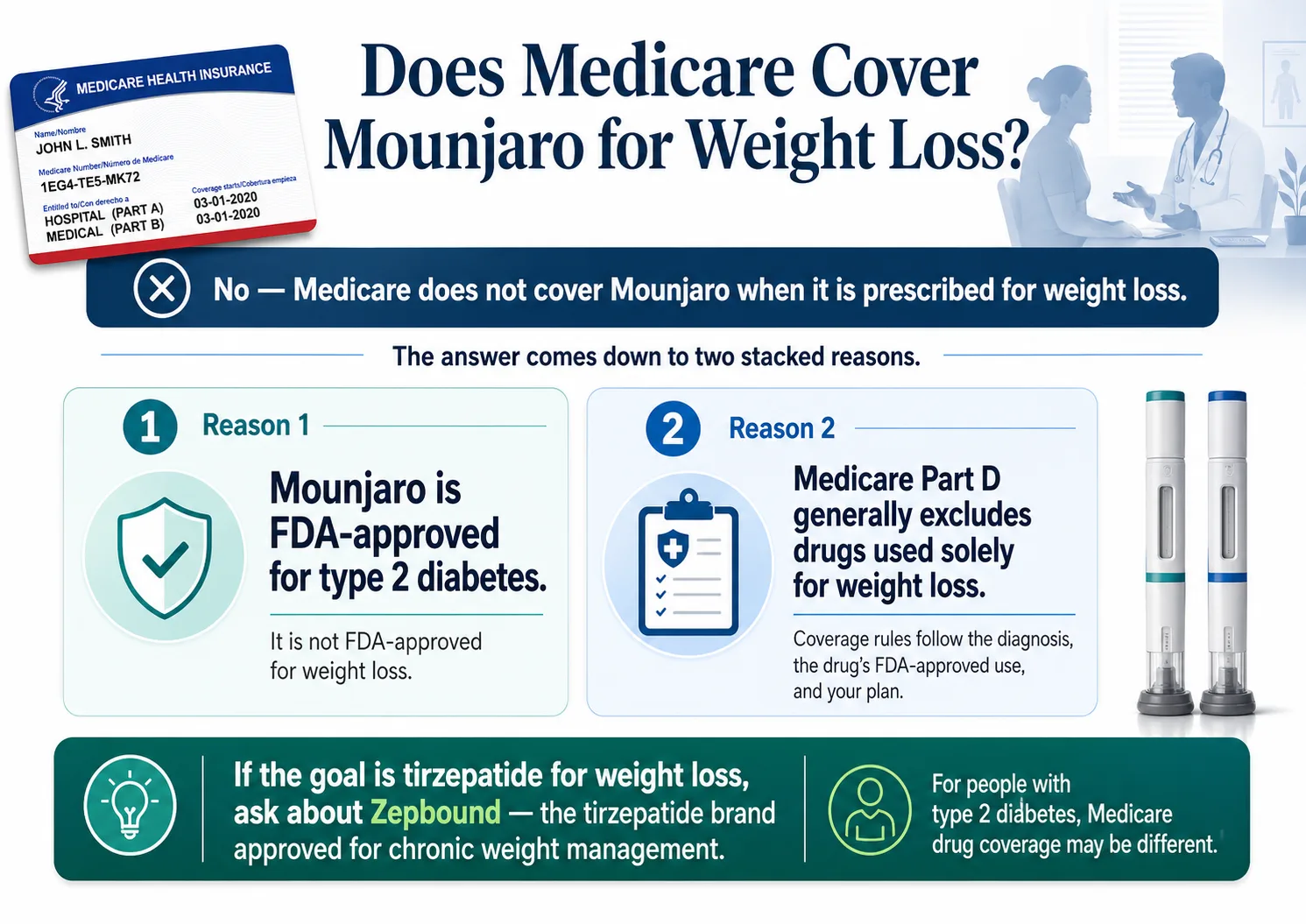
The most prominent examples are GLP-1 medications like Ozempic (semaglutide) and Mounjaro (tirzepatide). These medications are FDA-approved to treat Type 2 diabetes. Because diabetes is a recognized chronic illness and not an excluded category under the MMA, Medicare Part D plans are required to cover these drugs when prescribed for diabetes management.
However, if a physician prescribes Ozempic "off-label" for a patient who has obesity but not diabetes, Medicare will typically deny the claim. Pharmacies and insurance providers use diagnosis codes (ICD-10 codes) to verify that the medication is being used for a covered indication.
The Rise of Multi-Indication Medications
The pharmaceutical industry has navigated this statutory barrier by seeking FDA approval for different brand names of the same underlying chemical compound, targeted at different conditions:
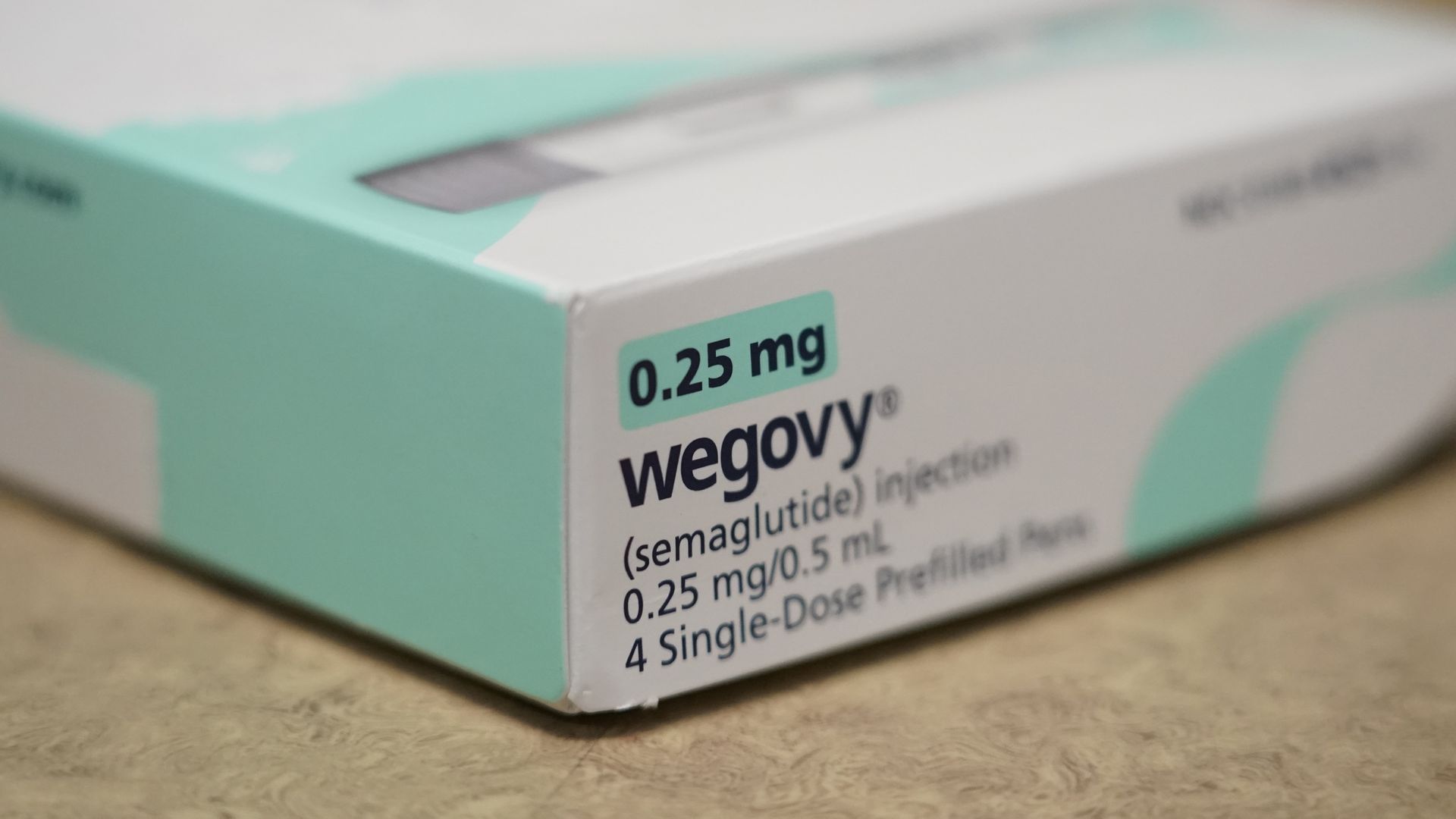
- Semaglutide: Marketed as Ozempic for diabetes (covered) and Wegovy for weight loss (traditionally not covered).
- Tirzepatide: Marketed as Mounjaro for diabetes (covered) and Zepbound for weight loss (traditionally not covered).
Recent Breakthroughs: The Cardiovascular Exception
In 2024 and 2025, the landscape of Medicare coverage shifted slightly due to new FDA approvals regarding cardiovascular health. In March 2024, the FDA approved a new indication for Wegovy: to reduce the risk of major adverse cardiovascular events (MACE), such as heart attack and stroke, in adults with established cardiovascular disease and either obesity or overweight.
Following this approval, CMS issued guidance clarifying that Part D plans can cover anti-obesity medications if they are FDA-approved for an additional "medically accepted indication" that is not excluded by law. This means that as of 2026, a Medicare beneficiary who has both obesity and a history of heart disease may have their Wegovy prescription covered, as the primary intent of the treatment is to prevent a heart attack, not simply to reduce body weight.
This "cardiovascular door" represents the first significant crack in the 2003 statutory exclusion. However, it does not apply to beneficiaries who have obesity but do not yet have diagnosed heart disease. For those millions of individuals, the medication remains an out-of-pocket expense.
Comparing Medicare Coverage for GLP-1 and Related Drugs (2026)
The following table outlines how Medicare currently views common medications associated with weight loss based on their primary FDA indications and the patient’s diagnosis.
| Medication | Primary Active Ingredient | Primary FDA Indication | Medicare Coverage Status (2026) | Requirements for Coverage |
|---|---|---|---|---|
| Ozempic | Semaglutide | Type 2 Diabetes | Covered | Diagnosis of Type 2 Diabetes. |
| Wegovy | Semaglutide | Chronic Weight Management / Heart Risk Reduction | Partial / Conditional | Covered ONLY for reducing cardiovascular risk in patients with heart disease. |
| Mounjaro | Tirzepatide | Type 2 Diabetes | Covered | Diagnosis of Type 2 Diabetes. |
| Zepbound | Tirzepatide | Chronic Weight Management | Not Covered | Excluded by the 2003 MMA statute. |
| Victoza | Liraglutide | Type 2 Diabetes | Covered | Diagnosis of Type 2 Diabetes. |
| Saxenda | Liraglutide | Chronic Weight Management | Not Covered | Excluded by the 2003 MMA statute. |
| Phentermine | Phentermine HCl | Short-term Weight Loss | Not Covered | Excluded by the 2003 MMA statute. |
The Economic Debate: Why the Policy Persists in 2026
The reluctance to repeal the weight loss drug exclusion is primarily driven by the projected cost to the Medicare Trust Fund. The Congressional Budget Office (CBO) and independent researchers have spent years analyzing the fiscal impact of the Treat and Reduce Obesity Act (TROA), a bill frequently introduced in Congress to mandate Medicare coverage for weight loss drugs.
The Cost of Innovation
In 2026, GLP-1 medications remain expensive, often costing between $800 and $1,300 per month without insurance. Given that approximately 40% of the Medicare population (over 25 million people) meets the clinical criteria for obesity, universal coverage could cost the government tens of billions of dollars annually.
While proponents argue that these drugs will save money in the long run by reducing the incidence of diabetes, kidney failure, and joint replacements, the CBO's 2024-2025 reports indicate that the "budgetary savings" from improved health outcomes do not currently offset the massive upfront cost of the medications within a 10-year budget window.
The Role of Price Negotiation
Under the Inflation Reduction Act (IRA), Medicare now has the power to negotiate prices for certain high-spend drugs. While the first round of negotiated prices took effect in 2026, many of the newest weight loss drugs have not yet reached the "seniority" required (7 to 11 years on the market) to be eligible for negotiation. This means that until these drugs become older or face generic competition, Medicare would be forced to pay high prices for a massive volume of patients, a scenario the Treasury is currently avoiding.
Alternative Paths for Medicare Beneficiaries
Since Part D plans cannot cover weight loss drugs directly, beneficiaries often look for alternative ways to manage obesity through Medicare-approved channels.
Intensive Behavioral Therapy (IBT)
Medicare Part B covers Intensive Behavioral Therapy (IBT) for obesity. This includes a body mass index (BMI) screening and behavioral counseling. To qualify, a beneficiary must have a BMI of 30 or higher. The counseling must be consistent with the 5-A framework:
- Assess: Evaluate the patient's behavioral health risks and factors.
- Advise: Give clear, specific, and personalized behavior change advice.
- Agree: Select appropriate treatment goals and methods.
- Assist: Help the patient acquire the skills and support needed for behavior change.
- Arrange: Schedule follow-up contacts for ongoing support.
Bariatric Surgery
Unlike weight loss drugs, Medicare does cover bariatric surgery (such as gastric bypass or sleeve gastrectomy) under Part B, provided the patient meets specific criteria. Generally, this requires a BMI of 35 or higher, at least one obesity-related health condition (like sleep apnea or high blood pressure), and documentation that previous attempts at medical weight loss were unsuccessful.
Medicare Advantage (Part C) Supplemental Benefits
Some Medicare Advantage plans, which are offered by private insurance companies, may choose to offer weight loss drug coverage as a "supplemental benefit." Because these plans have more flexibility than Original Medicare, they can use their own funds to cover drugs that are technically excluded by Part D. However, in 2026, this remains relatively rare due to the high costs, and most Advantage plans still mirror the standard Part D exclusions to keep premiums competitive.
Legislative Outlook: The Treat and Reduce Obesity Act (TROA)
The future of Medicare coverage for weight loss drugs depends entirely on the Treat and Reduce Obesity Act. This bipartisan legislation seeks to amend the Social Security Act to allow Medicare to cover newer, FDA-approved medications for chronic weight management.
By 2026, the focus of the debate has shifted from "Should we cover these drugs?" to "How can we afford to cover these drugs?" Potential compromises being discussed in Congress include:
- Limiting coverage to those with a BMI over 35 or 40.
- Requiring a "step therapy" approach where patients must try cheaper behavioral interventions first.
- Waiting for the prices to drop through the Medicare Drug Price Negotiation Program.
Without the passage of TROA or similar legislation, the majority of Medicare beneficiaries will remain ineligible for weight loss drug coverage unless they have a comorbid condition like Type 2 diabetes or established heart disease.
Frequently Asked Questions
1. Does Medigap cover weight loss drugs if Medicare doesn't? No. Medigap (Medicare Supplement Insurance) is designed to cover the "gaps" in Original Medicare, such as copayments, coinsurance, and deductibles for Parts A and B. It does not provide coverage for prescription drugs. All prescription drug coverage must come through a Part D plan or a Medicare Advantage plan, both of which are bound by the statutory exclusion of weight loss drugs.
2. Can my doctor write a "letter of medical necessity" to get Wegovy covered by Medicare? A letter of medical necessity is generally ineffective for weight loss drug coverage under Medicare because the exclusion is statutory. Even if your doctor proves that the drug is necessary for your health, Part D plans are legally prohibited from paying for it if the primary indication is weight loss. The only exception is if your doctor can document that you have a covered condition, such as Type 2 diabetes or established cardiovascular disease.
3. What is the $2,000 out-of-pocket cap in 2026, and does it help? The Inflation Reduction Act established a $2,000 annual out-of-pocket cap for Medicare Part D drugs, starting in 2025. In 2026, this cap is fully in effect. If you are one of the patients who qualifies for a GLP-1 drug (e.g., for diabetes or heart disease), you will not pay more than $2,000 per year for all your covered prescriptions combined. However, if the drug is not covered at all (like Zepbound for weight loss), the money you spend on it does not count toward this $2,000 cap.
4. Will Medicare cover the generic versions of weight loss drugs once they are available? Once a drug becomes a generic, it is typically much cheaper, but the statutory exclusion still applies. Even if a generic version of Wegovy were available, Medicare would still be prohibited from covering it for the sole purpose of weight loss unless the law is changed. However, generic versions would make the drugs much more affordable for seniors paying out-of-pocket.
5. Does Medicare cover weight loss programs like WeightWatchers or Noom? Medicare generally does not cover the membership fees for commercial weight loss programs. However, many Medicare Advantage plans offer "SilverSneakers" or similar fitness benefits that include gym memberships and some wellness resources. For dietary counseling, Medicare Part B covers medical nutrition therapy, but only for people with diabetes or kidney disease.
Summary Recommendation
If you are seeking weight loss medication under Medicare in 2026, start by having a detailed conversation with your primary care physician to determine if you have any "comorbid" conditions. If you have Type 2 diabetes or established cardiovascular disease, drugs like Ozempic or Wegovy may be covered. If you do not have these conditions, your options are limited to out-of-pocket payment, participating in clinical trials, or utilizing Medicare-covered alternatives like bariatric surgery and Intensive Behavioral Therapy. Always check your specific Part D or Medicare Advantage plan formulary for the most current coverage rules and prior authorization requirements.
Image Gallery