Guide to Low Cost Whole Life Insurance With No Medical Exam
Low cost whole life insurance with no medical exam provides permanent life coverage, guaranteed cash value growth, and locked-in premiums without requiring physical exams, blood samples, or urine tests. Insurance companies evaluate ris...
Low cost whole life insurance with no medical exam provides permanent life coverage, guaranteed cash value growth, and locked-in premiums without requiring physical exams, blood samples, or urine tests. Insurance companies evaluate risk through health questionnaires and electronic database queries. Selecting simplified issue policies over guaranteed issue alternatives helps buyers secure the lowest available rates.
Contents
Understanding No-Exam Whole Life Insurance
Whole life insurance is a form of permanent coverage designed to remain active for the policyholder's entire life, provided required premiums are paid. Unlike term life insurance, which expires after a set period such as 10, 20, or 30 years, whole life policies guarantee a death benefit payout whenever the insured passes away. Additionally, whole life policies include a tax-deferred cash value component that grows over time according to a fixed interest rate set by the insurer.
Traditionally, applying for whole life insurance required a full paramedical examination. This process involved a visit from a medical professional, blood draws, urine collection, blood pressure checks, and detailed medical history reviews. Modern underwriting technologies have transformed this process, enabling life insurance carriers to issue policies without physical exams.
In 2026, no-medical-exam policies use automated data verification systems to assess risk. Instead of requesting lab work, insurance underwriters query secure databases to evaluate an applicant's risk profile. Key data sources include:
- Medical Information Bureau (MIB) Reports: Records of prior insurance applications, detailing past medical conditions disclosed to member carriers.
- Prescription History Databases: Comprehensive logs of filled medications, dosages, and prescribing doctors, which serve as proxies for health conditions.
- Motor Vehicle Records (MVR): Driving history logs used to evaluate lifestyle risk factors, such as major traffic violations or DUI convictions.
- Credit-Based Insurance Scores: Statistical data points used by certain carriers to assess financial stability and policy retention likelihood.
Because insurance companies absorb higher statistical risk by omitting physical blood work and urinalysis, no-exam policies generally cost slightly more per dollar of coverage than fully underwritten policies. However, by understanding how policy structures differ, applicants can locate low-cost options that fit modest budgets.
Disclaimer: Life insurance regulations, policy availability, and consumer protection guidelines vary by state and jurisdiction. Consult with a licensed financial professional or independent insurance agent for advice specific to your financial situation.
Policy Types: Simplified Issue vs. Guaranteed Issue
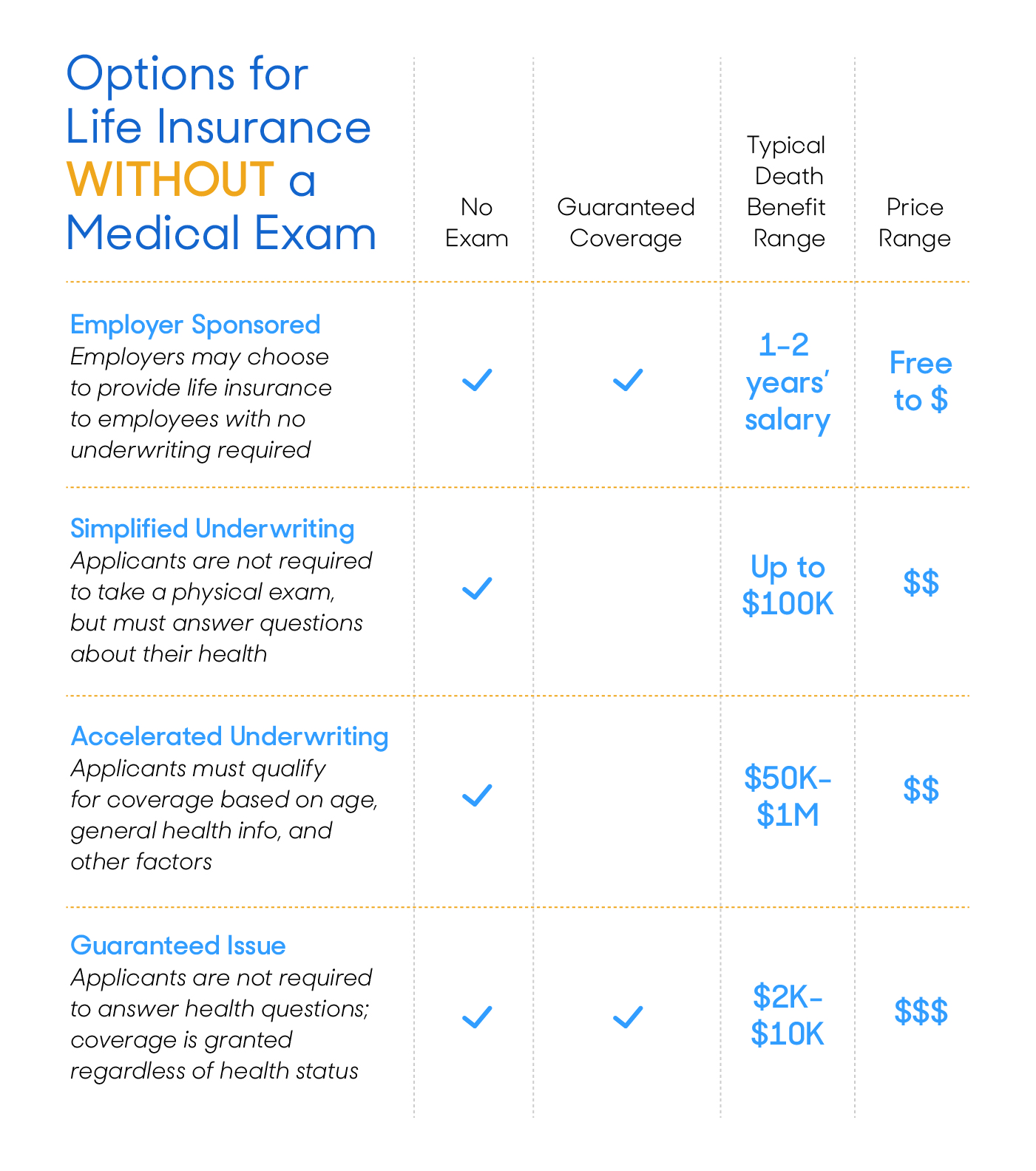
When shopping for affordable whole life insurance without a physical exam, consumers encounter two main categories of underwriting: simplified issue whole life and guaranteed issue whole life (often marketed as guaranteed acceptance or final expense insurance). Choosing between these two categories has a substantial impact on both monthly cost and coverage terms.
- No-Exam Whole Life Insurance Options
- Simplified Issue
- Health questionnaire
- Database risk checks
- Immediate coverage
- Lower relative cost
- Guaranteed Issue
- Zero health questions
- 100% approval rate
- 2-year wait period
- Higher premium cost
- Simplified Issue
1. Simplified Issue Whole Life Insurance
Simplified issue whole life insurance is the most cost-effective path to obtaining no-exam permanent coverage. Applicants complete a streamlined application that includes a series of medical questions regarding major health conditions, past diagnoses, hospitalizations, and prescription histories.
- Health Evaluation: There is no medical exam, but applicants must answer "yes" or "no" to targeted medical questions. Qualifying conditions typically exclude major active illnesses like terminal cancer, active organ failure, or severe neurological disorders.
- Coverage Amounts: Death benefits typically range from $10,000 to $50,000, though select carriers offer simplified issue whole life policies up to $100,000 for younger, healthier applicants.
- Benefit Payout: Immediate full coverage begins on day one. If the policyholder passes away shortly after policy issuance, the full face value is paid to the designated beneficiaries (assuming honest disclosures on the application).
- Cost Profile: Considerably less expensive than guaranteed issue policies because the carrier successfully filters out high-risk applicants through the medical questionnaire.
2. Guaranteed Issue Whole Life Insurance
Guaranteed issue whole life insurance guarantees approval for any applicant within a specific age range (typically ages 50 to 85), regardless of current health status or pre-existing conditions.
- Health Evaluation: No medical exam is performed, and no health questions are asked on the application. Medical history databases are generally not used to decline coverage.
- Coverage Amounts: Death benefits are limited, generally ranging between $2,000 and $25,000.
- Graded Death Benefit (Waiting Period): To prevent individuals with known terminal illnesses from purchasing full immediate coverage, guaranteed issue policies contain a statutory mandatory waiting period—typically two years. If the insured dies of natural causes within the first two policy years, the beneficiary receives a return of all premiums paid plus interest (usually 10%), rather than the full face amount. Full coverage applies immediately for accidental deaths.
- Cost Profile: Highest cost per $1,000 of death benefit. Because carriers accept severe medical risks blindly, premiums are priced high to offset anticipated claims.
Comparing No-Exam Whole Life Insurance Options
Evaluating key metrics across policy types helps clarify which option offers the best balance of affordability and immediate protection.
| Feature / Metric | Simplified Issue Whole Life | Guaranteed Issue Whole Life | Fully Underwritten Whole Life |
|---|---|---|---|
| Medical Exam Required? | No | No | Yes (Blood, Urine, Physical) |
| Health Questionnaire? | Yes (Brief health history) | No (Guaranteed acceptance) | Yes (Extensive medical history) |
| Underwriting Speed | Fast (24 hours to 5 days) | Instant to 48 hours | Slow (3 to 8 weeks) |
| Typical Coverage Limits | $10,000 – $50,000+ | $2,000 – $25,000 | $100,000 to $1,000,000+ |
| Waiting Period / Graded Benefit | None (Immediate full payout) | Yes (Typically 2-year waiting period) | None (Immediate full payout) |
| Relative Cost Tier | Moderate | High | Lowest per $1,000 of benefit |
| Cash Value Accumulation | Yes (Guaranteed fixed rate) | Yes (Grows slowly due to high costs) | Yes (Guaranteed + Dividends option) |
| Best Suited For | Moderate health, fast turnaround | Severe pre-existing health issues | Healthy individuals needing large policies |
Factors Influencing Premiums and How to Reduce Costs
While whole life insurance carries fixed premiums that never increase over the owner's lifetime, several factors determine the initial price. Managing these variables allows buyers to secure low-cost coverage.
Primary Rate Drivers
- Age at Application: Age is the primary factor in life insurance pricing. Rates increase incrementally with every year of age. Purchasing coverage earlier locks in lower lifetime rates.
- Gender assigned at birth: Statistically, women have longer life expectancies than men, resulting in lower monthly premiums for female applicants across all age groups.
- Tobacco Use: Smoking, vaping, or chewing tobacco drastically increases premiums. Tobacco users often pay 50% to 200% more than non-tobacco users for the exact same whole life policy.
- Coverage Amount (Face Value): Higher death benefits mean higher monthly payments. Selecting a policy aligned precisely with anticipated final expenses minimizes waste.
- Underwriting Class: On simplified issue policies, qualifying for a "Standard" or "Preferred" tier based on prescription history results in lower payments compared to "Substandard" tiers.
Strategies to Secure the Lowest Cost
- Apply for Simplified Issue First: Avoid jumping straight to guaranteed acceptance policies. Unless an applicant has a severe, uninsurable condition (such as active chemotherapy treatment or dialysis), they will likely qualify for a simplified issue policy that costs significantly less and offers immediate coverage.
- Right-Size the Benefit: Calculate explicit financial needs rather than choosing an arbitrary round figure. The Consumer Financial Protection Bureau recommends reviewing existing liquid assets, burial costs, outstanding medical bills, and short-term debt before selecting policy limits.
- Pay Premiums Annually: Most life insurance carriers add administrative modal fees when policyholders pay premiums monthly. Paying the premium as a single annual sum often saves 3% to 8% per year.
- Compare Multiple Carriers: Insurance companies rate health conditions differently. One carrier may decline an applicant with controlled Type 2 diabetes for simplified issue rates, while another carrier accepts them at standard rates. Working with independent brokers who aggregate quotes across multiple insurers improves the chances of finding competitive rates.
Critical Policy Terms and Fine Print
Before committing to a policy, buyers should examine specific policy language to avoid unexpected coverage gaps or unexpected fees.
Cash Value Accumulation and Policy Loans
Whole life insurance features a savings element known as cash value. A portion of every premium payment is credited toward an internal account that grows tax-deferred at a contractually guaranteed rate.
Once sufficient cash value accumulates, policyholders can borrow against it through policy loans. Key features of whole life cash value include:
- Fixed Interest Growth: Cash value grows based on a rate specified in the policy contract, regardless of stock market fluctuations.
- Tax-Deferred Growth: Interest gains are not taxed as long as the money remains inside the policy.
- Borrowing Power: Policyholders can withdraw or borrow cash value for emergency expenses. However, outstanding loan balances plus unpaid interest are deducted from the final death benefit if not repaid before death.
The "Free-Look" Period
State insurance regulations require life insurance carriers to provide a mandatory "free-look" period, typically lasting between 10 and 30 days after policy delivery. During this window, policyholders can review the contract terms in detail. If they choose to cancel the coverage for any reason during the free-look period, the carrier must issue a full refund of all premiums paid. Detailed statutory guidelines on consumer rights can be verified through the National Association of Insurance Commissioners (NAIC).
Step-by-Step Application Process
Securing a low-cost, no-exam whole life policy involves a straightforward series of steps designed to expedite approval while locking in optimal rates.
- STEP 1: Determine Coverage Needs
- Calculate final expenses, debts, and legacy goals
- STEP 2: Gather Medical & Prescription Details
- Collect current medications, dosages, and physician info
- STEP 3: Compare Simplified Issue Quotes
- Request quotes across multiple independent carriers
- STEP 4: Complete the Online or Phone Application
- Answer health questions honestly; authorize database checks
- STEP 5: Review Policy During Free-Look Window
- Check policy document terms and set up payment schedule
Step 1: Calculate Coverage Requirements
Determine the precise purpose of the whole life policy. Common applications include:
- Funeral and Burial Costs: The average traditional funeral service and burial cost between $7,000 and $12,000, while cremation services typically range from $2,000 to $5,000.
- Outstanding Personal Debt: Clearing credit card balances, small personal loans, or medical co-pays prevents liabilities from falling upon surviving relatives.
- Modest Bequests: Leaving a tax-free financial gift to children, grandchildren, or charitable institutions.
Step 2: Prepare Personal and Medical Information
Having accurate information ready speeds up automated underwriting systems. Gather:
- Social Security Number and Driver's License details.
- Names and dosages of all current prescription medications.
- Primary physician name and clinic address.
- Basic medical history details (e.g., diagnosis dates for high blood pressure or cholesterol).
Step 3: Compare Quotes from Multiple Carriers
Avoid purchasing the first policy advertised online. Seek independent insurance platforms or licensed agents who represent multiple carriers. Compare rates specifically within the simplified issue tier first to secure lower pricing.
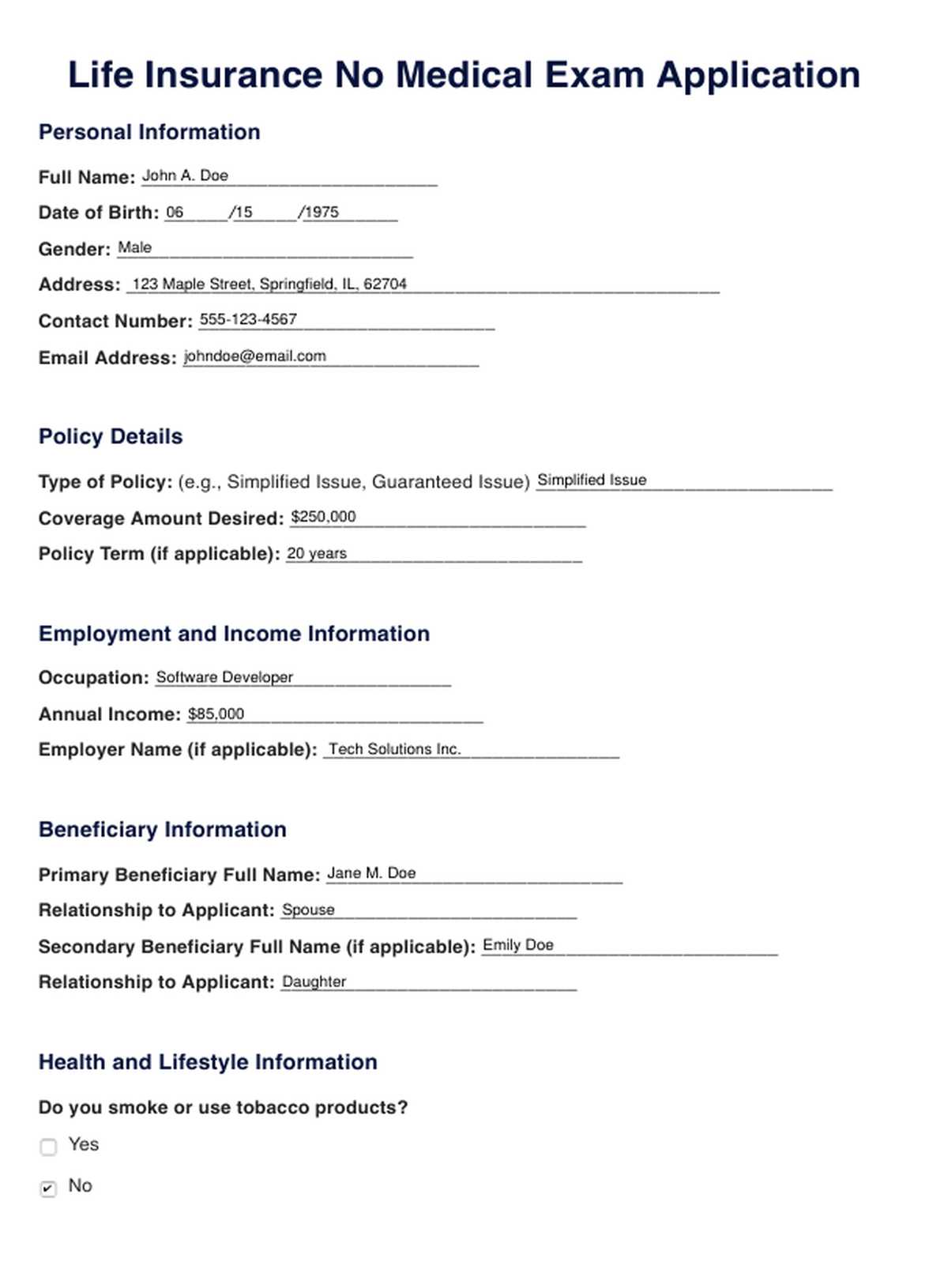
Step 4: Complete the Application and Authorization
Submit the application online or over the telephone with a licensed agent. Applicants must sign authorization forms permitting the insurance company to query MIB records, prescription databases, and driving history.
Answer all health questions with complete honesty. Material misrepresentations on an insurance application can lead to claim denials or policy rescission during the contestability period—a standard two-year window following policy issuance during which carriers can investigate claims for fraud.
Step 5: Review Contract and Establish Payment Setup
Upon approval, review policy documentation during the state-mandated free-look period. Confirm that premiums are guaranteed level and that the policy type matches your expectations (confirming whether it is simplified issue or guaranteed issue). Set up automated bank transfers (EFT) or annual payments to prevent accidental policy lapses.
Common Pitfalls to Avoid
Navigating the no-exam life insurance market requires careful attention to product details. Consumers frequently encounter misleading marketing tactics or misunderstand policy mechanisms.
1. Confusing Term Life with Whole Life Insurance
Some widely advertised "low cost no-exam policies" are actually term life insurance policies disguised as final expense insurance.
- Term Life Features: Rates increase every five years (in step-rated plans), or coverage terminates entirely upon reaching age 80.
- Whole Life Features: Premiums remain permanently fixed for life, and coverage cannot be canceled by the insurer due to aging or deteriorating health. Always verify that the policy contract explicitly says "Whole Life" or "Permanent Life."
2. Buying Guaranteed Issue Too Early
Guaranteed issue policies are widely advertised on television and in mailers, leading many consumers to assume they are the standard choice for no-exam coverage. However, individuals with minor, managed health conditions (like controlled hypertension or non-insulin diabetes) often qualify for simplified issue policies. Buying guaranteed issue when eligible for simplified issue results in paying higher premiums for less immediate coverage.
3. Relying Solely on Social Security Death Benefits
Many consumers assume federal safety nets cover burial costs. However, the Social Security Administration provides a one-time lump-sum death payment of only $255, payable solely to an eligible surviving spouse or dependent child. Private whole life coverage provides a far more reliable funding source for final expenses.
Frequently Asked Questions
Is whole life insurance without a medical exam truly low cost?
"Low cost" in whole life insurance is relative. While no-exam whole life policies cost slightly more per thousand dollars of coverage than policies requiring full medical underwriting, premiums remain manageable by selecting simplified issue options and limiting face amounts to actual needs (such as $10,000 to $25,000 for burial and final expenses). Once issued, premiums are guaranteed never to increase.
What is the maximum coverage available for a no-exam whole life policy?
For simplified issue whole life insurance, maximum coverage amounts generally range between $25,000 and $50,000, though select carriers offer up to $100,000 for qualified applicants. For guaranteed issue whole life insurance, coverage is strictly capped, usually between $2,000 and $25,000.
How does the waiting period work on guaranteed issue whole life insurance?
Guaranteed issue policies feature a 2-year graded death benefit waiting period. If the policyholder dies from natural causes (illness or disease) during the first two policy years, the insurer returns all paid premiums plus a small interest percentage (typically 10%) rather than paying the full face value. If death occurs due to an accident, the full death benefit is paid immediately from day one. Full coverage for natural causes begins automatically after year two.
Can a simplified issue whole life policy build cash value?
Yes. Simplified issue whole life insurance accumulates guaranteed cash value over time, just like traditional whole life policies. As monthly premiums are paid, a portion is credited toward the cash value account, which grows tax-deferred at a fixed rate specified in the policy contract. Policyholders can access these funds via policy loans or surrenders.
What happens if I make a mistake on the health questionnaire for a simplified issue policy?
If an applicant unintentionally misstates information, the carrier may request clarification. However, intentionally omitting major health conditions or hiding prescription histories constitutes fraud. Under the policy's two-year contestability clause, if the insured passes away within the first two years of the policy, the carrier has the legal right to audit medical records. Unreported pre-existing conditions can result in claim denial and premium refunds.
Final Recommendation: Securing Affordable Permanent Coverage
Securing low-cost whole life insurance without undergoing a medical exam requires selecting the right underwriting class for your health status. First, calculate your exact financial obligations, focusing on burial costs, outstanding balances, and small legacy gifts.
Always apply for simplified issue whole life policies before considering guaranteed acceptance products. Answering basic health questions opens the door to lower monthly rates and immediate first-day coverage. Work with an independent broker to compare offerings from multiple carriers, review policy documents carefully during the free-look window, and select automated annual or monthly payment options to keep your policy active for life.
Image Gallery