Primerica Loan from Life Insurance: Rules, Cash Value Reality, and Alternatives
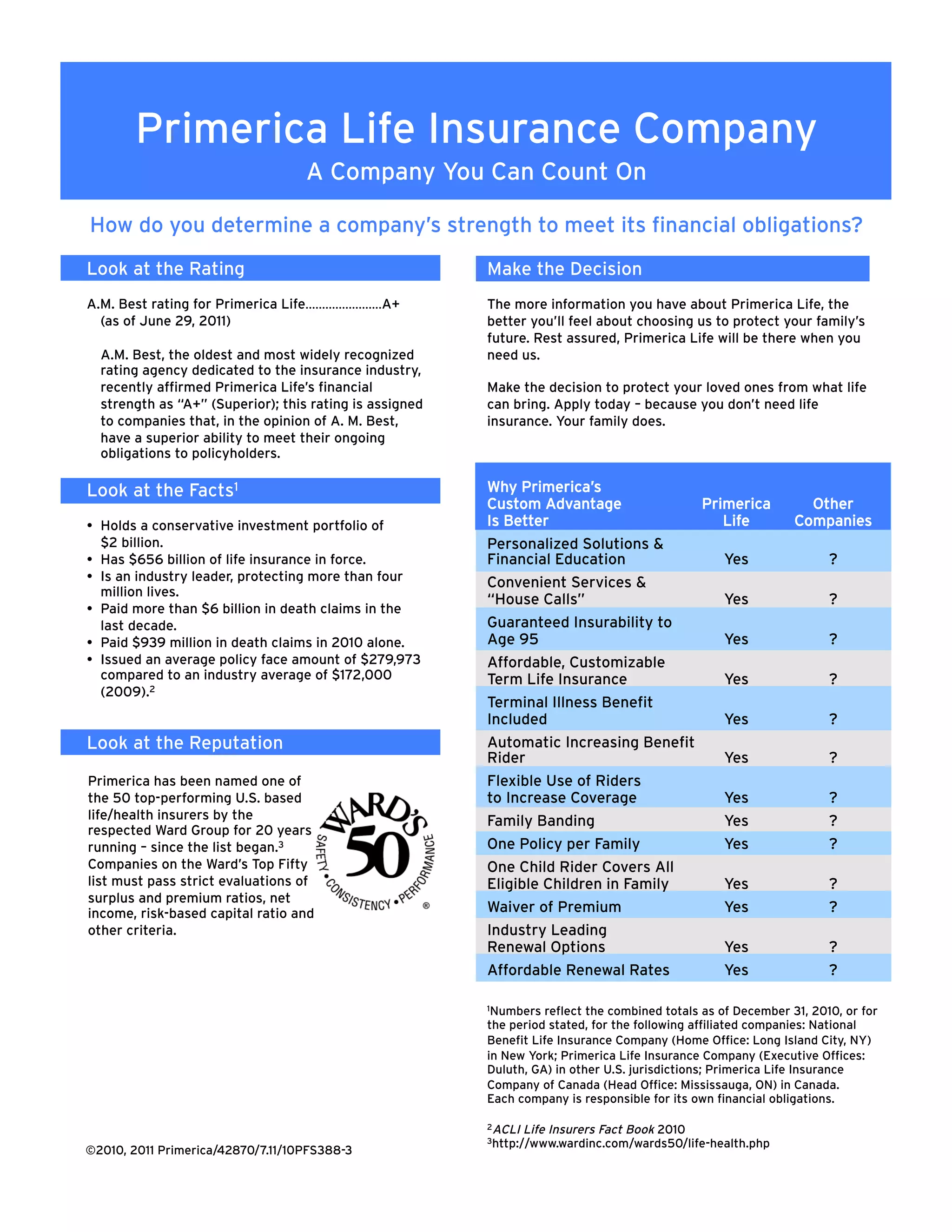
You cannot take a policy loan from a Primerica life insurance policy because Primerica exclusively sells term life insurance. Term life insurance provides guaranteed death benefits for a specified period but does not build cash value....
You cannot take a policy loan from a Primerica life insurance policy because Primerica exclusively sells term life insurance. Term life insurance provides guaranteed death benefits for a specified period but does not build cash value. Policy loans are strictly reserved for permanent life insurance contracts, such as whole life or universal life policies.
Contents
The Reality: Why Borrowing Against a Primerica Policy Is Not Possible
A common source of confusion for policyholders is the distinction between term life insurance and permanent life insurance. When individuals ask about obtaining a policy loan from Primerica, they are typically accustomed to features found in permanent life insurance contracts offered by traditional insurers.
To understand why a Primerica loan from life insurance does not exist, it is necessary to examine how Primerica structures its insurance products:
- Pure Protection Design: Primerica's underwriting entities—such as Primerica Life Insurance Company and National Benefit Life Insurance Company—issue term life insurance policies. These contracts are designed strictly to pay a tax-free death benefit to designated beneficiaries if the insured passes away during the covered term (e.g., 10, 15, 20, or 35 years).
- Zero Cash Value Accumulation: Unlike whole life or universal life policies, term life insurance policies do not collect an extra premium allocation to fund an internal savings or investment component. Because no cash equity accumulates within the contract, there is zero balance available to serve as collateral for a loan.
- Expiration of Coverage: If premiums cease or the policy term reaches its conclusion without renewal, the contract ends without residual equity, refund, or cash surrender value.
Because there is no cash balance inside a term policy, Primerica cannot issue a policy loan against your coverage.
Disclaimer: Financial products, tax laws, and insurance regulations vary by jurisdiction. The information provided here is for educational purposes. Consult a licensed financial advisor or policy counselor regarding your specific financial situation.
Primerica’s Business Model: "Buy Term and Invest the Difference"
Primerica’s inability to offer life insurance loans is not an operational oversight; it is a fundamental pillar of its financial philosophy, known as "Buy Term and Invest the Difference" (BTAID).
How the BTAID Philosophy Works
In traditional permanent life insurance (such as whole life), policyholders pay a higher premium. A portion of that premium pays for the actual cost of insurance, while the remainder is placed into a carrier-controlled cash value account that earns a fixed or variable return. The policyholder can later borrow against this accumulated cash value.
Primerica rejects this combined model, arguing that bundling insurance protection with investment vehicles is cost-ineffective for the average consumer. Instead, Primerica advocates unbundling these two financial needs:
Buy Term: Purchase pure term life insurance to secure maximum coverage during the years of highest financial liability (e.g., while raising children or paying off a mortgage) at a lower monthly cost than permanent insurance.
Invest the Difference: Take the money saved by choosing term insurance over whole life and invest it directly into separate investment vehicles, such as mutual funds, Individual Retirement Accounts (IRAs), or employer-sponsored retirement plans.
Traditional Whole Life
- Cost of Pure Insurance + Internal Cash Value
- Higher overall premium; policy owner can borrow against cash value
Primerica "Buy Term & Invest" Model
- Primerica Term Policy (Pure Death Benefit Only): Lower premium; no loan capability
- Separate Investment (Mutual Funds / IRA): Liquid growth assets
Under this structure, wealth accumulation occurs in dedicated investment accounts rather than inside the life insurance contract. Consequently, when a Primerica client requires capital, they do not borrow against their insurance policy; they access their independent investment accounts or utilize external credit facilities.
How Life Insurance Policy Loans Work in Permanent Policies
To better understand what Primerica policies do not provide, it helps to examine how life insurance loans function in traditional permanent policies (whole life, universal life, or variable universal life).
When a permanent policyholder takes out a policy loan:
- The Cash Value Acts as Collateral: The insurer does not literally withdraw money from the cash balance. Instead, the insurance company uses the cash value as security and advances funds from its own corporate reserves to the policyholder.
- No Credit Check Required: Because the loan is fully secured by the cash equity in the contract, there is no underwriting process, credit check, or employment verification.
- Flexible Repayments: The policyholder is not legally obligated to make monthly principal payments. However, interest accrues continuously on the outstanding loan balance.
- Impact on Death Benefit: If the insured dies with an outstanding policy loan, the remaining loan balance plus accrued interest is subtracted from the total death benefit paid to the beneficiaries.
- Tax Status: Policy loans are generally tax-free up to the policy's cost basis (the total premiums paid), provided the policy remains active and does not qualify as a Modified Endowment Contract (MEC).
Because Primerica term insurance contains no accumulated cash equity to serve as collateral, none of these mechanics apply to a Primerica policy.
Liquidity Alternatives for Primerica Policyholders
If you hold a Primerica life insurance policy and require cash for emergency expenses, debt consolidation, or major purchases, you must look outside your policy contract. Depending on your financial profile, several alternative paths exist.
- Need Liquid Cash?
- Has Separate Investments?
- Non-Retirement Brokerage: Sell assets
- Retirement Account (IRA / 401k): Loan or Penalty-free withdrawal
- No Investments Available?
- Personal Loan / Credit Line
- Home Equity Loan / HELOC
- Has Separate Investments?
1. Accessing Investments Managed Through PFS Investments Inc.
If you followed Primerica's BTAID strategy, you may hold mutual funds or brokerage accounts managed through Primerica’s investment arm, PFS Investments Inc.
- Redeeming Mutual Fund Shares: You can sell shares from a taxable investment account to raise cash. Keep in mind that selling appreciated assets will trigger capital gains tax obligations for that tax year.
- Retirement Account Withdrawals: If your investments are held inside a Traditional or Roth IRA, withdrawals are subject to specific IRS rules.
- Roth IRAs: You can withdraw your principal contributions at any time tax- and penalty-free. Earnings withdrawn before age 59½ may face income tax and a 10% early withdrawal penalty unless an exception applies.
- Traditional IRAs: Withdrawals before age 59½ are generally treated as taxable income and incur a 10% penalty, subject to standard IRS exemptions (such as first-time home purchases or qualified education expenses).
2. Utilizing Employer-Sponsored Retirement Plan Loans (401k Loans)
If your retirement savings are held in an employer-sponsored 401(k) or 403(b) plan, you may be eligible to take a plan loan:
- Most 401(k) plans allow participants to borrow up to 50% of their vested balance (up to a maximum of $50,000).
- Loan repayments are made through payroll deduction with interest paid back into your own account.
- Unlike life insurance loans, 401(k) loans must strictly be repaid within five years (unless used to purchase a primary residence) to avoid being classified as a taxable distribution.
3. Exploring Loan Products via Primerica Representatives
While Primerica representatives cannot issue loans from life insurance, Primerica maintains distribution agreements and strategic partnerships with third-party financial institutions. Depending on your region, a Primerica representative may connect you with external loan products:
- Mortgage Refinancing and Home Equity: Primerica has historically partnered with mortgage originators (such as Rocket Mortgage in the United States) to offer home refinancing, cash-out refinancing, and home equity solutions to policyholders who own residential property.
- Personal Credit Referral Services: In select markets, representatives can direct clients to partner platforms offering unsecured personal loans or debt consolidation programs.
4. Third-Party Financial Products
If internal investment redemptions or partner referral loans are not viable, standard market options remain available:
- Home Equity Lines of Credit (HELOCs): Borrow against the equity built in your real estate at variable interest rates.
- Unsecured Personal Loans: Obtain fixed-rate loans from commercial banks, credit unions, or online lenders based on your credit score and debt-to-income ratio.
Policy Loans vs. Primerica’s Model: Key Differences
The following table compares taking a traditional life insurance policy loan against relying on Primerica's combination of term insurance and separate investments.
| Feature / Dimension | Traditional Permanent Life Insurance (Policy Loan) | Primerica Model (Term Insurance + Investment Account) |
|---|---|---|
| Loan Eligibility | Yes; available once sufficient cash value accumulates | No; policy loans do not exist on term policies |
| Source of Funds | Insurance carrier's general pool (collateralized by cash value) | Redemption of mutual funds or external credit line |
| Credit Assessment | None required; guaranteed by cash value equity | Required for third-party personal/home loans |
| Cost of Protection | Higher premiums to fund internal cash balance | Lower premiums for pure protection coverage |
| Impact of Cash Access | Reduces death benefit if unpaid at death | No impact on term policy death benefit |
| Tax Implications | Policy loans are generally tax-free | Selling investments may trigger capital gains or IRA penalties |
| Risk of Policy Lapse | High if loan interest exceeds remaining cash value | None; accessing outside funds does not cancel the term policy |
Important Considerations Before Altering Your Coverage
If you need liquidity and are frustrated that your Primerica policy has no borrowable cash value, avoid making hasty financial moves without considering the operational risks:
Avoid Canceling Insurance Coverage for Short-Term Cash Needs
Term life insurance provides high benefit coverage per premium dollar. Canceling or surrendering your term policy to save on monthly premium payments leaves your dependents completely unprotected. Furthermore, re-applying for life insurance later in life will result in higher premiums due to advanced age or potential health changes.
Beware of Switching to Whole Life Solely for Policy Loans
Some consumers are tempted to replace their term insurance with a whole life policy from another carrier specifically to access policy loans. However:
- Whole life policies take 3 to 10 years of premium payments before building meaningful cash value available for borrowing.
- Early policy years heavily allocate premiums toward insurer administrative fees and sales commissions.
- Replacing an existing policy can result in a new contestability period and higher baseline costs.
Understand the True Cost of Investment Redemptions
If you choose to liquidate assets from a Primerica-administered mutual fund or IRA to meet cash needs, calculate the full financial impact:
- Tax Burden: Selling taxable assets incurs capital gains tax.
- Loss of Compounding: Capital withdrawn from market investments loses the potential for compound growth over time.
- Early Withdrawal Penalties: Tax-advantaged retirement accounts penalize early access prior to retirement age.
Frequently Asked Questions
Does Primerica offer any life insurance policies with cash value?
No. Primerica exclusively sells individual term life insurance policies. The company's corporate strategy centers on pure risk protection via term contracts while encouraging clients to maintain separate, liquid growth investments.
Can a Primerica agent write me a personal loan?
Primerica representatives are licensed financial services professionals, but they do not issue personal loans directly from their business offices. However, licensed representatives may refer clients to authorized third-party partners (such as affiliated mortgage lenders) to help secure home equity loans or refinancing.
What happens if I stop paying my Primerica term insurance premiums?
If you stop paying monthly premiums, your policy will enter a standard grace period (typically 31 days). If payment is not received before the grace period ends, the policy will lapse, and coverage will terminate. Because term insurance has no cash value, you will not receive any payout, refund, or cash surrender check.
Can I convert my Primerica term policy into a permanent policy to get cash value?
Primerica does not underwrite permanent or whole life policies, so you cannot convert a Primerica term policy into an internal cash-value contract. While Primerica policies offer options to convert or extend term coverage into new term contracts without medical underwriting, they cannot be converted into cash-value policies within Primerica.
Why did my representative say I could access money later if there is no policy loan?
When Primerica representatives discuss accessing cash in the future, they are referring to accumulating wealth in separate investment accounts (such as mutual funds, Roth IRAs, or personal brokerages) established alongside your term coverage. They are not describing a loan taken directly from your life insurance policy contract.
Next Steps for Policyholders
If you require liquidity and currently hold a Primerica life insurance policy, follow these structured steps to evaluate your options:
- Review Your Policy Schedule: Confirm your coverage type, monthly premium, and expiration date. Ensure you maintain your premium payments so your family remains protected during financial stress.
- Check Your Investment Accounts: Log in to your PFS Investments portal or review your account statements to determine if you have liquid mutual fund balances or Roth IRA contributions that can be accessed with minimal tax impact.
- Evaluate External Credit Options: Compare interest rates on home equity lines of credit (HELOCs), low-interest personal loans, or 401(k) loans against the tax consequences of liquidating long-term investments.
- Consult a Licensed Advisor: Before liquidating investment portfolios or changing your insurance coverage structure, consult a fiduciary financial advisor or CPA to analyze the tax implications and long-term financial impact.
Image Gallery