The Net Worth Equation and Debt to Asset Ratio Formula: A 2026 Financial Analysis
Net worth represents your total financial value, calculated by subtracting all liabilities from total assets. The debt-to-asset ratio measures financial leverage by dividing total debt by total assets. Together, these metrics provide a...
Net worth represents your total financial value, calculated by subtracting all liabilities from total assets. The debt-to-asset ratio measures financial leverage by dividing total debt by total assets. Together, these metrics provide a comprehensive view of solvency, risk exposure, and long-term wealth stability for individuals and businesses in the 2026 economic landscape.
Contents
The Core Foundations of the Net Worth Equation
The net worth equation is the most fundamental measurement of financial health. Often referred to as the "accounting equation" in a modified form, it serves as a snapshot of what an entity truly owns once all obligations are settled. In 2026, as digital assets and volatile market conditions continue to influence personal and corporate balance sheets, understanding the components of this equation is more critical than ever.
The basic formula is: Net Worth = Total Assets - Total Liabilities
Defining Total Assets
Assets are resources with economic value that an individual or corporation owns or controls with the expectation that it will provide a future benefit. In modern financial planning, assets are generally categorized by their liquidity and their potential for appreciation.
- Liquid Assets: These include cash and cash equivalents, such as checking accounts, high-yield savings accounts, and money market funds. These are essential for short-term stability and emergency funds.
- Invested Assets: This category encompasses brokerage accounts, retirement accounts (401(k)s, IRAs), stocks, bonds, and mutual funds. In 2026, this also increasingly includes verified digital assets and tokenized securities.
- Use Assets (Physical Assets): These are tangible items like primary residences, vehicles, jewelry, and collectibles. While these contribute to net worth, they often carry maintenance costs and may depreciate (in the case of vehicles) or appreciate (in the case of real estate).
Defining Total Liabilities
Liabilities represent everything you owe to other parties. Accuracy in calculating net worth depends entirely on a transparent accounting of these debts.
- Short-term Liabilities: These are obligations due within one year, such as credit card balances, personal loans, and outstanding medical bills.
- Long-term Liabilities: These are larger debts typically paid over many years, including mortgages, student loans, and business term loans.
By subtracting the sum of these liabilities from the sum of the assets, you arrive at your net worth. A positive net worth indicates that assets exceed debts, while a negative net worth suggests that the entity is technically insolvent.
Understanding the Debt to Asset Ratio Formula
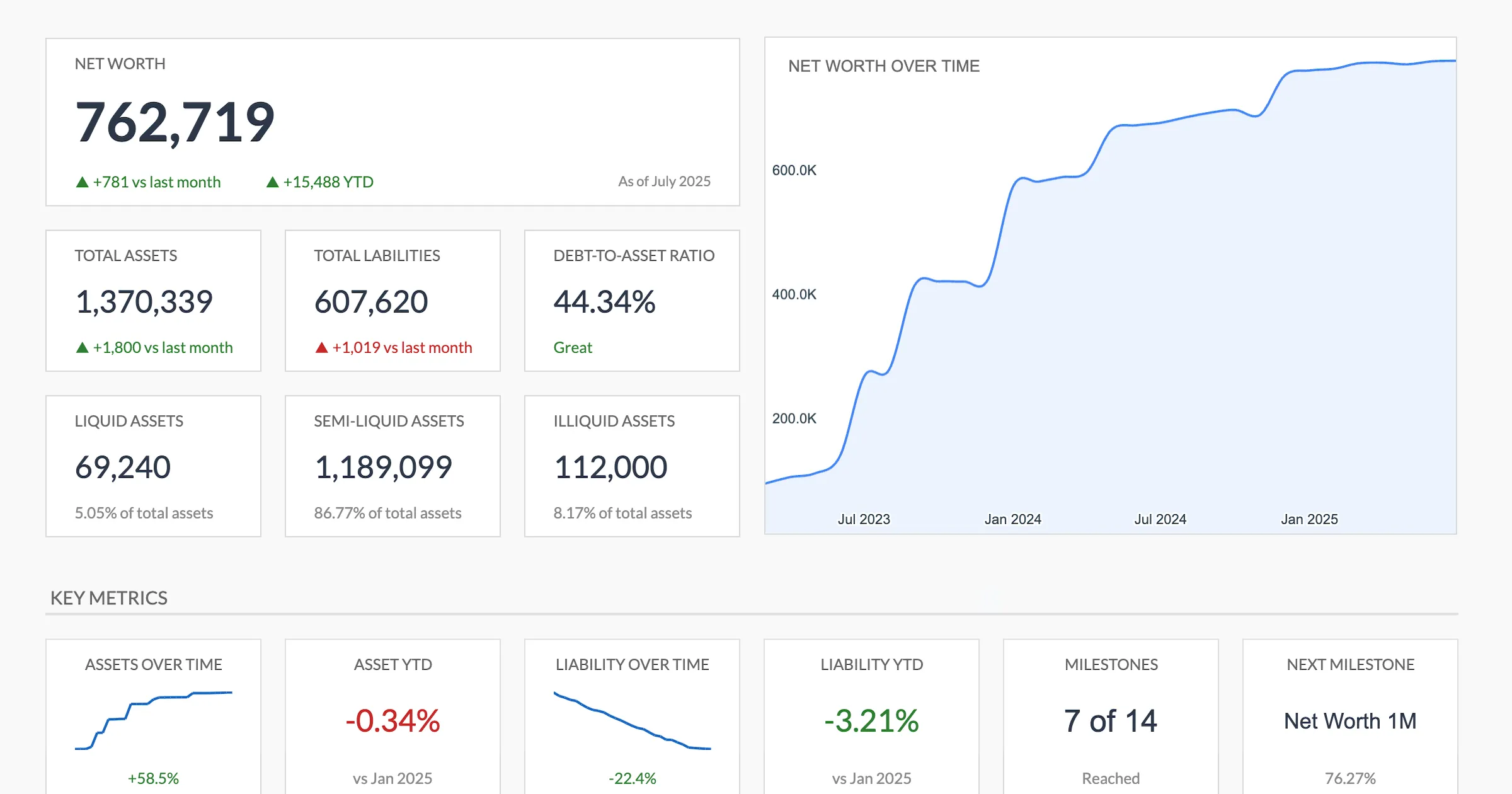
While net worth tells you "how much" you are worth, the debt-to-asset ratio tells you "how risky" your financial position is. This ratio is a leverage metric that shows the percentage of assets that are financed by debt rather than equity or outright ownership.
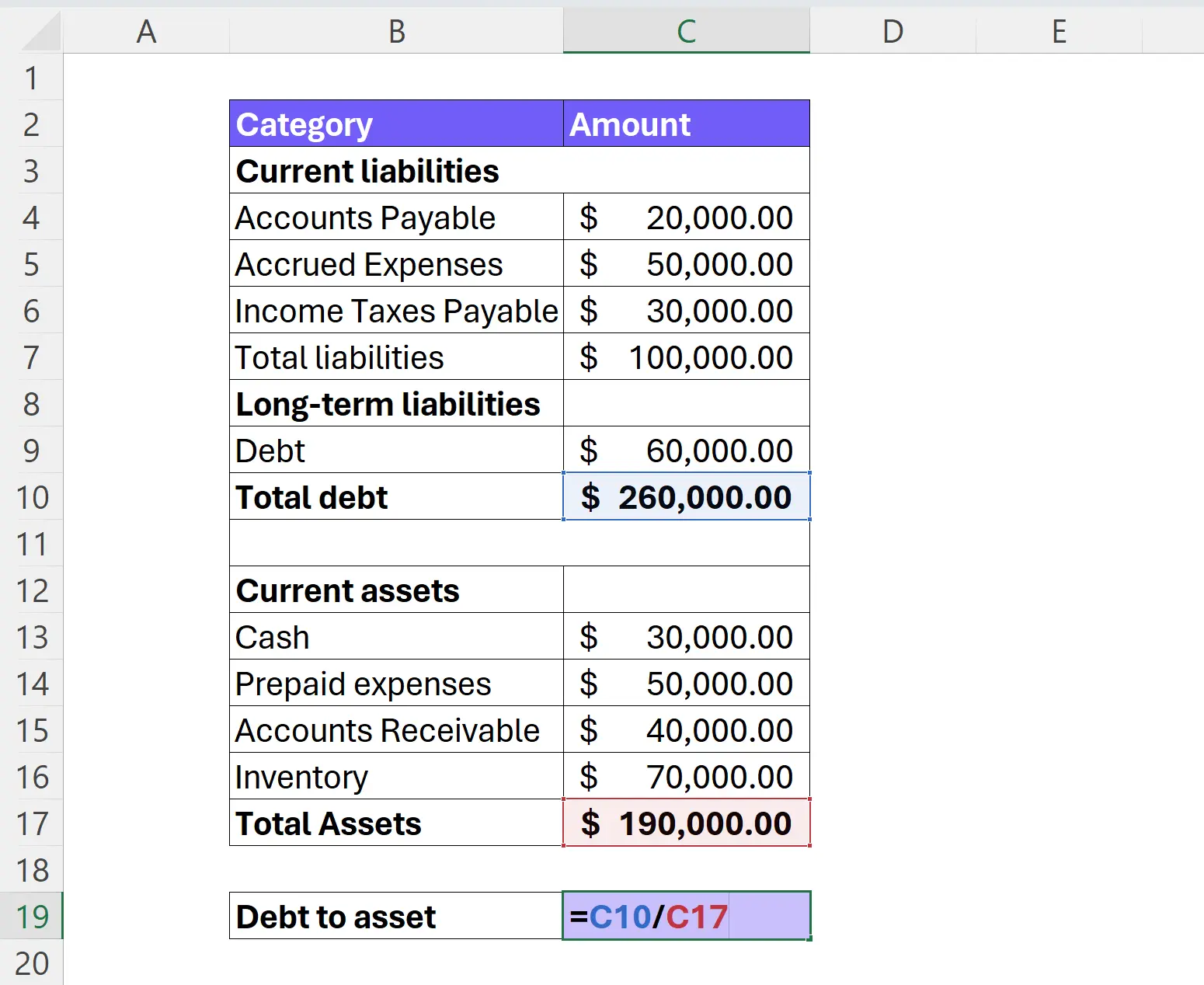
The formula is expressed as: Debt to Asset Ratio = (Total Debt / Total Assets) × 100
Calculating the Components
To use this formula effectively, you must aggregate all forms of debt. This includes both current and non-current liabilities. The "Total Assets" figure should reflect the current fair market value of everything owned.
For example, if an individual owns a home worth $500,000 and has a mortgage of $300,000, and also possesses $100,000 in liquid savings with no other debt, their total assets are $600,000 and their total debt is $300,000. Calculation: ($300,000 / $600,000) = 0.50 or 50%.
Interpreting the Ratio Results
The resulting decimal or percentage provides immediate insight into financial stability:
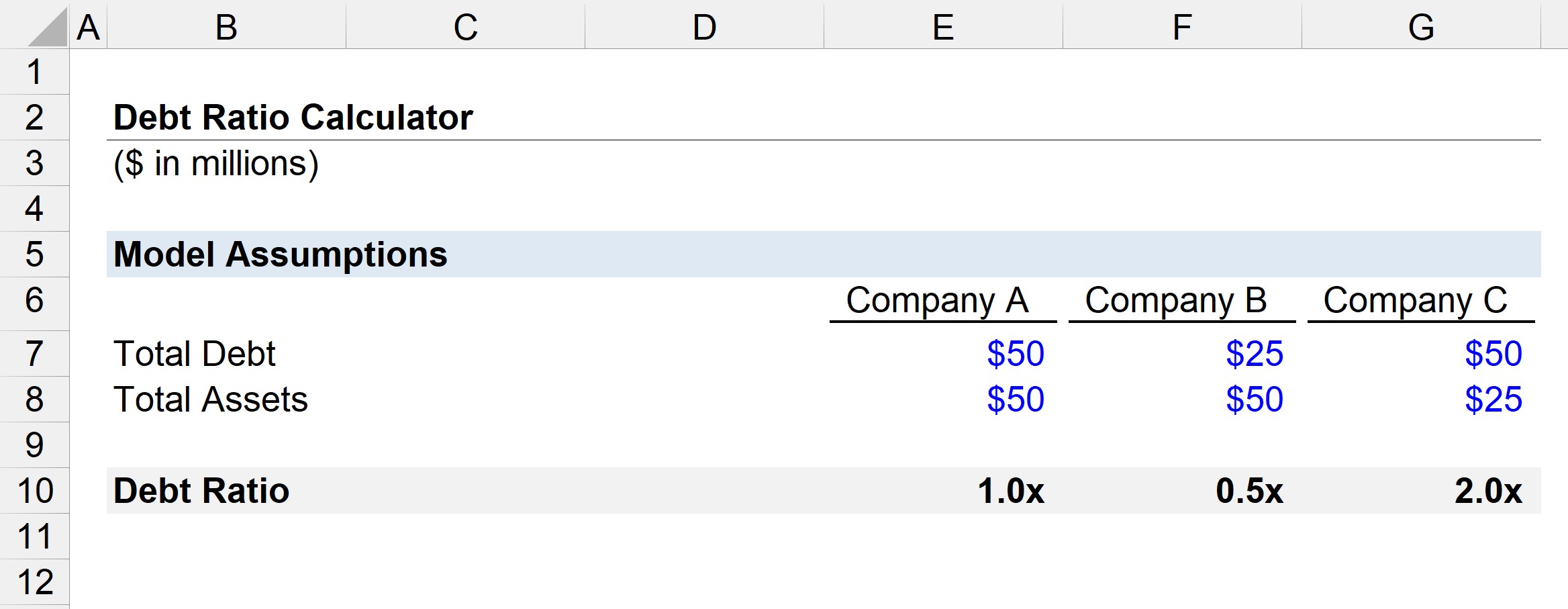
- Ratio Greater than 1.0 (100%): This indicates that the entity has more debt than assets. This is a high-risk situation often seen in struggling businesses or individuals with "underwater" loans.
- Ratio of 0.5 (50%): This means half of the assets are financed by debt. In many industries and for many homeowners, this is considered a moderate and manageable level of leverage.
- Ratio Less than 0.5 (Below 50%): This suggests a strong equity position. The entity owns more of its assets than the creditors do, providing a significant buffer against market downturns.
The Interplay Between Net Worth and Leverage
Net worth and the debt-to-asset ratio must be analyzed in tandem to get a true picture of financial health. A high net worth does not always mean low risk. For instance, an individual might have a net worth of $1 million but carry $10 million in assets and $9 million in debt. While the net worth is high, the debt-to-asset ratio is 0.9 (90%), indicating extreme vulnerability to even a minor dip in asset values.
Conversely, a younger professional might have a lower net worth of $100,000 but have $110,000 in assets and only $10,000 in debt. Their debt-to-asset ratio is roughly 9%. Although their absolute wealth is lower, their financial foundation is much more stable than the highly leveraged individual mentioned above.
Solvency vs. Liquidity
The net worth equation primarily measures solvency—the ability to meet long-term obligations. However, it does not account for liquidity—the ability to pay bills today. A person can have a high net worth because they own valuable real estate, but if they lack cash to pay their monthly mortgage, they face a liquidity crisis. This is why the debt-to-asset ratio is a vital secondary check; it highlights how much of the "value" is tied up in obligations that require regular cash outflows.
Comparative Metrics for Financial Analysis
To better understand how these formulas apply to different scenarios, it is helpful to compare the two primary metrics alongside other common indicators like the Debt-to-Equity ratio.
| Metric | Formula | Primary Purpose | Ideal Range (General) |
|---|---|---|---|
| Net Worth | Assets - Liabilities | Measures total absolute wealth and long-term solvency. | Positive and growing over time. |
| Debt-to-Asset Ratio | Total Debt / Total Assets | Measures financial leverage and risk exposure. | 0.3 to 0.6 (varies by age/industry). |
| Debt-to-Equity Ratio | Total Liabilities / Net Worth | Compares creditor financing to owner financing. | Below 1.0 for personal finance. |
| Liquidity Ratio | Liquid Assets / Short-term Debt | Measures ability to pay immediate obligations. | Above 1.0 to ensure safety. |
Practical Steps to Improve Your Financial Ratios
Improving these numbers requires a two-pronged approach: increasing asset value and decreasing liability totals.
Strategies for Asset Growth
- Diversification: In 2026, diversification involves balancing traditional equities with inflation-protected securities and real estate. This stabilizes the "Asset" side of the net worth equation during market volatility.
- Regular Valuation: Review the fair market value of your assets annually. Overestimating the value of use assets (like cars) can lead to an inflated sense of net worth.
- Automated Investing: Contributing to appreciating assets consistently ensures that the "Total Assets" figure grows independently of market timing.
Strategies for Debt Reduction
- The Debt Avalanche Method: Focus on paying off the highest-interest debt first. This reduces the total interest paid over time, allowing more capital to flow into assets.
- Refinancing: In favorable interest rate environments, refinancing high-interest debt can lower monthly obligations, though it may not immediately change the debt-to-asset ratio unless the principal is reduced.
- Avoiding Lifestyle Creep: As income increases, keeping debt levels stagnant while increasing asset contributions will rapidly improve the debt-to-asset ratio.
Common Mistakes in Calculations
Many individuals and small business owners miscalculate these figures, leading to poor financial decisions.
- Omitting "Invisible" Liabilities: Many forget to include private loans, deferred taxes, or co-signed loans where they are legally responsible for the debt.
- Using Purchase Price Instead of Market Value: Assets like electronics or vehicles should be recorded at their current resale value, not what you paid for them years ago.
- Mixing Personal and Business Finances: For entrepreneurs, it is vital to keep these balance sheets separate. Including business debt in a personal net worth calculation can distort the reality of one's personal financial security.
- Ignoring Inflation: In 2026, failing to account for the purchasing power of the "Cash" portion of your assets can lead to an overestimation of true financial health.
Frequently Asked Questions
Is a debt-to-asset ratio of 0.7 bad?
In a personal finance context, a ratio of 0.7 is generally considered high-risk. This means 70% of everything you own is essentially "owned" by creditors. While this might be acceptable for a brand-new business or a recent home buyer with a low down payment, the goal should be to lower this ratio over time to increase financial security.
Does net worth include my salary?
No, net worth does not include your salary. Net worth is a "stock" variable, meaning it measures your value at a specific point in time. Salary is a "flow" variable, representing income over time. While a high salary can help you increase your net worth by allowing you to buy more assets or pay down debt, the salary itself is not an asset.
How often should I calculate my net worth and debt ratios?
Most financial advisors recommend a quarterly or annual review. Calculating it too frequently can lead to stress over minor market fluctuations, while doing it too infrequently may cause you to miss negative trends in your leverage or spending habits.
Can you have a high net worth but a poor debt-to-asset ratio?
Yes. As mentioned earlier, if you own $10 million in real estate but have $9 million in mortgages, your net worth is $1 million. However, your debt-to-asset ratio is 0.9. If property values drop by just 11%, your net worth becomes negative, illustrating the high risk associated with high leverage.
How do student loans affect the debt-to-asset ratio?
Student loans are liabilities. They increase the numerator (Total Debt) without necessarily adding a corresponding tangible asset to the denominator (Total Assets). While education is an "intangible asset" that increases earning potential, it cannot be sold on the open market and thus does not count in the standard net worth equation.
Final Recommendation
To achieve long-term financial independence, you should prioritize increasing your net worth while simultaneously lowering your debt-to-asset ratio. Start by listing every asset at its current market value and every debt at its current payoff balance. Use the formulas provided to establish your baseline. In the 2026 economy, aim for a debt-to-asset ratio below 0.4 and a net worth that grows by at least the rate of inflation plus 3% annually. This dual-focus strategy ensures you are not just becoming wealthier, but also becoming more resilient to financial shocks.
Image Gallery