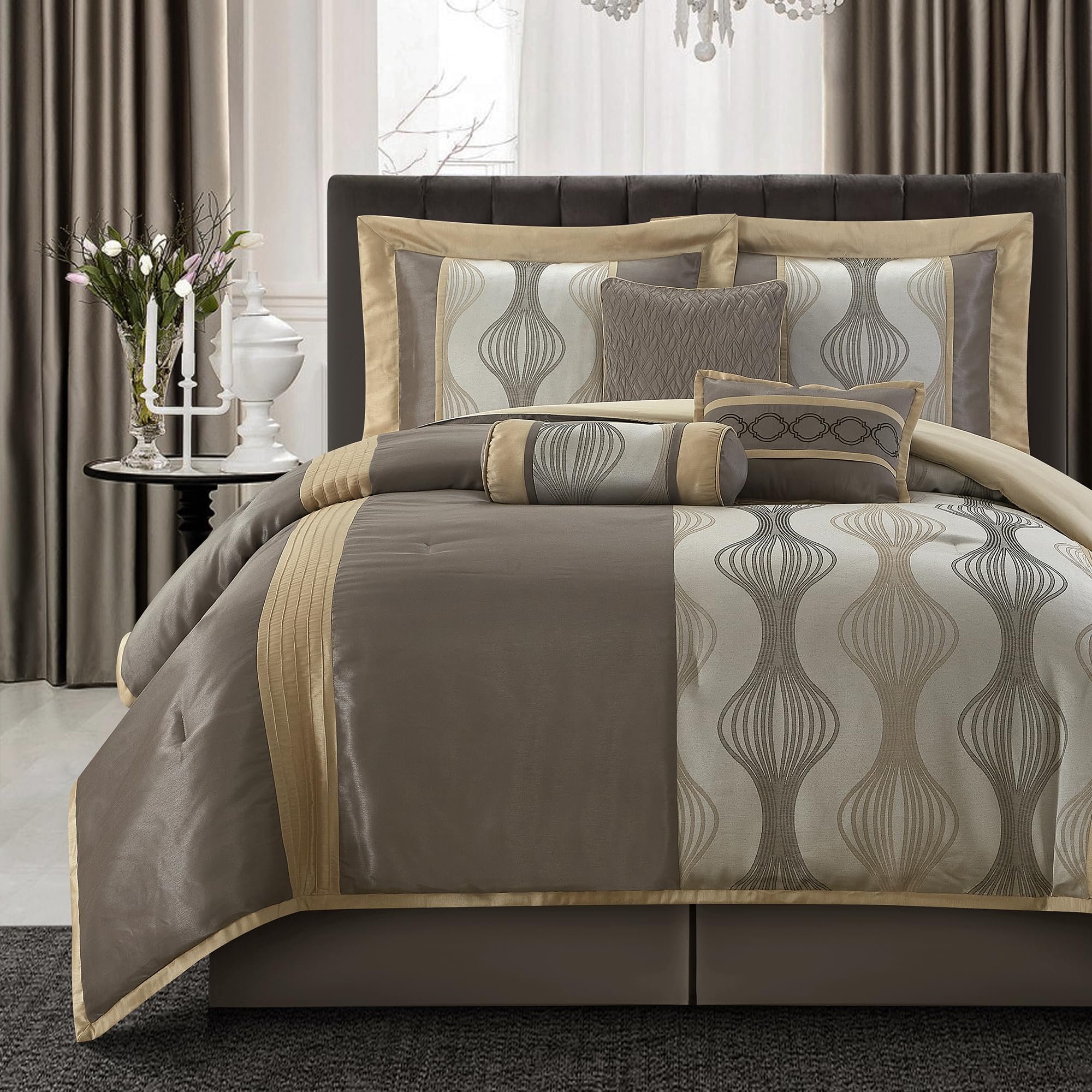
How to Choose the Best Cal King Comforter
To choose the best California King comforter, you must prioritize specific dimensions (typically 102" x 96" or larger) to ensure adequate side coverage for the 72" x 84" mattress. Evaluate the fill material—down for superior warmth-to-...
To choose the best California King comforter, you must prioritize specific dimensions (typically 102" x 96" or larger) to ensure adequate side coverage for the 72" x 84" mattress. Evaluate the fill material—down for superior warmth-to-weight ratio or down-alternative for hypoallergenic needs—and select a baffle-box construction to prevent the fill from shifting over the larger surface area.
Contents
Choosing bedding for a California King mattress presents unique challenges compared to standard sizing. Because the California King is narrower and longer than a standard Eastern King, off-the-shelf "King/Cal King" universal sizes often fail to provide the necessary drape, leaving the sides of the mattress exposed or the foot of the bed looking truncated. In 2026, the market for luxury bedding has expanded significantly, offering more specialized dimensions and sustainable materials than ever before. This guide provides a technical breakdown of how to select a comforter that balances aesthetic proportions, thermal efficiency, and long-term durability.
Understanding California King Dimensions vs. Standard King
The primary mistake consumers make is assuming that a standard King comforter will fit a California King bed. A California King mattress measures 72 inches wide by 84 inches long. In contrast, a standard King is 76 inches wide by 80 inches long. This four-inch difference in length is critical; a standard King comforter will often leave the mattress base visible at the foot of the bed.
When shopping, look for "True Cal King" dimensions. A well-fitting comforter should ideally measure at least 102 inches wide by 96 inches long. If you have a high-profile mattress (14 inches or thicker) or use a pillow-top, you may need an "Oversized Cal King" comforter, which can reach dimensions of 108" x 98". The goal is to have at least 12 to 15 inches of overhang on each side to cover the mattress and the top of the bed frame or box spring.
Evaluating Fill Materials: Down vs. Down-Alternative
The "fill" is the internal material that provides insulation. Your choice depends on your local climate, personal allergies, and preferred weight.
Natural Down
Down consists of the fluffy undercoating of geese or ducks. It is prized for its "loft"—the ability to trap air and provide warmth without heavy weight.
- Fill Power: This measures the quality of the down. In 2026, premium Cal King comforters typically feature a fill power of 650 to 850. Higher fill power means the comforter will be lighter but warmer.
- Longevity: With proper care, a high-quality down comforter can last 10 to 15 years.
- Sustainability: Look for the Responsible Down Standard (RDS) certification to ensure ethical sourcing and animal welfare.
Down-Alternative
Usually made from polyester microfibers or recycled PET, down-alternative mimics the feel of down.
- Hypoallergenic Benefits: These are the preferred choice for sleepers with asthma or respiratory sensitivities, as they do not harbor dander in the same way natural feathers might.
- Weight: Down-alternative is generally heavier than natural down to achieve the same level of warmth. This "weighted" feel is preferred by some for its calming effect.
- Washability: Most synthetic fills are machine-washable, making them more practical for households with pets or children.
Natural Fibers (Wool, Silk, and Bamboo)
For those who live in humid climates or suffer from night sweats, natural fiber fills offer superior moisture-wicking. Wool can absorb up to 30% of its weight in moisture without feeling damp, while silk provides a very low-profile, breathable layer that is ideal for hot sleepers.
Construction Techniques: Why Baffle-Box Matters
On a large surface like a California King bed, the fill has a tendency to migrate toward the edges or the foot of the bed, creating "cold spots." The construction method determines how well the fill stays in place.
- Baffle-Box Construction: This is the gold standard for high-end comforters. It involves sewing thin strips of fabric (baffles) between the top and bottom covers to create individual 3D cubes. This allows the fill to reach its maximum loft while preventing it from shifting. It results in a uniform, "cloud-like" appearance.
- Sewn-Through Stitching: In this method, the top and bottom layers are stitched directly together. While this keeps the fill from moving between compartments, it compresses the material at the seams, creating thin areas where heat can escape. This is more common in lightweight, summer-weight comforters.
- Box Stitch: Similar to sewn-through but usually with larger squares. It is durable and easier to manufacture but offers less loft than a baffle-box design.
Selecting the Right Shell Fabric and Thread Count
The "shell" or "ticking" is the outer fabric that holds the fill. Because the California King covers a large area, the weight and texture of this fabric significantly impact the overall sleep experience.
- Material: Long-staple cotton (such as Egyptian or Pima) remains the industry standard for durability and softness. In 2026, Tencel (Lyocell) and bamboo-derived fabrics have become popular for their cooling properties and silky drape.
- Thread Count: For a comforter shell, a thread count between 250 and 400 is ideal. Contrary to popular belief, a higher thread count is not always better; counts above 500 can lead to a denser weave that traps too much heat and prevents the down from "breathing."
- Weave:
- Percale: A plain weave that feels crisp and cool. Excellent for hot sleepers.
- Sateen: A weave that produces a lustrous, silky feel and a slightly heavier drape. Better for those who like a cozy, warm sensation.
Warmth Levels and Seasonal Weight
Since a California King comforter represents a significant investment, you must choose a weight that aligns with your bedroom temperature. High-end manufacturers typically categorize products into three or four warmth levels:
- Lightweight/Summer: Designed for temperatures above 70°F (21°C). These have less fill and often use sewn-through construction to maximize breathability.
- All-Season: The most versatile option, suitable for year-round use in climate-controlled homes. It balances insulation with enough breathability to prevent overheating.
- Heavyweight/Winter: Formulated for cold climates or sleepers who prefer a very heavy, insulating layer. These almost exclusively use high-fill-power down and baffle-box construction.
| Feature | Down (Natural) | Down-Alternative | Silk/Wool Fill |
|---|---|---|---|
| Ideal Fill Power/GSM | 600 - 800+ Fill Power | 300 - 450 GSM | 250 - 400 GSM |
| Primary Benefit | Maximum loft & warmth | Hypoallergenic & washable | Moisture-wicking & cooling |
| Durability | 10 - 15 Years | 5 - 7 Years | 8 - 12 Years |
| Typical Cost (Cal King) | $300 - $800 | $100 - $300 | $250 - $600 |
| Care Requirement | Professional / Low heat | Machine Washable | Dry Clean Only |
Critical Sizing and Overhang Measurements
To avoid the common mistake of a comforter that looks "too small," use the following formula. Measure the height of your mattress from the top surface to the bottom of the side rail. Multiply that height by two and add 72 inches (the width of the Cal King).
- Example: If your mattress is 12 inches thick and you want the comforter to cover the mattress entirely on both sides, you need a width of 12 + 12 + 72 = 96 inches.
- Visual Preference: If you want a luxury look where the comforter reaches the floor, you will likely need a custom "Jumbo Cal King" (approx. 114" x 100").
Care and Maintenance for Large-Scale Bedding
Maintaining a California King comforter requires specialized care due to its sheer volume. Most standard residential washing machines cannot accommodate the bulk of a Cal King comforter, especially when it becomes saturated with water.
- Use a Duvet Cover: This is the single most important step in preserving your comforter. A duvet cover protects the inner fill from body oils, sweat, and dust, meaning you only need to wash the comforter itself once every 1–2 years.
- Professional Laundering: For down comforters, professional cleaning is recommended. If you wash it at home, use a high-capacity, front-loading commercial machine. Never use an agitator-style top-loader, as it can tear the baffles.
- Drying Process: Use the lowest heat setting and include several wool dryer balls or clean tennis balls to prevent the fill from clumping. This process can take 3 to 5 hours for a California King size. Ensure it is 100% dry to prevent mold or mildew growth.
Common Pitfalls to Avoid
- Ignoring the "King/Cal King" Hybrid: Many manufacturers sell a "Universal King" size. This is usually 104" x 90". While the width is fine, the 90-inch length is often too short for the 84-inch long Cal King mattress, leaving very little room to tuck or drape at the foot of the bed.
- Overestimating Thread Count: Do not be swayed by "1000 Thread Count" labels, which often indicate multi-ply yarns of lower quality. Look for long-staple cotton with a 300-400 count for the best performance.
- Forgetting the Climate: A heavy down comforter in a Southern California or Florida climate may lead to "sleep fragmentation" due to overheating. Opt for "Lightweight" or "All-Season" if your home stays above 68°F at night.
FAQ
Can I use a standard King comforter on a California King bed? While you can physically place it on the bed, it will likely not fit well. A standard King is 4 inches wider and 4 inches shorter than a California King. This means the comforter will hang too low on the sides but will not sufficiently cover the foot of the bed, potentially exposing the mattress or sheets.
What is the best fill power for a year-round Cal King comforter? A fill power between 600 and 700 is considered ideal for all-season use. It provides enough loft to stay cozy in the winter without becoming oppressively hot during the spring and autumn months.
How often should I replace my comforter? A high-quality down comforter should last 10 to 15 years if used with a duvet cover. Synthetic down-alternatives usually need replacement every 5 to 7 years, as the fibers eventually lose their "spring" and begin to clump or flatten.
What does "Oversized California King" mean? This term refers to comforters that exceed the standard 102" x 96" dimensions. They are typically 108" to 112" wide. These are designed for modern, deep mattresses (15+ inches thick) to ensure the bedding reaches the bed frame and provides a luxurious, draped appearance.
Is baffle-box construction worth the extra cost? Yes, especially for California King sizes. Because the bed is so large, fill migration is a significant issue. Baffle-box construction ensures the insulation remains evenly distributed across the entire 72" x 84" surface, preventing the "empty" fabric patches common in cheaper comforters.
Practical Recommendation
When selecting your California King comforter in 2026, prioritize a True Cal King size (minimum 102" x 96") with baffle-box construction and a 650-750 fill power down (or a high-quality 350 GSM down-alternative). Always pair it with a breathable cotton or Tencel duvet cover to extend its lifespan and ensure a hygienic sleep environment. Verify the dimensions on the packaging rather than relying on the "King" label to ensure the length is sufficient for your mattress.
Image Gallery