A Comprehensive Guide to the List of Indian Life Insurance Companies Explained
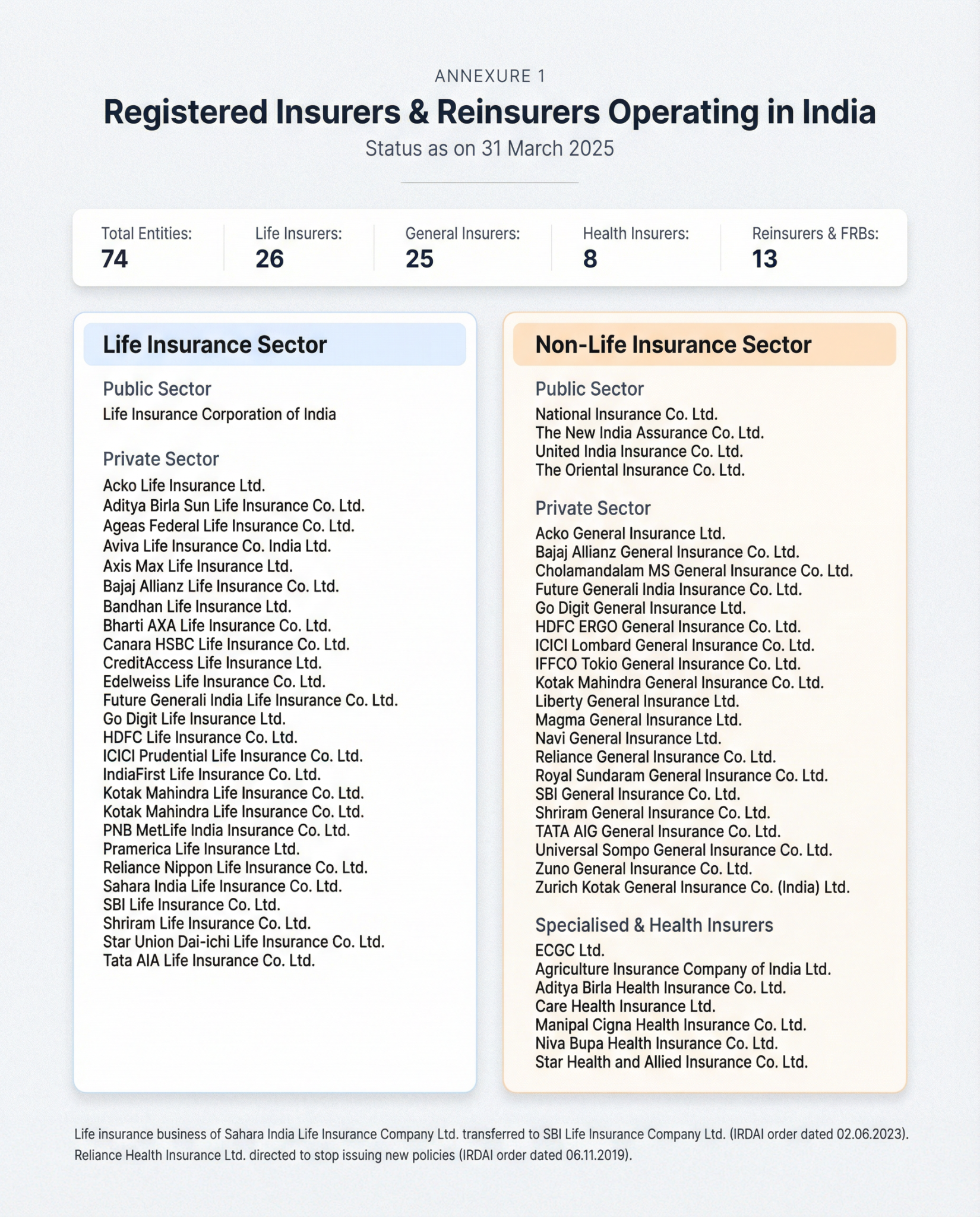
Navigating the landscape of Indian life insurance requires understanding the regulatory framework established by the Insurance Regulatory and Development Authority of India (IRDAI). As of 2026, the market consists of a mix of public se...
Navigating the landscape of Indian life insurance requires understanding the regulatory framework established by the Insurance Regulatory and Development Authority of India (IRDAI). As of 2026, the market consists of a mix of public sector giants and private sector players, each offering distinct product suites ranging from traditional endowment plans to complex unit-linked insurance plans (ULIPs).
Contents
Understanding this list is essential for policyholders to ensure they are dealing with licensed, solvent entities that offer the protection, transparency, and claim settlement efficiency required for long-term financial security.
The Regulatory Framework: Understanding IRDAI Oversight
The life insurance sector in India is strictly governed by the Insurance Regulatory and Development Authority of India (IRDAI). The IRDAI Act of 1999 empowers the authority to protect the interests of policyholders, regulate insurance companies, and ensure the orderly growth of the industry.
When you look at the list of authorized insurers, you are looking at companies that have met stringent capital requirements, solvency margins, and compliance standards set by the regulator. Before considering any insurer, an applicant should verify their registration status through the IRDAI official portal. Engaging with a company that is not explicitly licensed by the IRDAI exposes the policyholder to significant financial risk, including the potential loss of premiums and the denial of death benefit claims.
Categorizing Indian Life Insurance Providers
The Indian life insurance market is bifurcated into two primary segments: the Public Sector and the Private Sector. Each segment operates with different historical foundations and operational philosophies.
1. The Public Sector: Life Insurance Corporation of India (LIC)
The Life Insurance Corporation of India remains the state-owned behemoth of the industry. Established in 1956 through the nationalization of private insurance companies, LIC holds a unique position. Because it is a sovereign-backed entity, it is often favored by consumers seeking maximum security for long-term savings and traditional protection products. LIC operates through an extensive network of physical branches across the country, which remains a primary channel for service and claim assistance.
2. The Private Sector
Private life insurance companies in India are generally joint ventures between domestic financial institutions (such as banks or large conglomerates) and international insurance expertise. These entities were permitted to enter the market following the liberalization of the sector in the early 2000s. Private insurers are typically characterized by:
- Product Innovation: Faster adoption of digital-first products, including complex investment-linked insurance plans.
- Technological Integration: Sophisticated mobile applications, digital onboarding processes, and automated underwriting engines.
- Customer Service Models: Often utilize omni-channel support systems that emphasize remote interaction, web-based policy management, and rapid digital claim processing.
Comparative Overview of Insurer Types
| Feature | Public Sector (LIC) | Private Sector Insurers |
|---|---|---|
| Primary Ownership | Government of India | Private Promoters/Joint Ventures |
| Market Focus | Mass reach, traditional savings | Segmented, tech-enabled, investment-linked |
| Service Approach | Largely agent/branch driven | Digital-first/Hybrid approach |
| Product Complexity | Conservative/Traditional | Highly diversified/Customizable |
| Digital Onboarding | Developing/Partial | Mature and comprehensive |
Key Factors to Consider When Selecting an Insurer
Selecting an insurer from the list is not merely about brand recognition; it is about evaluating the operational health and customer-centricity of the company.
Solvency Ratio
The Solvency Ratio is a critical indicator of an insurer’s financial health. It measures the company's ability to meet its long-term debt obligations and potential claims. The IRDAI mandates a minimum solvency ratio of 1.5. A higher ratio generally indicates a greater buffer of capital available to pay claims even in unforeseen economic downturns. Policyholders can find these figures in the annual public disclosure documents released by every insurance company.
Claim Settlement Ratio (CSR)
The Claim Settlement Ratio represents the percentage of claims an insurer has paid out relative to the total number of claims received in a given financial year. While a high CSR is a positive sign, it should not be viewed in isolation. One must also consider the "Amount Settlement Ratio," which indicates the proportion of the value of claims paid out, as some companies may settle many small claims but contest large, high-value ones.
Product Suitability
Insurance products are generally divided into:
- Term Insurance: Pure protection with no investment component. This is the most cost-effective way to secure high coverage amounts.
- Endowment Plans: A mix of insurance and savings, often providing a maturity benefit.
- ULIPs (Unit Linked Insurance Plans): Market-linked products where a portion of the premium is invested in equity or debt funds.
- Annuity/Pension Plans: Designed specifically for retirement income streams.
An insurer’s "best" product depends on your personal financial goals. A company with a stellar reputation for term insurance might not be the most efficient provider for wealth-building ULIPs.
The Process of Verification and Procurement
Before purchasing a policy from any insurer on the list, follow this verified procedure to ensure legitimacy and suitability:
- Verify Registration: Confirm the company is listed on the IRDAI website. Do not rely on third-party comparison sites exclusively.
- Review Public Disclosures: Check the insurer’s website for the "Public Disclosures" section. Here, you will find mandatory reports on solvency, claim settlement, and financial performance.
- Understand the Product Document: Every policy must have a "File and Use" approval number from the IRDAI. This number signifies that the specific product structure has been reviewed and approved by the regulator.
- Compare Costs: Utilize the "Benefit Illustration" document. This is a mandatory standardized format that shows the projected returns and costs of a policy, allowing for an apples-to-apples comparison between different companies.
Common Challenges and Troubleshooting
Policyholders often encounter hurdles during the lifecycle of an insurance contract. Knowing how to manage these can save significant time and stress.
- Delayed Claim Settlement: If a claim is delayed, the primary recourse is to contact the company’s Grievance Redressal Officer (GRO). Every insurer is legally required to have an internal mechanism for handling complaints.
- Mis-selling: This occurs when a policy is sold based on false promises or improper disclosure. If you suspect mis-selling, file a complaint through the IRDAI’s Integrated Grievance Management System (IGMS).
- Policy Lapses: If you miss a premium payment, most policies provide a "grace period" (typically 15 to 30 days). Ensure you track your premium due dates to avoid the loss of coverage and the hassle of medical re-underwriting required to revive a lapsed policy.
Frequently Asked Questions (FAQ)
1. Does the government guarantee policies issued by private insurers?
No. While the IRDAI regulates all insurers to protect policyholders, private insurers are independent corporate entities. Only policies issued by the Life Insurance Corporation of India (LIC) carry a sovereign guarantee from the Government of India.
2. Can I transfer my policy from one insurer to another?
Generally, no. Life insurance is a long-term contract. You cannot "port" an existing life insurance policy to a different company. You would typically need to surrender or stop paying premiums on the old policy and purchase a new one, which may involve new underwriting and higher premiums due to your increased age.
3. What happens if my insurance company goes bankrupt?
The IRDAI has strict solvency mandates to prevent insolvency. In the unlikely event an insurer fails, the regulator typically facilitates the transfer of the existing policyholders' portfolio to another financially stable insurance company to ensure that coverage continues without interruption.
4. Are the premiums for the same term plan different across companies?
Yes. Premiums vary based on the insurer's internal underwriting policies, their cost of operations, and their risk assessment models. This is why comparing multiple quotes is a standard best practice before finalizing a purchase.
5. Is it mandatory to buy insurance through an agent?
No. Many insurers offer direct-to-customer channels, often called "online plans," which are generally cheaper because they exclude agent commissions. However, if you require professional advice regarding complex estate planning or specific family needs, an agent or a certified financial planner can provide valuable guidance.
Final Recommendation
To begin your journey, identify your specific need—whether it is pure income protection or wealth creation. Once defined, visit the IRDAI website to view the current list of licensed insurers. Prioritize companies that demonstrate consistent solvency ratios and transparent claim settlement data over the past three to five years. Always review the "Benefit Illustration" document in detail before signing any contract, and ensure that all health and financial disclosures provided in your application are accurate, as these are the pillars upon which your future claims will be settled.
Image Gallery