How Sunscreen for Newborns Should Be Used: A Clinical Perspective on Infant Sun Safety
For newborns under six months, the primary strategy for sun protection is complete avoidance of direct exposure rather than the application of sunscreen. If unavoidable circumstances necessitate sun exposure, experts recommend applying...
For newborns under six months, the primary strategy for sun protection is complete avoidance of direct exposure rather than the application of sunscreen. If unavoidable circumstances necessitate sun exposure, experts recommend applying only minimal amounts of mineral-based sunscreen to small, exposed areas such as the face and the backs of the hands, while prioritizing physical barriers like shade and protective clothing.
Contents
Understanding the Newborn Skin Barrier
Newborn skin is significantly more permeable and thinner than that of an adult. Because the skin barrier is not fully developed at birth, infants have a higher surface-area-to-body-weight ratio. This physiological reality means that if chemical-based ingredients are applied over large surface areas, there is a higher potential for systemic absorption compared to older children or adults. Furthermore, the sweat glands in a newborn are not yet fully functional, which limits the infant's ability to regulate body temperature through perspiration. Consequently, covering an infant’s skin with heavy, occlusive layers of product can occasionally interfere with their natural thermoregulation.
The Preference for Physical Barriers
Medical organizations, including the American Academy of Pediatrics (AAP), consistently emphasize that shade and physical protection are the gold standard for newborn sun safety. Newborns should be kept out of direct sunlight whenever possible, particularly during peak UV radiation hours between 10:00 AM and 4:00 PM.
When outdoors, utilize the following physical strategies:
- Stroller Protection: Use a stroller with a canopy that provides full shade. Ensure that the cover allows for adequate airflow to prevent overheating.
- Protective Clothing: Dress the infant in lightweight, long-sleeved shirts and pants made from tightly woven, breathable fabrics. A wide-brimmed hat that shades the face, ears, and neck is essential.
- Shade Structures: When at the beach or park, place the newborn under a beach umbrella, sun tent, or in the shade of a tree. Always ensure that the environment remains well-ventilated.
Navigating Sunscreen Selection for Infants
If exposure to the sun is unavoidable and physical barriers are insufficient, parents should opt for mineral-based sunscreens. These products utilize active ingredients such as titanium dioxide or zinc oxide. Unlike chemical filters, which absorb into the top layer of the skin to convert UV rays into heat, mineral-based formulas sit on the surface of the skin and physically reflect or scatter UV radiation.
Comparison of Sunscreen Types for Infants
| Feature | Mineral-Based (Physical) | Chemical-Based |
|---|---|---|
| Active Ingredients | Zinc Oxide, Titanium Dioxide | Avobenzone, Oxybenzone, etc. |
| Mechanism | Reflects/Scatters UV light | Absorbs and dissipates UV light |
| Skin Penetration | Minimal; sits on the surface | High; penetrates the epidermis |
| Reaction Risk | Lower (less likely to irritate) | Higher (potential for sensitivities) |
| Visibility | Often leaves a white cast | Dries clear |
How to Properly Apply Sunscreen in Limited Scenarios
If you must apply sunscreen to a newborn under six months because no other protection is available, follow these specific application steps to minimize risk:
- Spot Testing: Before applying a new product to the entire exposed area, test a small amount on the baby's inner forearm. Wait 24 hours to monitor for redness, swelling, or rash.
- Strategic Application: Only apply the product to small areas that cannot be covered by clothing, specifically the face, the back of the hands, and perhaps the top of the feet. Avoid applying sunscreen to the hands themselves, as infants frequently place their hands in their mouths.
- Removal: Since mineral sunscreens are designed to remain on the surface, they may require gentle but thorough removal with a mild, fragrance-free baby soap or cleanser during the next bath to prevent clogged pores or skin irritation.
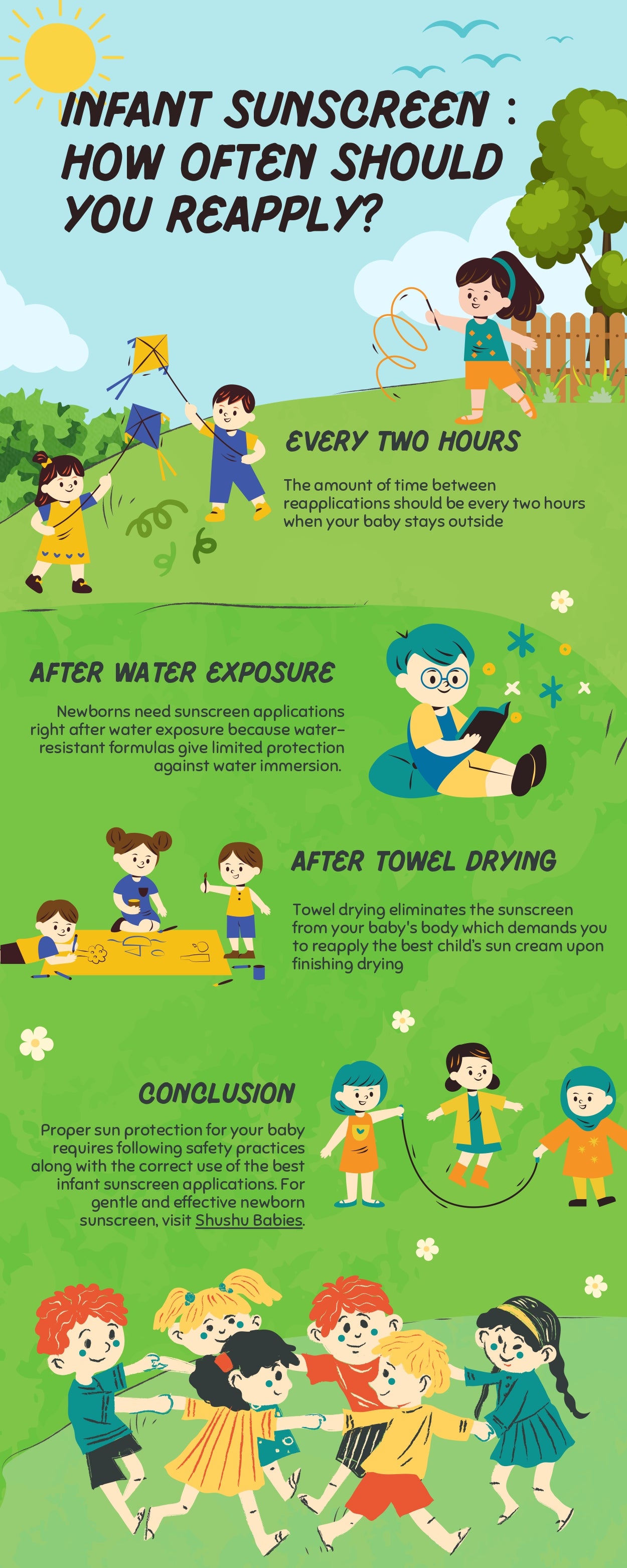
- Reapplication: If the infant is exposed to water or is perspiring, the efficacy of the sunscreen may decrease. Reapply as directed by the product label, though the focus should always remain on returning the infant to a shaded area.
Common Mistakes to Avoid
Many parents inadvertently compromise their newborn's safety by relying on common misconceptions. One major error is assuming that "waterproof" or "sweatproof" labels guarantee complete protection. According to U.S. Food and Drug Administration (FDA) guidelines, no sunscreen is truly waterproof; they are only labeled as "water-resistant" for a specific duration (usually 40 or 80 minutes). Relying on these claims can lead to prolonged sun exposure, which is dangerous for a newborn.
Another common mistake is neglecting eye protection. Newborn eyes are highly sensitive to UV rays, which can cause long-term damage. While sunglasses are difficult to keep on newborns, parents should focus on using hats with wide brims to cast shade over the eye area.
Frequently Asked Questions
Why is sunscreen generally discouraged for babies under six months? Sunscreen is not discouraged due to a specific "toxic" threshold, but rather due to the underdeveloped nature of newborn skin. Because their skin is more permeable, the potential for irritation or allergic reactions to the chemical additives or fragrances in many sunscreens is higher.
Can I use "baby-formulated" sunscreens for a newborn? "Baby" labels are often marketing terms. Always check the ingredient list for zinc oxide or titanium dioxide. Avoid products containing oxybenzone, parabens, or synthetic fragrances, which are more common in adult formulations and more likely to cause contact dermatitis in infants.
What should I do if my newborn gets a sunburn? If a newborn develops a sunburn, it is a medical concern. Keep them out of the sun immediately and cool the affected area with a soft cloth dampened with cool water. Contact your pediatrician, as infants are at higher risk for dehydration and systemic reactions to sun-related injury.
Does a newborn need sunscreen on a cloudy day? UV rays can penetrate clouds and reflect off surfaces like sand, water, and pavement. While the intensity is lower, the same principles apply: rely on physical barriers and shade rather than relying on sunscreen application.
How do I verify if a sunscreen is mineral-based? Consult the "Active Ingredients" section of the product packaging. If the only active ingredients listed are Zinc Oxide or Titanium Dioxide, it is a mineral-based sunscreen. Avoid any products that list chemical filters as the primary active components.
Next Steps for Parental Vigilance
If you are planning an outing with your newborn, conduct a "protection audit" before leaving your home. Ensure you have a wide-brimmed hat, a lightweight cotton blanket for shade, and a stroller canopy. If your destination lacks natural shade, bring a portable umbrella or a UV-rated sun shade tent. By prioritizing these environmental modifications, you provide the most effective protection against UV-induced damage while allowing your infant to enjoy the outdoors safely. If you remain unsure about specific product ingredients, consult your pediatrician during a well-child visit to discuss brands that are clinically recognized for sensitive skin.
Image Gallery