Taylor Swift and Floyd Mayweather Net Worth Compared: Music Empire Versus Undefeated Boxing Fortune
Comparing the financial standing of pop icon Taylor Swift and undefeated boxing champion Floyd Mayweather reveals two distinct models of wealth accumulation in the modern entertainment and sports industries. While Taylor Swift built he...
Comparing the financial standing of pop icon Taylor Swift and undefeated boxing champion Floyd Mayweather reveals two distinct models of wealth accumulation in the modern entertainment and sports industries. While Taylor Swift built her billionaire status primarily through historic touring revenues, strategic catalog ownership, and massive consumer engagement, Floyd Mayweather achieved his fortune through record-breaking pay-per-view boxing purses, savvy fight promotions, and strategic real estate investments.
Contents
Evaluating the net worth of public figures involves analyzing diverse income streams, asset portfolios, and business ventures. Both personalities have achieved elite financial status, but the mechanisms driving their fortunes highlight the contrasting economic realities of the global music business and elite professional combat sports.
The Foundations of Taylor Swift's Billionaire Status
Taylor Swift's rise to billionaire status represents a watershed moment in the music industry, driven primarily by intellectual property rights, direct-to-consumer merchandising, and unprecedented live performance scale. Unlike traditional pop stars who relied heavily on record label distribution splits, Swift orchestrated a career pivot centered on ownership and autonomy.
The Eras Tour and Live Performance Economics
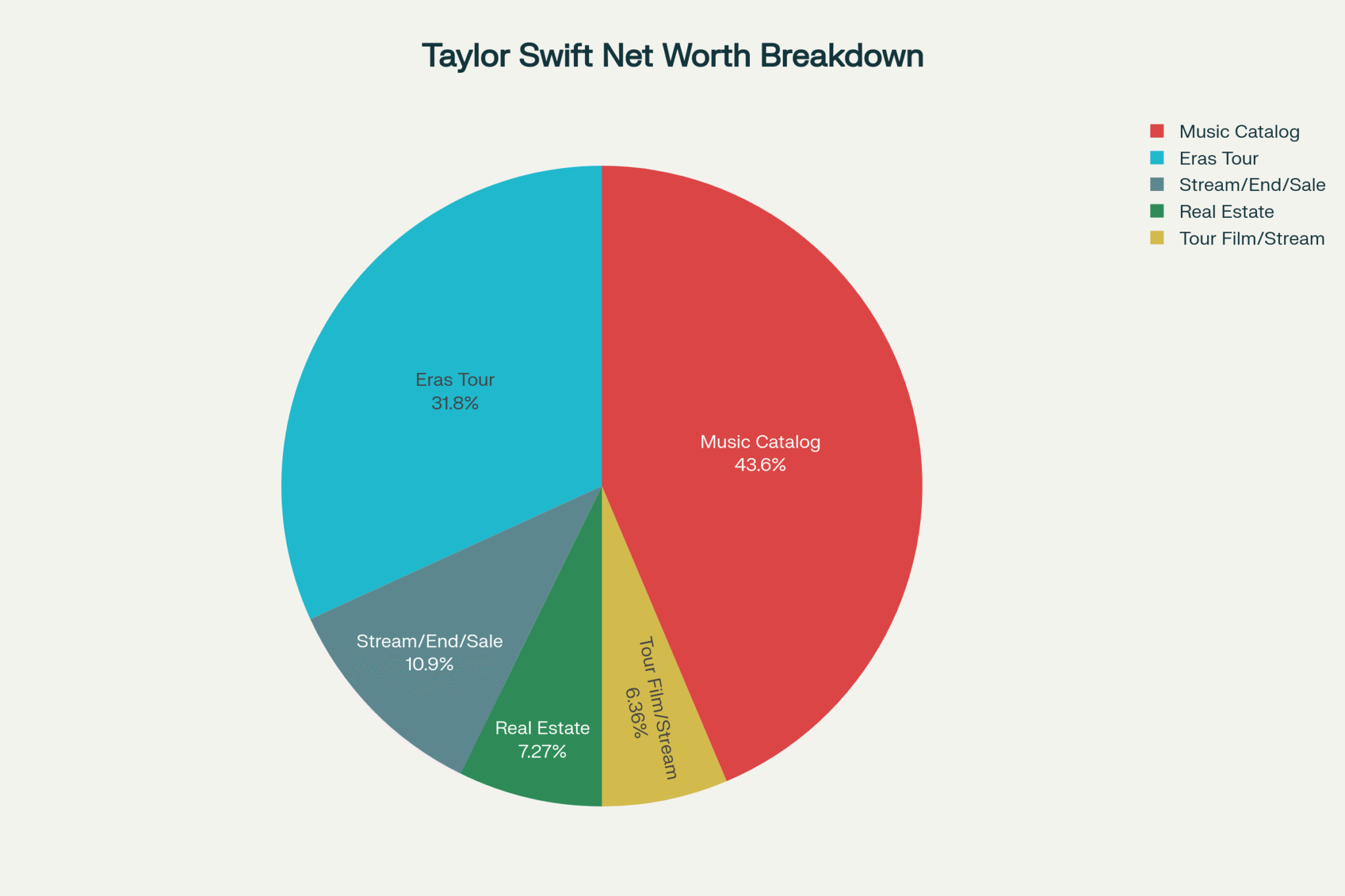
The primary catalyst for Swift crossing the billionaire threshold is The Eras Tour. Spanning multiple continents and hundreds of stadium dates, the tour generated gross revenues exceeding one billion dollars, making it the highest-grossing concert tour in history.
Unlike previous touring models where artists received a modest percentage of gate receipts after promoter deductions, Swift's production company operated under a structure that captured a massive share of ticket sales, VIP packages, and exclusive merchandise revenue. Furthermore, the theatrical release of Taylor Swift: The Eras Tour bypassed traditional Hollywood studio gatekeepers, distributing directly through AMC Theatres and securing an unusually high revenue-sharing percentage for the artist.
Music Catalog Re-Recordings and Ownership
A defining aspect of Swift's financial strategy is her ongoing project to re-record her first six studio albums. Following the public sale of her original master recordings by her former record label, Swift utilized her legal right to re-record compositions, effectively creating alternative master recordings that she owns entirely.
This move redirected millions of streaming royalties, licensing fees for film and television synchronization, and physical album sales back to her control. Owning her master recordings transformed her from a high-earning employee of the music industry into a primary copyright holder with enduring, compounding passive income streams.
Floyd Mayweather's "Money" Empire and Combat Sports Dominance
Floyd Mayweather earned his nickname "Money" by transforming professional boxing into a promotional business. Throughout a career spanning multiple weight classes and culminating in a 50-0 professional record, Mayweather pioneered a business model where the athlete acted as both the primary talent and the lead promoter.
Pay-Per-View Revenue and Gate Receipts
Mayweather’s financial peak was defined by historic pay-per-view (PPV) events, most notably his bouts against Manny Pacquiao in 2015 and Conor McGregor in 2017. The bout against Pacquiao generated over 400 million dollars in domestic PPV revenue alone, while the McGregor fight generated more than 600 million dollars globally.
By founding Mayweather Promotions, Floyd eliminated traditional middleman promoters like Top Rank or Golden Boy Promotions for the latter half of his career. This structural shift allowed him to capture not only his guaranteed fighter purse but also a substantial percentage of closed-circuit broadcast rights, international television distribution, gate receipts, and sponsorship inventory.
Real Estate and Venture Investments
Outside the boxing ring, Mayweather deployed his fight earnings into a diversified portfolio centered on commercial real estate, residential developments, and commercial properties. His real estate holdings include luxury residential properties across Las Vegas, Miami, and Los Angeles, alongside commercial real estate portfolios that generate consistent cash flow.
Additionally, Mayweather maintains investments in technology startups, hospitality ventures, and luxury automotive assets. Unlike active fighters who depend on recurring fight purses, Mayweather transitioned his enterprise into a private holding company model, sustaining his wealth through capital appreciation and commercial rents.
Financial Comparison: Swift vs. Mayweather
| Financial Metric | Taylor Swift | Floyd Mayweather |
|---|---|---|
| Primary Wealth Driver | Global touring, music publishing, and master recording ownership | Pay-per-view boxing purses, fight promotion, and real estate |
| Estimated Net Worth | Estimated above $1.1 billion (Bloomberg analysis) | Estimated between $400 million and $1.2 billion (Career earnings exceeding $1.1 billion) |
| Monetization Model | Intellectual property, licensing, direct merchandise, and stadium tours | Event promotion, pay-per-view revenue shares, and real estate appreciation |
| Active Business Scale | Global enterprise encompassing music, film distribution, and live entertainment | Private investment holding company, real estate portfolio, and promotional entities |
Structural Differences in Wealth Generation
Comparing the balance sheets of Swift and Mayweather highlights fundamental differences between the entertainment and sports economies.
Career Longevity and Active Income
While professional athletes face a strict physical expiration date, musicians can maintain or even expand their earning potential over decades. Mayweather retired from professional boxing matches with a fixed record, relying entirely on exhibition bouts, real estate yields, and past investments to maintain his financial standing.
Conversely, Taylor Swift operates an enterprise capable of generating massive cash flows through catalog consumption, sync licensing, and potential future recording projects. The shelf life of a music catalog often appreciates over time as generational nostalgia drives streaming metrics, whereas a boxer's earning power peaks strictly during active competition years.
Liquidity versus Hard Assets
Floyd Mayweather's wealth has historically involved high-liquidity cash events tied to single calendar dates, followed by capital allocation into tangible assets like commercial real estate and luxury goods. Mayweather frequently displays high liquidity through high-value luxury purchases, though his underlying foundation rests on hard real estate assets.
Taylor Swift’s wealth is heavily integrated into corporate valuations, intangible assets such as copyrights and trademarks, and predictable cash flows generated by global digital distribution networks. Her financial architecture reflects the modern digital economy, where intellectual property capitalization commands higher valuations than traditional physical holdings.
Frequently Asked Questions
How did Taylor Swift become a billionaire?
Taylor Swift achieved billionaire status primarily through the unprecedented commercial success of The Eras Tour, combined with the strategic ownership of her music catalog via her re-recorded albums, streaming royalties, and merchandise sales.
What was Floyd Mayweather's highest-earning fight?
Floyd Mayweather’s highest-earning fight was his August 2017 bout against mixed martial arts star Conor McGregor. The event generated over 600 million dollars in total revenue, yielding a personal payout estimated at over 250 million dollars for Mayweather.
Does Floyd Mayweather still make money from boxing?
While Mayweather retired from sanctioned professional boxing with a 50-0 record, he continues to earn substantial sums through international exhibition boxing matches, his promotional company, and real estate investments.
Are Taylor Swift's earnings primarily from touring or streaming?
While streaming generates consistent, long-term passive income, Taylor Swift's largest revenue spikes derive from live touring infrastructure, stadium ticket sales, merchandise distribution, and direct-to-consumer film distribution deals.
How do their business management strategies differ?
Taylor Swift focuses on intellectual property retention, creative autonomy, and direct consumer monetization. Floyd Mayweather utilized a promoter-fighter hybrid model to capture the financial upside of event production while investing heavily in tangible assets like real estate.
Conclusion and Next Actions
Comparing Taylor Swift and Floyd Mayweather demonstrates that reaching elite financial status requires capturing the primary upside of one's labor rather than accepting traditional distributor splits. For analysts, investors, and observers tracking celebrity wealth, evaluating these fortunes requires looking past headline-grabbing figures to examine the underlying asset structures—whether those assets consist of timeless music copyrights or high-yield real estate portfolios and pay-per-view promotion networks. When reviewing personal wealth strategies, understanding the difference between active labor income and compounding intellectual or real estate assets remains the most reliable framework for long-term financial analysis.
Image Gallery