Washington Boat Registration Fees and Requirements: A Comprehensive 2026 Guide
In Washington State, boat registration fees are primarily determined by the vessel's fair market value and its intended use. For the current 2026 registration cycle, most recreational boaters can expect to pay a combined total consisti...
In Washington State, boat registration fees are primarily determined by the vessel's fair market value and its intended use. For the current 2026 registration cycle, most recreational boaters can expect to pay a combined total consisting of a base registration fee of $20.25, a Watercraft Excise Tax of 0.5% of the vessel's value, and various environmental and administrative surcharges.
Contents
Registering a vessel in Washington is not merely a matter of paying a flat fee; it is a multi-tiered financial obligation involving the Department of Licensing (DOL) and the Department of Revenue (DOR). Whether you are purchasing a new cabin cruiser or renewing the decals on a family fishing boat, understanding the nuances of these costs is essential for legal compliance and budgeting. This guide provides a detailed breakdown of current fees, the calculation of excise taxes, and the procedural requirements for boat owners in 2026.
The Core Structure of Washington Boat Registration Fees
The total cost to register a boat in Washington is the sum of several distinct charges. While some fees are fixed, others vary significantly based on the boat’s price or value. It is important to distinguish between the initial registration (when you first buy the boat or move it to Washington) and the annual renewal.
Annual Registration Fee
The base registration fee for all vessels required to be registered is $20.25. This is a mandatory annual fee that contributes to the general operation of the state's vessel tracking and licensing systems.
Watercraft Excise Tax
The most significant variable in your total cost is the Watercraft Excise Tax. Unlike a flat fee, this tax is calculated at 0.5% of the boat’s fair market value. For example, a boat valued at $50,000 would incur a $250 excise tax annually. This tax was implemented to replace the previous system of personal property taxes on boats, streamlining the collection process into the annual registration cycle.
Environmental and Safety Surcharges
Washington places a high priority on maritime environmental protection and boater safety. Consequently, several smaller fees are bundled into the registration process:
- Derelict Vessel Removal Fee: Currently $5.00. These funds are specifically earmarked for the Washington Department of Natural Resources to remove abandoned or sunken vessels that pose a threat to navigation and the environment.
- Invasive Species Fee: Usually around $2.00, used by the Department of Fish and Wildlife to prevent the spread of aquatic invasive species like zebra mussels.
- Boating Safety Education: A portion of registration fees supports statewide boating safety programs and marine law enforcement.
Calculating the Watercraft Excise Tax in 2026
The Department of Revenue (DOR) determines the "fair market value" used for excise tax calculations. For a newly purchased vessel, this is typically the purchase price. However, for renewals, the state uses a standardized depreciation schedule to estimate the current value.
Valuation Disputes
If a boat owner believes the state’s valuation is significantly higher than the actual market value (perhaps due to engine failure or structural damage), they can appeal the valuation. This process usually requires an independent appraisal or documentation of the vessel's condition. It is important to note that the 0.5% excise tax is applied to the vessel itself, including the motor and all permanently attached equipment, but typically excludes the boat trailer, which is registered separately as a motor vehicle.
Excise Tax Exemptions
Not all vessels are subject to the excise tax. Exemptions include:
- Vessels used exclusively for commercial fishing.
- Vessels owned by the United States or a state/local government.
- Vessels less than 16 feet in length with a motor of less than 10 horsepower (though these are generally exempt from registration entirely unless used on federally controlled waters).
- Vessels held for sale by a licensed dealer (inventory).
Initial Title and Registration Fees
When you first acquire a boat, you must also pay for the Certificate of Title and the initial entry into the state’s database. These are one-time fees (per ownership change) rather than annual costs.
| Fee Type | 2026 Amount | Frequency |
|---|---|---|
| Registration Fee (Base) | $20.25 | Annual |
| Watercraft Excise Tax | 0.5% of Value | Annual |
| Derelict Vessel Removal Fee | $5.00 | Annual |
| Invasive Species Fee | $2.00 | Annual |
| Certificate of Title | $26.50 | One-time / Transfer |
| Registration Service Fee | $15.00 | Annual (if at subagent) |
| Title Service Fee | $15.00 | One-time / Transfer |
| Carbon Monoxide Decal | $0.00 (Mandatory) | Once |
Note: Subagent fees may vary slightly by location. Using a local "licensing office" instead of a main DOL branch often incurs a small service fee that helps fund the private operations of those offices.
Sales and Use Tax Obligations
Beyond the registration fees, the single largest cost associated with boat ownership in Washington is the Sales or Use Tax. This is a one-time tax paid upon purchase or when first bringing a boat into the state.
Sales Tax
If you purchase a boat from a Washington dealer, you will pay sales tax at the point of purchase. The rate depends on the location of the dealership, combining the state rate (6.5%) with local jurisdictional rates, often totaling between 8% and 10.5%.
Use Tax
If you purchase a boat from a private party or bring a boat into Washington from another state where you did not pay a comparable sales tax, you must pay Use Tax. The Washington Department of Revenue mandates this to ensure that all residents contribute equally, regardless of where the purchase occurred. The Use Tax rate is identical to the Sales Tax rate in the location where the boat is primarily moored or stored.
Which Vessels Must Be Registered?
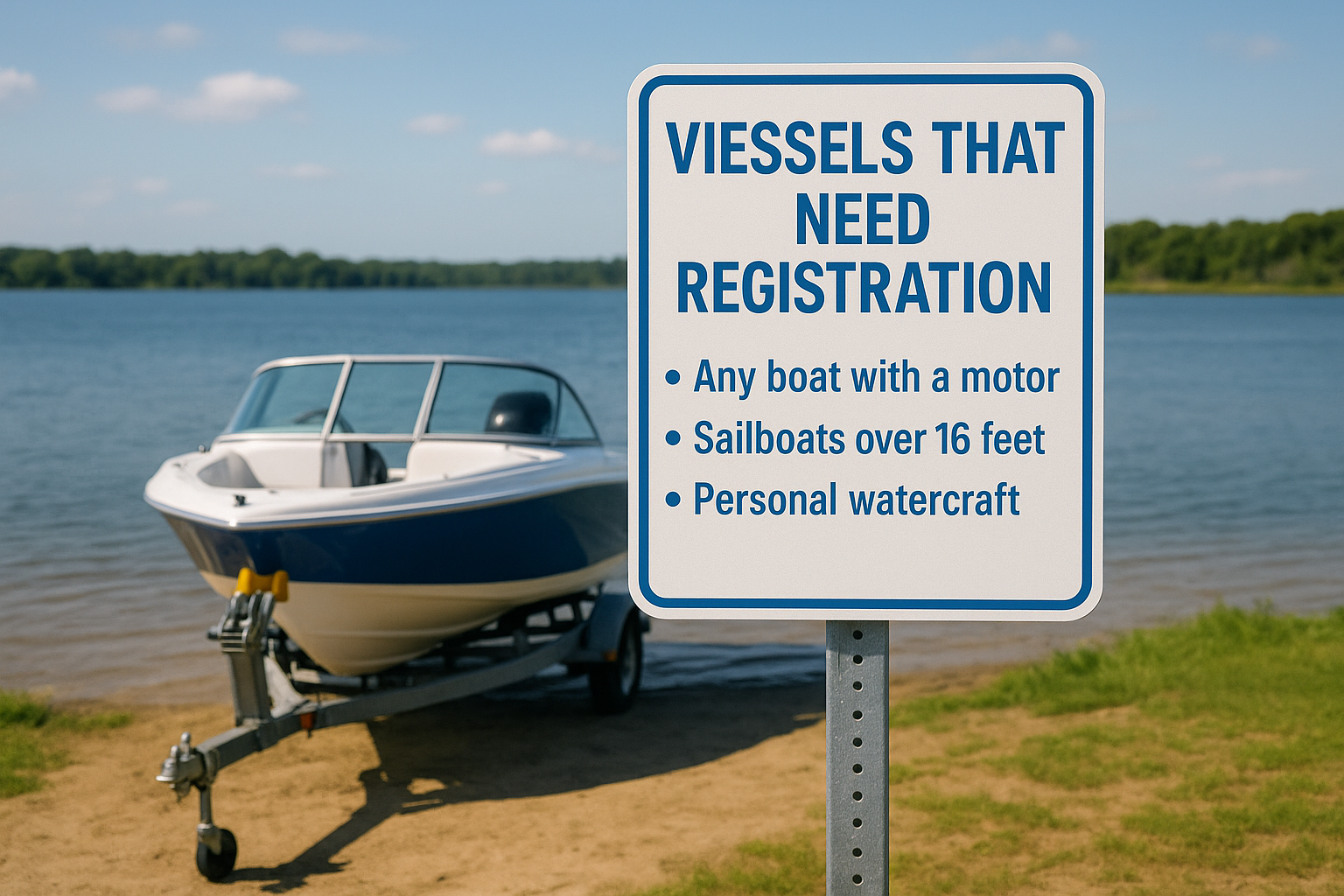
In 2026, Washington law remains consistent regarding which vessels require a title and registration. You must register any motorized vessel used on Washington waters unless it meets specific exemption criteria.
Mandatory Registration
- All vessels 16 feet or longer with a motor.
- All vessels (regardless of length) with a motor of 10 horsepower or more.
- Human-powered vessels (canoes, kayaks) that have been outfitted with a motor.
Registration Exemptions
- Vessels under 16 feet with a motor of less than 10 horsepower, used only on non-federal waters.
- Non-motorized vessels (kayaks, canoes, rowboats) with no mechanical propulsion.
- Vessels currently registered in another state or country and remaining in Washington for less than 60 days.
- US Government-owned vessels.
- Foreign vessels with a valid cruising permit from the US Customs Service.
The Registration Process: Steps and Documentation
Registering your boat in 2026 can be done in person at a county auditor’s office, a licensing subagent, or through the DOL’s online portal. To complete the process, you must provide specific documentation to prove ownership and value.
- Proof of Ownership: This is usually the manufacturer’s certificate of origin (for new boats) or the previous owner's title (for used boats).
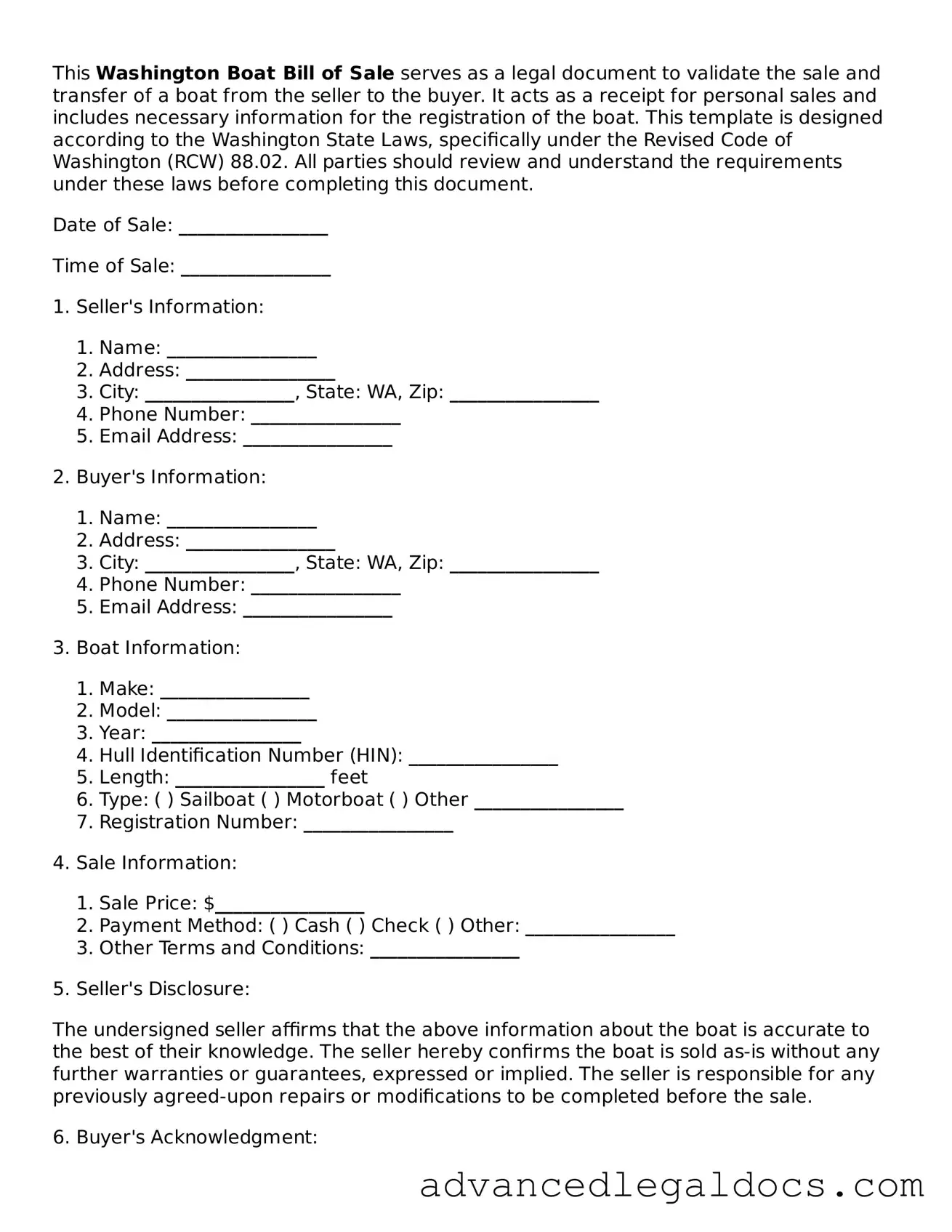
- Bill of Sale: A signed document stating the purchase price, the date of sale, and the vessel's hull identification number (HIN). This is critical for calculating the Sales/Use tax and excise tax.
- Vessel Title Application: Form TD-420-001, which must be signed by all registered owners.
- Payment: Be prepared for the combined total of the title fee, registration fee, excise tax, and sales/use tax.
Once registered, you will receive a Certificate of Registration, which must be kept on the vessel at all times during operation, and two decals. The decals must be placed on each side of the forward half of the vessel, within six inches of the registration number.
Non-Resident Requirements and Cruising Permits
Washington is a premier destination for boaters from British Columbia, Oregon, and beyond. If you are a non-resident, you must be aware of the "60-day rule." A vessel registered in another state or country may be used in Washington for up to 60 days without registering it with the DOL.
For those planning to stay longer, a Non-Resident Vessel Repair Permit or a Cruising Permit may be required. If a non-resident vessel remains in Washington waters for more than 60 days, the owner must either register the boat or apply for a 60-day extension (if eligible), which carries its own set of administrative fees. Failure to do so can result in significant penalties and the retroactive assessment of Use Tax.
Boating Safety Education Card (BSEC)
While not a "registration fee" in the strict sense, obtaining a Boating Safety Education Card is a mandatory one-time cost for almost all boaters in Washington. Operated by Washington State Parks, this requirement applies to all operators of motorized vessels with 15 horsepower or greater.
The card costs $10.00 and does not expire. To get the card, you must pass an approved boating safety course. Operating a registered vessel without this card (if you were born after January 1, 1955) can result in a fine, making it a critical "hidden cost" of legal boating.
Common Mistakes and Fee Penalties
Failing to register a boat on time or providing inaccurate information can lead to costs far exceeding the standard registration fees.
- Late Penalties: If you fail to transfer a title within 15 days of purchase, Washington imposes a monetary penalty. This penalty starts at $50 on the 16th day and increases by $2 per day thereafter, up to a maximum of $125.
- Excise Tax Evasion: Attempting to undervalue a vessel on a Bill of Sale to avoid excise or sales tax is a serious offense. The Department of Revenue frequently audits vessel transactions and can assess the tax based on the actual market value, plus interest and significant fraud penalties.
- Expired Decals: Washington boat registrations expire every year on June 30th. Unlike car tabs, which expire on a rolling basis throughout the year, all boat decals expire on the same day. Operating a vessel on July 1st with old decals can result in a citation from the Marine Patrol.
Frequently Asked Questions
Do I have to register a boat trailer separately in Washington?
Yes. Boat trailers are considered motor vehicles and must be titled and licensed separately through the DOL. They are subject to their own set of weight-based fees and are not covered by the boat's registration or excise tax.
What is the "Carbon Monoxide Decal" fee?
The decal itself is usually free or included in the registration processing. Washington law requires all new and used motorized vessels (except personal watercraft) to display a warning sticker about the dangers of carbon monoxide. If your boat does not have one, you can request it from a licensing office.
I just moved to Washington. How long do I have to register my boat?
You must register your vessel within 60 days of moving to the state. You will likely be required to pay Use Tax if you haven't previously paid a sales tax to another state that is equal to or greater than the Washington rate.
Can I renew my boat registration online in 2026?
Yes. The Washington DOL offers an online renewal system. You will need your registration number and a credit/debit card. The new decals are typically mailed to your address within 10 to 14 business days.
Are documented vessels (USCG) exempt from Washington registration?
No. Even if a vessel is federally documented with the U.S. Coast Guard, it must still be registered with the State of Washington if it is used in state waters. Documented vessels are still subject to the 0.5% Watercraft Excise Tax and must display the registration decals, though they do not display the state "WN" registration numbers.
Practical Recommendation
To ensure a smooth registration process in 2026, boat owners should use the Washington Department of Licensing’s "Vessel Fee Calculator" or contact a local county auditor’s office before completing a purchase. Always obtain a formal Bill of Sale that includes the purchase price, the HIN, and the signatures of both parties. For high-value vessels, budget approximately 10% of the purchase price for the initial sales/use tax and registration fees to avoid financial surprises during the titling process.
Image Gallery