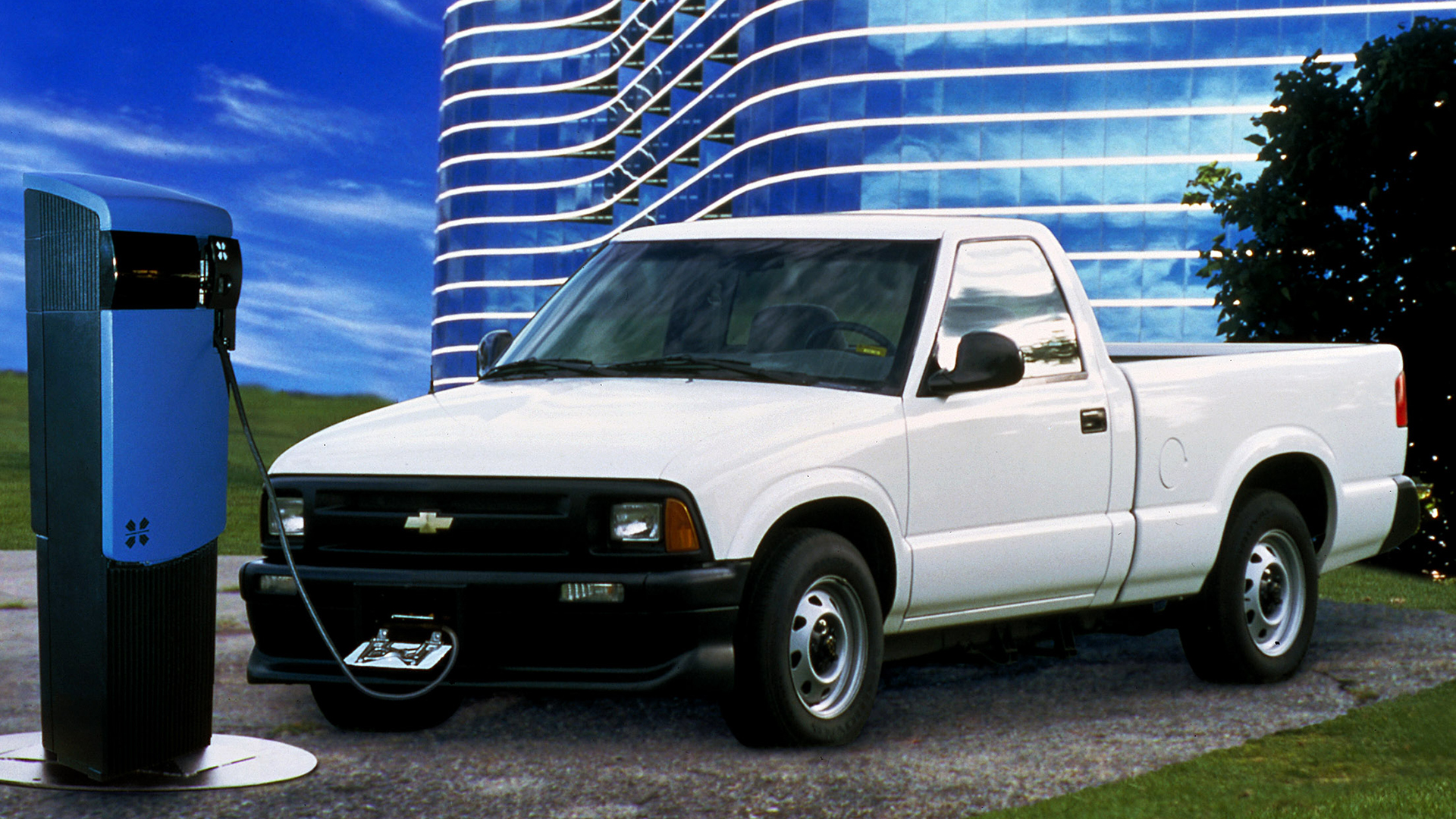
The 1997 Chevrolet S-10: Specifications, History, and Comprehensive Review
The 1997 Chevrolet S-10 represents a classic era of American compact pickup trucks, balancing utility, multiple engine configurations, and rear-wheel or four-wheel-drive systems to serve both commercial fleets and everyday drivers. Int...
The 1997 Chevrolet S-10 represents a classic era of American compact pickup trucks, balancing utility, multiple engine configurations, and rear-wheel or four-wheel-drive systems to serve both commercial fleets and everyday drivers.
Contents
Introduction to the 1997 Chevrolet S-10
The Chevrolet S-10 has long held a prominent place in automotive history as General Motors’ pioneering entry into the domestic compact pickup truck market. Introduced originally for the 1982 model year, the S-10 was engineered to offer the maneuverability and efficiency of a smaller vehicle while retaining the practical utility of a traditional pickup bed. By 1997, the S-10 was well-established in its second generation, which had launched for the 1994 model year with a more aerodynamic exterior, improved interior ergonomics, and enhanced safety features like standard driver and passenger airbags and available anti-lock braking systems (ABS).
For buyers and automotive enthusiasts examining the 1997 Chevrolet S-10 specifications and history, this model year captures the truck at a mature stage of its lifecycle. It featured various body styles, including the Regular Cab and the extended Extended Cab (known as the LS or Xtreme trims in subsequent years, though 1997 featured standard, LS, and SS variants), alongside multiple powerplant options ranging from an economical four-cylinder to a robust V6. This comprehensive guide explores the historical context, mechanical specifications, interior and exterior design changes, performance capabilities, common maintenance considerations, and lasting legacy of the 1997 Chevrolet S-10.
Historical Context and Evolution of the Second-Generation S-10
To understand the 1997 model year, it is necessary to examine how the second-generation S-10 evolved from its predecessor. The first generation (1982–1993) was characterized by utilitarian styling and boxy proportions. As Japanese compact trucks gained significant market share in the 1980s and early 1990s, General Motors recognized the need for a modern redesign that prioritized passenger comfort, styling appeal, and structural rigidity.
The 1994 Redesign and 1997 Positioning
The comprehensive redesign for the 1994 model year introduced a sweeping, aerodynamic profile that reduced wind noise and improved fuel efficiency. By 1997, GM had refined initial production quirks, making the truck a reliable and predictable platform. The 1997 S-10 shared its platform with its corporate sibling, the GMC Sonoma, as well as the Chevrolet Blazer and GMC Jimmy SUVs.
During this era, compact trucks served a dual purpose. They were affordable workhorses for tradespeople, landscapers, and utility workers, yet they were increasingly purchased as daily drivers by younger buyers and suburban families who appreciated their car-like driving dynamics compared to full-size trucks like the Chevrolet C/K series.
Technical Specifications and Powertrain Options
The 1997 Chevrolet S-10 offered three distinct engine choices, catering to buyers who prioritized fuel economy or those who needed towing capacity and payload strength. Power was routed through either a manual transmission or an automatic transmission, with configurations available in both Two-Wheel Drive (2WD) and Four-Wheel Drive (4WD).
Engine Lineup
- 2.2L Vortec 2200 Inline-4 (LN2):
- Horsepower: 118 hp @ 5,200 rpm
- Torque: 130 lb-ft @ 3,600 rpm
- Application: Standard on base Regular Cab 2WD models. Designed primarily for fuel economy and light-duty urban commuting.
- 4.3L Vortec 4300 V6 (L35):
- Horsepower: 180 hp @ 4,400 rpm
- Torque: 250 lb-ft @ 2,800 rpm
- Application: Standard on 4WD models and optional on 2WD variants. This engine utilized central port fuel injection (CPI/W-code or later X-code multi-port injection variants) and was widely praised for its robust low-end torque.
- High-Output 4.3L V6 (Rare or specific trims): While standard 4.3L configurations dominated, variations of this engine powered the performance-oriented S-10 SS variant, delivering snappy throttle response and strong acceleration for a compact truck of that era.
Transmission and Drivetrain Options
- 5-Speed Manual (Getrag/NV1500 or Borg-Warner/NV3500 depending on the engine): Paired with both the 2.2L four-cylinder and the 4.3L V6. Manual transmissions featured a floor shifter and appeal to traditionalists seeking maximum control and fuel efficiency.
- 4-Speed Automatic (4L60-E): Commonly paired with the 4.3L V6 engine. The electronically controlled 4L60-E provided smooth gear shifts and was essential for towing applications.
- Drivetrain Layouts:
- 2WD Models: Featured independent front suspension with coil springs and a live axle with multi-leaf springs in the rear.
- 4WD Models: Utilized an independent front suspension with torsion bars, giving the truck a higher ride height, increased ground clearance, and an Insta-Trac shift-on-the-fly transfer case controlled electronically via dashboard buttons.
| Engine Option | Displacement | Horsepower | Torque | Transmission Choices | Primary Drivetrain |
|---|---|---|---|---|---|
| Vortec 2200 I4 | 2.2 Liters | 118 hp | 130 lb-ft | 5-speed manual / 4-speed automatic | Rear-Wheel Drive (2WD) |
| Vortec 4300 V6 | 4.3 Liters | 180 hp | 250 lb-ft | 5-speed manual / 4-speed automatic | Rear-Wheel Drive & Four-Wheel Drive |
Dimensions, Payload, and Towing Capacities
The compact footprint of the 1997 Chevrolet S-10 made it exceptionally versatile for tight parking spaces and narrow job sites.
Cab and Bed Configurations
- Regular Cab: Available with either a standard short bed (approx. 6 feet) or a long bed (approx. 7.5 feet).
- Extended Cab: Offered additional cab space behind the front seats, featuring small jump seats suitable for occasional passenger transport or secure interior cargo storage. Extended Cab models were paired exclusively with the short bed.
Capacities
- Payload Capacity: Depending on the suspension package and engine, payload ratings generally ranged from 1,000 to over 1,600 pounds.
- Towing Capacity: Properly equipped V6 models featuring a heavy-duty towing package could tow up to approximately 5,500 to 6,000 pounds, making it capable of hauling small utility trailers, boats, or camping equipment.
Interior Comfort and Ergonomics
Inside the 1997 S-10, the cabin reflected the automotive interior design trends of the mid-1990s, utilizing durable plastics and straightforward controls.
Dashboard and Instrumentation
The wrap-around dashboard angled primary climate and radio controls toward the driver. Clear analog gauges included a speedometer, tachometer, fuel level, oil pressure, coolant temperature, and voltage meter. Rotary dials managed the heating, ventilation, and air conditioning (HVAC) system, while 4WD models featured a clean push-button selector panel on the left side of the dash.
Seating Options
Buyers could choose between a vinyl bench seat for maximum durability in work trucks, a cloth split-bench seat with a fold-down center armrest, or high-back bucket seats with a central console on higher trim levels like the LS. Extended Cab variants provided small folding jump seats in the rear, though legroom in the back was limited and best reserved for children or short trips.
Performance, Handling, and Driving Dynamics
Driving the 1997 Chevrolet S-10 offers a distinct mechanical feel compared to modern unibody trucks and crossovers.
Ride Quality
With a body-on-frame construction and leaf-spring rear suspension, the S-10 could ride somewhat firmly when the truck bed was empty. However, the independent front suspension absorbed road imperfections adequately. Steering was power-assisted rack-and-pinion on 2WD models, providing reasonably direct feedback, while 4WD models used recirculating-ball steering to accommodate the front differential architecture.
Fuel Economy
Fuel efficiency varied significantly depending on the powertrain:
- The 2.2L Inline-4 achieved respectable fuel economy figures for its era, hovering in the low-to-mid 20s mpg combined for manual transmission variants.
- The 4.3L V6 prioritized power over fuel conservation, typically returning fuel economy in the mid-to-high teens depending on whether the vehicle was configured with 2WD or 4WD.
Common Maintenance and Reliability Considerations
For restorers, collectors, and daily drivers evaluating a 1997 Chevrolet S-10 today, understanding common mechanical traits is essential for long-term vehicle ownership.
1. Fuel System and Injection
The 4.3L V6 engine utilizes a Central Port Fuel Injection (CPI) or Sequential Multiport Fuel Injection (MFI) system depending on the exact build date. Early variants of this fuel metering system can experience internal leaks at the pressure regulator or poppet valves, leading to hard starting, rough idling, or fuel dilution in the engine oil. Upgrading to the updated Delphi multi-port fuel injection spider assembly is a common and permanent fix for this issue.
2. Cooling System Maintenance
Like many GM trucks of this vintage, maintaining the cooling system with clean Dex-Cool or compatible antifreeze is vital. Neglecting coolant changes can lead to intake manifold gasket leaks or heater core blockages. Regularly inspecting the radiator hoses, water pump, and thermostat housing prevents overheating issues.
3. Suspension and Steering Wear
Due to age and usage, front-end components such as ball joints, control arm bushings, idler arms, and pitman arms are subject to wear. Replacing these components restores alignment stability and eliminates wandering steering feel on the highway.
4. Rust Prone Areas
Depending on geographic region, road salt and moisture can affect rocker panels, cab corners, the lower edges of doors, and the rear leaf-spring shackles. Thoroughly inspecting the frame rails for structural integrity is a critical step when purchasing or maintaining an S-10 from this era.
Frequently Asked Questions
What engines were available in the 1997 Chevrolet S-10?
The 1997 Chevrolet S-10 offered two main engine choices: a 2.2-liter Vortec inline-four producing 118 horsepower and a 4.3-liter Vortec V6 producing 180 horsepower. Both engines were paired with either manual or automatic transmissions.
Did the 1997 Chevrolet S-10 come in four-wheel drive?
Yes. Four-wheel drive (4WD) was available on models equipped with the 4.3-liter V6 engine. These models featured an electronic "Insta-Trac" transfer case operated via dashboard push buttons, offering shift-on-the-fly capability between 2Hi, 4Hi, and 4Lo.
What is the towing capacity of a 1997 Chevrolet S-10 V6?
When properly equipped with the 4.3-liter V6 engine, automatic transmission, and a suitable trailering package, the 1997 S-10 could tow up to approximately 5,500 to 6,000 pounds.
How many cab styles were offered for this model year?
The 1997 S-10 was offered in two primary cab configurations: the Regular Cab and the Extended Cab. The Extended Cab featured small auxiliary jump seats behind the front seats and was paired exclusively with the short pickup bed.
What are common mechanical issues to watch out for on a 1997 S-10?
Common issues include fuel pressure regulator leaks within the 4.3L V6 injection spider, wear in front steering and suspension components (such as ball joints and idler arms), and potential rust formation on rocker panels and frame rails in salt-belt regions.
Conclusion and Final Recommendations
The 1997 Chevrolet S-10 remains a quintessential example of the American compact pickup truck. Combining a simple, robust chassis with proven powertrain options, it offers reliable utility, straightforward maintenance, and nostalgic 1990s styling. Whether used as a dependable project vehicle, a weekend hauling companion, or a nostalgic daily driver, proper maintenance of its fuel and cooling systems ensures long-lasting operation. Prospective owners should prioritize inspecting the vehicle frame for rust and verifying the service history of the engine and transmission to secure a reliable, functional classic truck.
Image Gallery