Who Owns the Biggest Oil Company? Ownership Breakdown of Global Energy Giants
Saudi Aramco (officially the Saudi Arabian Oil Group) is the largest oil company in the world by market valuation, daily production, and proven reserves. It is overwhelmingly owned by the government of Saudi Arabia, which holds direct...
Saudi Aramco (officially the Saudi Arabian Oil Group) is the largest oil company in the world by market valuation, daily production, and proven reserves. It is overwhelmingly owned by the government of Saudi Arabia, which holds direct equity alongside its sovereign wealth fund, the Public Investment Fund (PIF), while a small minority stake is publicly traded.
Contents
Identifying the World's Largest Oil Company
Determining which energy enterprise is the "biggest" depends on the financial or operational metric applied:
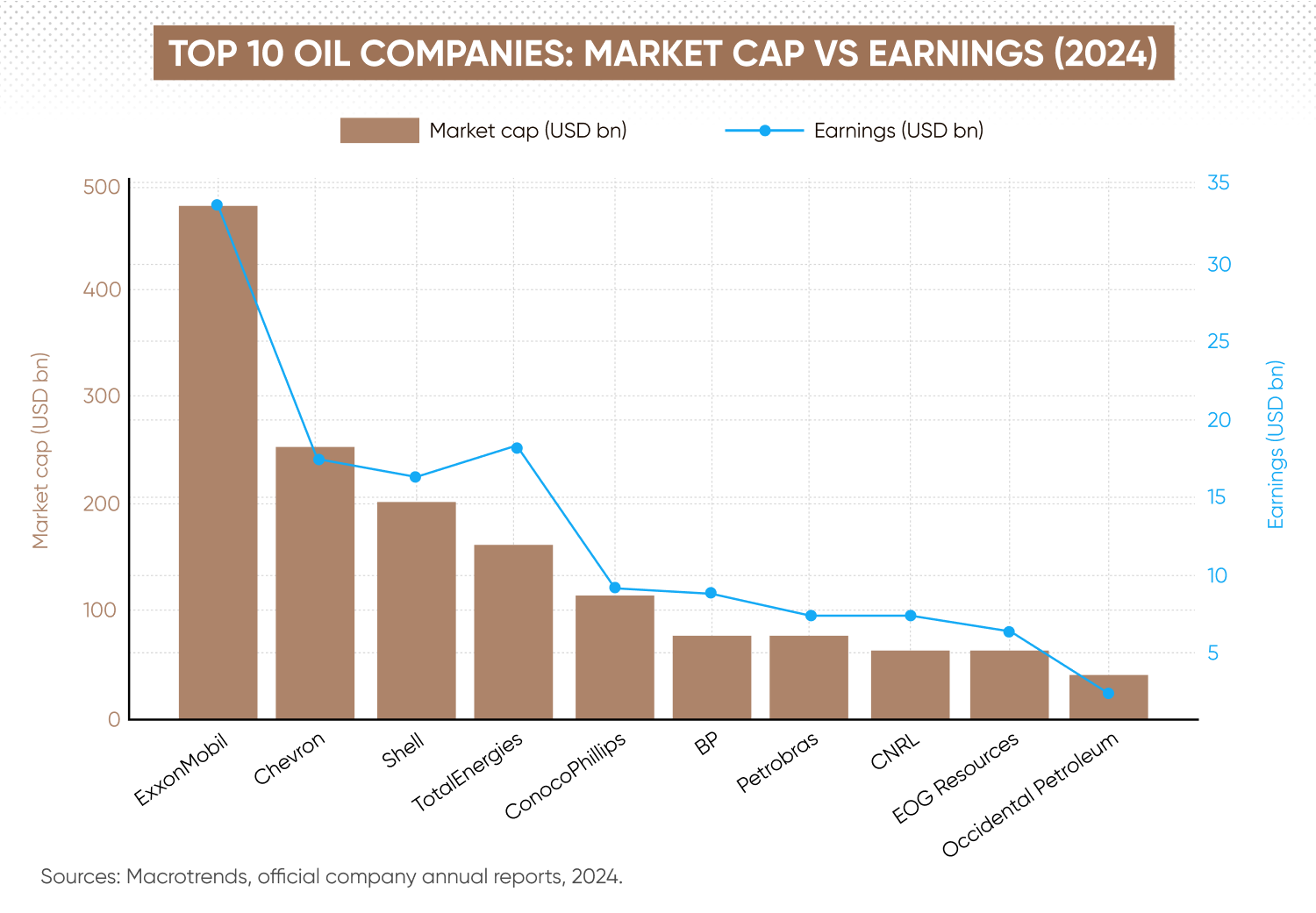
- Market Capitalization: Saudi Aramco consistently leads global energy companies in total stock market value, historically fluctuating between $1.7 trillion and $2.4 trillion based on global crude price cycles.
- Daily Production Volume: Saudi Aramco produces roughly 9 million to 11 million barrels of crude oil per day—representing approximately 10% of global total crude supply—far outstripping any individual Western corporate competitor.
- Proven Reserves: Saudi Aramco holds over 250 billion barrels of oil equivalent in conventional proven reserves, representing the largest commercially viable reserve base managed by a single corporate entity.
- Annual Revenue: China National Petroleum Corporation (CNPC), Sinopec, and Saudi Aramco frequently rotate in top positioning for annual gross revenues, governed by refinery throughput volumes and domestic market distribution networks.
Because Saudi Aramco holds unmatched authority across market valuation, conventional reserve access, and raw daily liquid extraction, it is globally recognized as the largest single oil company.
The Ownership Breakdown of Saudi Aramco
For decades following its full nationalization in 1980, Saudi Aramco operated as a 100% state-owned enterprise with no public equity listing. That dynamic shifted in December 2019, when the Kingdom listed a small fraction of the company on the Saudi Exchange (Tadawul) in the world’s largest initial public offering (IPO), raising $25.6 billion for a 1.5% equity stake.
Subsequent equity reorganizations and follow-on offerings have adjusted the distribution of ownership without diluting ultimate government control.
Saudi Aramco Equity Ownership Structure:
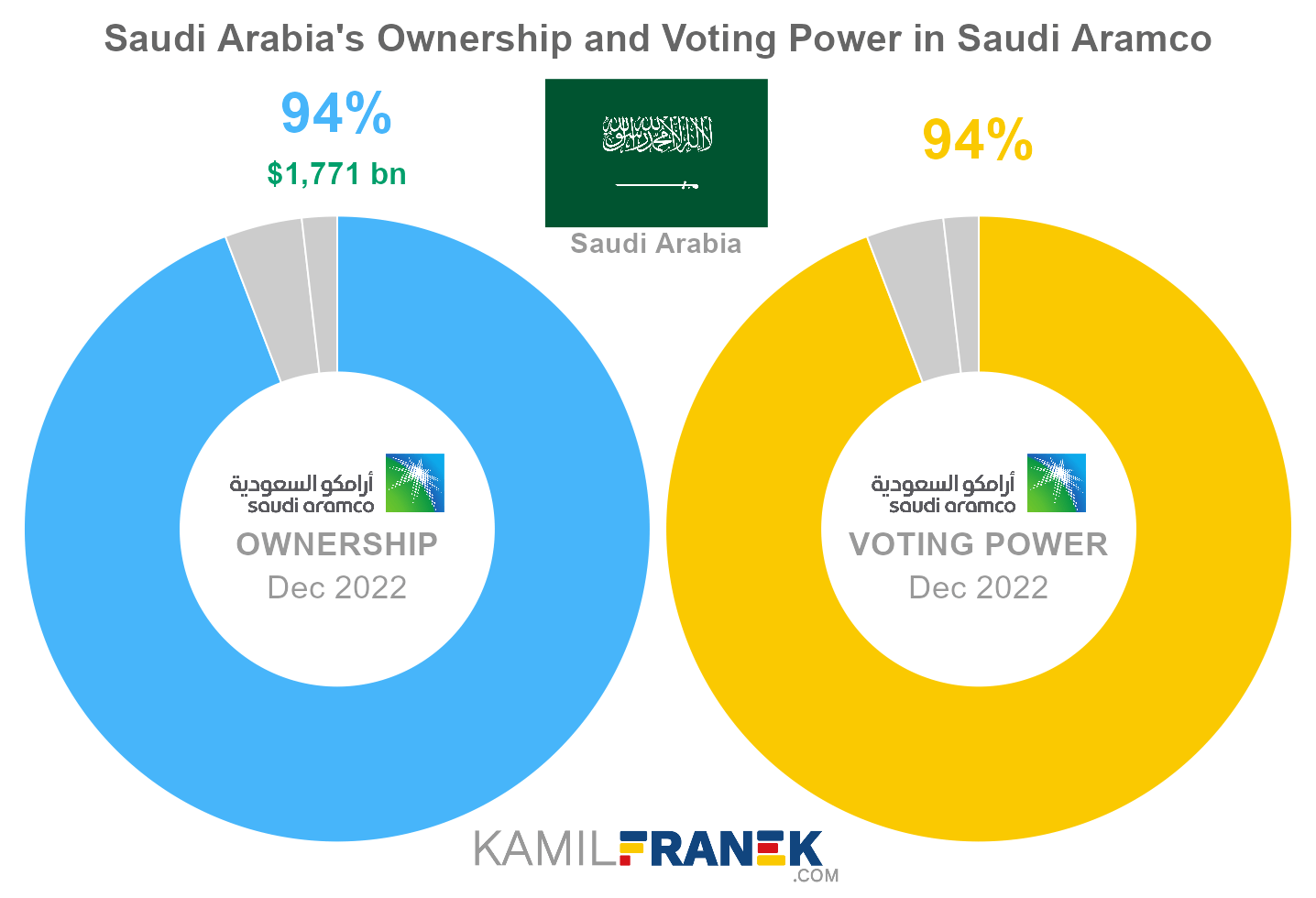
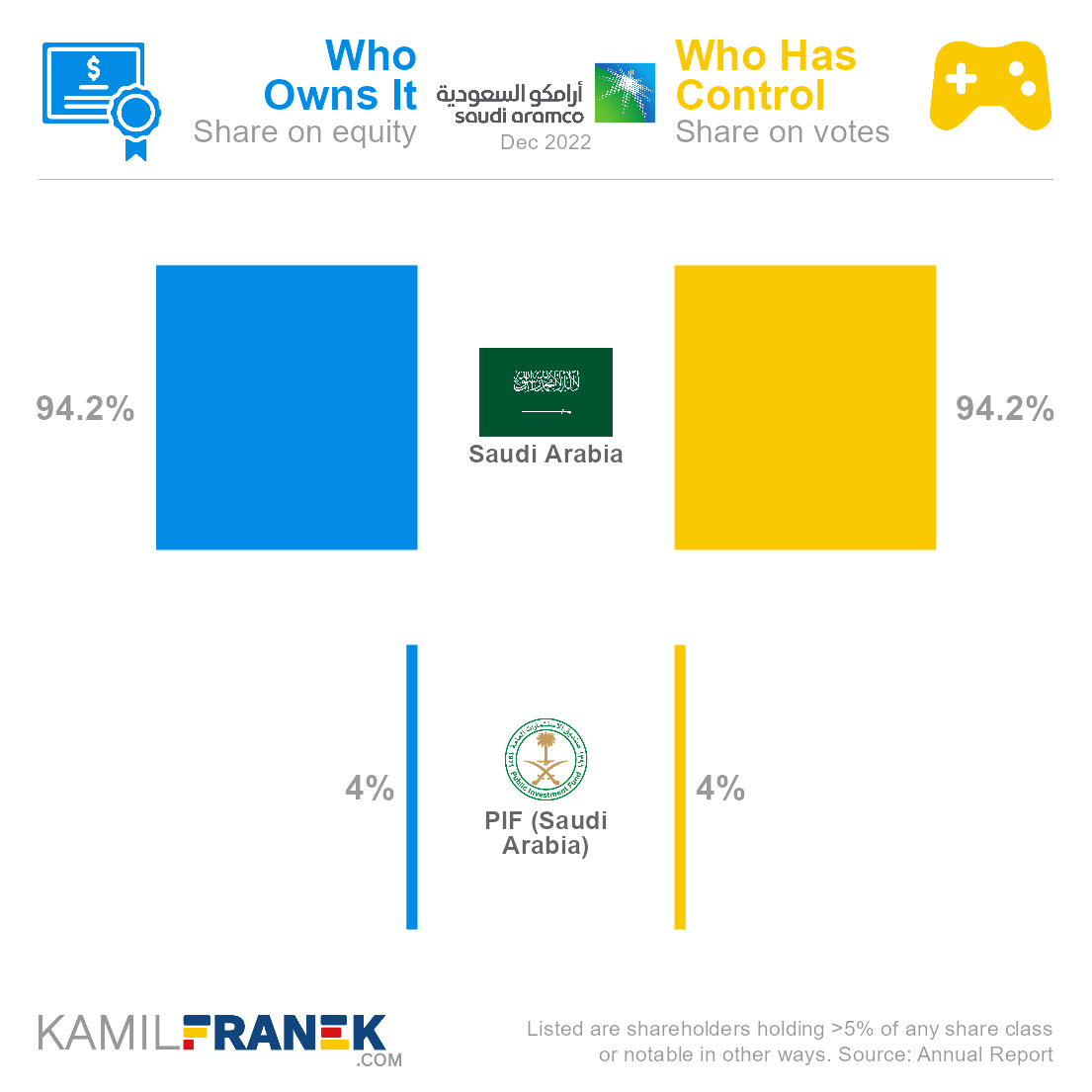
- Government of Saudi Arabia (Direct): ~81.5%
- Public Investment Fund (PIF) & Subsidiaries: ~16.0%
- Public Free Float (Tadawul Traded): ~2.5%
1. Direct State Ownership (The Kingdom of Saudi Arabia)
The government of Saudi Arabia directly holds roughly 81.5% of Saudi Aramco's total issued shares. This direct stake guarantees that the Ministry of Energy and the Royal Court retain direct authority over board appointments, long-term strategic capital expenditures, production capacity mandates, and state dividend policy.
2. The Sovereign Wealth Fund (Public Investment Fund)
The Kingdom’s sovereign wealth fund, the Public Investment Fund (PIF), along with its wholly owned investment vehicles such as Sanabil Investments, holds an estimated 16% of Aramco’s shares. The Saudi government transferred these equity tranches in multiple blocks to strengthen the PIF’s balance sheet, leverage asset-backed financing, and fund major non-oil economic diversification projects under the nation's Vision 2030 plan.
3. Public Shareholders and International Investors
The remaining ~2.5% of equity constitutes the public free float traded under the ticker 2222 on the Tadawul exchange in Riyadh. This slice includes holdings by:
- Domestic retail investors in Saudi Arabia and the Gulf Cooperation Council (GCC).
- Regional institutional asset managers, pension funds, and insurance firms.
- International institutional investors operating through Saudi Arabia’s Qualified Foreign Investor (QFI) framework or tracking major global equity benchmarks like the MSCI Emerging Markets Index.
Despite the existence of public shareholders, decision-making power remains concentrated with the state. The primary mechanism for delivering value to minority investors is Aramco's distribution of dividends, which include both a base dividend commitment and performance-linked dividend payouts tied to free cash flow.
State Ownership vs. Investor Ownership: NOCs vs. IOCs
Understanding who owns the world's largest oil companies requires distinguishing between National Oil Companies (NOCs) and Investor-Owned Companies (IOCs).
Global Energy Enterprises:
- National Oil Companies (NOCs)
- Sovereign State Ownership
- Resource Access Primacy
- Geopolitical/Fiscal Goals
- Aramco, ADNOC, CNPC, KPC
- Investor-Owned Companies (IOCs)
- Institutional & Retail Equity
- Free-Cash Flow & Share Buybacks
- ExxonMobil, Shell, Chevron, BP
National Oil Companies (NOCs)
NOCs are owned, controlled, or majority-managed by sovereign national governments. They control approximately 75% to 80% of global proven oil reserves and global upstream production capacity.
- Primary Objective: Serve state strategic interests, generate sovereign tax and dividend revenue, ensure national energy security, maintain domestic fuel subsidies, and fulfill diplomatic production agreements (such as OPEC+ allocations).
- Key Examples: Saudi Aramco (Saudi Arabia), ADNOC (United Arab Emirates), CNPC and Sinopec (China), Kuwait Petroleum Corporation (Kuwait), QatarEnergy (Qatar), and Rosneft (Russia).
- Hybrid Models: Some NOCs operate as publicly listed hybrids. For example, the Brazilian state holds controlling voting shares in Petrobras, while common and preferred shares trade publicly on the NYSE and B3. Similarly, the Norwegian state owns roughly 67% of Equinor, leaving the remainder to public capital markets.
Investor-Owned Companies (IOCs) / "Supermajors"
IOCs are publicly traded corporations listed on major stock exchanges such as the New York Stock Exchange (NYSE), London Stock Exchange (LSE), or Euronext. They generally do not own subterranean mineral rights directly; instead, they operate by acquiring leases, concessions, and production-sharing agreements from host nations worldwide.
- Primary Objective: Maximize shareholder return on average capital employed (ROACE), generate free cash flow, expand quarterly cash dividends, and fund equity share buyback programs.
- Key Examples: ExxonMobil, Chevron, Shell, TotalEnergies, and BP.
- Ownership Structure: Controlled primarily by institutional investment management firms, mutual funds, sovereign wealth funds, and private retail investors.
Detailed Comparison of Top Global Oil Companies
The table below outlines the ownership structures, home jurisdictions, primary controlling entities, and key operational profiles of the world's leading oil and gas companies.
| Company Name | Country | Ownership Model | Controlling Entity / Principal Shareholders | Strategic Focus |
|---|---|---|---|---|
| Saudi Aramco | Saudi Arabia | State-Controlled (NOC) | Government of Saudi Arabia (~81.5%), Public Investment Fund (~16%), Public Float (~2.5%) | Upstream Crude Extraction, Downstream Refining, Petrochemicals |
| China National Petroleum Corp (CNPC) / PetroChina | China | State-Owned Enterprise | State-Owned Assets Supervision and Administration Commission (SASAC) (~80%+ via parent CNPC) | Domestic & International Exploration, Pipeline Operations, Refining |
| Sinopec Group | China | State-Owned Enterprise | SASAC / State Council of the People's Republic of China | Global Refining Capacity, Chemical Manufacturing, Retail Fuel Distribution |
| ExxonMobil | United States | Publicly Traded (IOC) | The Vanguard Group (~9.5%), BlackRock (~7.0%), State Street Corp (~5.0%) | Deepwater E&P, Unconventional Permian Basin Shale, Global LNG |
| Shell plc | United Kingdom | Publicly Traded (IOC) | Institutional Investors (Vanguard, BlackRock, Norges Bank Investment Management) | Integrated Gas/LNG, Offshore Production, Downstream Marketing |
| Chevron Corporation | United States | Publicly Traded (IOC) | The Vanguard Group (~9.2%), BlackRock (~7.1%), State Street Corp (~4.7%) | Upstream Liquids Extraction, Permian Basin Expansion, LNG Supply |
| Abu Dhabi National Oil Co (ADNOC) | UAE | State-Owned (NOC) | Supreme Council for Financial and Economic Affairs / Government of Abu Dhabi (100%) | Upstream Expansion, Low-Carbon Intensity Crude, Petrochemical Exports |
| Petrobras | Brazil | Hybrid Public/State | Government of Brazil (Controlling Voting Interest ~50.3%), Public Institutional/ADR Float (~49.7%) | Subsea Pre-Salt Offshore Deepwater Production |
Who Owns the Supermajors? The Role of Institutional Investors
While state governments control NOCs like Aramco, the equity ownership of public Western Supermajors (ExxonMobil, Chevron, Shell, TotalEnergies, and BP) is dominated by large institutional asset management groups.
Top Institutional Owners of Western Supermajors (e.g., ExxonMobil, Chevron):
- The Vanguard Group (Passive Index Funds / ETFs): ~9% – 10%
- BlackRock, Inc. (iShares / Institutional Accounts): ~7% – 8%
- State Street Corporation (SPDR Funds): ~4% – 5%
- Geode Capital Management: ~2% – 3%
- Free Float (Other Institutions, Pensions, & Retail Investors): ~70%
Data filed with the U.S. Securities and Exchange Commission (SEC) demonstrates that institutional index funds and asset managers represent the largest voting blocks in publicly traded energy companies:
- Passive Asset Managers: Entities like The Vanguard Group, BlackRock, and State Street hold substantial shares across all major public oil companies through passive index-tracking products (such as the S&P 500 Index Fund or Energy Select Sector SPDR Fund).
- Sovereign Wealth Funds: Non-domestic sovereign wealth funds also deploy capital into public IOC shares. For example, Norges Bank Investment Management (manager of Norway’s $1.5+ trillion Government Pension Fund Global) holds multi-billion-dollar equity stakes across Shell, TotalEnergies, ExxonMobil, and Chevron.
- Governance Impact: Institutional asset owners wield voting power over board elections, executive compensation structures, climate transition pathways, and capital allocation mandates (such as balancing carbon abatement projects against traditional hydrocarbon exploration).
Economic Implications of State Ownership
The state-dominated ownership model of Saudi Aramco shapes both regional governance and the broader global oil market:
1. Fiscal Reliance and Sovereign Budgets
Saudi Arabia’s national budget depends on revenues generated by Saudi Aramco. The company pays royalty taxes, corporate income taxes, and substantial base and performance-linked dividends directly into state accounts. These payments fund infrastructure projects, civil service payrolls, and diversification initiatives under Vision 2030, including giga-projects like NEOM.
2. Geopolitical and Production Capacity Alignment
Because the Saudi government is Aramco’s majority owner, corporate extraction targets align directly with national diplomatic and economic objectives. When Saudi Arabia negotiates output targets within the OPEC+ framework, Aramco implements those decisions by adjusting production or keeping spare production capacity offline. This dynamic differs from investor-owned oil companies, which operate under corporate commercial mandates rather than state-directed export controls.
3. Capital Efficiency and Production Costs
Aramco benefits from low extraction costs, which average under $10 per barrel for conventional crude in fields like Ghawar. Access to abundant, low-cost reserves under exclusive state concession agreements provides Aramco with financial resilience during extended downturns in global oil prices.
Frequently Asked Questions
Is Saudi Aramco fully owned by the Saudi Royal Family?
No. Saudi Aramco is owned by the sovereign state of Saudi Arabia (the Kingdom's government treasury) and its sovereign wealth fund (the Public Investment Fund), not as the personal property of individual royal family members. While members of the ruling family hold major government positions that oversee energy policy, the company's equity belongs to the state and public shareholders.
Can international individual investors buy shares of Saudi Aramco?
Yes, indirect and direct paths exist. International retail investors can access Saudi Aramco equity listed on the Saudi Exchange (Tadawul) through brokerages offering global market trading, or by purchasing shares in international exchange-traded funds (ETFs) that track emerging markets or Gulf region equities.
Which individual person owns the most oil stock globally?
No single individual privately owns a controlling share of a top-tier global oil corporation today. Historical block holdings, such as John D. Rockefeller's controlling stake in Standard Oil, were broken up in the early 20th century. Modern oil ownership is concentrated in sovereign states (for NOCs) and institutional fund managers like Vanguard and BlackRock (for IOCs).
What oil company generates the highest revenue in the world?
Annual top-revenue honors alternate depending on international crude benchmark prices and refining margins. State-owned Chinese refiners Sinopec and CNPC routinely report high top-line revenues due to large domestic downstream refining volumes. However, Saudi Aramco generally maintains higher net profit margins and total net earnings due to its low extraction costs.
Which country holds the largest total proven oil reserves?
By total volume in the ground, Venezuela holds the world's largest proven crude reserves (over 300 billion barrels), managed by state oil company PDVSA. However, much of Venezuela's supply consists of extra-heavy crude in the Orinoco Belt, which is technically difficult and expensive to refine. Saudi Aramco holds the largest commercially low-cost, conventional oil reserves in active production.
Key Takeaways and Summary
Understanding who owns the world's largest oil company boils down to recognizing the dominance of state equity in energy markets:
- Primary Ownership: The world's largest oil company, Saudi Aramco, is owned by the government of Saudi Arabia (~81.5% direct state ownership, ~16% via the Public Investment Fund, and ~2.5% publicly traded free float).
- Operational Scale: Aramco commands the market lead in market valuation, daily crude extraction volume, and conventional commercial reserve reserves.
- NOC vs. IOC Distinction: State-owned National Oil Companies (Aramco, ADNOC, CNPC) control the majority of global oil reserves under sovereign mandate, whereas Western Supermajors (ExxonMobil, Chevron, Shell) are owned by institutional investors, pension funds, and public market participants.
To track corporate governance changes, dividend announcements, or free-float updates for Saudi Aramco, monitor official disclosures via the Saudi Arabian Oil Group Investor Relations Portal and periodic equity filings on the Saudi Exchange (Tadawul).
Image Gallery