Compliance and Privacy in Environmental Health Projects: A Data Governance Framework
Environmental health projects must balance regulatory compliance across environmental protection standards with strict data privacy laws governing personal health and spatial information. Achieving compliance requires structured govern...
Environmental health projects must balance regulatory compliance across environmental protection standards with strict data privacy laws governing personal health and spatial information. Achieving compliance requires structured governance, geoprivacy protections such as spatial masking, secure cloud enclaves, dynamic informed consent, and robust data use agreements that shield individual identity while maintaining scientific validity.
Contents
Disclaimer: This guide is provided for educational and operational planning purposes only and does not constitute formal legal counsel. Project leads should consult qualified healthcare compliance attorneys and data privacy specialists for jurisdiction-specific legal mandates.
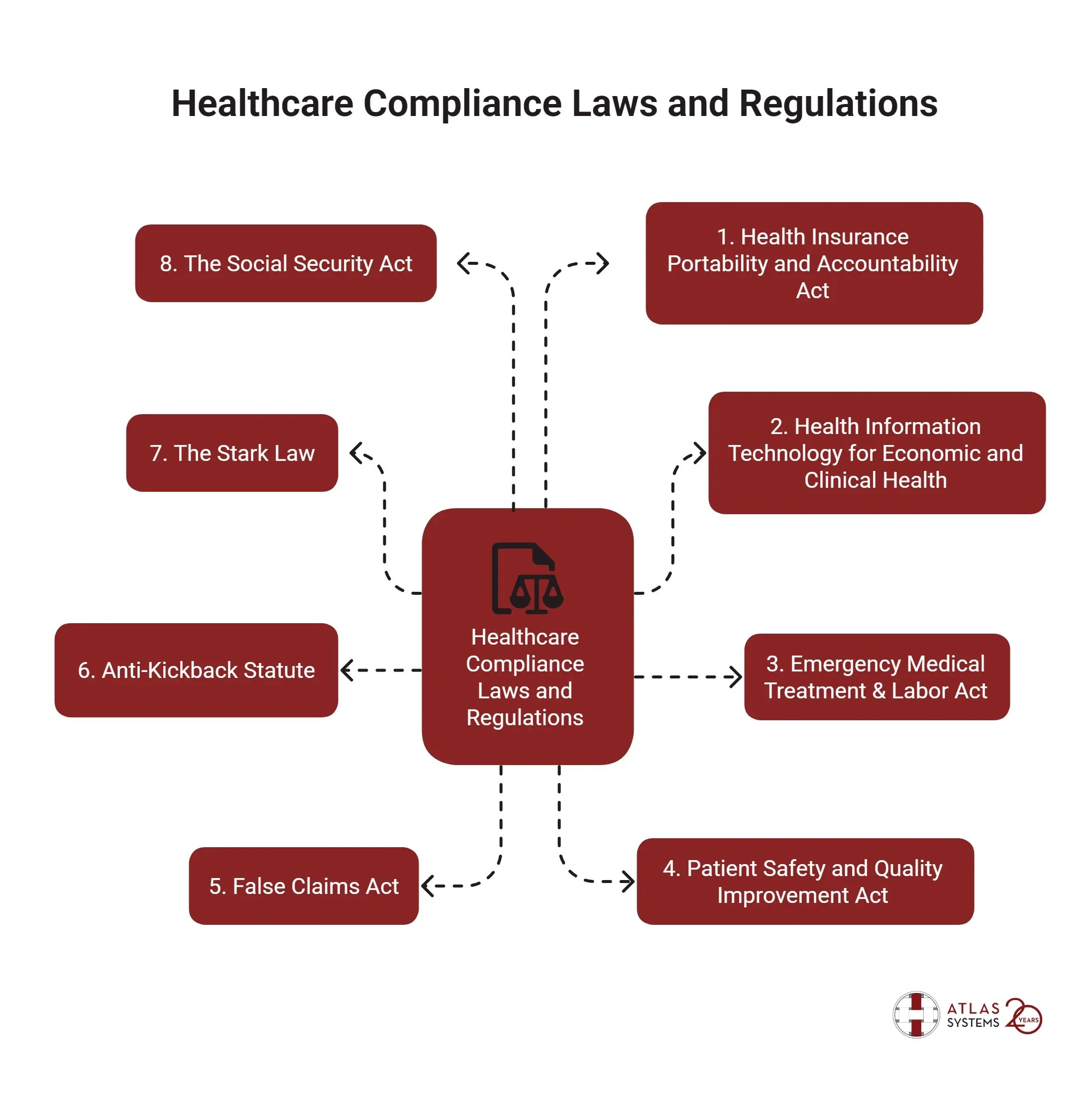
The Regulatory Matrix Governing Environmental Health Data
Environmental health projects operate at the intersection of environmental monitoring, public health surveillance, spatial analytics, and personal biomedical research. Because these initiatives combine physical environmental readings with individual human exposure data, they fall under a complex web of overlapping regulatory regimes. Managing compliance requires mapping data flows against specific statutory requirements before field deployment.
| Statutory Framework | Primary Jurisdiction | Core Regulatory Trigger |
|---|---|---|
| HIPAA Privacy Rule | Healthcare/Covered Ent. | Protected Health Data (PHI) |
| Common Rule (45 CFR 46) | US Federally-Funded Res. | Human Subject Research |
| GDPR (Articles 6 & 9) | EU/UK Personal Data | Special Category Health/Bio |
| State Health Privacy | US State-Level (MHMDA) | Non-HIPAA Consumer Health |
| EPA & OSHA Directives | US Environmental/Workplace | Exposure & Hazard Logs |
Healthcare Privacy Standard (HIPAA)
When environmental projects involve covered entities—such as academic medical centers, hospital systems, or clinical trial networks—data collection must comply with the U.S. Department of Health and Human Services HIPAA Privacy Rule guidelines. Standard environmental readings (e.g., ambient air particulate matter or municipal water fluoride levels) do not constitute Protected Health Information (PHI) in isolation. However, as soon as environmental measures link to individual health records, bio-specimen tracking, or patient diagnostic codes, the aggregated dataset becomes PHI.
Under HIPAA’s Safe Harbor method, 18 specific identifiers must be removed to achieve de-identification. Crucially for spatial epidemiological research, geographic subdivisions smaller than a state—including street address, city, county, and 5-digit ZIP code—are classified as direct identifiers. If a project requires high-resolution spatial coordinates to model localized toxic exposure, researchers cannot use the Safe Harbor method and must instead rely on the Expert Determination Method, utilizing statistical proofs to establish that the re-identification risk remains negligible.
Human Subject Protections and the Common Rule
Federally funded environmental health studies in the United States must adhere to the Federal Policy for the Protection of Human Subjects (Common Rule). Overseen by Institutional Review Boards (IRBs), the Common Rule dictates how researchers obtain informed consent, evaluate participant risks, and protect identifiable private information or identifiable biospecimens.
Projects incorporating real-time exposure monitors, indoor sensor placement, or biomarker sampling (such as blood lead levels or microplastic accumulation) must undergo rigorous IRB protocol review. IRBs scrutinize data storage architectures, secondary data sharing plans, and the potential psychological or financial harm to participants if environmental risk data (e.g., property-level contamination) is accidentally disclosed.
International Frameworks: GDPR and UK GDPR
For projects conducted in Europe or involving European residents, compliance hinges on Article 9 of the General Data Protection Regulation, which classifies genetic data, biometric data, and data concerning health as "special category data." Processing this information is prohibited unless explicit exceptions apply, such as explicit user consent or processing necessary for scientific research under Article 9(2)(j).
GDPR establishes strict parameters regarding:
- Data Minimization: Collecting only the environmental and physiological data strictly necessary for the research objective.
- Purpose Limitation: Restricting secondary analysis unless explicit consent or legal grounds exist.
- Cross-Border Data Transfers: Enforcing Standard Contractual Clauses (SCCs) or adequacy decisions when moving spatial and biological telemetry outside the European Economic Area (EEA).
State-Level Consumer Privacy Frameworks
State-level legislation has expanded privacy obligations beyond traditional healthcare entities. The Washington My Health My Data Act (MHMDA), alongside comprehensive state privacy laws in California, Colorado, and Connecticut, expands the definition of consumer health data. Under these laws, non-HIPAA entities—such as commercial wearable manufacturers or mobile app developers tracking environmental pollen and personal asthma triggers—must obtain explicit opt-in consent before collecting, sharing, or processing location-based health indicators.
Workplace Safety and Industrial Hygiene Regulations
In occupational environmental health projects, compliance intersects with workplace regulations administered under Occupational Safety and Health Administration regulations and international counterparts. Workplace exposures to airborne toxins, extreme heat, or industrial noise require systematic logging. However, employers must segregate mandatory industrial hygiene monitoring records from private worker medical profiles to prevent unlawful employment discrimination or privacy violations.
Unique Privacy Risks in Environmental Health Engineering
Environmental health investigations present unique privacy vulnerabilities that traditional digital privacy controls fail to resolve. Because environmental exposures are intrinsically tied to physical locations and individual daily routines, standard anonymization techniques often prove inadequate.
- RE-IDENTIFICATION TRIANGULATION RISK
- High-Res GIS Exposure Map
- IoT Sensor Telemetry
- Biomonitoring & Metabolomics
- Re-Identified Individual & Location Bio-Profile
Geoprivacy and Spatial Re-Identification
Spatial privacy, or geoprivacy, represents the primary point of failure in environmental data stewardship. High-resolution Geographic Information System (GIS) datasets—such as global positioning system (GPS) tracks from personal exposure monitors or precise coordinates of household water testing—can easily re-identify participants even after names and administrative IDs are removed.
By cross-referencing de-identified spatial points with public property records, tax registries, or voter databases, malicious actors can perform spatial reverse-geocoding. For instance, linking an anonymous health record to a precise residential lat-long coordinate reveals the identity of the homeowner with near-absolute certainty.
Continuous Telemetry and Smart Infrastructure Sensors
The integration of Internet of Things (IoT) sensors within smart cities and smart homes creates continuous data streams. Indoor air quality (IAQ) monitors, smart water meters, and personal noise dosimeters record granular telemetry.
When analyzed over time, these continuous telemetry streams disclose behavioral signatures:
- Wake-up and sleep patterns inferred from noise and light telemetry.
- Occupancy rates based on indoor carbon dioxide ($CO_2$) fluctuations.
- Unplanned absences or travel based on sharp drops in resource consumption.
If intercepting parties gain access to unencrypted telemetry, they can infer private household activities and health behaviors without accessing direct medical charts.
Biomonitoring and Exposure Biomarkers
Modern environmental health projects increasingly rely on internal exposomics—analyzing biological fluids for industrial chemicals, heavy metals, volatile organic compounds, or epigenetic modifications.
- Environmental Toxin
- Biological Specimen
- Epigenetic / Exposure Marker
- Unique Biological Profile
- Re-Identification Risk
Biomonitoring data presents elevated privacy risks because chemical body burdens, combined with metabolic profiles, can function as unique biological markers. Furthermore, samples stored in biobanks for long-term toxicological study can yield genomic data during future analyses, permanently linking environmental exposure histories to individual genetic identity.
Open Data Sharing vs. Subject Confidentiality
Funders and scientific journals increasingly enforce open science policies. For example, the NIH Data Management and Sharing Policy mandates public sharing of research data to accelerate scientific discovery.
This requirement creates a fundamental conflict: researchers must release high-dimensional environmental and biological datasets while upholding consent agreements that guarantee participant confidentiality. Publishing raw spatial or multi-omic environmental data without advanced transformation exposes study participants to unintended re-identification.
Technical Safeguards and Anonymization Methodologies
To mitigate privacy risks while preserving scientific utility, environmental health projects must implement robust technical controls and mathematical anonymization techniques.
| Safeguard Category | Practical Implementation Strategy |
|---|---|
| Geomasking | Adaptive Random Perturbation, Donut Masking |
| Spatial Aggregation | Census Block Group / H3 Hexagonal Binning |
| Differential Privacy | Calibrated Noise Addition to Spatial Aggregates |
| Secure Data Enclaves | Trusted Research Environments (TREs), Air-Gapped Cloud |
| Synthetic Datasets | Generative Statistical Models preserving Covariance |
Advanced Geomasking Techniques
Geomasking modifies geographic coordinates to prevent reverse-geocoding while maintaining spatial relationships needed for statistical analysis. Principal geomasking strategies include:
- Donut Masking: Displaces a spatial point randomly within a minimum ($r_1$) and maximum ($r_2$) radial distance. The minimum distance prevents original location re-identification, while the maximum distance keeps the point within its relevant environmental context (e.g., the same watershed or air quality zone).
- Adaptive Random Perturbation: Adjusts displacement distances based on underlying population density. In dense urban areas, small displacements (e.g., 50 meters) suffice due to high population background noise. In rural regions, displacement radii scale up to several kilometers to prevent isolation of isolated homesteads.
- Voronoi Polygon Masking: Perturbs point locations within Voronoi cells constructed around target coordinates, ensuring perturbed points maintain identical topological adjacency properties.
Mathematical Privacy Models: k-Anonymity and Differential Privacy
When releasing tabular data that links environmental exposures to health outcomes, projects apply formal mathematical models:
- $k$-Anonymity: Ensures that any individual’s combination of quasi-identifiers (e.g., age, gender, 3-digit ZIP code, toxic exposure tier) is identical to at least $k-1$ other individuals in the dataset.
- Differential Privacy: Adds mathematically calibrated noise to dataset queries or spatial aggregate outputs. Differential privacy provides a provable guarantee that the inclusion or exclusion of a single participant does not significantly alter the query results, shielding individuals from targeted differential analysis.
Trusted Research Environments (TREs) and Data Enclaves
Rather than distributing raw datasets to external researchers, environmental initiatives deploy Trusted Research Environments (TREs) or secure cloud data enclaves (such as AWS GovCloud or Azure Government compliance zones).
TREs enforce strict data governance parameters:
- Air-Gapped Processing: Analysts work within isolated remote desktop sessions without local download, print, or copy privileges.
- Role-Based Access Control (RBAC): Users view only the specific data layers necessary for their approved sub-study.
- Automated Output Checking: Statistical outputs undergo algorithmic and manual review before export to ensure no small cell counts ($n < 5$) or identifiable spatial maps are released.
- Raw Field Data
- TRE Secure Enclave
- External Analyst Access (No Export)
- Differential Noise / Privacy Check
- Public Aggregate Release
Synthetic Data Generation
For open data compliance, engineering teams use generative statistical models to create synthetic environmental health datasets. Synthetic data mirrors the statistical distribution, covariance, and spatial correlation matrix of real field measurements without containing any genuine individual data points. Researchers can test code, validate models, and design experiments on synthetic files before submitting final scripts for execution inside secure TRE enclaves.
Data Governance and Consent Lifecycle Management
Technical safeguards are only effective when supported by a robust data governance framework that manages data throughout its lifecycle, from participant onboarding to ultimate destruction.
- Project Design & PIA
- Tiered Dynamic Informed Consent
- Secure Ingestion & Dynamic Masking
- Inter-Institutional DUAs
- Automated Lifecycle & Retraction Workflow
Dynamic Informed Consent Frameworks
Traditional static consent forms are ill-suited for long-term environmental health studies, where future analytical methods or secondary research questions cannot be anticipated at baseline. Forward-thinking projects deploy dynamic consent platforms—digital interfaces that enable participants to alter their consent preferences over time.
Dynamic consent architectures support:
- Tiered Permissions: Participants select whether their data can be used solely for the primary environmental exposure study, shared with non-profit academic partners, or utilized in commercial research.
- Granular Sensor Toggles: Participants opt in or out of specific data channels (e.g., allowing outdoor air sensors while disabling indoor microclimate telemetry).
- Real-Time Revocation: Participants can withdraw consent through a central dashboard, triggering automated data purge protocols across connected research databases.
Data Use Agreements (DUAs)
Inter-institutional data transfers require legally binding Data Use Agreements (DUAs). DUAs dictate the precise boundaries of data access, explicitly prohibiting recipient institutions from attempting re-identification, linking datasets to third-party databases, or sharing access credentials with unauthorized staff.
DUAs must specify:
- Approved research objectives and operational scopes.
- Mandatory technical security standards (e.g., AES-256 encryption at rest and in transit, multi-factor authentication).
- Incident response procedures, mandating breach notification within defined timeframes (typically 24 to 72 hours).
- Data destruction deadlines and certification protocols upon project completion.
Participant Retraction Workflows
Enforcing the "right to be forgotten" under GDPR or statutory deletion mandates under state laws requires specialized data pipeline architecture. When a subject revokes consent, data orchestration engines must purge their biological, environmental, and spatial records from active analytical tables, cache stores, and secondary backups. If data has already been aggregated into published differential tables, historical snapshots must document the exclusion of that subject from subsequent analytical builds.
Strategic Comparison: Compliance Controls Across Environmental Health Archetypes
Different environmental health initiatives present distinct operational environments, risk profiles, and legal exposure levels. The matrix below contrasts governance requirements across four common project archetypes.
| Project Archetype | Primary Data Types Collected | Dominant Regulatory Drivers | Critical Privacy Risk | Primary Mitigation Safeguard |
|---|---|---|---|---|
| Spatial Epidemiology & Biomonitoring | Residential addresses, blood/urine toxin levels, EHR records | HIPAA, Common Rule, NIH DMS Policy | Direct spatial re-identification; identification of family lineages via biomonitoring | Donut geomasking; Secure TRE enclaves; Expert Determination de-identification |
| Workplace Industrial Hygiene | Worker exposure levels (chemical, noise), wearable GPS, duty logs | OSHA regulations, State Privacy Laws, Labor Agreements | Unlawful employment discrimination; continuous worker surveillance | Strict segregation of industrial exposure logs from HR/medical records; anonymized worker IDs |
| Municipal Smart City Infrastructure | Ambient IAQ, outdoor particulate sensors, traffic flow, acoustic arrays | Local Privacy Directives, State Privacy Acts, GDPR (if in EU) | Inference of private household daily routines; surveillance creep | Edge-computing aggregation; immediate discarding of raw audio; spatial grid binning |
| Citizen Science Air Quality Networks | Crowdsourced indoor/outdoor sensor readings, user IP addresses, spatial tags | Consumer Data Privacy Laws, Terms of Service Agreements | Accidental publishing of home locations; unconsented commercial exploitation | Voluntary spatial fuzzing; explicit opt-in data sharing; zero collection of personal identifiers |
Step-by-Step Implementation Roadmap for Project Leaders
Executing an environmental health initiative requires integrating compliance and privacy considerations into every phase of the project lifecycle.
| Phase | Operational Steps & Milestones |
|---|---|
| Phase 1: Scoping | Conduct PIA/DPIA; Map data lineage; Identify legal bases |
| Phase 2: Design | Provision TREs; Implement AES-256; Configure RBAC & API gateways |
| Phase 3: Field | Execute Dynamic Consent; Validate sensor telemetry encryption |
| Phase 4: Sharing | Apply geomasking; Audit cell counts; Issue DUAs for exports |
Phase 1: Scoping and Privacy Impact Assessment (PIA)
Before purchasing hardware or recruiting participants, project teams must complete a comprehensive Privacy Impact Assessment (PIA) or Data Protection Impact Assessment (DPIA).
- Step 1.1: Map the complete data lineage, tracing data points from physical acquisition (sensors, biological samples, questionnaires) through transit, storage, analytical transformations, and long-term archiving.
- Step 1.2: Identify all Applicable Legal Frameworks (HIPAA, Common Rule, GDPR, state statutes) based on participant residency, funding sources, and institutional affiliations.
- Step 1.3: Assess re-identification vectors, evaluating how spatial, biological, and temporal data layers could be combined with public registries.
Phase 2: Infrastructure Configuration and Access Architecture
Establish the technical environment prior to field data acquisition.
- Step 2.1: Provision zero-trust cloud infrastructure utilizing end-to-end encryption (AES-256 for data at rest, TLS 1.3 for data in transit).
- Step 2.2: Build isolated TRE storage environments equipped with automated audit logging to record every file access, query, and transformation attempt.
- Step 2.3: Establish API gateways that automatically strip direct identifiers and apply automated spatial fuzzing routines to incoming real-time telemetry streams before data hits the primary database.
Phase 3: Ethical Field Deployment and Data Ingestion
Execute field data collection while maintaining operational compliance controls.
- Step 3.1: Implement dynamic, plain-language informed consent protocols. Ensure digital consent systems provide downloadable copies and clear opt-out options.
- Step 3.2: Perform regular sensor integrity audits to confirm IoT devices capture only targeted environmental parameters and do not leak extraneous metadata (e.g., unencrypted local Wi-Fi SSID logs).
- Step 3.3: Maintain strict separation of key files (linking true identities to study IDs) from working research datasets. Store encryption keys in isolated, hardware-secured vaults accessible only to authorized data custodians.
Phase 4: Secure Data Dissemination and Archiving
Fulfill open science and repository mandates without violating subject privacy.
- Step 4.1: Apply statistical de-identification techniques (geomasking, spatial binning, $k$-anonymity adjustments) to all outgoing datasets intended for external distribution.
- Step 4.2: Execute formal Data Use Agreements (DUAs) with external recipient institutions prior to granting entry to TRE enclaves.
- Step 4.3: Set up automated lifecycle retention schedules to archive, anonymize, or securely destroy data records in accordance with project mandates and institutional requirements.
Frequently Asked Questions
How does geoprivacy differ from standard healthcare data anonymization?
Standard healthcare de-identification typically relies on removing categorical identifiers like names, social security numbers, and basic demographic fields. Geoprivacy focuses specifically on spatial data, where an individual's physical location (such as residence, workplace, or travel routes) functions as a unique identifier. Because environmental exposures depend on location, spatial data cannot simply be deleted without destroying scientific utility. Geoprivacy uses spatial techniques like adaptive perturbation, donut masking, and regional aggregation to retain geographic patterns while preventing reverse-geocoding to a specific address.
Are private indoor air quality sensors subject to HIPAA regulations?
Indoor air quality sensors are only subject to HIPAA if they are deployed, owned, or managed by a HIPAA Covered Entity (such as a clinical hospital system or health network) or its Business Associate, AND the sensor readings are directly linked to Protected Health Information (PHI)—such as a patient's medical record or diagnostic chart. If a university environmental science department or commercial tech company deploys indoor air sensors independently of a healthcare system, HIPAA does not apply. However, state consumer privacy laws (e.g., CCPA/CPRA, Washington MHMDA) or research regulations (Common Rule) may still govern the data.
How can projects comply with NIH open data mandates without exposing sensitive participant locations?
To satisfy open data mandates like the NIH Data Management and Sharing Policy while protecting subject privacy, projects should deploy a tiered data distribution strategy. Teams can publish fully anonymized, spatially aggregated (e.g., state or county-level) or synthetic datasets to public repositories for general exploration. Concurrently, high-resolution spatial datasets containing refined environmental exposure coordinates should be placed in restricted-access Trusted Research Environments (TREs) or repositories that require a formal Data Use Agreement (DUA), IRB approval, and identity verification before access is granted.
What are the primary legal risks of failing to secure spatial environmental health data?
Failing to secure spatial environmental datasets exposes institutions to major regulatory fines, civil litigation, and reputational damage. Regulatory breaches under HIPAA can result in civil monetary penalties scaling up to annual statutory maximums per violation category, while GDPR non-compliance can trigger fines up to €20 million or 4% of global annual turnover. Beyond statutory fines, releasing unmasked exposure data can cause private property devaluation, insurance discrimination, or community stigmatization if specific neighborhoods or homes are publicly linked to toxic hazards without proper context or consent.
Does removing participant names make an environmental dataset legally de-identified?
No. Removing names, street names, and explicit identifiers (often called direct identifiers) is insufficient to legally de-identify an environmental health dataset. Under HIPAA, the Common Rule, and GDPR, datasets remain identifiable if individuals can be recognized through indirect re-identification vectors. In environmental health, combining quasi-identifiers—such as precise geographic coordinates, rare environmental exposure levels, age, gender, and local census data—allows external parties to re-identify participants using data-matching algorithms. True legal de-identification requires formal statistical verification (such as the HIPAA Expert Determination method) or rigorous mathematical transformations.
Strategic Recommendations for Project Governance
To maintain regulatory compliance and participant trust without sacrificing research capabilities, environmental health project leaders should take the following operational steps:
- Establish an Interdisciplinary Oversight Committee: Form a dedicated governance group comprising data privacy officers, spatial GIS specialists, biostatisticians, and legal counsel prior to launching field collection.
- Mandate Privacy by Design Architecture: Configure cloud repositories, sensor pipelines, and spatial analytical platforms so that privacy safeguards (encryption, spatial perturbation, role-based access) are active by default rather than added retroactively.
- Implement Tiered Data Access Frameworks: Avoid binary "open vs. hidden" data sharing models. Utilize public aggregate releases, synthetic open-access files, and restricted TRE enclaves for high-resolution analytical research.
- Perform Continuous Compliance Audits: Conduct bi-annual reviews of access logs, DUA expirations, and cloud infrastructure settings to identify and remediate data security vulnerabilities.
Image Gallery