Understanding the IB Business Management Syllabus: A Comprehensive Guide
The International Baccalaureate (IB) Business Management syllabus is a rigorous pre-university course designed to develop students’ understanding of business theory and its practical application in complex, real-world environments. The...
The International Baccalaureate (IB) Business Management syllabus is a rigorous pre-university course designed to develop students’ understanding of business theory and its practical application in complex, real-world environments. The curriculum focuses on five core units—Introduction to Business, Human Resources, Finance, Marketing, and Operations—supported by a conceptual framework and a specialized "Business Management Toolkit" for strategic analysis.
Contents
The IB Business Management course serves as a cornerstone for students pursuing the Diploma Programme (DP), offering a blend of quantitative analysis and qualitative evaluation. As of 2026, the curriculum follows the "first assessment 2024" update, which modernized the course to reflect contemporary challenges such as digital transformation, sustainability, and social entrepreneurship. Whether taken at Standard Level (SL) or Higher Level (HL), the syllabus aims to cultivate critical thinking and ethical decision-making.
Core Pillars of the IB Business Management Syllabus
The syllabus is structured around five central modules that mirror the functional departments of a modern corporation. Each unit builds upon the previous one, ensuring that students understand how a decision in marketing, for instance, affects the financial health and operational capacity of an organization.
Unit 1: Introduction to Business Management
This introductory module establishes the foundation of the course. Students explore the different types of business entities, ranging from sole traders and partnerships to private limited companies and non-profit organizations. A significant portion of this unit is dedicated to the external environment, teaching students how to use the STEEPLE analysis (Social, Technological, Economic, Environmental, Political, Legal, and Ethical) to assess external pressures.
Furthermore, Unit 1 introduces organizational objectives, emphasizing the shift from traditional profit maximization to the "Triple Bottom Line" (Profit, People, Planet). This reflects the 2026 business climate where corporate social responsibility (CSR) is no longer optional but a strategic necessity.
Unit 2: Human Resource Management
Unit 2 examines the most critical asset of any business: its people. The syllabus covers workforce planning, recruitment, and the various methods of appraisal. A key focus is placed on motivation theories—ranging from Taylor’s scientific management to Herzberg’s two-factor theory and Pink’s drive theory.
Students also analyze leadership styles and organizational culture. In the modern context, this unit explores how remote work and automation have reshaped the employee-employer relationship. Higher Level (HL) students delve deeper into industrial relations and the complexities of managing human resources in a globalized market.
Unit 3: Finance and Accounts
Often considered the most challenging module, Unit 3 focuses on the "language of business." Students learn to construct and interpret financial statements, including Profit and Loss accounts and Balance Sheets. The syllabus requires a firm grasp of:
- Sources of Finance: Internal vs. external, and short-term vs. long-term funding.
- Costs and Revenues: Break-even analysis and margin of safety.
- Final Accounts: Liquidity ratios, profitability ratios, and efficiency ratios.
- Investment Appraisal: Evaluating the viability of projects using Payback Period, Average Rate of Return (ARR), and Net Present Value (NPV).
By 2026, the finance module also emphasizes the importance of sustainable finance and ethical investment strategies, reflecting global shifts in capital allocation.
Unit 4: Marketing
Marketing in the IB syllabus goes beyond advertising. It covers market research (primary and secondary), market segmentation, and the positioning of brands. Students are taught the 4 Ps (Product, Price, Place, Promotion) for SL, while HL students expand this to the 7 Ps, adding People, Process, and Physical Evidence to account for the service industry.
Significant attention is given to digital marketing and the evolution of e-commerce. Students analyze how data analytics and social media influence consumer behavior and how businesses adapt their international marketing strategies to suit different cultural contexts.
Unit 5: Operations Management
The final unit explores how goods and services are produced. Key topics include production methods (job, batch, mass, and cellular), lean production, and quality management. Students investigate the trade-offs between cost and quality and the impact of location decisions.
In recent years, the syllabus has increased its focus on Sustainability and Supply Chain Management. Students evaluate how businesses manage their environmental footprint and the ethical implications of global sourcing, ensuring that operations remain resilient in an era of climate change and geopolitical shifts.
The Business Management Toolkit
A unique feature of the current syllabus is the "Business Management Toolkit." This is a collection of 15 specific analytical tools that students are expected to apply across all units and in their assessments. These tools bridge the gap between theory and practice, allowing students to conduct objective evaluations of business scenarios.
The toolkit includes:
- SWOT Analysis: Strengths, Weaknesses, Opportunities, Threats.
- Ansoff Matrix: Market penetration, product development, market development, and diversification.
- BCG Matrix: Analysis of a firm’s product portfolio (Stars, Cash Cows, Question Marks, Dogs).
- Porter’s Five Forces: Analyzing competitive intensity (HL only).
- Force Field Analysis: Evaluating driving and restraining forces for change.
- Decision Trees: Quantitative risk assessment.
- Gantt Charts: Project management and scheduling.
Mastering these tools is essential for success in Paper 2 and the Internal Assessment, as they provide the structural framework for high-scoring responses.
Assessment Structure: SL vs. HL
The IB Business Management assessment consists of external examinations and an internal research project. While both levels share the same core units, the depth of study and the complexity of the examinations differ significantly.
| Assessment Component | Standard Level (SL) | Higher Level (HL) |
|---|---|---|
| Paper 1 | Based on a pre-released statement/case study. Focuses on Units 1-5. | Based on a pre-released statement/case study. Requires deeper integration of units. |
| Paper 2 | Focuses on quantitative and qualitative data response questions. | Includes more complex financial analysis and an essay section. |
| Paper 3 | Not Applicable. | Focuses on a social enterprise case study (Social, Ethical, and Environmental). |
| Internal Assessment | 2,000-word research project on a real business issue. | 2,000-word research project on a real business issue (same requirements as SL). |
| Total Weighting | 70% External / 30% Internal | 80% External / 20% Internal |
The Internal Assessment (IA)
The IA was standardized in the latest syllabus update. Both SL and HL students must produce a research project (maximum 2,000 words) that addresses a real-world business issue or a forward-looking decision facing a specific organization. The project must be based on primary or secondary research (or a mix of both) and must demonstrate the application of business tools, techniques, and theories.
Paper 3: The HL Distinction
Paper 3 is exclusive to Higher Level students. It is designed to assess the ability to analyze a "Social Enterprise"—a business that prioritizes social or environmental impact alongside financial viability. Students are given a stimulus document during the exam and must identify the challenges and opportunities facing the enterprise, proposing strategic recommendations that align with its mission.
The Conceptual Framework
The 2024-2030 syllabus cycle emphasizes four key concepts that serve as "lenses" through which students view all business activities. These are:
- Creativity: The ability to generate new ideas and solve problems innovatively.
- Ethics: The moral principles that guide business behavior and decision-making.
- Change: How businesses adapt to internal and external shifts.
- Sustainability: The long-term viability of a business in terms of environmental, social, and economic impact.
Students are expected to discuss these concepts in their extended responses, showing an understanding that business decisions do not occur in a vacuum but are influenced by these overarching themes.
FAQ: Common Questions About the Syllabus
Is IB Business Management easier than Economics?
There is no objective "easiness" scale; however, the subjects differ in focus. Business Management is more practical and applied, focusing on the internal workings of firms and strategic decision-making. Economics is more theoretical and mathematical, focusing on markets, government policy, and global trade. Students who enjoy case studies and real-world organizational puzzles often prefer Business Management.
Do I need to be good at math for Unit 3?
While you do not need advanced calculus, you must be comfortable with "business math." This includes calculating percentages, interpreting ratios, constructing balance sheets, and performing break-even analysis. The syllabus provides a formula sheet, but the ability to interpret what the numbers mean for a business's strategy is more important than the calculation itself.
Can I change from SL to HL during the course?
This depends on your school’s policy and how much of the syllabus has been covered. HL includes additional topics in almost every unit (e.g., HL-only finance ratios, organizational planning tools, and Paper 3). Most educators recommend deciding by the end of the first term to ensure all HL-specific content is mastered.
How does the 2024 syllabus update affect 2026 students?
The 2026 cohort will be the third year to sit exams under the revised syllabus. This means there are now sufficient past papers and established marking patterns for Paper 3 and the standardized IA. The focus remains heavily on the "Toolkit" and the four key concepts (Creativity, Ethics, Change, Sustainability).
What are the best resources for studying?
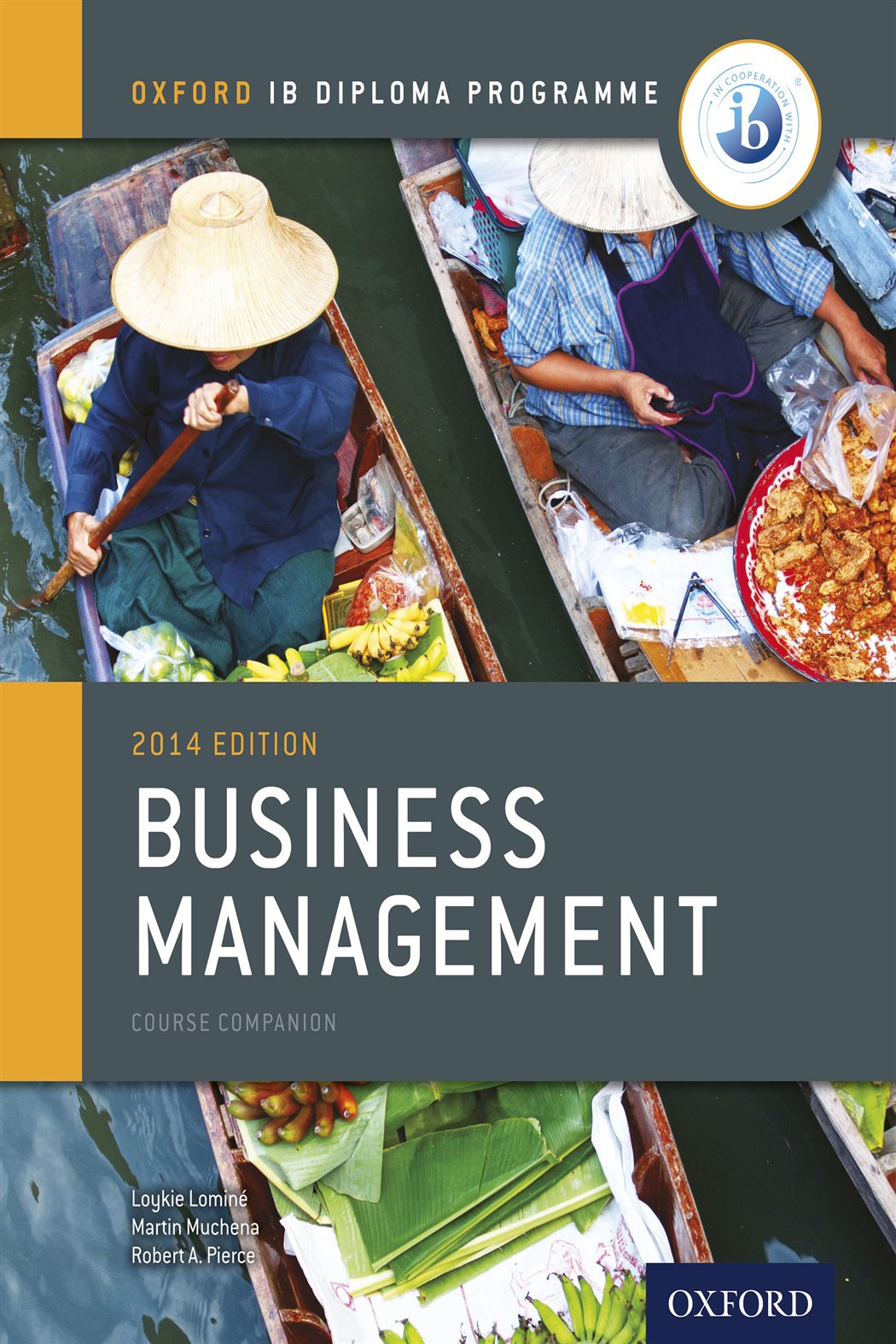
The official International Baccalaureate Organization (IBO) website is the primary source for the subject guide. Additionally, textbook publishers like Oxford University Press and Cambridge University Press offer comprehensive guides tailored to the current syllabus.
Practical Recommendations for Students
To excel in IB Business Management by 2026, students should move beyond rote memorization. Success in this subject requires the ability to synthesize information. When studying a case study, do not just identify a marketing problem; explain how that problem will impact the company's cash flow (Finance) and its ability to retain staff (Human Resources).
Regularly reading business news from sources like the Financial Times or The Economist is also highly recommended. This helps in understanding how the theoretical tools in the "Toolkit" apply to actual corporate maneuvers, such as mergers, rebranding, or sustainability pivots. Finally, prioritize the Internal Assessment early in the second year, as the 2,000-word limit requires concise, high-impact writing that often takes multiple drafts to perfect.
Image Gallery