The Online Master of Science Degree Explained: Structure, Accreditation, and Career Value
An online Master of Science (MS) degree is an accredited graduate-level academic credential focused on scientific, technical, quantitative, or applied fields delivered through digital learning platforms. It offers the same academic rig...
An online Master of Science (MS) degree is an accredited graduate-level academic credential focused on scientific, technical, quantitative, or applied fields delivered through digital learning platforms. It offers the same academic rigor, curriculum standards, and university diploma as traditional on-campus programs, allowing working professionals to advance their technical expertise while maintaining career and personal commitments.
Contents
What Is an Online Master of Science Degree?
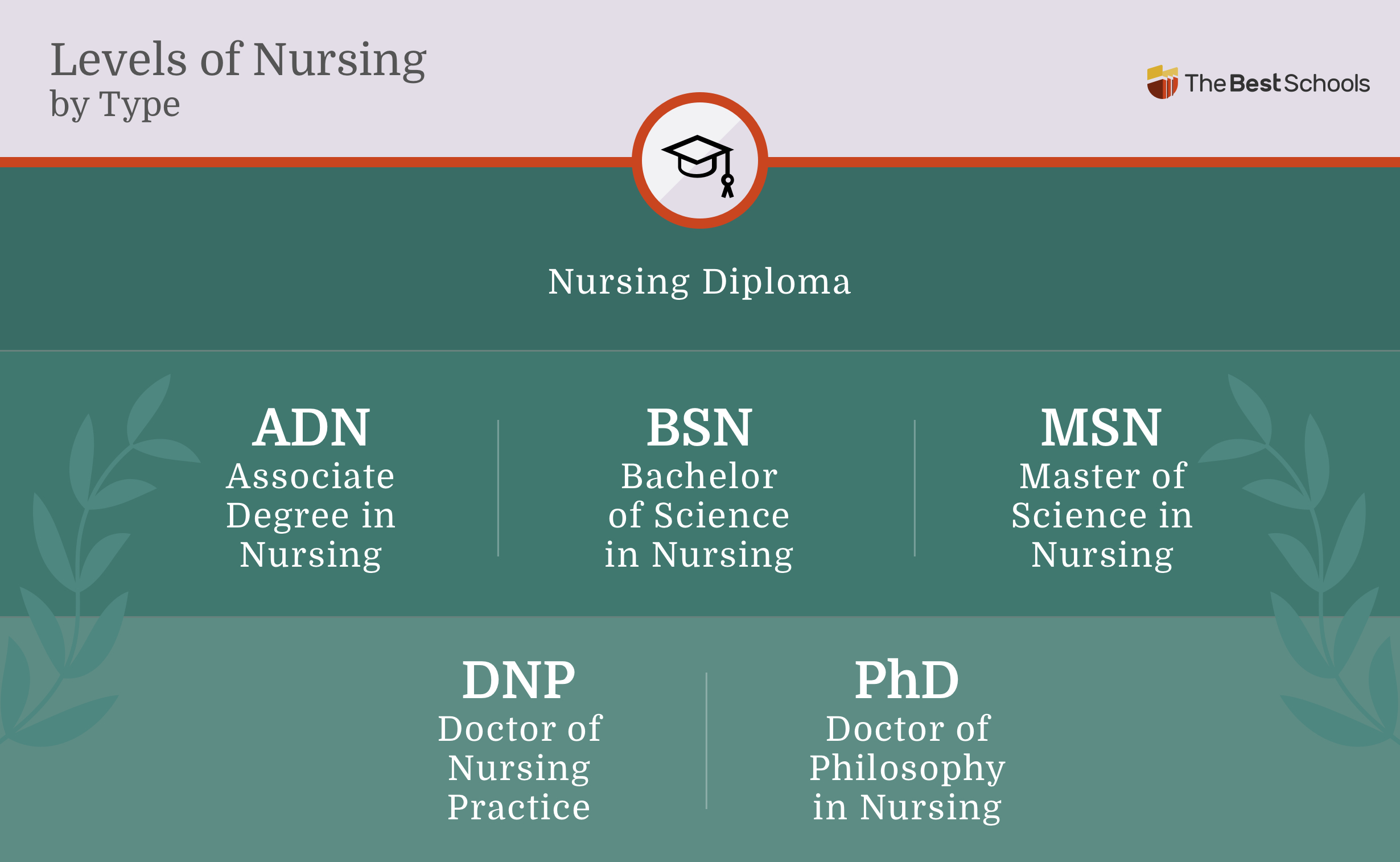
A Master of Science degree is a postgraduate qualification awarded to students who complete coursework in technical, scientific, quantitative, or analytical disciplines. When earned online, the degree curriculum mirrors its resident counterpart, requiring students to master advanced theoretical principles and practical applications in fields such as computer science, data analytics, engineering, nursing, finance, and environmental science.
Unlike broad humanities or liberal arts credentials, an MS program emphasizes technical depth, empirical research methodology, and domain-specific problem-solving. Students engage with complex mathematical models, specialized software systems, laboratory simulations, and evidence-based methodologies.
| Master of Science (MS) Program Focus |
|---|
| Technical & Quantitative Foundation |
| Empirical Research Methods & Data Analysis |
| Domain-Specific Problem Solving (STEM, Healthcare, Finance) |
| Applied Capstone or Research Thesis |
Historically, graduate science degrees required physical presence in lectures, physical laboratories, and research facilities. Modern learning management systems (LMS), remote cloud environments, and interactive simulation tools now allow universities to deliver equivalent instructional quality online. As a result, the distinction between an online MS and a campus-based MS lies entirely in the medium of instructional delivery, not in the graduate learning standards or academic rigor required to graduate.
Key Differences: MS vs. MA, MBA, and MPS
Understanding how an online MS compares to other common graduate degrees helps prospective applicants select the pathway that best aligns with their educational background and career objectives.
- Master of Science (MS): Centers on specialized technical knowledge, quantitative research, and scientific theory. It is ideal for individuals seeking technical specialist positions, research roles, or eventual doctoral study.
- Master of Arts (MA): Focuses primarily on humanities, social sciences, or fine arts, emphasizing qualitative analysis, critical theory, and descriptive exposition.
- Master of Business Administration (MBA): Prioritizes general managerial principles, executive decision-making, organizational leadership, and broad operational functions across business domains.
- Master of Professional Studies (MPS): Applied, cross-disciplinary degree tailored directly to specific industry practices and applied skills, often requiring fewer theoretical research credits than an MS.
| Feature / Criteria | Master of Science (MS) | Master of Arts (MA) | Master of Business Admin (MBA) | Master of Prof. Studies (MPS) |
|---|---|---|---|---|
| Core Focus | Technical, STEM, and quantitative theory | Humanities, arts, and social sciences | Business strategy and executive management | Industry-specific practical applications |
| Primary Methodology | Applied quantitative research, labs, data modeling | Qualitative research, essays, critical synthesis | Case studies, team leadership, cross-functional projects | Skill-based projects, portfolio development |
| Typical Duration | 30–36 credit hours (1.5 to 2.5 years) | 30–36 credit hours (1.5 to 2 years) | 36–60 credit hours (1.5 to 3 years) | 30–33 credit hours (1 to 2 years) |
| Final Requirement | Applied capstone project, exam, or thesis | Thesis, comprehensive exam, or portfolio | Capstone business project or strategy simulation | Applied professional portfolio or practicum |
| Primary Target Career | Technical specialist, engineer, data scientist, researcher | Specialist, educator, policy analyst, manager | Corporate manager, executive, management consultant | Mid-level career switcher or practitioner |
How Online MS Programs Work: Delivery and Learning Platforms
The instructional architecture of an online Master of Science degree relies on specialized digital ecosystems designed to handle high-level computational tasks and collaboration. Universities utilize platforms such as Canvas, Blackboard, or Brightspace to structure modules, distribute reading materials, submit code, and administer assessments.
Asynchronous vs. Synchronous Instruction
Online graduate education generally uses two main instructional models:
- Asynchronous Learning: Course material, pre-recorded lecture videos, reading assignments, and programming exercises are accessible 24/7. Students complete tasks within scheduled weekly deadlines, granting maximum flexibility for full-time working professionals.
- Synchronous Learning: Requires attendance at live, scheduled video seminar sessions. These classes encourage real-time debate, live code reviews, and direct interaction with faculty and peers.
Many competitive online MS programs utilize a hybrid format, blending asynchronous weekly lectures with optional or required live discussion sections, peer review groups, and faculty office hours.
Virtual Labs and Computational Infrastructure
For scientific and engineering disciplines, online MS programs incorporate specialized digital environments:
- Virtual Laboratories: Interactive software environments simulating biological, physical, or mechanical systems, allowing students to alter variables and observe outcomes.
- Cloud Computational Workspaces: Remote server access (such as AWS, Azure, or institutional high-performance computing clusters) enabling students to process large datasets, run complex statistical models, and deploy production-grade software without requiring expensive local hardware.
- Proctored Assessments: Remote proctoring software using automated identity verification and secure browser locks to ensure academic integrity during high-stakes examinations.
Accreditation and Academic Legitimacy
Accreditation is the definitive measure of quality and legitimacy for any higher education program. Enrolling in an unaccredited online MS program risks financial loss, non-transferable credits, and rejection by employers or state licensing boards.
Institutional Accreditation
In the United States, institutional accreditation is granted by recognized regional accrediting bodies recognized by the U.S. Department of Education and the Council for Higher Education Accreditation (CHEA). Institutional accreditation verifies that an entire university meets essential standards for administrative integrity, faculty qualifications, financial stability, and student support services.
Programmatic Accreditation
In addition to institutional accreditation, specialized fields often require discipline-specific programmatic accreditation. Common examples include:
ABET: Accredits degree programs in engineering, computing, data science, and applied science.
AACSB (Association to Advance Collegiate Schools of Business): Accredits business schools offering quantitative MS degrees, such as an MS in Business Analytics or MS in Finance.
CCNE (Commission on Collegiate Nursing Education): Accredits master’s-level nursing programs (MSN).
Institutional Accreditation (Whole University Standards)
- Programmatic Accreditation (Field-Specific Rigor)
- ABET (Engineering & Computer Science)
- AACSB (Business & Quantitative Analytics)
- CCNE (Nursing & Healthcare)
- Programmatic Accreditation (Field-Specific Rigor)
Diploma Disclosures
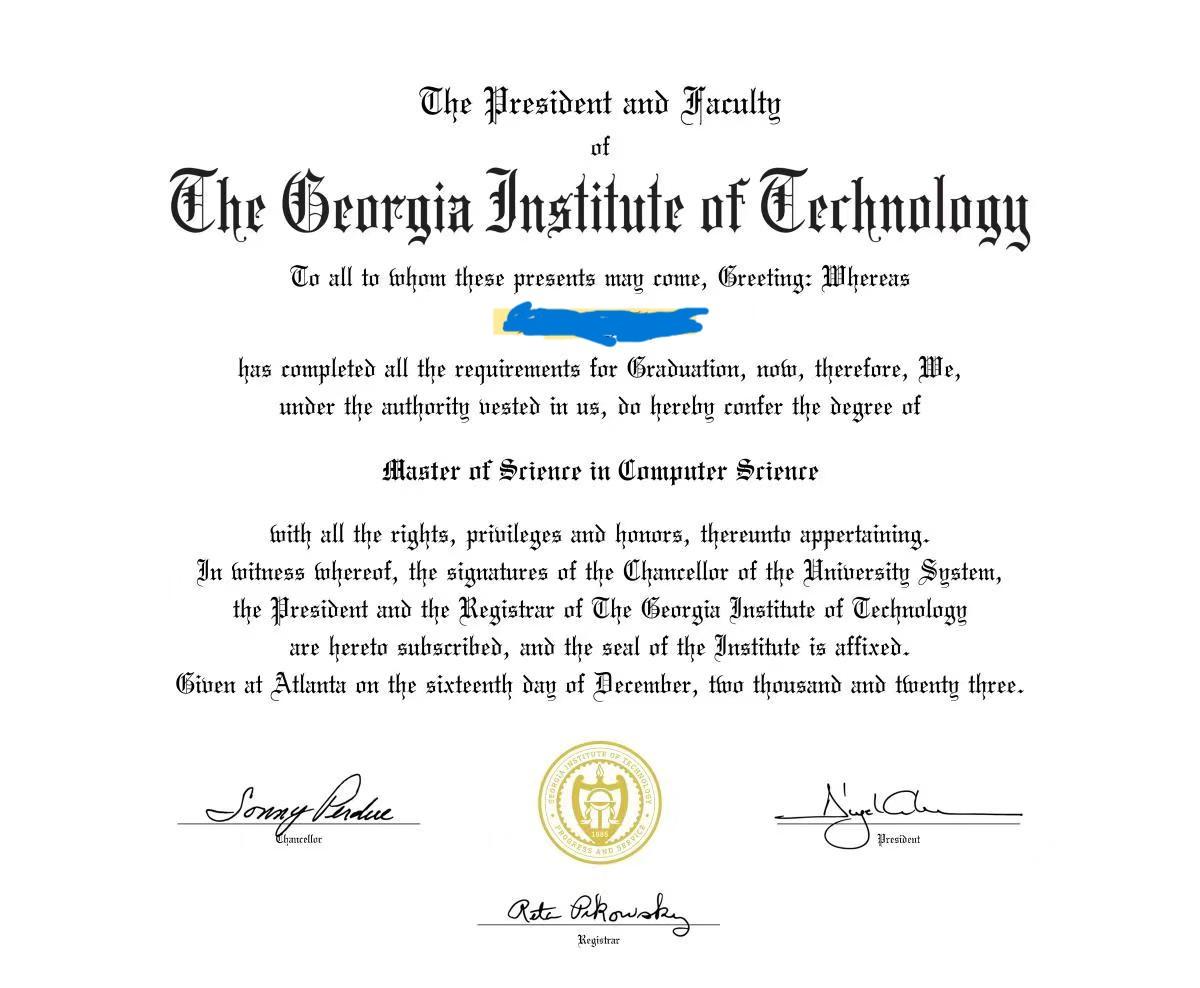
A common concern among prospective students is whether an online degree carries a label on the diploma stating "Online." Virtually all regionally accredited traditional universities issue identical diplomas and academic transcripts to both online and on-campus graduates. The degree earned is simply a Master of Science in the chosen discipline, issued by the governing board of the institution.
Admission Requirements and Preparation
Admissions committees for online Master of Science programs evaluate applicants on both overall academic capacity and field-specific technical preparation.
- Bachelor's Degree (STEM or Quantitative Discipline)
- Academic Transcripts (Prerequisite Coursework Verification)
- Application Package
- Statement of Purpose
- Professional Letters of Recommendation
- Resume / Work Experience
- Test Scores (GRE/GMAT - Often Optional)
Core Academic Prerequisites
Because MS coursework builds directly upon undergraduate fundamentals, programs typically demand background preparation in specific foundational subjects:
- Computer Science & Data Science: Demonstrated proficiency in multivariable calculus, linear algebra, discrete mathematics, data structures, and at least one high-level programming language (e.g., Python, C++, Java).
- Engineering Fields: Completed undergraduate coursework in differential equations, physics, thermodynamics, and fluid mechanics.
- Quantitative Finance/Economics: Demonstrated training in probability theory, statistics, microeconomics, and calculus.
Applicants lacking standard prerequisites may be admitted conditionally or asked to complete foundational bridge courses—such as those monitored by the Council of Graduate Schools—prior to beginning graduate-level coursework.
General Application Materials
Standard application packages for online MS programs generally require:
- Official Transcripts: Demonstrating a cumulative undergraduate GPA (typically a minimum 3.0 on a 4.0 scale).
- Statement of Purpose: A professional essay detailing academic background, research interests, career alignment, and reasons for pursuing the specific program.
- Letters of Recommendation: Two or three professional or academic letters speaking to the applicant’s analytical capabilities, work ethic, and potential for advanced technical study.
- Standardized Test Scores: While historically required, many online graduate programs have transitioned to GRE/GMAT-optional policies, emphasizing professional work experience and quantitative undergraduate performance instead.
Tuition Costs, Financial Aid, and ROI
Tuition rates for online MS degrees vary considerably based on institutional type (public vs. private), residency requirements, and technical infrastructure needs.
Cost Structures
- Public Universities (In-State): Generally range from $12,000 to $25,000 total program tuition.
- Public Universities (Out-of-State / Online Flat Rate): Many public institutions offer a single, flat-rate tuition fee for online students regardless of state residency, ranging between $15,000 and $35,000.
- Private Non-Profit Universities: Program costs typically range from $30,000 to $60,000 or more.
Unlike undergraduate programs, online graduate tuition is usually billed on a per-credit-hour basis, allowing part-time students to pay only for the units taken in a given term.
Financial Aid Options
Graduate students enrolled in accredited online MS programs at eligible institutions have access to several financial support channels:
- Federal Student Aid: U.S. citizens and eligible non-citizens completing the FAFSA can access Direct Unsubsidized Loans and Grad PLUS Loans through federal programs administered by the U.S. Department of Education.
- Employer Tuition Assistance: Many corporate employers provide annual tuition reimbursement budgets for technical employees pursuing relevant advanced degrees.
- Institutional Scholarships: Merit-based scholarships awarded directly by university academic departments to high-performing applicants.
Return on Investment (ROI)
The financial return on an online MS degree depends heavily on industry demand. According to data tracked by the U.S. Bureau of Labor Statistics (BLS), advanced degree holders consistently experience higher median weekly earnings and lower unemployment rates compared to bachelor's degree holders. Fields such as artificial intelligence, cybersecurity, advanced nursing practice, and software architecture historically generate robust salary growth that offsets degree tuition within a few years of completion.
Key Factors to Evaluate Before Enrolling
Selecting the right online Master of Science degree requires a systematic evaluation beyond marketing materials. Applicants should carefully assess the following program components:
- Faculty Involvement: Determine whether online courses are taught by full-time research faculty, tenured professors, or adjunct industry practitioners.
- Career Support Infrastructure: Evaluate if online students receive equal access to campus career fairs, virtual recruiting systems, resume reviews, and alumni networking databases.
- Student Retention and Graduation Rates: Request program completion metrics to gauge student satisfaction and academic support effectiveness.
- Capstone vs. Thesis Flexibility: Determine whether the curriculum requires an academic thesis—ideal for eventual Ph.D. aspirations—or an applied industry capstone project designed for immediate workplace implementation.
- Asynchronous Flexibility: Verify whether program schedules align with full-time professional responsibilities, particularly regarding live attendance expectations and exam scheduling windows.
Frequently Asked Questions
Do employers respect online Master of Science degrees?
Yes. Employers evaluate degrees based on the accreditation, reputation, and academic rigor of the granting institution, rather than the delivery format. Because most accredited universities issue identical diplomas and transcripts for online and on-campus programs, employers recognize them as equivalent academic qualifications.
Can I complete an online MS degree while working full-time?
Yes. Online MS programs are structured primarily for working professionals. Students taking one or two courses per term usually spend between 15 and 20 hours per week on coursework, enabling them to balance full-time employment with degree completion over two to three years.
Is a thesis required for an online Master of Science?
Not always. Many online MS programs offer two distinct tracks: a thesis track designed for students preparing for doctoral studies or research positions, and a non-thesis or capstone track focused on applied projects and direct professional application.
How long does it take to complete an online MS degree?
Program completion timelines depend on enrollment status. Full-time students typically finish in 12 to 18 months, while part-time students working full-time complete their degree in 2 to 3 years.
Do online MS programs offer access to research opportunities?
Yes. Many universities provide online graduate students with access to cloud computing clusters, remote research lab groups, virtual research symposiums, and faculty-led research initiatives, allowing remote students to contribute to published academic papers.
Practical Next Steps
Prospective applicants evaluating an online Master of Science program should follow a systematic decision framework:
- Verify Accreditation: Search the official databases of the U.S. Department of Education or CHEA to confirm institutional accreditation status.
- Audit Course Prerequisites: Review program admission pages to identify and fulfill necessary undergraduate mathematics, science, or computer programming prerequisites.
- Calculate Total Program Costs: Compare total cost per credit hour, mandatory technology fees, and potential employer tuition assistance options across candidate institutions.
- Engage Program Directors: Schedule virtual informational sessions with admissions representatives or faculty advisors to clarify synchronous class expectations and lab requirements.
- Submit Applications Early: Prepare transcripts, personal statements, and letters of recommendation well in advance of priority deadlines to maximize admission and scholarship opportunities.
Image Gallery