How to Save Money with a Life Insurance Comparison in 2026
Comparing life insurance policies allows you to identify price discrepancies between insurers for identical coverage levels. By evaluating term lengths, death benefits, and riders across multiple providers, consumers can often reduce m...
Comparing life insurance policies allows you to identify price discrepancies between insurers for identical coverage levels. By evaluating term lengths, death benefits, and riders across multiple providers, consumers can often reduce monthly premiums by 20% to 50% while ensuring long-term financial security for their beneficiaries.
Contents
Effective life insurance comparison requires more than just looking at the lowest monthly premium. As we navigate the financial landscape of 2026, the integration of predictive underwriting and personalized risk assessment has made the marketplace more competitive but also more complex. Saving money requires a systematic approach to understanding your own needs, evaluating the financial health of providers, and recognizing how different policy structures impact long-term costs.
Understanding the Variables of Life Insurance Pricing
To save money through comparison, you must first understand what insurers are actually pricing. In 2026, life insurance premiums are determined by a combination of traditional actuarial data and modern data points, including lifestyle habits and real-time health metrics.
Underwriting Categories and Risk Assessment
Insurers place applicants into specific "risk classes," such as Preferred Plus, Preferred, Standard Plus, and Standard. Tobacco users are placed in separate, significantly more expensive categories. The difference in premiums between "Preferred Plus" and "Standard" can be as much as 30% to 40% for the exact same death benefit.
When comparing policies, it is vital to realize that different companies have different "niches." One insurer might be more lenient toward applicants with a history of high blood pressure, while another might offer better rates for individuals with a family history of heart disease. A thorough comparison involves finding the specific carrier whose underwriting guidelines are most favorable to your unique health profile.
The Role of Age and Timing
The most significant factor in life insurance pricing remains age. Every year you wait to purchase a policy, the premium increases. In 2026, many carriers utilize "age-nearest" or "age-attained" calculations. Some companies will "backdate" a policy to save you money by making you appear a year younger on paper, though this requires paying the previous months' premiums upfront. Comparing how different companies handle the "age" variable can result in significant savings over a 20- or 30-year term.
Comparing Term vs. Permanent Life Insurance
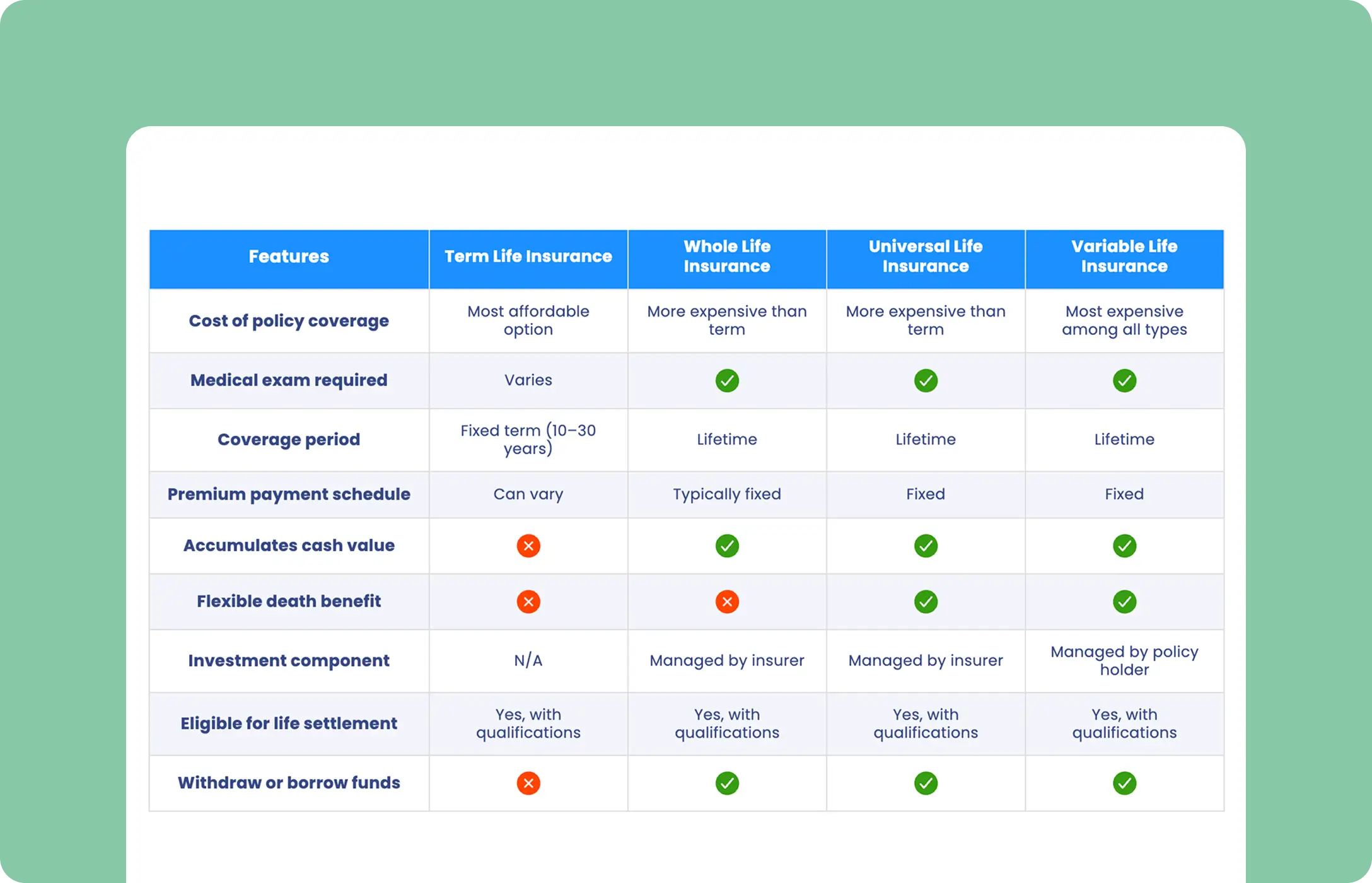
One of the most effective ways to save money is by selecting the correct type of insurance for your specific needs. There is often a massive price gap between term life and permanent (whole or universal) life insurance.
Term Life Insurance: The Budget-Friendly Choice
Term life insurance provides coverage for a specific period, such as 10, 20, or 30 years. It is designed to replace income during your highest-need years—for example, while raising children or paying off a mortgage. Because it does not build cash value and eventually expires, it is significantly cheaper than permanent options. For most families in 2026, term insurance remains the most cost-effective way to secure a high death benefit for a low monthly cost.
Permanent Life Insurance: When is it Worth the Cost?
Permanent life insurance, including Whole Life and Universal Life, covers you for your entire life and includes a savings component known as cash value. While the premiums are much higher, these policies can be useful for estate planning or high-net-worth individuals looking for tax-advantaged growth. However, if your primary goal is to "save money," permanent insurance is rarely the answer unless you have specific lifelong financial obligations.
Comparison Table: 2026 Estimated Monthly Premiums (Healthy 35-Year-Old)
The following table illustrates the potential cost differences across various policy types and coverage amounts. Note: Rates are based on 2026 market averages for a non-smoker in the "Preferred" health class.
| Policy Type | Coverage Amount | Term Length | Est. Monthly Premium | 20-Year Total Cost |
|---|---|---|---|---|
| Term Life | $500,000 | 10 Years | $18.50 | $2,220 (for 10 yrs) |
| Term Life | $500,000 | 20 Years | $26.00 | $6,240 |
| Term Life | $1,000,000 | 20 Years | $42.00 | $10,080 |
| Term Life | $500,000 | 30 Years | $38.50 | $9,240 |
| Whole Life | $500,000 | Lifetime | $450.00 | $108,000 |
| Universal Life | $500,000 | Lifetime | $310.00 | $74,400 |
Strategic Methods for Comparing Policies
To perform a successful comparison that yields actual savings, follow these technical steps to ensure you are looking at comparable products.
1. Standardize the Coverage Amount
When using comparison tools or working with a broker, keep the death benefit constant. Comparing a $400,000 policy from Company A with a $500,000 policy from Company B makes it impossible to see which insurer offers the better value per dollar of coverage. Use a needs-analysis calculator to determine your exact requirement—typically 10 to 15 times your annual income—and use that figure as your benchmark.
2. Evaluate Rider Costs Separately
Riders are "add-ons" to a policy, such as a waiver of premium, accidental death benefit, or child term riders. These can inflate the cost of a policy quickly. When comparing two quotes, ensure you are looking at the base premium first. One company might look cheaper on the surface, but if their "Living Benefits" rider (which allows you to access the death benefit if terminally ill) is an extra charge while another company includes it for free, the second company is actually the better deal.
3. Check Financial Strength Ratings
A low premium is only a "saving" if the company is around to pay the claim. Use independent rating agencies such as A.M. Best or Standard & Poor’s to verify the financial stability of the insurer. Companies with ratings in the "A" range are generally considered very stable. In 2026, with the economic fluctuations of recent years, selecting a company with a strong balance sheet is a critical part of the value comparison.
How to Optimize Your Profile for Lower Quotes
Beyond just comparing what is available, you can influence the quotes you receive by addressing the factors insurers use to calculate risk.
Health and Lifestyle Improvements
Since 2026 underwriting is increasingly data-driven, small changes can lead to large savings. Many insurers now offer "interactive" policies where you can receive premium discounts by sharing data from fitness trackers. If you can demonstrate consistent physical activity or improved sleep patterns, some carriers may lower your rates during the annual review process. Furthermore, quitting smoking for at least 12 to 24 months before applying can cut your premiums by more than half.
Policy Laddering Strategy
One advanced way to save money through comparison is "laddering." Instead of buying one $1 million 30-year term policy, you might buy:
- A $500,000 10-year policy (to cover the mortgage).
- A $300,000 20-year policy (to cover children's education).
- A $200,000 30-year policy (to cover spouse income replacement).
By comparing the costs of multiple smaller policies versus one large one, you can ensure you aren't paying for more coverage than you need as your debts decrease over time. This strategy can save a policyholder thousands of dollars over three decades.
Common Pitfalls in Life Insurance Comparisons
Saving money should not come at the expense of policy integrity. Avoid these common mistakes when reviewing your options.
- Ignoring the "Renewability" Clause: Some cheap policies have premiums that skyrocket after the initial term. Ensure your term policy is "level," meaning the premium stays the same for the entire duration.
- Focusing Only on Brand Name: Large, well-known insurers often have higher marketing costs that are passed on to the consumer. Smaller, highly-rated mutual companies often offer more competitive rates because they are owned by policyholders rather than shareholders.
- Underestimating Total Needs: Choosing a lower death benefit just to save $5 a month can leave your family financially vulnerable. It is better to save money by adjusting the term length or shopping for a better risk class than by cutting the necessary death benefit.
The Role of Independent Brokers in 2026
While direct-to-consumer websites are popular for quick quotes, independent brokers still play a vital role in saving money. Brokers have access to "non-public" underwriting niches. For example, if you have a specific medical condition, a broker knows which carrier recently updated their guidelines to be more favorable toward that condition. In 2026, AI-driven brokerage tools can scan thousands of pages of underwriting manuals in seconds to find the one company that will give you a "Preferred" rating when others would give you "Standard."
Frequently Asked Questions
Is it better to buy life insurance directly online or through an agent to save money?
Buying online is often faster for simple term policies, but an independent agent can often save you more money if you have any "red flags" like a health issue or a dangerous hobby. Agents can "shop" your file anonymously to multiple carriers to see who will offer the best rate before you officially apply.
Can I change my life insurance policy if I find a cheaper one later?
Yes, you can replace a life insurance policy at any time. However, you should never cancel your existing coverage until the new policy is officially "in force" and you have made the first payment. Be aware that as you get older, a new policy might be more expensive even if the rates are more competitive, simply because of your increased age.
How much can I save by paying my premiums annually instead of monthly?
Most life insurance companies charge a "fractional premium" fee for monthly payments. This is essentially an administrative interest charge. By comparing the annual cost versus the monthly cost, you will often find that paying once a year saves you between 2% and 8% on your total annual premium.
Do lifestyle choices like SCUBA diving or piloting impact my comparison?
Absolutely. High-risk hobbies can lead to "flat extra" charges, which are additional fees added to the base premium (e.g., an extra $2 per $1,000 of coverage). When comparing, you must disclose these hobbies to get an accurate quote, as some insurers specialize in high-risk occupations and hobbies while others will simply decline the application.
What is the "Free Look Period" and how does it help me save?
The "Free Look Period" is a legally mandated timeframe (usually 10 to 30 days) during which you can cancel a new policy for a full refund. This allows you to continue comparing policies even after you've made your first payment. If you find a significantly better deal within this window, you can switch without financial penalty.
Practical Recommendation for 2026
To maximize your savings, start by obtaining at least three "level term" quotes for a 20-year duration. Ensure that you are comparing the same death benefit across all three. Once you identify the lowest quote, investigate the insurer’s financial strength rating via A.M. Best. If the company is rated A- or higher, and the policy includes "Accelerated Death Benefit" riders at no extra cost, you have likely found the best value for your needs. Always review your coverage every three to five years or after major life events, such as the birth of a child or a significant change in health, to ensure you are still paying the most competitive rate available in the market.
Image Gallery