Why Are Olives in Martinis? The History, Science, and Etiquette of the Iconic Garnish
Olives are in martinis to balance the drink's sharp, botanical profile with salt and acidity, which rounds out the bitterness of the gin and vermouth. Beyond flavor, the olive provides a textural contrast and carries a historical tradi...
Olives are in martinis to balance the drink's sharp, botanical profile with salt and acidity, which rounds out the bitterness of the gin and vermouth. Beyond flavor, the olive provides a textural contrast and carries a historical tradition that evolved as cocktails shifted from sweet to savory profiles in the late 19th century.
Contents
The Martini is arguably the most recognizable cocktail in the world, characterized by its V-shaped glass and the distinctive green orb resting at its base. While modern drinkers often take the olive for granted, its presence is neither accidental nor purely decorative. In 2026, as craft cocktail culture continues to refine the "classics," understanding the intersection of culinary history and sensory science reveals why this specific garnish remains the gold standard for the world's most sophisticated drink.
The Historical Evolution: From Sweet Cherries to Savory Olives
The Martini did not begin its life with an olive. To understand why we now pair gin with brine, one must look at the cocktail’s ancestors: the Martinez and the Marguerite. In the mid-to-late 1800s, cocktails were generally sweeter, often utilizing Old Tom gin (a sweeter style) and sweet Italian vermouth. These early iterations were frequently garnished with a maraschino cherry.
As the American palate shifted toward "dry" drinks in the late 19th century, bartenders began using London Dry gin and French (dry) vermouth. This transition fundamentally changed the chemical requirements of the garnish. A sweet cherry no longer complemented the astringent, juniper-forward profile of a dry martini.
Historical records, including Harry Johnson’s Bartender’s Manual (1888), show a period of experimentation where lemon peels and olives vied for dominance. One popular theory suggests that a French stationmaster in the late 1800s popularized the olive, though it is more likely that the trend emerged from the burgeoning "free lunch" culture in New York City bars. During this era, salty snacks like olives, crackers, and cured meats were provided to patrons to encourage more drinking. A bartender likely dropped a bar snack into a glass, discovered the flavor synergy, and a tradition was born. By the time the 1930s arrived and Prohibition had ended, the olive had firmly established its place as the definitive Martini garnish.
The Science of Salt: Why the Palate Craves the Garnish
The inclusion of an olive is a masterclass in sensory science. A standard Martini is a high-proof, spirit-forward cocktail. Gin is infused with botanicals—juniper, coriander, angelica root, and citrus peel—many of which carry inherent bitterness.
Bitterness Suppression
Salt (sodium chloride) is a powerful modifier of taste. It has the unique ability to suppress bitterness while enhancing other flavors. When the slight amount of brine from an olive enters the gin-vermouth mixture, it reduces the perception of the "harsh" juniper notes, making the drink taste smoother and more "rounded." This is the same reason a pinch of salt is often added to high-quality coffee or chocolate.
The Role of Acidity and Umami
Olives are typically cured in brine containing vinegar or lactic acid. This acidity provides a "bright" counterpoint to the heavy, oily texture of gin. Furthermore, olives are rich in glutamate, which provides a savory umami sensation. Because gin and vodka lack protein and fat, the olive introduces a culinary depth that the spirits cannot provide on their own.
The Impact of Olive Oil
Even a single olive releases a microscopic layer of oil onto the surface of the drink. This oil changes the "mouthfeel" of the Martini. It coats the tongue slightly, which slows down the evaporation of the alcohol in the mouth, allowing the drinker to perceive the subtle aromatics of the vermouth more clearly.
The Anatomy of the Perfect Martini Olive
Not all olives are created equal, and in a cocktail with only two or three ingredients, the quality of the garnish is paramount. In 2026, bartenders prioritize specific varieties based on their oil content, firmness, and brine composition.
- Spanish Queen (Gordal): These are the classic, large Martini olives. They are meaty and provide a substantial snack at the end of the drink. Their firm texture ensures they do not disintegrate in the alcohol.
- Manzanilla: The most common variety, often stuffed with pimento. They are slightly nuttier and saltier than Queen olives, making them ideal for those who prefer a punchier flavor.
- Castelvetrano: A favorite in modern craft bars, these bright green Sicilian olives are mild, buttery, and less acidic. They pair exceptionally well with vodka martinis, where a heavy brine might overwhelm the spirit.
- Blue Cheese or Anchovy Stuffed: These are "functional" garnishes that transform the drink into a liquid appetizer. The fat from the cheese or the salt from the fish interacts with the alcohol to create a much more complex, savory experience.
Comparison of Common Martini Garnishes
| Garnish Type | Flavor Profile | Best Spirit Pairing | Primary Function |
|---|---|---|---|
| Pimento Olive | Salty, piquant, classic | London Dry Gin | Balances bitterness with salt. |
| Lemon Twist | Citrusy, bright, floral | High-Botanical Gin | Enhances aromatics via essential oils. |
| Castelvetrano | Buttery, mild, creamy | Vodka | Adds richness without excess salt. |
| Gibson (Onion) | Savory, earthy, "funky" | Navy Strength Gin | Provides a distinct umami depth. |
| Blue Cheese Olive | Creamy, pungent, fatty | Clean Vodka | Softens alcohol burn with fat. |
The Rule of Three: Etiquette and Superstition
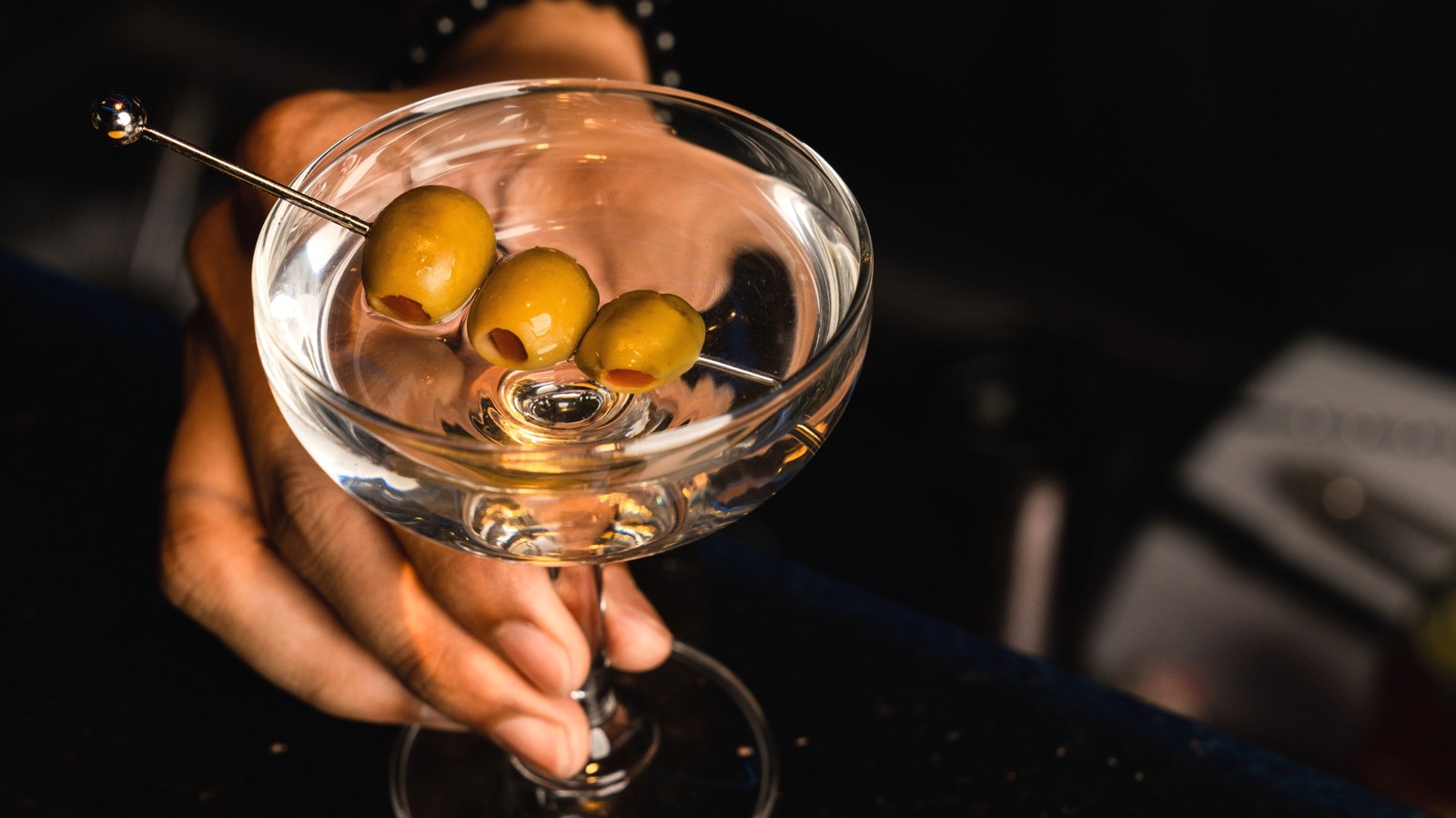
The presentation of olives in a Martini follows a strict, albeit informal, code of etiquette. The most enduring "rule" is that olives must be served in odd numbers—usually one or three.
The Odd Number Superstition
In bar culture, serving an even number of olives (two or four) is often considered bad luck. While the origins of this superstition are murky, it likely stems from visual aesthetics. The "Rule of Thirds" in design suggests that odd-numbered groupings are more visually appealing and less "static" than even-numbered ones. A single olive looks like a focal point; three olives create a line or triangle that guides the eye. Two olives, conversely, can look like eyes peering up from the bottom of the glass, which many find unappealing.
To Eat or Not to Eat?
There is often confusion regarding when to consume the garnish. The general consensus among etiquette experts is that the olives should be eaten only after the drink is finished, or at the very least, after the first few sips. The olive acts as a "boozy treat" that has absorbed the flavors of the gin and vermouth. In a formal setting, if the olives are on a pick, you may lift the pick and eat them. If they are loose at the bottom of the glass, you should wait until the drink is finished to retrieve them.
The Rise of the "Dirty" Martini
The ultimate evolution of the olive's role is the Dirty Martini. This variation involves adding a splash of the olive brine directly into the shaker. This practice was popularized in the mid-20th century, notably by figures like Franklin D. Roosevelt, who famously enjoyed a "messy" Martini.
In 2026, the Dirty Martini has moved beyond simple jar brine. Top-tier bars now create "house brines" using precise concentrations of sea salt, filtered water, and aromatics like bay leaves or peppercorns. This ensures that the salt level is consistent and that the brine enhances rather than masks the quality of the base spirit.
Frequently Asked Questions
Why shouldn't you put two olives in a martini?
The "rule of odd numbers" is a long-standing tradition in bartending. Visually, an odd number of items is more aesthetically pleasing and balanced. Superstition also plays a role; many old-school bartenders believe that an even number of olives brings bad luck to the drinker or the establishment.
What is the difference between a Martini and a Gibson?
The only difference between a standard Martini and a Gibson is the garnish. While a Martini uses an olive or a lemon twist, a Gibson uses a pickled cocktail onion. The onion provides a savory, earthy profile that is distinct from the salty, fruity profile of an olive.
Should you use oil-cured or brine-cured olives?
For a Martini, brine-cured olives are essential. Oil-cured olives (like Kalamatas) are too soft and will release too much heavy oil and dark pigment, clouding the drink and altering the flavor profile in an unappealing way. Brine-cured olives maintain their structure and provide the necessary salinity.
Is it acceptable to ask for extra olives?
Yes, it is perfectly acceptable. If you prefer more than the standard three, you can ask for a "side of olives." This allows you to snack on them without cluttering the glass or displacing too much of the liquid.
Does the olive change the calorie count of the drink significantly?
A standard Martini is roughly 150-200 calories, almost entirely from alcohol. A single large Spanish Queen olive adds about 10-15 calories. While not significant in terms of energy, the sodium in the olives can lead to increased water retention, which is something to consider if you are monitoring salt intake.
Final Recommendation
When preparing or ordering a Martini, the choice of olive should be dictated by the spirit. If you are drinking a bold, juniper-heavy gin, choose a classic Manzanilla to cut through the botanical weight. If you are enjoying a premium, chilled vodka, opt for a Castelvetrano to complement the spirit’s smoothness. Regardless of your preference, always ensure the olives are chilled before they enter the glass to prevent them from warming the cocktail.
Image Gallery