Ford Expedition Max Cargo Space: A Comprehensive Technical Breakdown
The 2026 Ford Expedition Max provides a class-leading maximum cargo volume of 123.1 cubic feet when all rear seats are folded flat. With the third row in use, it maintains 36.2 cubic feet of space, expanding to 79.6 cubic feet when the...
The 2026 Ford Expedition Max provides a class-leading maximum cargo volume of 123.1 cubic feet when all rear seats are folded flat. With the third row in use, it maintains 36.2 cubic feet of space, expanding to 79.6 cubic feet when the third row is stowed, offering significantly more utility than the standard-length Expedition.
Contents
The Ford Expedition Max has long been the benchmark for families and professionals who refuse to compromise between passenger capacity and hauling capability. As of 2026, the Expedition Max continues to utilize its extended wheelbase—roughly 12 inches longer than the standard model—to provide a cargo area that is not just larger in volume, but more sophisticated in its engineering. Understanding these dimensions in detail is essential for determining if this full-size SUV can accommodate specific needs, from plywood sheets to full-size camping equipment.
Understanding the Dimensions: More Than Just Cubic Feet
When evaluating the Ford Expedition Max, it is vital to distinguish between raw volume and usable dimensions. While cubic feet provide a standardized metric for comparison, the actual length, width, and height of the aperture determine what physically fits through the liftgate.
Cargo Volume by Configuration
The 2026 Expedition Max is designed with a modular interior. The cargo capacity shifts significantly based on how many passengers you are carrying:
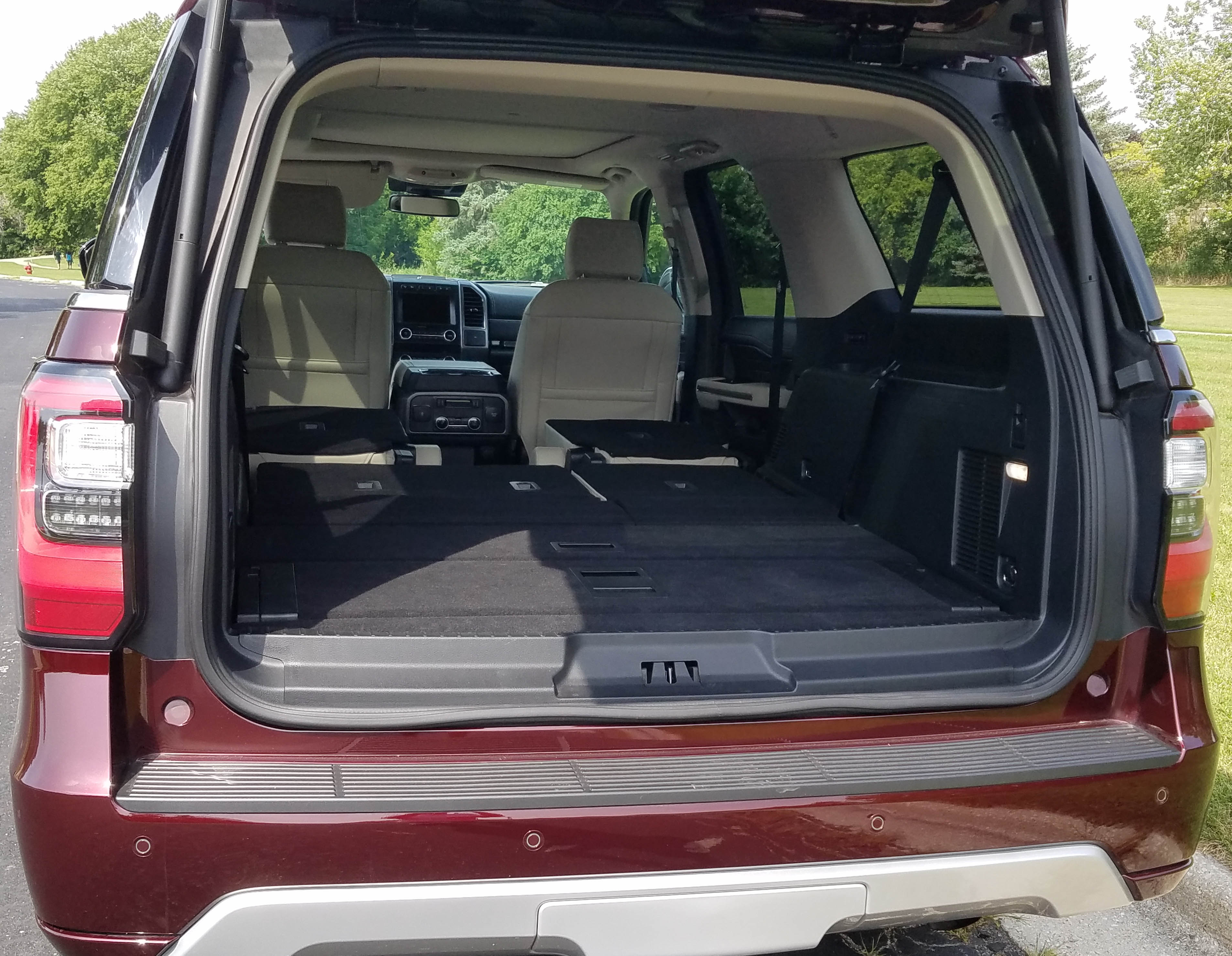
- Behind the First Row (All Rear Seats Folded): 123.1 cubic feet. This configuration transforms the vehicle into a legitimate alternative to a cargo van, providing a nearly flat load floor that extends from the back of the front seats to the liftgate.
- Behind the Second Row (Third Row Folded): 79.6 cubic feet. This is the most common "utility mode" for large families, offering enough space for large appliances or a week’s worth of expedition gear while still seating up to five people.
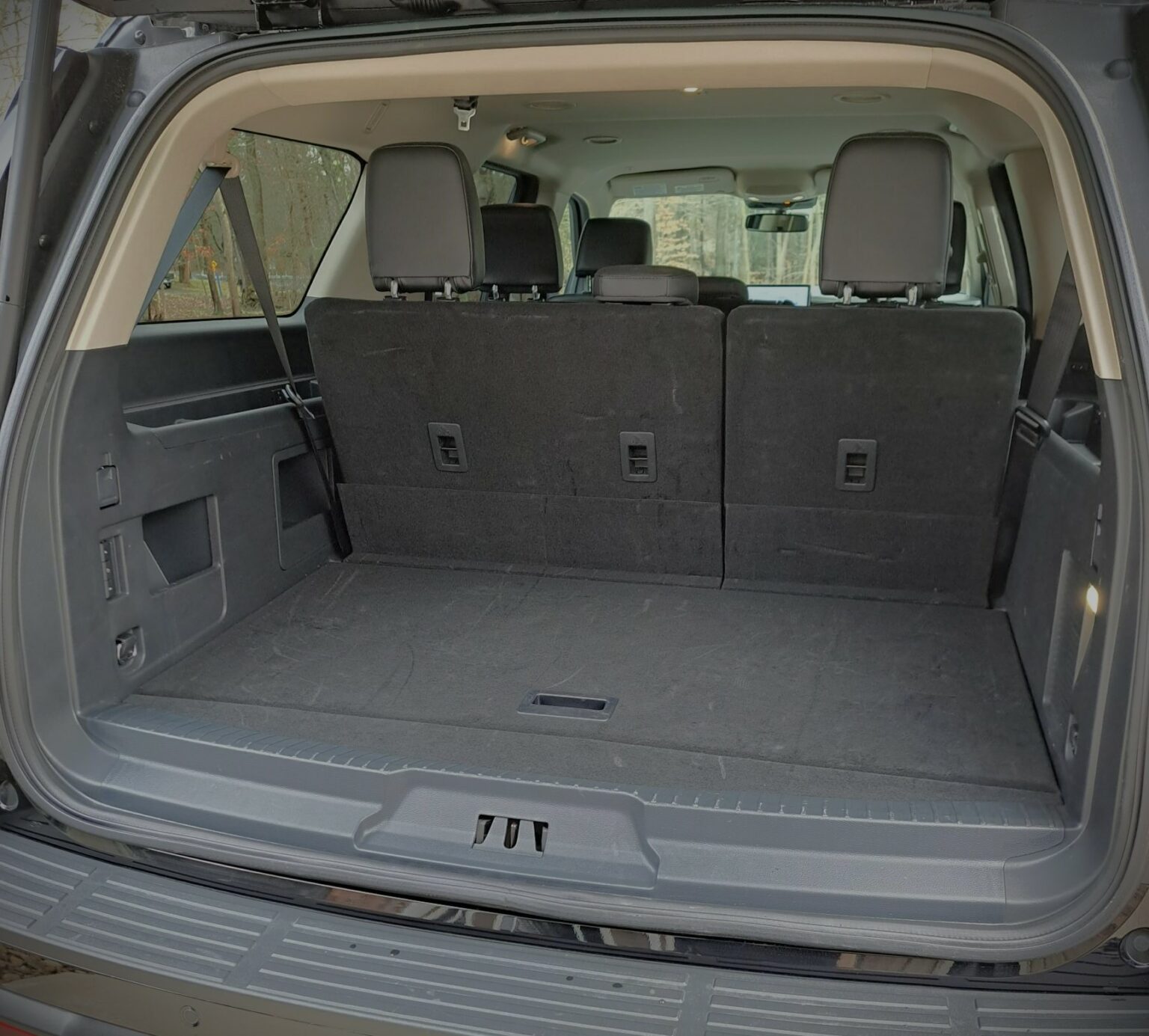
- Behind the Third Row (All Seats Up): 36.2 cubic feet. This is where the "Max" designation earns its keep. While the standard Expedition offers limited space behind the third row, the Max provides enough room for several full-sized suitcases without obstructing rearward visibility.
Physical Measurements and Load Floor Length
For those hauling specific items like lumber or furniture, the linear measurements are often more important than the volume:
- Maximum Load Floor Length: Approximately 93 inches from the back of the front seats to the closed liftgate.
- Width Between Wheel Wells: Roughly 48.2 inches. This is a critical measurement for DIYers, as it allows a standard 4x8 sheet of plywood to lie flat on the floor, though the length will require the liftgate to remain slightly ajar or the sheets to be angled.
- Cargo Opening Height: About 35 inches, which can vary slightly depending on the trim level and suspension setup (e.g., the Stealth Performance vs. the Timberline-inspired off-road trims).
The Ford Split Liftgate: A 2026 Utility Highlight
One of the most significant evolutions in the current generation of the Expedition Max is the implementation of the Ford Split Liftgate. This feature, which became a staple for the 2025 and 2026 model years, changes how users interact with the cargo space.
The system functions as a 75/25 split. The top three-quarters of the liftgate raises like a traditional SUV hatch, while the bottom quarter folds down like a pickup truck tailgate. This design serves several practical purposes:
- Tailgating and Seating: The lower portion can support up to 600 pounds, making it a functional bench for outdoor events.
- Cargo Retention: When the lower gate is up, it acts as a barrier, preventing groceries or loose gear from rolling out of the vehicle when you open the main glass.
- Extended Work Surface: The inner surface of the lower tailgate often includes measuring points and cup holders, effectively turning the back of the Expedition Max into a mobile workstation.
Interior Versatility and Power Features
The utility of the Expedition Max is enhanced by the Cargo Tailgate Manager and power-folding seat technology. Ford has prioritized "one-touch" utility to ensure that transitioning from passenger mode to cargo mode is effortless.
PowerFold® Second and Third Row Seats
Most high-end trims (Limited, King Ranch, and Platinum) come standard with PowerFold® third-row seats and power-folding second-row tip-and-slide seats. Controlled via a button panel in the rear cargo area, these seats can be lowered in seconds. The 2026 model also includes a "quick-return" feature for the third row, allowing it to be raised back into position without manual lifting, which is a common pain point in large SUVs.
The Cargo Management System
The available Cargo Management System includes a tiered shelving unit. This allows owners to stack items vertically without crushing the contents of bags underneath. Furthermore, the floor panel can be tilted up to create a divider, keeping smaller items secured in a dedicated well near the bumper.
| Configuration | Cargo Volume (Cu. Ft.) | Max Length (Inches) | Best For |
|---|---|---|---|
| Behind 1st Row | 123.1 | ~93" | Furniture, Plywood, Full Camping Gear |
| Behind 2nd Row | 79.6 | ~61" | Bicycles, Large Coolers, Small Appliances |
| Behind 3rd Row | 36.2 | ~31" | Groceries, Luggage, Sports Bags |
Comparisons: Expedition Max vs. The Competition
To truly understand the "detail" of the Expedition Max cargo space, it must be viewed in the context of its primary rivals: the Chevrolet Suburban and the GMC Yukon XL.
Historically, the GM twins (Suburban/Yukon XL) held a slight edge in raw cubic footage. However, for 2026, the Expedition Max has narrowed this gap through more efficient packaging of the independent rear suspension. While the Suburban offers roughly 144 cubic feet of total volume, the Expedition Max’s interior width and the functionality of the Split Liftgate often make its 123.1 cubic feet more accessible for daily tasks.
The Expedition Max also outperforms the Toyota Sequoia in cargo versatility. Because the Sequoia utilizes a solid rear axle and a hybrid battery pack, its load floor is not flat and its third row does not fold into the floor, giving the Expedition Max a significant advantage in usable rectangular space.
Payload and Weight Considerations
While the volume is vast, users must be mindful of the vehicle's Payload Capacity. The payload includes the weight of all passengers plus any cargo stored inside or on the roof.
For the 2026 Expedition Max, the payload typically ranges from 1,550 to 1,750 pounds, depending on the drivetrain (4x2 vs. 4x4) and optional equipment. Loading 123 cubic feet of heavy material—such as bags of concrete or heavy oak furniture—can quickly approach this limit. Overloading the cargo area can negatively impact braking distances, suspension longevity, and the performance of the 3.5L EcoBoost® engine.
Additionally, the roof rack on the Expedition Max is rated for approximately 200 pounds of dynamic weight (when the vehicle is moving). This is ideal for cargo boxes or kayaks, effectively extending the "cargo space" beyond the interior cabin.
Practical Loading Tips for Max Owners
- Utilize the Under-Floor Storage: There is a shallow storage bin located beneath the rear floorboard, perfect for storing jumper cables, emergency kits, or the trailer hitch ball mount when not in use.
- The Flat Load Floor: To achieve a perfectly flat floor, ensure the second-row headrests are folded down before activating the power-fold sequence. This prevents the seats from catching on the front seatbacks.
- Center Console Pass-Through: While not a "cargo area" per se, the massive center console can hold a full-sized laptop or a small handbag, keeping valuables out of sight while the main cargo area is full.
Frequently Asked Questions
Can a 4x8 sheet of plywood fit in a Ford Expedition Max?
Yes, a 4x8 sheet of plywood can fit, but it requires the second and third rows to be folded flat. While the width between the wheel wells (48.2 inches) accommodates the 4-foot width, the 8-foot length may require the front seats to be moved forward slightly or the plywood to rest on the center console armrest. Most owners find it fits best when angled or with the liftgate secured slightly open if the front seats are in a rearward position.
How does the cargo space differ between the standard Expedition and the Max?
The Expedition Max is approximately 12 inches longer than the standard Expedition, with most of that length added behind the third row. This results in the Max having 36.2 cubic feet of space behind the third row compared to roughly 20.9 cubic feet in the standard model. The Max is the preferred choice for those who frequently use the third row but still need to carry luggage.
Is the load floor in the 2026 Expedition Max completely flat?
Yes, thanks to the independent rear suspension design, the Expedition Max offers a nearly level load floor when the second and third rows are folded. There are very minor gaps between the seat segments, which can be covered with an aftermarket cargo mat if you are hauling loose materials like mulch or gravel.
Does the Split Liftgate interfere with cargo volume?
No, the Split Liftgate does not reduce the internal volume. In fact, it increases the functional utility by allowing you to load smaller items through the top glass or sit on the lower tailgate without opening the entire rear of the vehicle, which is helpful in tight parking spaces or low-ceiling garages.
What is the "Cargo Tailgate Manager"?
The Cargo Tailgate Manager is an adjustable shelving and partitioning system. It can be configured as a shelf to create two levels of storage, a vertical divider to prevent items from shifting, or an extension of the flat load floor. In the 2026 model, it is designed to work seamlessly with the lower portion of the split liftgate.
Final Recommendation for Buyers
If your primary goal is maximum utility without moving to a commercial van, the 2026 Ford Expedition Max is the most versatile choice in the full-size SUV segment. Its 123.1 cubic feet of total space is impressive, but it is the Split Liftgate and the PowerFold seating that make that space truly usable. Prospective buyers should measure their garage length before purchasing, as the Max’s extended wheelbase requires significantly more parking depth than a standard SUV. For those who frequently haul both a full crew and their gear, the Max remains the definitive leader in cargo-to-passenger efficiency.
Image Gallery