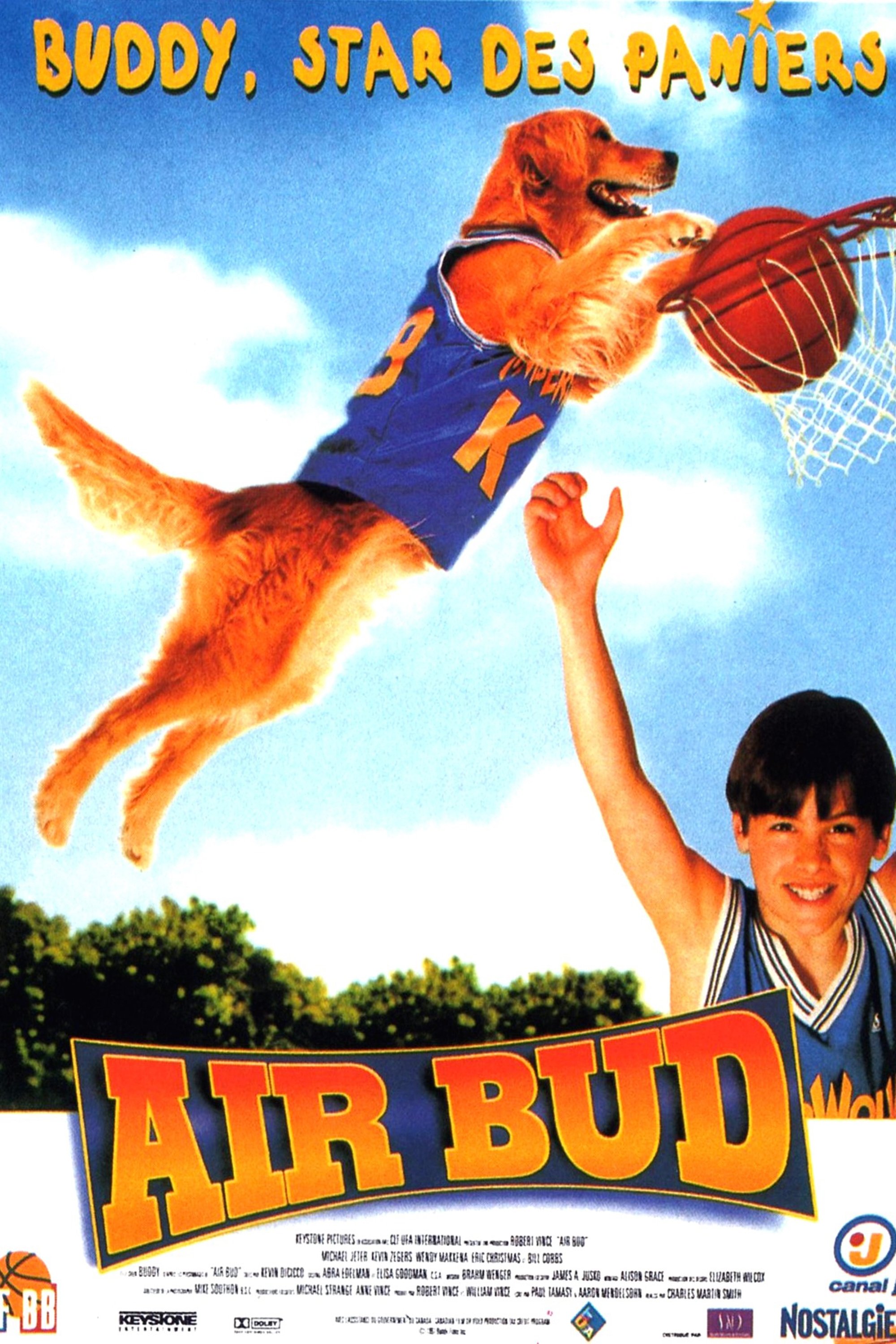
Why the Buddy Air Bud Movies Matter: A Cultural and Cinematic Legacy
The Air Bud film franchise serves as a foundational pillar of 1990s and 2000s family entertainment, transcending its premise of a golden retriever playing sports to become a masterclass in low-budget, high-concept children's cinema. Th...
The Air Bud film franchise serves as a foundational pillar of 1990s and 2000s family entertainment, transcending its premise of a golden retriever playing sports to become a masterclass in low-budget, high-concept children's cinema. The franchise matters because it successfully synthesized animal-led physical comedy with sincere, human-centric emotional narratives, effectively launching the "animal athlete" subgenre and proving the viability of direct-to-video sequels as a sustainable business model in the early era of home media.
Contents
The Genesis of the Animal Athlete Genre
In 1997, the release of the first Air Bud film by Walt Disney Pictures introduced audiences to Buddy, a real-life Golden Retriever with an uncanny ability to manipulate a basketball. While the film was not the first to feature animals in prominent roles—tracing a lineage back to Lassie and Benji—it was the first to ground a dog’s extraordinary abilities within the rigid rules of competitive sports.
The importance of this innovation lies in the transition from "the dog as a companion" to "the dog as a protagonist." By treating Buddy as a team member rather than just a pet, the film tapped into a specific childhood fantasy: the idea that an animal could be an equal participant in one's life. This shifted the power dynamic in family films, moving away from stories where the animal is a passive catalyst for plot to one where the animal is the active agent of victory.
The Business Model of the Direct-to-Video Sequel
Beyond the narrative, the Air Bud franchise is a critical case study in film distribution strategy. Following the original theatrical release, the production company, Keystone Entertainment, transitioned to a direct-to-video (DTV) model for the subsequent Air Bud and Air Buddies installments.
In the late 1990s and throughout the 2000s, this strategy proved that a franchise did not need theatrical box-office dominance to be profitable. By standardizing production costs—filming in locations like British Columbia, maintaining a consistent tone, and leveraging the recurring appeal of the dog character—the franchise maintained profitability over a decade. This model paved the way for modern streaming-era content, where the focus shifted from high-budget theatrical tentpoles to consistent, episodic brand content that retained its value on home media shelves and later in digital libraries.
Narrative Themes and Emotional Intelligence
While critics often focus on the absurdity of a dog playing basketball, soccer, football, or volleyball, the internal logic of the films remains consistently focused on themes of resilience, grief, and friendship.
The original film, in particular, deals directly with the protagonist Josh Framm’s struggle to adapt to a new school following the death of his father. The presence of Buddy is not merely a comedic device but a mechanism for emotional processing. The success of the Air Bud series in this regard lies in its refusal to treat its young audience as incapable of handling complex emotions. By linking the dog’s success on the court to the human child’s emotional healing, the filmmakers ensured that the audience remained invested in the human characters, providing a balanced narrative weight that is often missing from purely slapstick children's media.
Comparative Evolution of the Franchise
The franchise evolved in two distinct phases: the original Air Bud era, focused on a singular dog playing various sports, and the Air Buddies era, which introduced the concept of the dog's talking puppies.
| Feature | Original Air Bud Era | Air Buddies Era |
|---|---|---|
| Focus | Singular Protagonist (Buddy) | Ensemble Cast (Puppies) |
| Tone | Sports/Drama grounded in reality | Fantasy/Adventure with dialogue |
| Distribution | Theatrical + Home Video | Direct-to-Video / Digital |
| Target Audience | Families (All ages) | Younger children (Pre-teen) |
The transition to the Air Buddies films marked a shift toward a more fantastical element: the ability for the puppies to speak to one another. While this alienated some critics of the original film, it was a vital evolution for the franchise’s longevity. By anthropomorphizing the puppies, the series was able to adopt the tropes of adventure films (heist movies, space travel, superhero films) while maintaining the visual consistency of the dog-led sports format.
The Technical Reality of Animal Performance
The technical achievement of the Air Bud franchise is often overlooked. Creating a cohesive narrative with animals that are not CGI-animated requires precise training and specific film editing techniques. The "buddy" dogs were trained to perform specific sports-related tasks using positive reinforcement methods.
The reliance on practical animal performance rather than digital animation provides a tactile, "lived-in" feeling that modern viewers often find more endearing than contemporary CGI animals. This authenticity is a significant reason for the franchise’s enduring appeal. The viewer is not watching a visual effect; they are watching a living creature executing a task, which creates a psychological bridge that digital characters often fail to replicate.
Addressing Common Criticisms
Critics frequently point to the "anything goes" logic of the later sequels as a detriment to the brand's quality. However, from a developmental perspective, these films serve a purpose as an introduction to genre tropes. The Air Buddies series, for example, functions as an accessible gateway for children to understand the structures of different film genres—such as the "spy thriller" or the "treasure hunt"—through the lens of characters they are already familiar with.
Moreover, the low barrier to entry and the non-violent nature of the conflict resolution within these films made them a staple in households for parents seeking "safe" content that still provided a clear narrative arc and resolution.
FAQ: Understanding the Legacy of the Franchise
1. Was Buddy actually able to play sports? Buddy was an exceptionally talented dog who could perform specific motions requested by his trainers, such as pushing a basketball toward a hoop or carrying a football. The final results seen on screen are a combination of expert animal training, camera angles, and strategic editing to create the illusion of complex gameplay.
2. Why did the franchise shift from sports to adventures? The Air Buddies spinoffs shifted toward adventure because it allowed for more character-driven humor. Once the "sports" gimmick was exhausted across five films, the shift to talking puppies allowed the producers to explore different archetypal roles for the five puppies, increasing the franchise's creative lifespan.
3. What made the Air Bud movies so profitable? The franchise benefited from low production overheads, consistent branding, and a loyal audience that spanned multiple generations. By maintaining a constant presence in the direct-to-video market, they became a "reliable" purchase for parents, much like a trusted toy brand.
4. Are these movies considered culturally significant? While not "high art," they are significant as a primary example of successful 1990s family cinema that prioritized the "animal-human bond." They defined the childhood viewing experience for millions and established a formula for animal-led adventure films that persists to this day.
5. Where can I find these movies in 2026? As of 2026, the Air Bud film rights have shifted across various distribution partners. They are generally available through major digital purchase and rental platforms, as well as select streaming services that maintain libraries of 1990s and 2000s family content. Always check your local digital storefront for current regional availability.
The Lasting Impact
The importance of the Air Bud films is best summarized by their persistence. They did not rely on massive marketing budgets or critical acclaim to survive; they relied on the simple, universal appeal of the bond between a child and a dog. By successfully moving from the athletic field to the broader world of adventure, they demonstrated that an "animal star" is as capable of carrying a film franchise as any human actor.
If you are looking to revisit the franchise or introduce it to a new generation, the best approach is to start with the original 1997 release to understand the grounded emotional tone, before moving into the more fantastical puppy-led adventures. These films remain a testament to the idea that, in the world of family entertainment, heart and a clear, simple premise can define a lasting legacy.
Image Gallery