The Legacy and Professional Evolution of Actor Randolph Scott
Randolph Scott was a quintessential figure in mid-20th-century American cinema, best known for his stoic portrayals in Western films and his transition from a reliable leading man to a focused, independent producer. His career, spannin...
Randolph Scott was a quintessential figure in mid-20th-century American cinema, best known for his stoic portrayals in Western films and his transition from a reliable leading man to a focused, independent producer. His career, spanning from the late 1920s to the mid-1960s, serves as a masterclass in professional branding, longevity, and the strategic navigation of the Hollywood studio system.
Contents
Early Life and Entry into Hollywood
Born George Randolph Scott on January 23, 1898, in Orange County, Virginia, Scott’s path to fame was unconventional. He attended Georgia Tech and later the University of Virginia, where his physical stature—standing at 6’2”—and athleticism marked him as a natural candidate for the screen. Unlike many actors of his generation who climbed through the ranks of regional theater, Scott’s entry into the film industry in the late 1920s was facilitated by his social connections and a chance encounter with Howard Hughes.
His early roles were largely uncredited, but his performance in the 1932 film Wild Horse Mesa signaled his shift toward the Western genre, a category that would define his professional legacy. Scott’s appeal lay in his restrained, believable delivery. In an era often dominated by theatrical, overwrought acting, Scott provided a calm, grounded presence that resonated with audiences looking for authenticity.
The Rise of the Western Archetype
Throughout the 1930s and 1940s, Scott’s filmography diversified as he appeared in comedies, musicals, and dramas. He worked with legendary directors such as George Stevens and Rouben Mamoulian, proving his versatility. However, his most significant professional maturation occurred when he committed fully to the Western genre in the late 1940s.
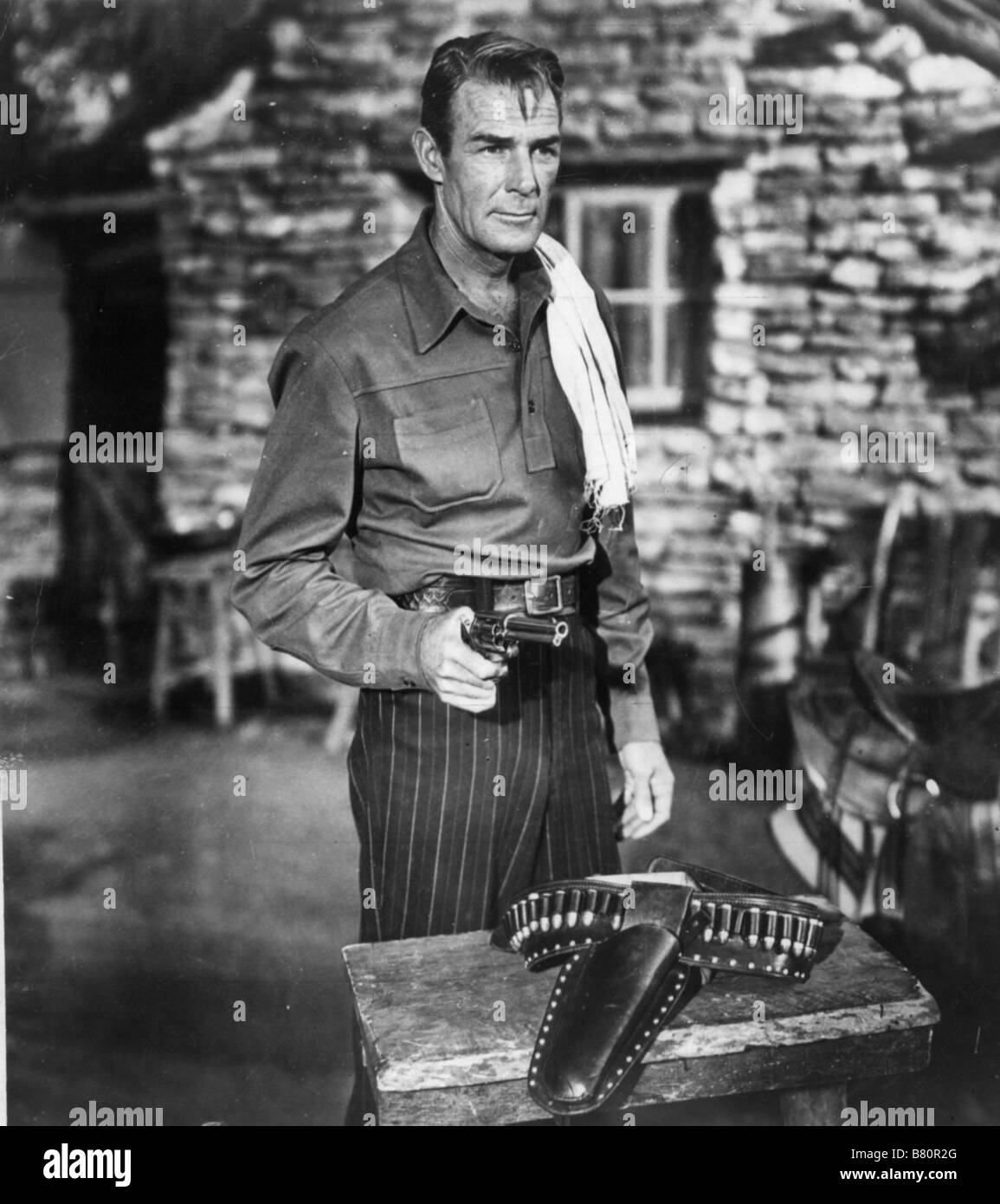
Scott’s characters were rarely flamboyant. He perfected the role of the "loner"—a man with a haunted past, a strong moral compass, and a sense of weary justice. This archetype was not just a performance choice; it was a highly effective brand. By consistently delivering quality performances in Westerns, Scott became a reliable box-office draw, ensuring that his films remained profitable for studios even during the industry’s transitional periods.
The Ranown Cycle: A Technical Masterclass in Independent Production
The most critical period of Randolph Scott’s career, and perhaps his most significant contribution to film history, is the series of collaborations with director Budd Boetticher and producer Harry Joe Brown. Collectively known as the "Ranown Cycle" (a portmanteau of Randolph and Brown), these seven films—including Seven Men from Now (1956) and Comanche Station (1960)—transformed the Western into a vehicle for psychological depth.
| Film Title | Release Year | Director | Significance |
|---|---|---|---|
| Seven Men from Now | 1956 | Budd Boetticher | The inception of the Ranown Cycle aesthetic. |
| The Tall T | 1957 | Budd Boetticher | Notable for its tight, claustrophobic narrative. |
| Decision at Sundown | 1957 | Budd Boetticher | Explored themes of obsession and vengeance. |
| Buchanan Rides Alone | 1958 | Budd Boetticher | Shifted tone toward darker, more cynical motifs. |
| Ride Lonesome | 1959 | Budd Boetticher | Critically praised for its visual minimalism. |
| Westbound | 1959 | Budd Boetticher | Explored historical Civil War tensions. |
| Comanche Station | 1960 | Budd Boetticher | The final collaboration, emphasizing total stoicism. |
These films were produced on modest budgets with tight shooting schedules. The technical approach involved using wide, expansive landscapes to highlight the isolation of the characters, forcing a focus on the dialogue and the unspoken tensions between the actors. This period proved that an actor, by controlling his own projects, could maximize artistic output while maintaining tight financial control.
Financial and Operational Management
Scott was known in the industry not only for his screen persona but for his acumen in financial management. In an era before the modern "points" system for actors became standard, Scott was among the first to negotiate significant participation in his films' profits. By forming his own production companies, he effectively transformed his acting career into a sustainable business enterprise.
His approach to film production was marked by efficiency. He understood the overhead costs of the studio system and moved to mitigate them by keeping crews small and production durations short. This pragmatism extended to his personal life; Scott was widely regarded as one of the wealthiest actors of his time, not through high-profile excess, but through disciplined investments in real estate and capital management.
Later Career and Retirement
Randolph Scott retired from acting following his role in Sam Peckinpah’s Ride the High Country (1962). The decision was deliberate; he recognized that the Western genre was undergoing a shift toward the "Revisionist Western," characterized by more graphic violence and moral ambiguity. Rather than attempting to adapt his persona to a changing cinematic landscape, Scott chose to conclude his career on his own terms with a performance that critics consider his finest.
Following his retirement, Scott remained largely out of the public eye. He focused his energy on his private business affairs and golf, a sport he had played competitively in his youth. He passed away in 1987, leaving behind a body of work that serves as a foundational study for actors looking to cultivate a specific professional image and maintain agency within the constraints of a major studio system.
Analyzing the "Scott Persona"
Why does the Randolph Scott persona endure in contemporary film studies? It comes down to a concept often referred to as "Economy of Gesture." Scott rarely overacted. His performance technique involved the removal of extraneous movement. By doing less on screen, he allowed the audience to project their own emotions onto his characters. This technique requires an immense amount of confidence and technical discipline—knowing exactly when a slight tilt of the head or a shift in the eyes communicates more than a monologue.
For students of film, studying Scott provides a clear look at how an actor can sustain a career across four decades by sticking to a "core competency." He did not chase trends; he became the standard-bearer for a specific, high-quality style of storytelling that audiences could rely upon.
Frequently Asked Questions
1. Was Randolph Scott a real cowboy in his personal life? No. While Scott was an excellent horseman and was comfortable in the saddle due to his extensive Western film experience, he was a product of a middle-class upbringing in Virginia. He did not grow up working on a ranch, though his physical agility helped him perform his own riding stunts in many films.
2. What defines the "Ranown Cycle" of films? The Ranown Cycle refers to a series of seven Westerns produced by Scott and Harry Joe Brown and directed by Budd Boetticher. These films are characterized by minimalist scripts, psychological intensity, and a focus on the moral dilemmas faced by the protagonist. They are considered high-water marks for the B-Western genre.
3. Did Randolph Scott ever attempt to play non-Western roles? Yes, quite extensively. During the 1930s and 1940s, Scott appeared in various genres, including romance, comedy, and war films. He played opposite major stars like Fred Astaire and Ginger Rogers in Roberta (1935) and appeared in the historical drama The Last of the Mohicans (1936). He shifted to the Western genre exclusively in his later years.
4. Why did Randolph Scott retire after Ride the High Country? Scott felt that his career had reached a natural conclusion. The film was a poignant exploration of aging and obsolescence in the West, providing a perfect thematic closing chapter for his own career. He was also financially secure and had little interest in the changing styles of Hollywood in the 1960s.
Final Recommendation for Enthusiasts
For those looking to understand the technical prowess of Randolph Scott, the best starting point is Ride the High Country (1962). To appreciate his peak professional collaboration, watch The Tall T (1957). These films demonstrate the nuance he brought to the screen and explain why his influence remains pertinent for those studying the history of American film production and the development of the enduring Western archetype.
Image Gallery