The Portfolio Definition in Project Management Explained
In project management, a portfolio is a centralized collection of projects, programs, sub-portfolios, and operations managed as a group to achieve specific strategic business objectives. Unlike individual projects that focus on tactica...
In project management, a portfolio is a centralized collection of projects, programs, sub-portfolios, and operations managed as a group to achieve specific strategic business objectives. Unlike individual projects that focus on tactical delivery, a portfolio serves as the high-level bridge connecting an organization’s overarching strategy to its practical execution.
Contents
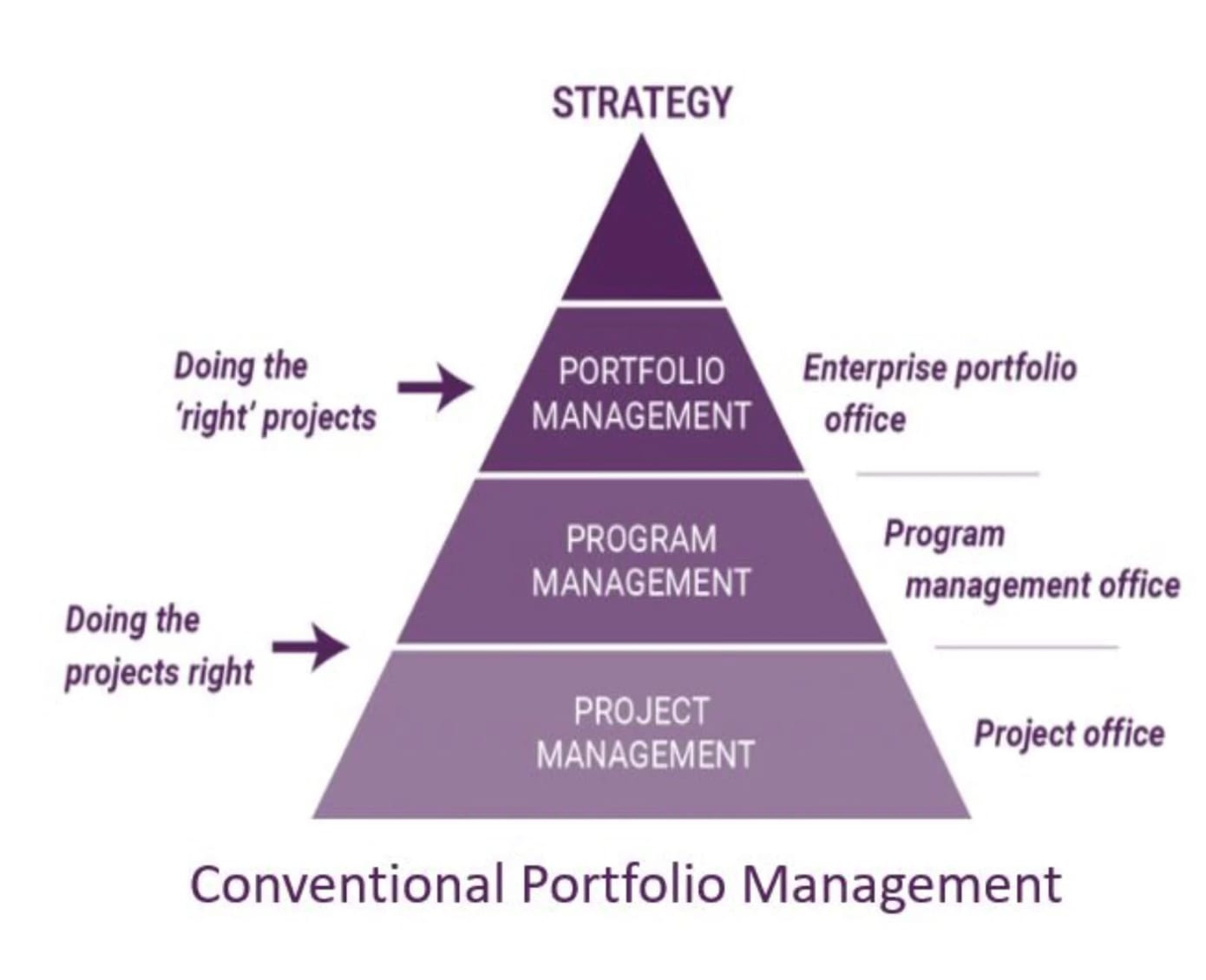
The primary purpose of a portfolio is to ensure that an organization is "doing the right work" rather than simply "doing work right." By grouping disparate initiatives together, executives and Portfolio Managers can see the big picture, allowing them to prioritize high-value investments, allocate scarce resources effectively, and balance risks across the entire enterprise. As of 2026, the portfolio definition remains grounded in the standards set by the Project Management Institute (PMI) and ISO 21504, though the application has evolved toward more agile, data-driven continuous planning.
The Structural Anatomy of a Project Portfolio
To understand the portfolio definition, one must look at its constituent parts. A portfolio is not merely a "list of projects." It is a dynamic ecosystem where various entities coexist to drive ROI and strategic alignment.
Projects and Programs
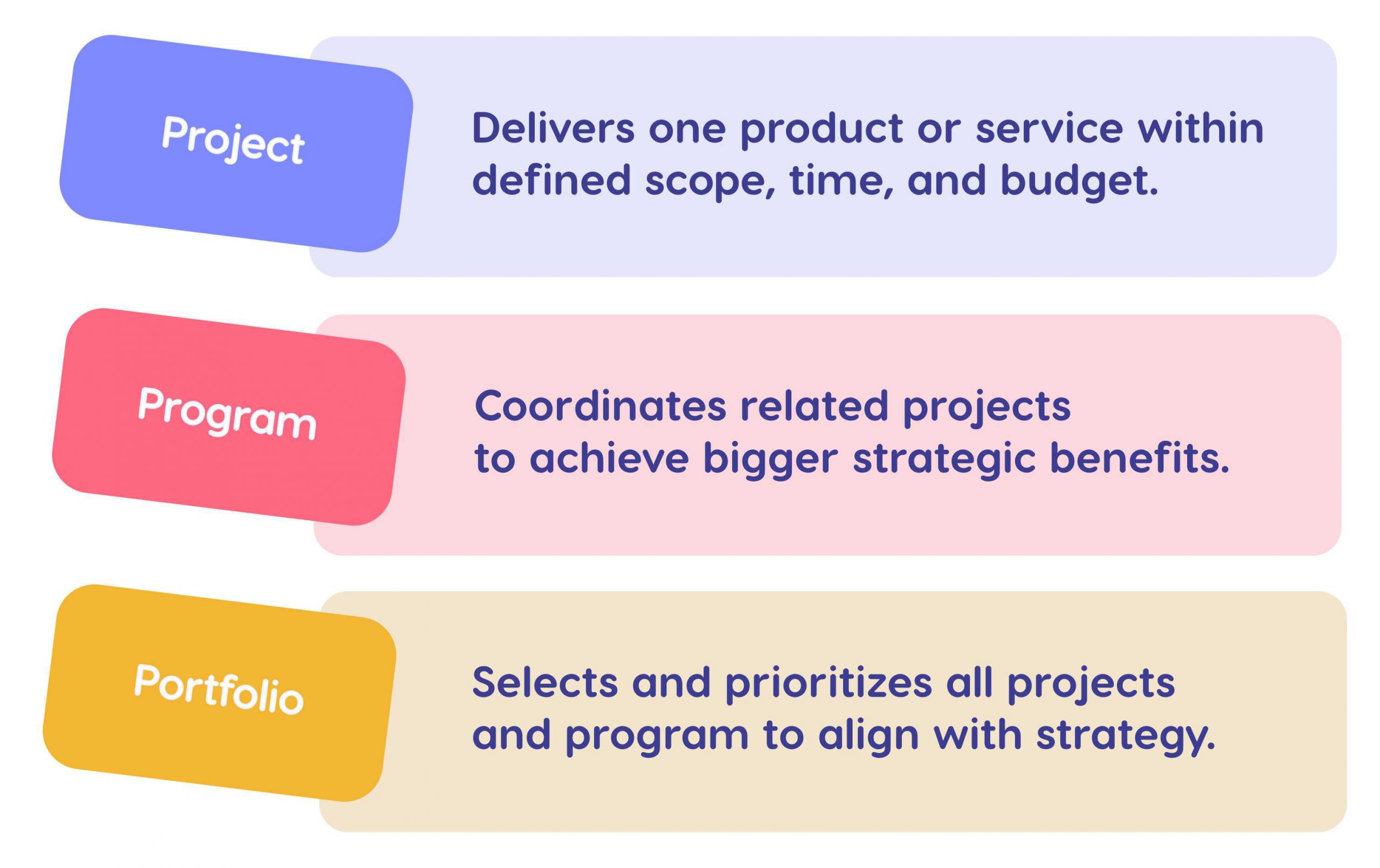
Projects are the smallest units within a portfolio, characterized by their temporary nature and specific unique outputs. Programs are groups of related projects managed in a coordinated way to obtain benefits not available from managing them individually. In a robust portfolio, multiple programs and independent projects are evaluated against one another to determine which provides the most value toward the current year’s corporate goals.
Sub-Portfolios
In large multinational corporations or diversified conglomerates, the primary organizational portfolio may be broken down into sub-portfolios. These might be organized by business unit (e.g., the IT Portfolio, the Marketing Portfolio), by geographic region, or by product line. Sub-portfolios allow for more granular governance while still rolling up into the master portfolio for executive visibility.
Operational Work
A common misconception in older project management models was that operations existed entirely outside the portfolio. In modern practice, and specifically in 2026 standards, operations—the ongoing activities that keep a business running—are often included in portfolio management. This ensures that the resource "run rate" (the cost and manpower required for daily operations) is accounted for before new, transformative projects are approved.
Strategic Alignment: The Soul of the Portfolio
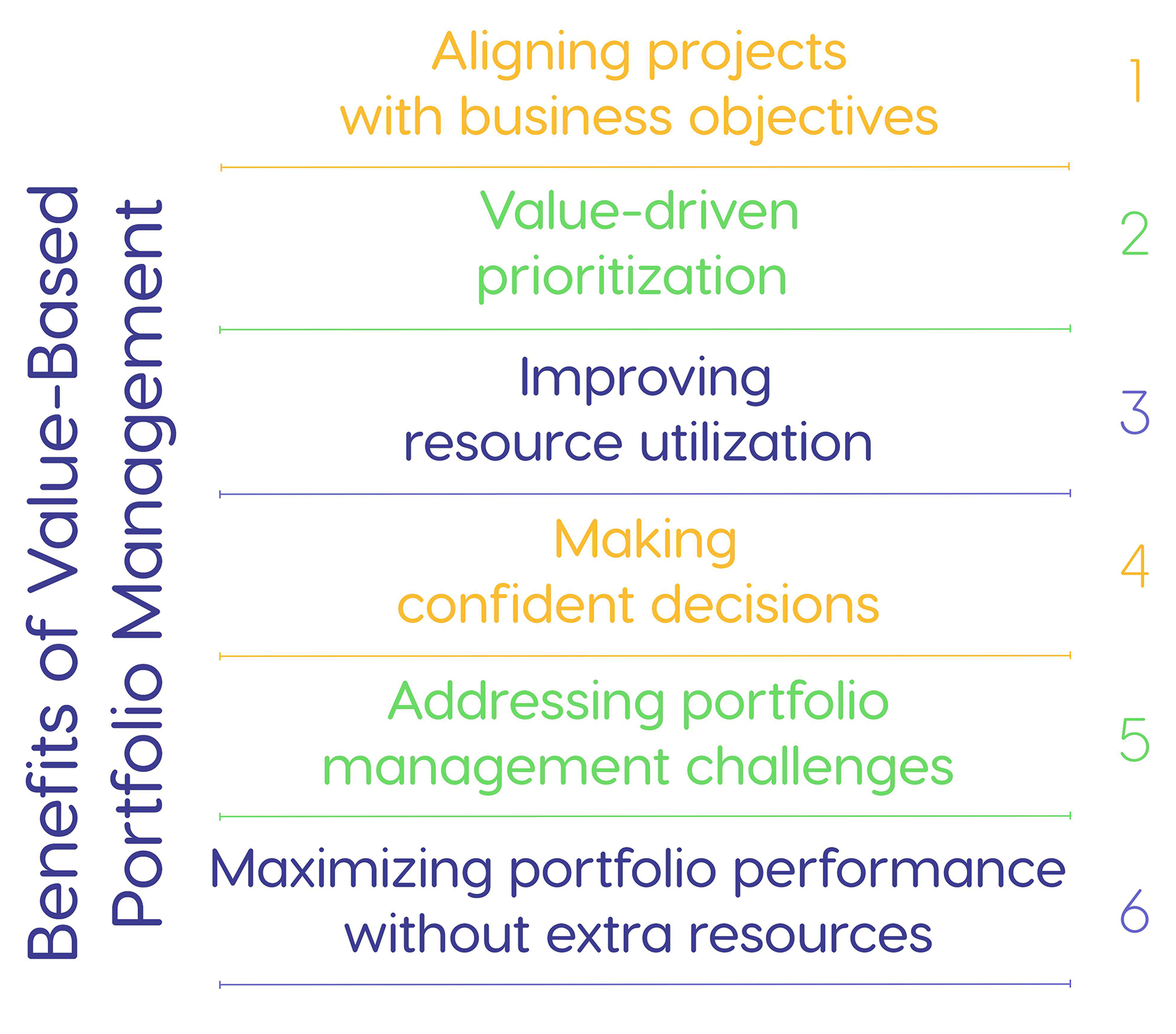
The defining characteristic that separates a portfolio from a random collection of tasks is strategic alignment. Every item within a portfolio must have a traceable link to a high-level organizational goal.
If an organization has a strategic goal to reduce its carbon footprint by 20% by 2030, the portfolio should contain projects focused on renewable energy, supply chain optimization, and sustainable packaging. If a proposed project does not support this goal—no matter how profitable it might seem—a mature portfolio management process would flag it for rejection or deferral.
This alignment process involves:
- Strategic Mapping: Identifying which business pillars a project supports.
- Value Scoring: Assigning numerical values to projects based on their contribution to strategy.
- Portfolio Balancing: Ensuring the mix of projects isn't too heavily weighted toward "low-risk/low-reward" or "high-risk/high-reward" initiatives, but rather a healthy blend that ensures both stability and innovation.
Key Differences: Portfolio vs. Program vs. Project
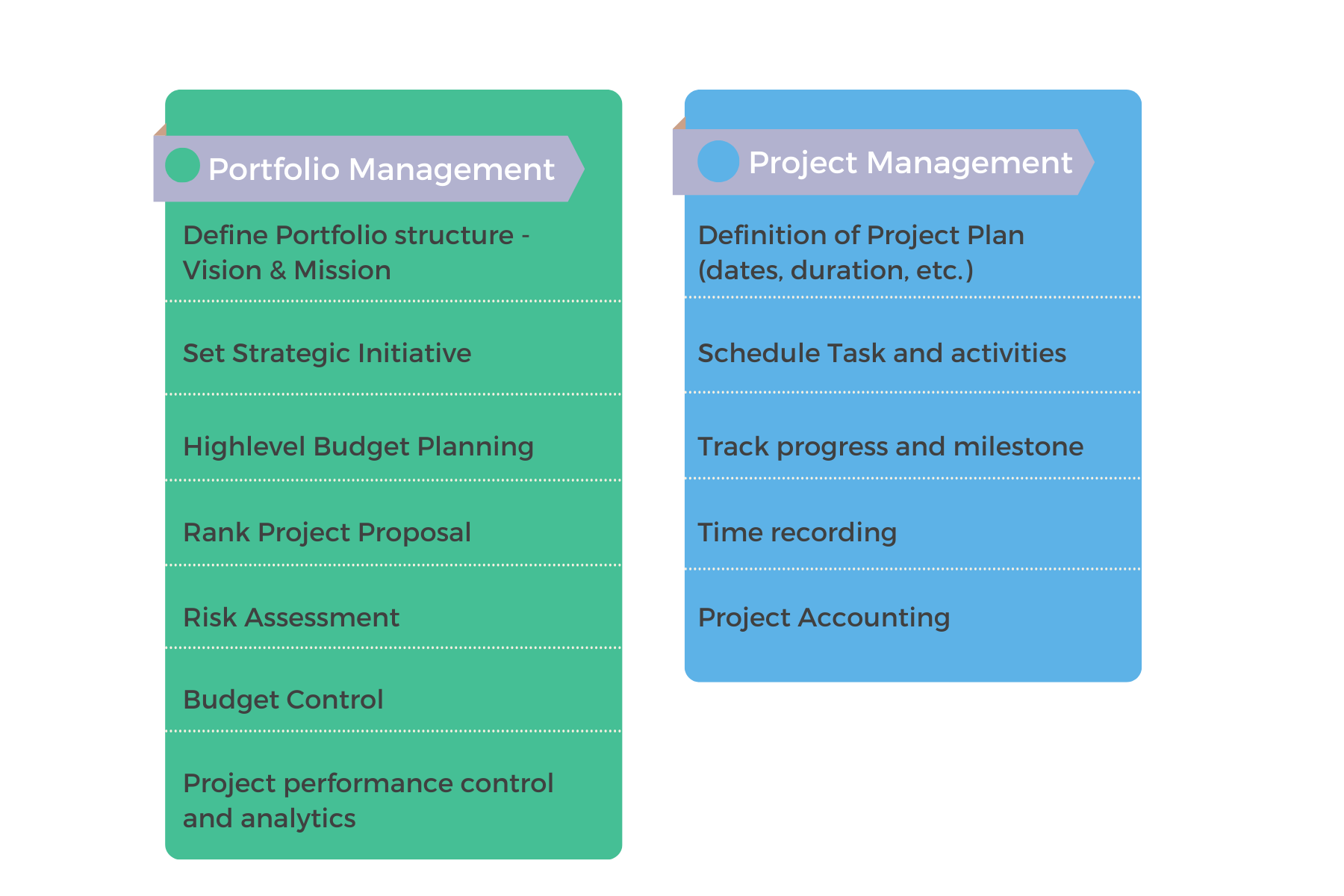
Understanding the hierarchy is essential for effective governance. While these terms are often used interchangeably in casual conversation, they represent distinct levels of authority and focus within the professional management landscape.
| Feature | Project | Program | Portfolio |
|---|---|---|---|
| Focus | Tactical: Scope, time, and cost. | Intermediate: Benefits and synergies. | Strategic: Alignment and value. |
| Success Criteria | Quality, schedule, and budget. | Benefit realization and ROI. | Total value and strategic impact. |
| Duration | Temporary (defined start/end). | Long-term (delivery of benefits). | Permanent/Ongoing (evolving). |
| Management Role | Project Manager. | Program Manager. | Portfolio Manager/Executive Board. |
| Change Impact | Limited to specific deliverables. | Affects related project interdependencies. | Affects the entire business direction. |
The Role of Portfolio Management (PPM)
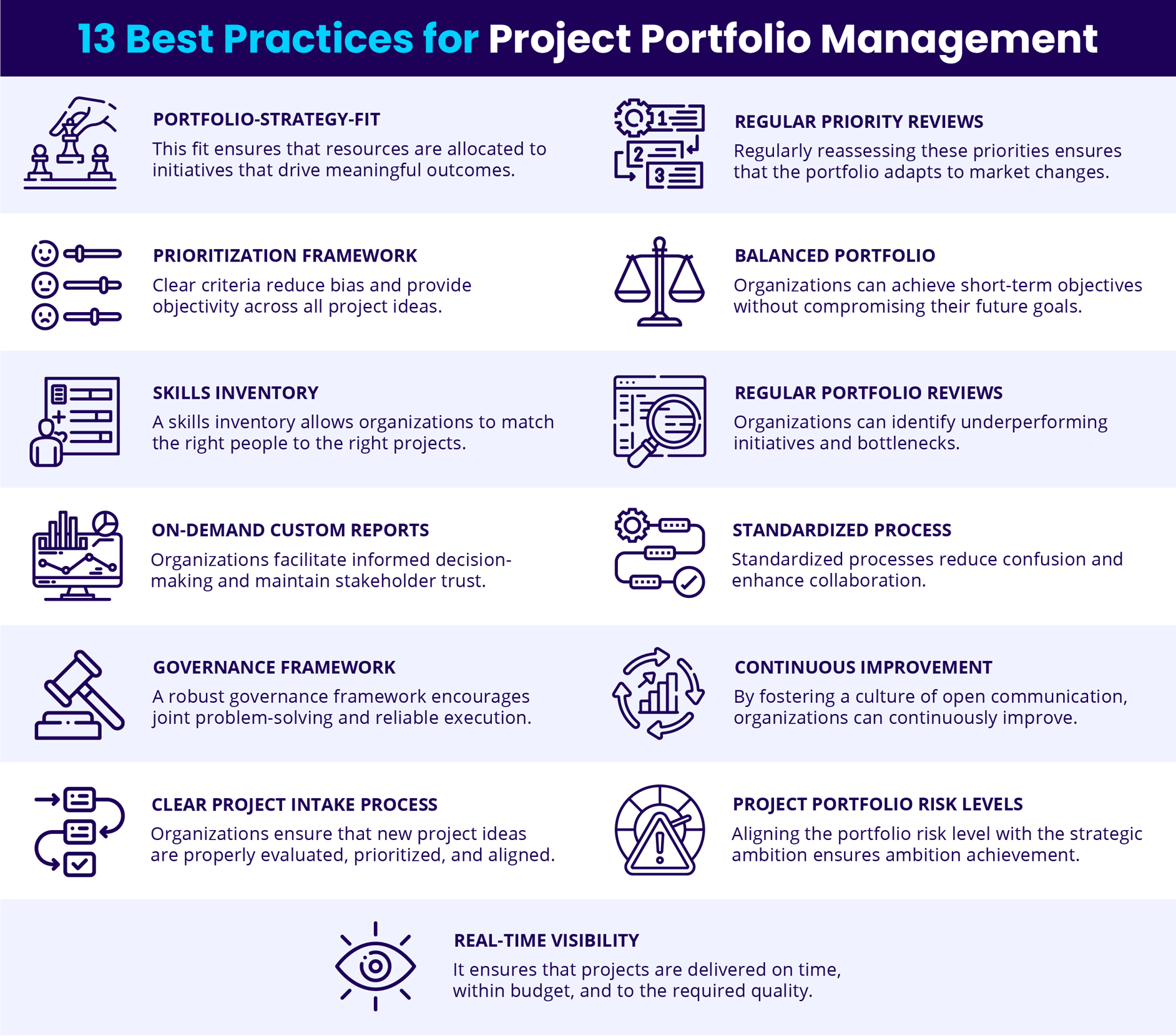
If the Portfolio is the "what," then Project Portfolio Management (PPM) is the "how." PPM is the centralized management of the processes, methods, and technologies used by project managers and project management offices (PMOs) to analyze and collectively manage current or proposed projects.
Resource Capacity Planning
One of the most critical functions of portfolio management is resolving resource conflicts. Most organizations have more ideas than they have people or money. PPM provides the data necessary to see that "Team A" is over-allocated across five different projects, allowing the Portfolio Manager to delay one project to ensure the success of another.
Risk Diversification
Just as a financial investor spreads money across stocks, bonds, and real estate to mitigate risk, a Portfolio Manager spreads organizational investment across different types of initiatives. This "Efficient Frontier" approach ensures that if one high-risk innovation project fails, the organization’s overall health is protected by more stable, foundational projects.
Governance and Oversight
Portfolio management establishes the "rules of engagement." This includes the stage-gate process, where projects must meet specific criteria to move from one phase to the next. In 2026, this governance is increasingly automated, using real-time data to "kill" underperforming projects earlier than was possible in previous decades.
The Portfolio Lifecycle: How Portfolios Evolve
A portfolio is not a static document; it is a living entity that goes through a continuous cycle of refinement.
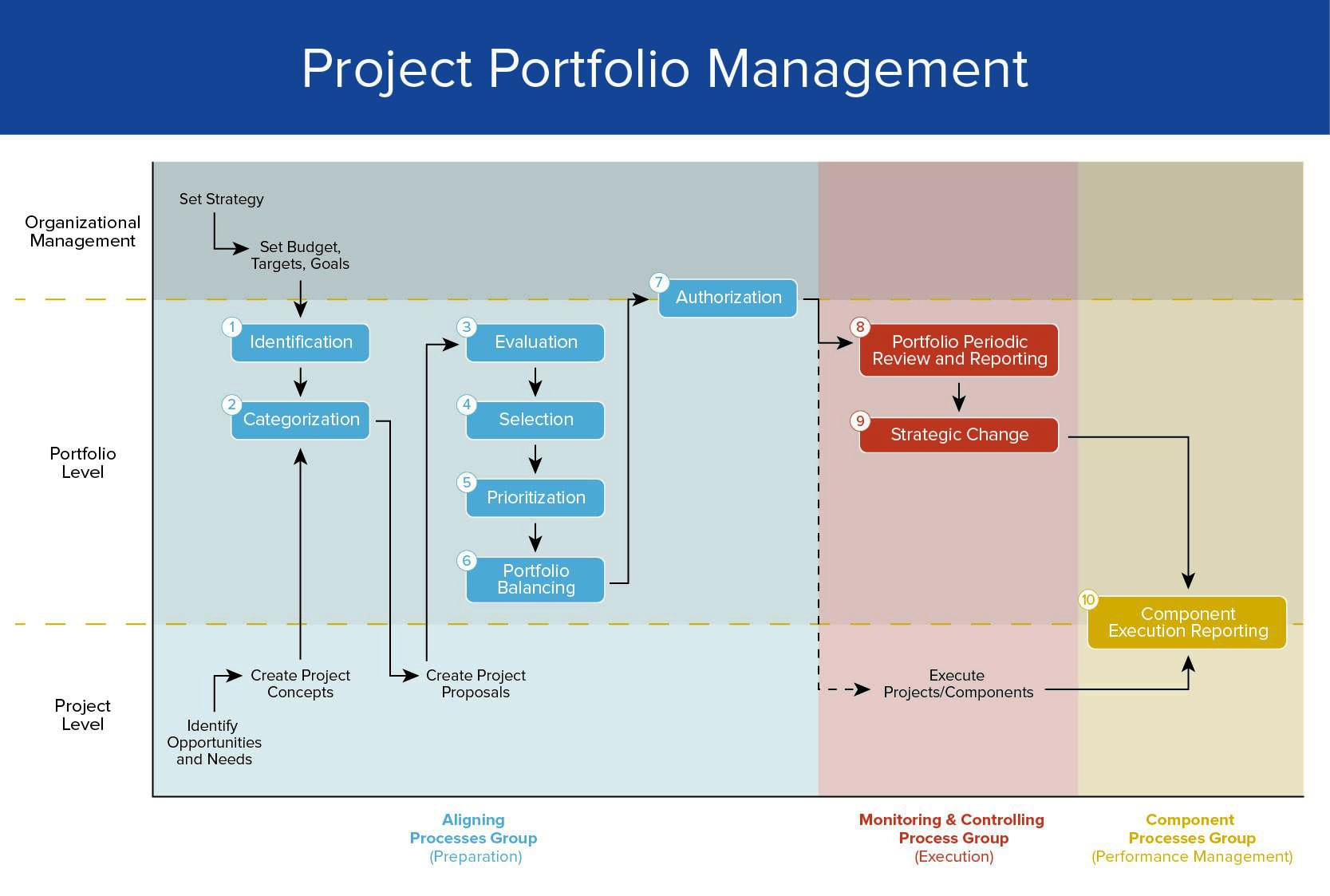
- Inventory/Identification: Gathering all ongoing and proposed initiatives into a single view. This is often the hardest step for organizations that have operated in silos.
- Categorization: Grouping items based on their nature—such as mandatory/regulatory, business-as-usual, or transformative/growth.
- Evaluation: Using objective criteria (Net Present Value, Internal Rate of Return, Risk Score) to assess each initiative.
- Selection and Prioritization: Determining which projects get the "green light" based on the current budget and resource availability.
- Optimization: Adjusting the portfolio mix to ensure it maximizes value while staying within constraints.
- Monitoring and Control: Continuously tracking the performance of the portfolio and making real-time adjustments as market conditions change.
Common Pitfalls in Portfolio Definition
Even with a clear definition, many organizations struggle to implement portfolio management effectively. Recognizing these common errors is vital for any PMO leader or executive.
The "Pet Project" Syndrome
This occurs when an influential executive pushes a project into the portfolio regardless of its strategic value or resource requirements. Without a strong portfolio definition and governance structure, these "pet projects" drain resources from high-value, strategically aligned initiatives.
Initiative Overload
When the portfolio definition is too broad or the gatekeeping is too weak, organizations often take on more work than they can handle. This results in "diluted effort," where every project moves slowly because resources are spread too thin.
Lack of Reliable Data
A portfolio is only as good as the data feeding it. If project managers provide inaccurate status reports or "watermelon" reports (green on the outside, red on the inside), the portfolio-level view will be distorted, leading to poor executive decision-making.
Frequently Asked Questions
What is the difference between a project portfolio and a project pipeline?
A project portfolio consists of all projects currently being managed, including those in execution and those being closed. A project pipeline refers specifically to the "intake" stage—projects that are being proposed, evaluated, and vetted but have not yet been officially authorized or funded.
Who is ultimately responsible for the portfolio?
While a Portfolio Manager or a Project Management Office (PMO) handles the day-to-day analysis, the ultimate accountability lies with the Portfolio Steering Committee or executive leadership. These individuals have the authority to allocate capital and change the company’s strategic direction.
Can an organization have more than one portfolio?
Yes. Very large organizations often have multiple portfolios categorized by department or business unit. However, for true strategic clarity, these should eventually roll up into a single "Enterprise Portfolio" that allows the CEO and CFO to see the total organizational spend and impact.
How often should a portfolio be reviewed?
In the current business environment of 2026, the traditional annual review is no longer sufficient. Most high-performing organizations conduct quarterly "Big Room Planning" or monthly portfolio reviews to ensure that they can pivot quickly in response to market shifts or technological disruptions.
Does a portfolio include non-project work?
Yes, modern portfolio definitions include "Operations" and "Business as Usual" (BAU). This is necessary because these activities consume the same resource pool as projects. If you don't account for the 40% of time your staff spends on maintenance, your project portfolio will be fundamentally over-scheduled and doomed to fail.
Practical Recommendation: Starting Your Portfolio Journey
If you are tasked with defining or managing a portfolio for the first time, start by establishing a single source of truth. You cannot manage what you cannot see. Begin by creating a simple inventory of every active initiative across your department or company.
Once you have this list, apply a "Strategic Filter." Ask: "If we stopped this project tomorrow, would it hinder our ability to reach our three-year goals?" If the answer is no, that project is a candidate for decommissioning. By tightening the portfolio definition and focusing only on work that truly matters, you increase the likelihood of project success and organizational growth.
Image Gallery