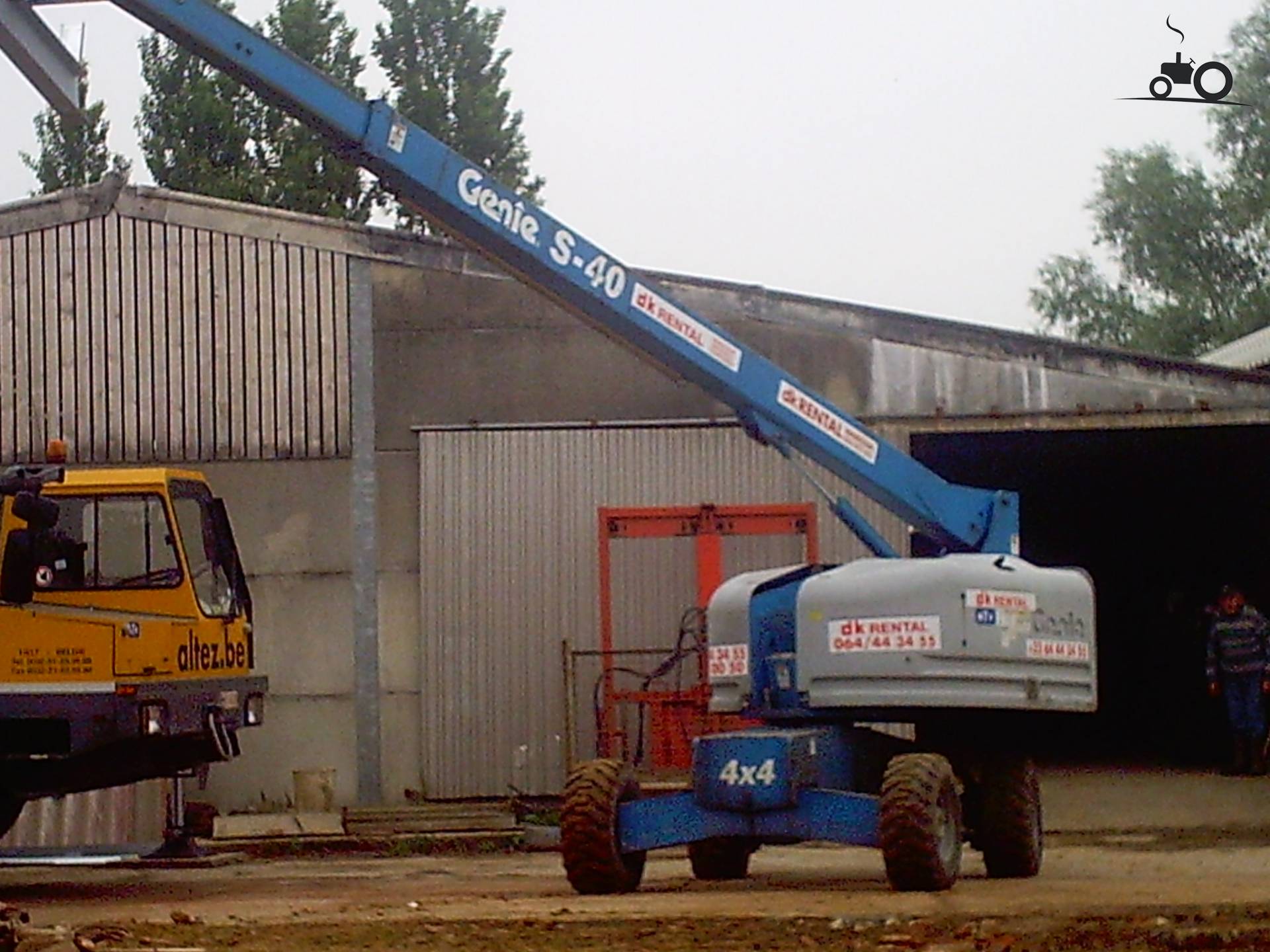
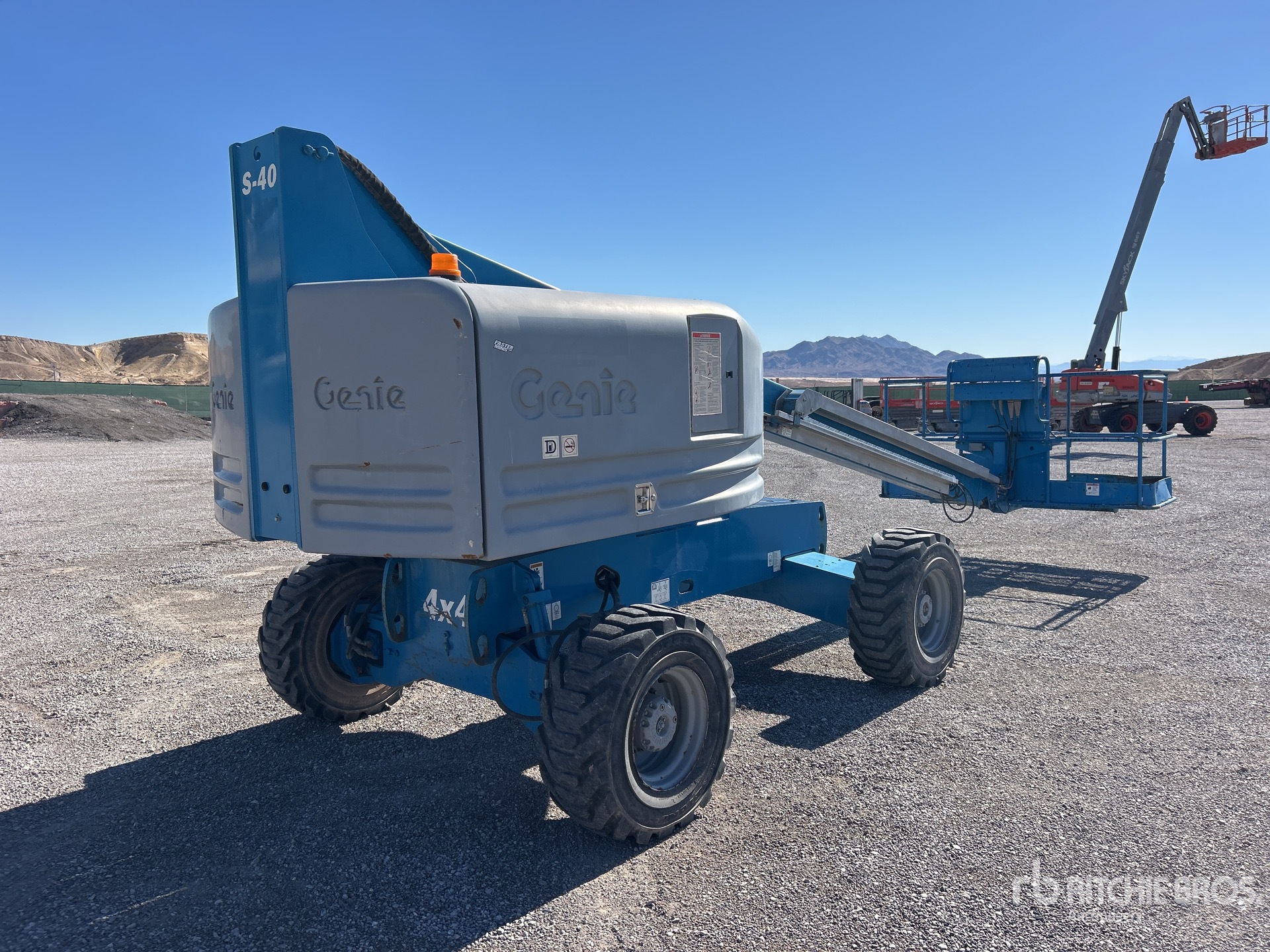
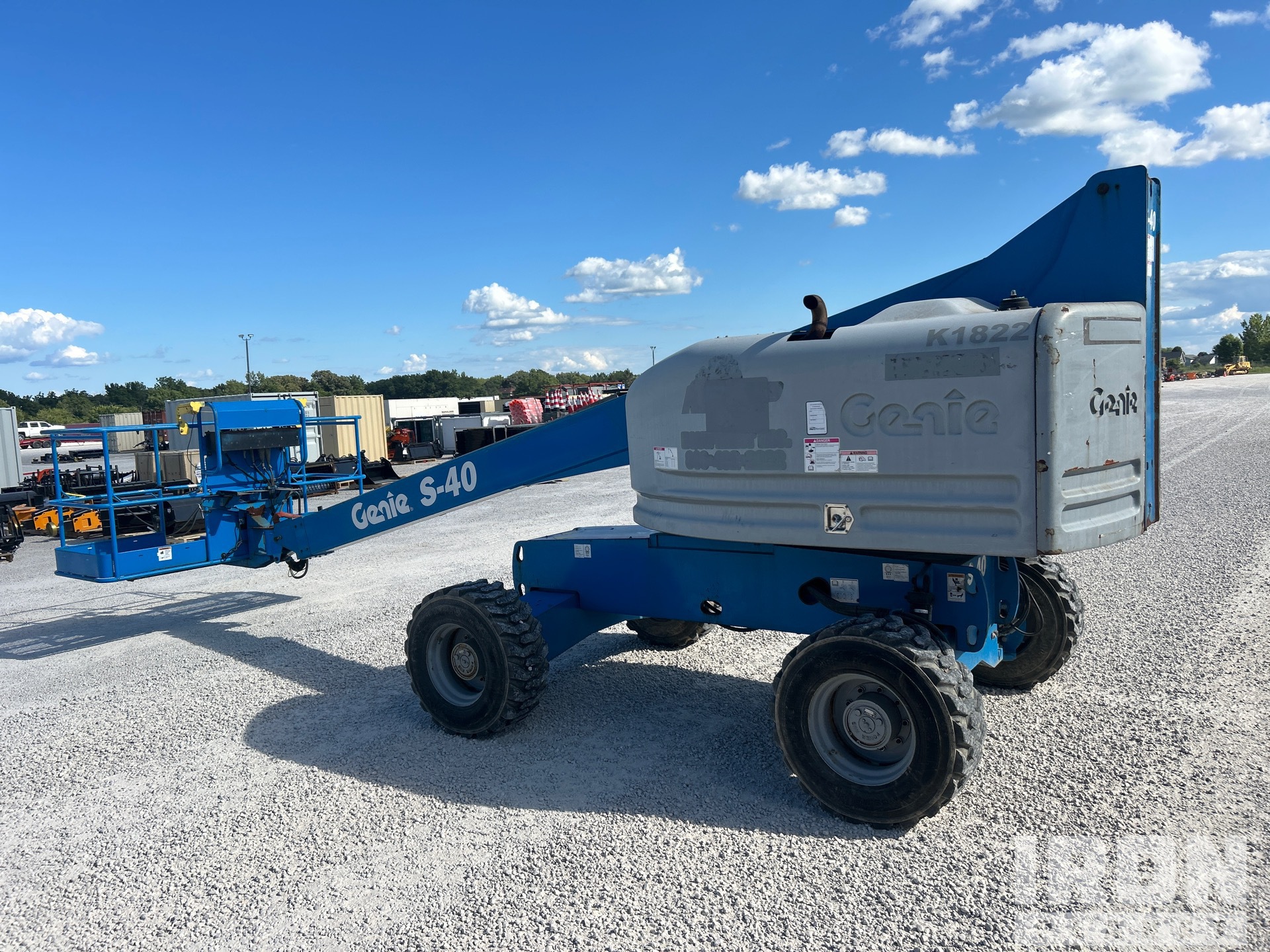
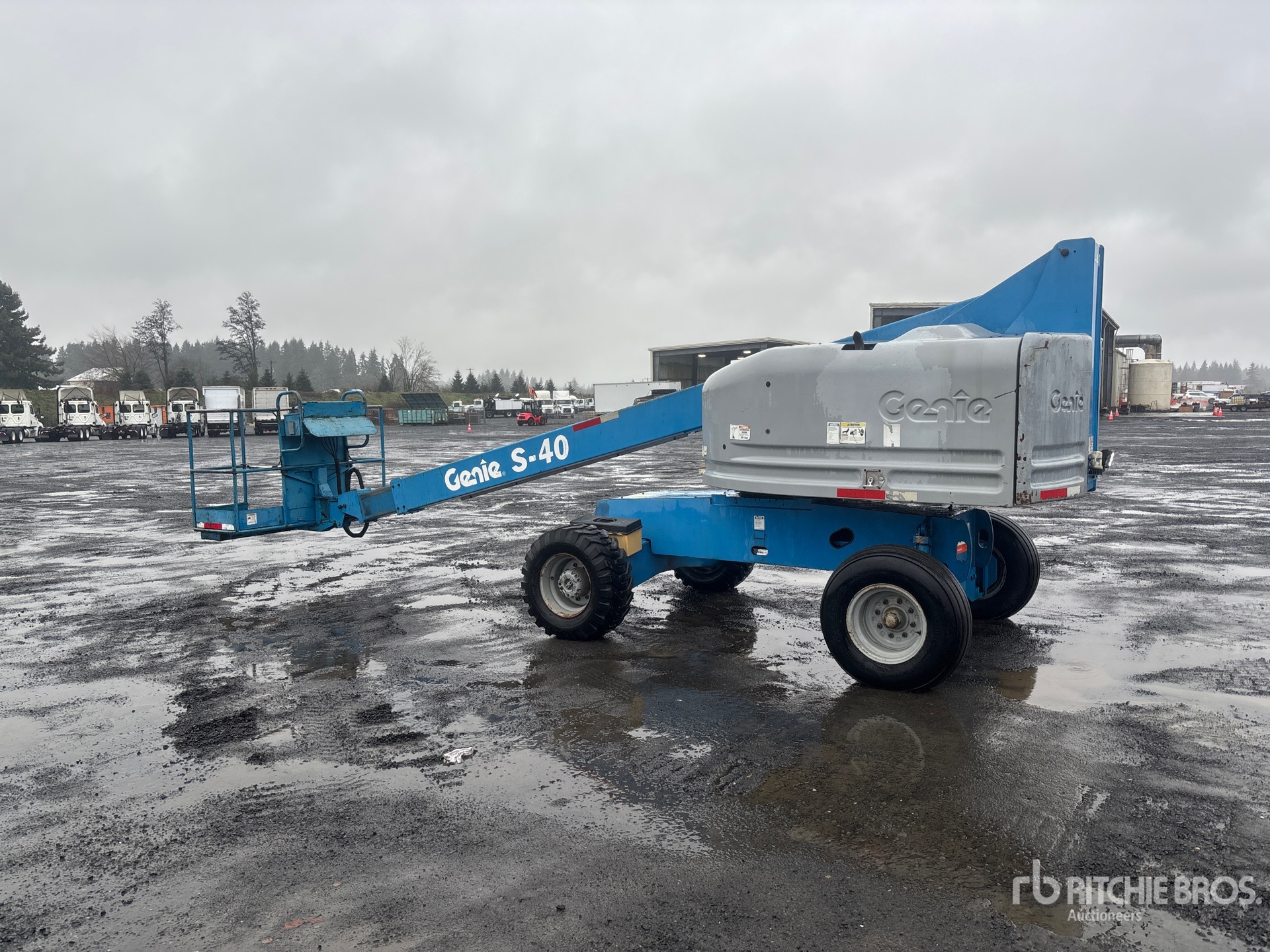
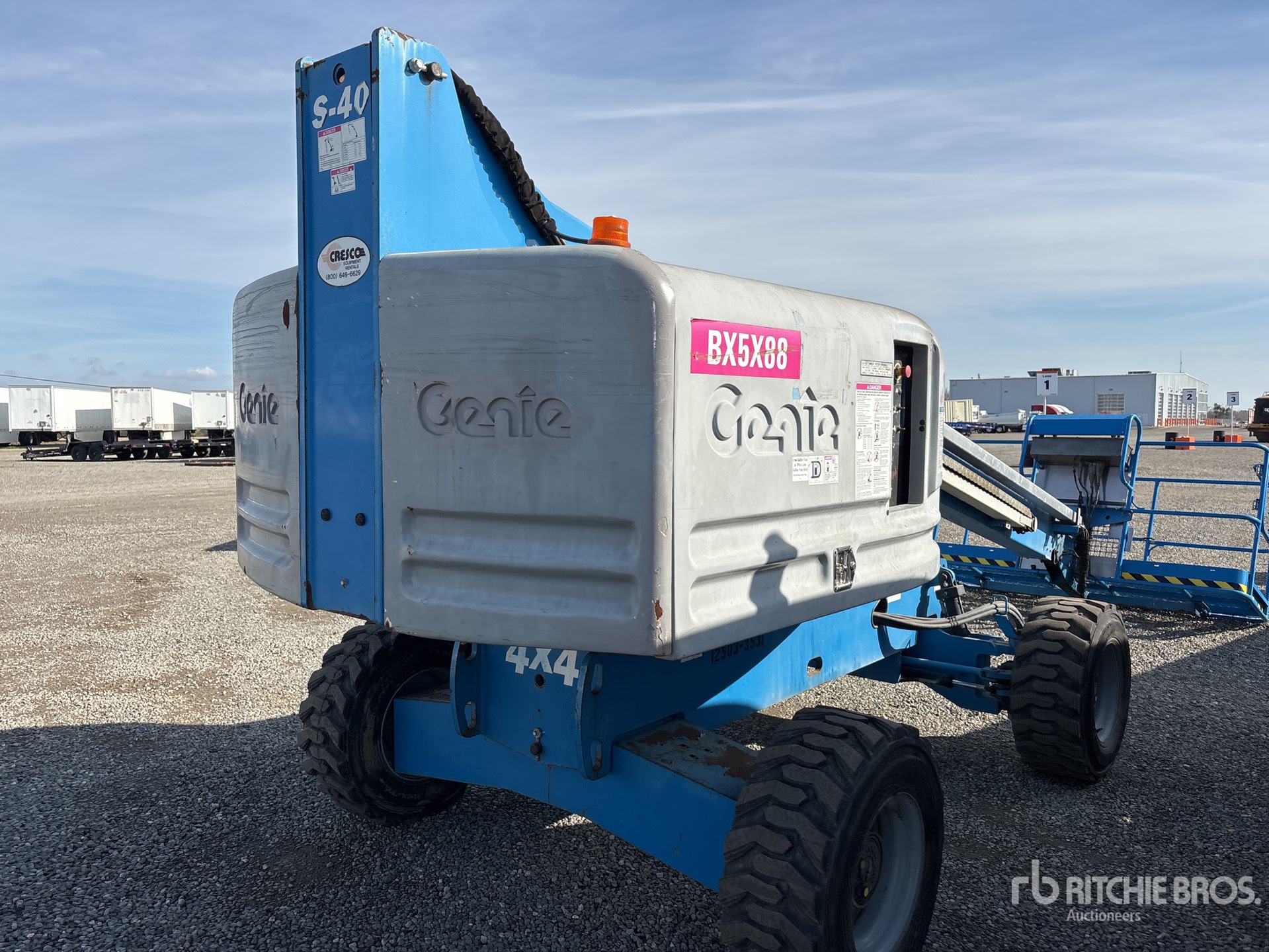
Genie S-40 Specs: Performance, Dimensions, and Operating Capabilities
The Genie S-40 is a telescopic boom lift designed for versatile aerial access, offering a platform height of 40 feet (12.19 m) and a working height of 46 feet (14.20 m). With a horizontal reach of 31 feet 8 inches (9.65 m) and a 500 lb...
The Genie S-40 is a telescopic boom lift designed for versatile aerial access, offering a platform height of 40 feet (12.19 m) and a working height of 46 feet (14.20 m). With a horizontal reach of 31 feet 8 inches (9.65 m) and a 500 lb (227 kg) lift capacity, it provides a stable, high-reach solution for construction, maintenance, and industrial applications.
Contents
The Genie S-40 has long been a foundational asset in the aerial work platform (AWP) industry. As a telescopic or "stick" boom, it is engineered for tasks that require straight-ahead reach and height rather than the up-and-over capabilities found in articulating models. In the landscape of 2026, the S-40 remains a highly sought-after machine in both the rental and resale markets due to its balance of reach, footprint, and reliability. This guide provides a detailed breakdown of the technical specifications, performance metrics, and operational requirements for the standard Genie S-40.
Core Working Dimensions and Reach Envelope
The primary value of the Genie S-40 lies in its reach envelope. Unlike articulating booms that utilize a knuckle joint to navigate obstacles, the telescopic boom of the S-40 extends directly outward. This allows for faster positioning when the path to the work area is clear.
Working Height and Platform Elevation
The "40" in S-40 denotes the maximum platform height of 40 feet. However, operators must distinguish between platform height and working height. The working height is generally calculated by adding six feet to the platform height to account for the reach of an average human operator. For the S-40, this results in a maximum working height of 46 feet (14.20 m).
Horizontal Reach and Rotation
Horizontal reach is often more critical than vertical height in many industrial settings. The S-40 provides a maximum horizontal reach of 31 feet 8 inches (9.65 m). This allows the machine to be parked a significant distance from a structure while still allowing the operator to access the façade or roofline. The turntable offers a 360-degree continuous rotation, minimizing the need to reposition the chassis during complex tasks.
Lift Capacity
The standard S-40 features a restricted platform capacity of 500 lbs (227 kg). This capacity must include the weight of the operator, their tools, and any materials being lifted. For crews requiring higher capacities, Genie offers the S-40 XC (Xtra Capacity) variant, but the standard S-40 remains the industry benchmark for general-purpose maintenance and light construction.
Physical Footprint and Transport Specifications
Understanding the physical dimensions of the Genie S-40 is essential for logistics, as the machine must be transported via trailer and must often navigate tight job sites.
Chassis and Stowed Dimensions
When fully stowed for transport, the S-40 measures approximately 24 feet 3 inches (7.39 m) in length. Its width is standardized at 7 feet 6 inches (2.30 m), which allows it to fit on most standard flatbed trailers without requiring wide-load permits. The stowed height is 8 feet 2 inches (2.49 m), making it capable of passing through many industrial bay doors.
Machine Weight
The operating weight of the S-40 varies depending on the drive configuration (2WD vs. 4WD) and tire options. Typically, a standard 4WD model weighs approximately 12,320 lbs (5,588 kg). This weight is a critical factor when determining ground pressure and whether the surface (such as suspended slabs or manicured lawns) can support the machine without damage.
Wheelbase and Ground Clearance
The S-40 features a wheelbase of 7 feet 3 inches (2.20 m). This relatively compact wheelbase, combined with a ground clearance of 12.5 inches (32 cm) at the center of the chassis, allows the machine to navigate uneven terrain and small obstacles common on active construction sites.
Power and Engine Configurations
The Genie S-40 is powered by internal combustion engines, with several configurations available to suit different regional emissions standards and fuel availability.
Engine Options
Most S-40 units are equipped with either a diesel or a dual-fuel engine.
- Diesel Engines: Historically, the S-40 has utilized reliable power plants such as the Deutz D2.9 L4 or the Perkins 404F-22. These engines are favored for their torque and durability in harsh environments.
- Dual Fuel (Gas/LPG): For environments where diesel exhaust is a concern or where LPG is more readily available, dual-fuel configurations (using engines like the Ford MSG425) are common.
Fuel Tank Capacity and Hydraulics
The machine is equipped with a 20-gallon (76 L) fuel tank, which is generally sufficient for a full day of heavy operation. The hydraulic system, which powers the boom extension, rotation, and drive functions, has a reservoir capacity of 45 gallons (170 L). This high volume of hydraulic fluid helps dissipate heat, ensuring consistent performance during continuous operation in high-temperature climates.
Drive Performance and Terrain Capability
The S-40 is designed for versatility across different ground conditions. Its performance is largely dictated by the drive system chosen at the time of manufacture.
Travel Speed and Gradeability
In its stowed position, the S-40 can travel at speeds up to 4.8 mph (7.7 km/h). When the boom is raised or extended, the system automatically shifts into a "creep" mode for safety, significantly reducing travel speed to allow for precise positioning.
Gradeability refers to the machine's ability to climb slopes. The S-40 4WD model typically offers a gradeability of 40% when stowed. It is important to note that gradeability is a measure of the engine's power and traction, not a safety rating for operating the boom on an incline. Boom operation should only occur on firm, level surfaces.
Turning Radius and Steering
The S-40 offers two-wheel steering. The inside turning radius is approximately 6 feet 8 inches (2.03 m), while the outside turning radius is 15 feet 8 inches (4.78 m). These metrics are vital for operators working in congested areas where maneuvering room is limited.
Technical Specifications Comparison Table
The following table summarizes the key specifications of the Genie S-40 and compares it with its high-capacity sibling, the S-40 XC, and a primary competitor in the 40-foot telescopic class.
| Specification | Genie S-40 (Standard) | Genie S-40 XC | JLG 400S |
|---|---|---|---|
| Max Working Height | 46 ft (14.20 m) | 46 ft 2 in (14.24 m) | 46 ft (14.02 m) |
| Max Platform Height | 40 ft (12.19 m) | 40 ft 2 in (12.24 m) | 40 ft (12.19 m) |
| Max Horizontal Reach | 31 ft 8 in (9.65 m) | 28 ft 11 in (8.81 m) | 33 ft 3 in (10.13 m) |
| Platform Capacity | 500 lbs (227 kg) | 660 lb/1,000 lb Dual | 600 lbs / 1,000 lbs |
| Machine Weight | ~12,320 lbs | ~14,080 lbs | ~13,640 lbs |
| Gradeability (4WD) | 40% | 45% | 45% |
| Stowed Length | 24 ft 3 in | 24 ft 3 in | 24 ft 9 in |
| Drive Speed (Stowed) | 4.8 mph | 4.0 mph | 4.5 mph |
Operational Safety and Standard Features
Genie integrates several safety and productivity features into the S-40 that define its operational limits.
Control Systems
The S-40 utilizes the Genie ALC-1000 control system, which provides proportional joysticks for smooth boom movement. This system allows for "multi-function" capability, meaning an operator can lift, extend, and rotate the boom simultaneously, provided the engine RPM is sufficient to support the hydraulic demand.
Safety Sensors and Alarms
- Tilt Alarm: A sensor in the chassis alerts the operator if the machine is on a slope exceeding the safety limit (typically 2.5 to 5 degrees depending on the market and year of manufacture).
- Load Sense: Modern iterations of the S-40 include platform load-sensing technology that disables functions if the weight in the basket exceeds the 500 lb rated capacity.
- Descent Alarm: An audible alarm sounds whenever the boom is lowered or the machine is in motion to warn ground personnel.
Platform Specifications
The standard platform is 8 feet (2.44 m) wide, though a 6-foot (1.83 m) version is common for tighter spaces. The platform includes a self-closing swing gate, a 110V AC outlet for power tools, and multiple lanyard attachment points for fall protection harnesses.
Maintenance and Long-term Reliability
In 2026, the Genie S-40 remains a favorite for fleet managers because of its straightforward maintenance path. The "open-engine" design provides easy access to filters, fluids, and the battery, reducing labor hours during scheduled service intervals.
Service Intervals
Standard maintenance typically follows a 250-hour or 6-month interval for minor checks (oil, filters, lubrication) and a more intensive annual inspection. The annual inspection is a regulatory requirement in many jurisdictions (such as ANSI in the US) and involves a structural analysis of the boom sections and weldments.
Common Troubleshooting Areas
Operators and technicians should monitor hydraulic hose wear at the boom tip, as these are exposed to the elements and potential snagging. Additionally, ensuring the calibration of the boom angle sensors is vital for maintaining the machine's reach envelope accuracy.
Frequently Asked Questions
What is the difference between the Genie S-40 and the S-45?
The S-45 is essentially the same machine base as the S-40 but includes a 5-foot (1.52 m) articulating jib at the end of the boom. This jib allows for greater flexibility in positioning the platform, particularly when trying to reach over an edge or around a minor obstruction. The S-40 lacks this jib, making it a "straight boom" only.
Can the Genie S-40 be used indoors?
While the S-40 is primarily an outdoor machine due to its internal combustion engine, it can be used indoors if the building is properly ventilated. In such cases, the dual-fuel (LPG) version is preferred over the diesel version to minimize particulate emissions. For strictly indoor use, electric articulating booms are generally a better choice.
What kind of license is required to operate a Genie S-40?
While "license" requirements vary by country, in the United States and Canada, operators must be "trained and authorized." This typically involves a certification course that meets OSHA and ANSI standards (such as MEWP operator training). Operators must also be familiarized with the specific model they are using by a qualified person.
Does the S-40 come in a tracked version?
Yes, Genie produces the S-40 Trax. Instead of traditional tires, this version uses a four-point independent track system. This is designed for extremely muddy or soft soil conditions where a wheeled machine would bog down. The specs for the Trax version are similar, though the machine weight is higher and the travel speed is slightly lower.
What is the fuel consumption of a Genie S-40?
Fuel consumption depends heavily on the duty cycle. On average, during intermittent operation (lifting and repositioning), the engine may consume between 0.5 and 1.5 gallons per hour. Constant travel or high-idle usage will increase this rate.
Practical Recommendation for Equipment Selection
When evaluating the Genie S-40 specs for a project in 2026, first verify the maximum weight of the tools and personnel required. If your team frequently approaches the 500 lb limit, opting for the S-40 XC or a JLG 400S may be necessary to avoid "overload" cutouts. However, for standard maintenance and painting where weight is not an issue, the S-40 remains the most cost-effective and transportable machine in its class. Always ensure the ground conditions are rated for a 12,000+ lb machine before deployment.
Image Gallery