Exploring the Differences Between Gorillas and Orangutans: A Comprehensive Guide
Gorillas and orangutans are both members of the great ape family, Hominidae, but they represent distinct evolutionary paths adapted to different environments. Gorillas are large, primarily ground-dwelling herbivores native to the fores...
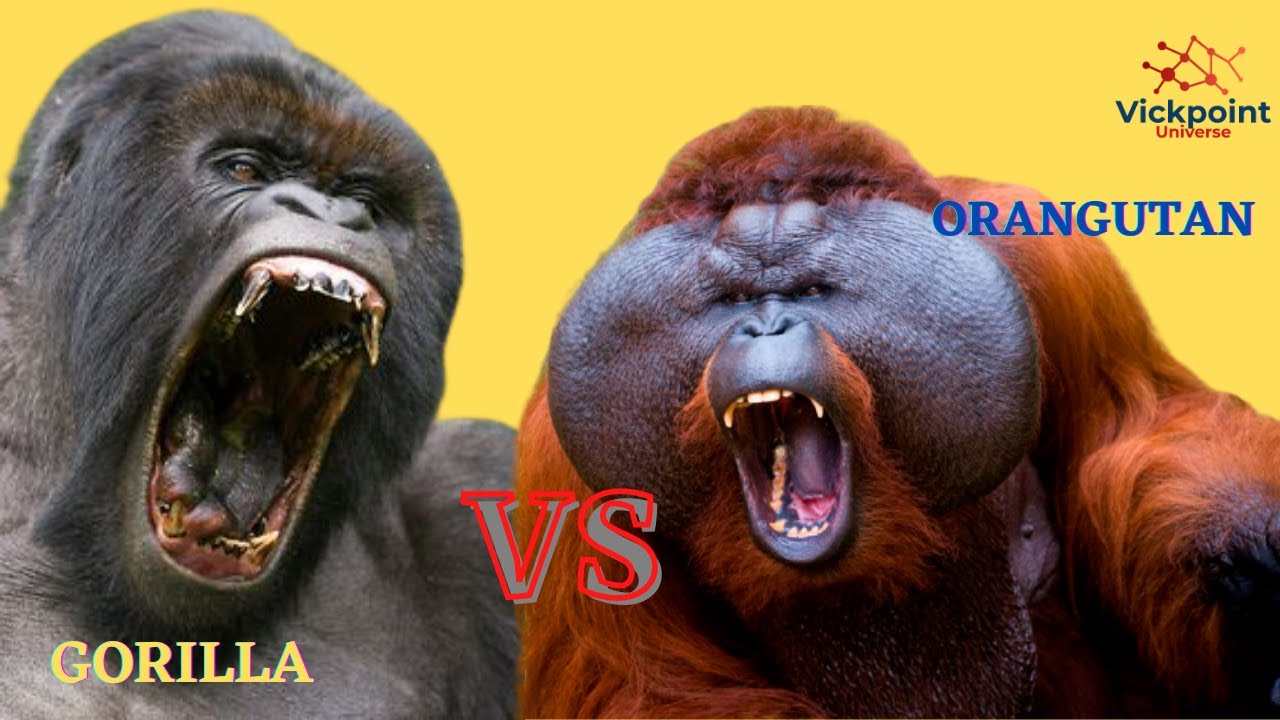
Gorillas and orangutans are both members of the great ape family, Hominidae, but they represent distinct evolutionary paths adapted to different environments. Gorillas are large, primarily ground-dwelling herbivores native to the forests of Africa, while orangutans are highly intelligent, solitary, and almost entirely arboreal primates found only in the rainforests of Borneo and Sumatra in Southeast Asia.
Contents
Evolutionary Heritage and Geographic Distribution
To understand the fundamental differences between gorillas and orangutans, one must first look at their geographic and evolutionary history. While both share a common ancestor with humans, they diverged at different points in the primate lineage. Gorillas are more closely related to humans and chimpanzees than they are to orangutans.
As of 2026, the geographic isolation of these species remains a defining characteristic. Gorillas are found exclusively in the tropical and subtropical forests of Central and East Africa. They are divided into two main species—the Western Gorilla (Gorilla gorilla) and the Eastern Gorilla (Gorilla beringei)—which are further divided into four subspecies, including the well-known Mountain Gorilla.
In contrast, orangutans are the only great apes native to Asia. Historically, their range extended across much of Southeast Asia and even into southern China, but they are now confined to the islands of Borneo (Pongo pygmaeus) and Sumatra (Pongo abelii and Pongo tapanuliensis). This deep geographic split means these species have evolved to survive in drastically different ecosystems: the dense, mountainous, or lowland forests of the African continent versus the swampy, peat-rich, and dipterocarp-heavy rainforests of the Indonesian and Malaysian islands.
Physical Morphology and Skeletal Adaptations
The physical differences between gorillas and orangutans are perhaps the most striking, driven by their specialized modes of locomotion. Gorillas are built for power and stability on the ground, while orangutans are masters of the canopy.
Size and Body Mass
Gorillas are the largest living primates on Earth. An adult male "silverback" can weigh between 300 and 450 pounds (136 to 204 kg) and stand roughly 5 to 6 feet tall when upright. Their bodies are barrel-chested, muscular, and robust, designed for terrestrial movement.
Orangutans are significantly smaller, though still large by primate standards. Male orangutans typically weigh between 110 and 200 pounds (50 to 90 kg), with females being about half that size. Their body structure is more streamlined and flexible, which is essential for moving through the treetops without breaking branches.
Limb Proportions and Locomotion
The most visible anatomical difference lies in the length and function of the limbs. Gorillas have relatively short arms compared to their massive torsos. They move primarily through "knuckle-walking," a form of quadrupedalism where they walk on the knuckles of their front hands rather than their palms. This allows them to support their immense weight while moving across the forest floor.
Orangutans possess the longest arms of any great ape relative to their body size. A male's arm span can reach up to 7 feet (2.1 meters). Their hips are also uniquely mobile, allowing them to swing their legs in almost any direction. This adaptation supports "quadrumanous" locomotion, meaning they use both hands and feet to grasp branches. While they rarely descend to the ground, when they do, they walk on their palms or the sides of their feet, as their anatomy is not optimized for knuckle-walking.
Facial Features and Sexual Dimorphism
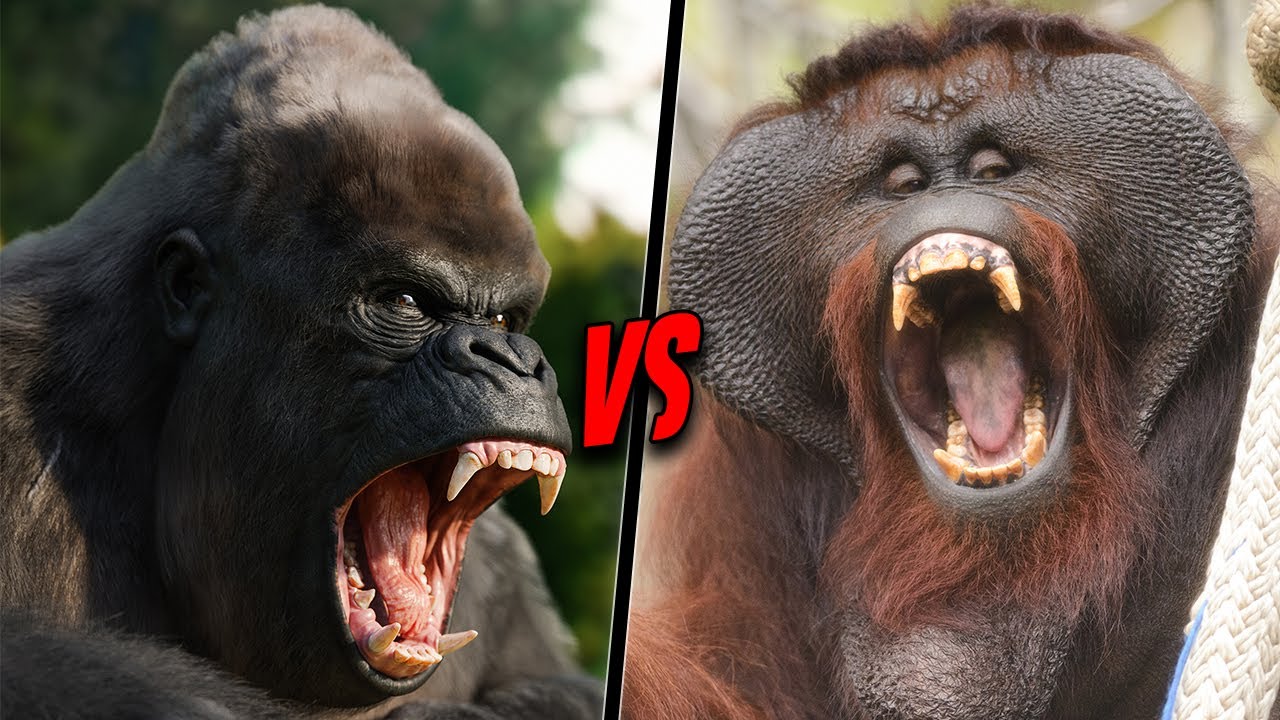
Both species exhibit extreme sexual dimorphism, but it manifests differently. Male gorillas develop a patch of silver hair on their backs upon reaching maturity—the hallmark of the "silverback." They also have large sagittal crests on their skulls, which provide anchor points for massive jaw muscles used for chewing tough vegetation.
Male orangutans, particularly those in Sumatra and Borneo, often develop large "flanges"—fleshy cheek pads that frame their faces. These flanges are used to amplify their "long calls," which can travel through dense jungle for over a mile to signal territory and attract mates. Not all adult male orangutans develop flanges; this phenomenon, known as bimaturism, is a unique biological strategy where "unflanged" males remain smaller and less aggressive.
Social Structures and Reproductive Strategies
The social lives of these two apes could not be more different. The social organization of a species is often a reflection of its environment and the availability of food resources.
The Gorilla Troop
Gorillas are highly social animals that live in stable groups called troops. A typical troop consists of one dominant silverback male, several adult females, and their offspring. The silverback acts as the protector, decision-maker, and primary breeder. He defends the group against predators and competing males. This social structure provides safety in numbers and allows for complex emotional bonds between group members. When young males reach maturity, they usually leave the troop to live as bachelors until they can form their own group.
The Solitary Orangutan
In sharp contrast, orangutans are the most solitary of all great apes. This behavior is largely a result of their diet. Because they rely heavily on fruit, which can be scarce or widely dispersed in the rainforest, the environment cannot support large groups of large-bodied primates in one area.
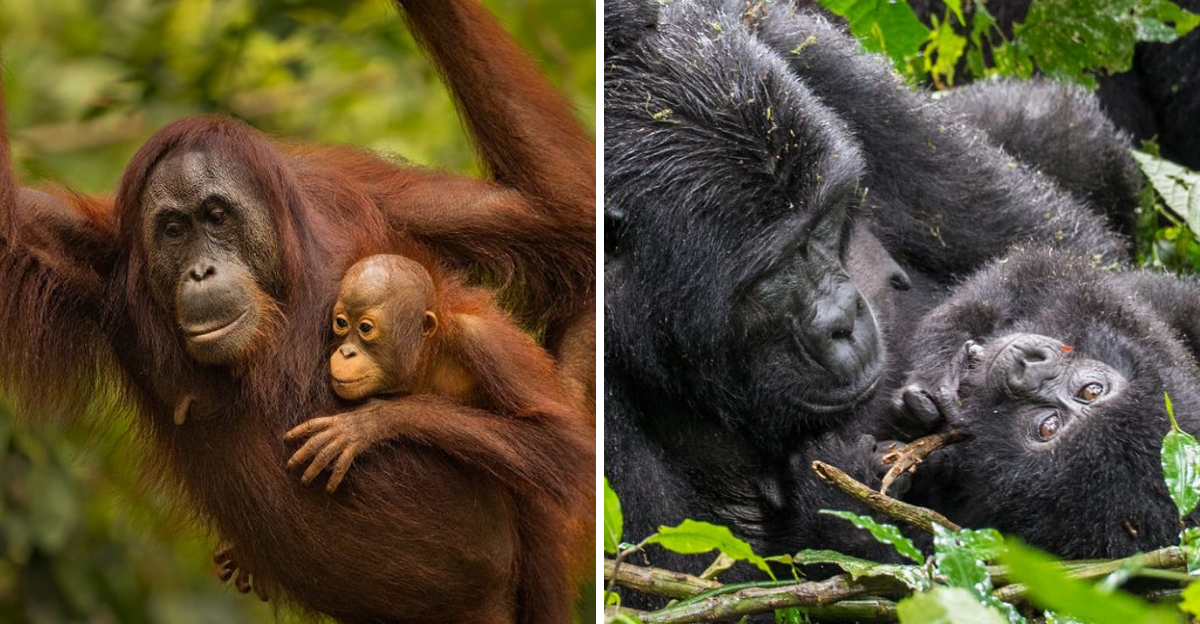
Adult females usually travel with their dependent offspring, but adult males spend the vast majority of their lives alone. They interact primarily for mating purposes. Despite this solitary nature, orangutans are not anti-social; they are known to have "social clusters" where individuals whose territories overlap recognize and occasionally tolerate one another, particularly during "mast fruiting" events when food is unusually abundant.
Dietary Patterns and Foraging Behavior
While both species are primarily herbivorous, their specific dietary requirements dictate their daily activity patterns.
- Gorillas: These apes are primarily folivores. Their diet consists of stems, bamboo shoots, bark, and leaves. Because foliage is abundant and calorie-poor, gorillas must consume massive quantities—up to 40 pounds a day for an adult male—to sustain their energy levels. Their large digestive tracts are specifically designed to ferment and break down fibrous plant material.
- Orangutans: Often described as frugivores, orangutans prefer fruit above all else. They are known to eat over 300 different types of fruit, including the pungent durian. When fruit is unavailable, they supplement their diet with leaves, bark, insects, and occasionally bird eggs. Their keen spatial memory allows them to remember the location and ripening schedules of hundreds of trees throughout the forest.
Comparative Summary of Gorilla and Orangutan Traits
| Feature | Gorilla | Orangutan |
|---|---|---|
| Scientific Name | Gorilla | Pongo |
| Native Region | Central and East Africa | Borneo and Sumatra (Asia) |
| Primary Habitat | Tropical forests, mountains, swamps | Tropical rainforests, peat swamps |
| Locomotion | Terrestrial (Knuckle-walking) | Arboreal (Brachiation/Clambering) |
| Social Structure | Highly social (Troops/Silverbacks) | Primarily solitary |
| Main Diet | Foliage, bamboo, shoots (Folivore) | Fruits, bark, insects (Frugivore) |
| Average Weight (Male) | 300–450 lbs (136–204 kg) | 110–200 lbs (50–90 kg) |
| Lifespan (Wild) | 35–40 years | 30–45 years |
| Cognitive Focus | Social intelligence and cohesion | Technical problem-solving and tool use |
Cognitive Capabilities and Tool Use
Both gorillas and orangutans exhibit high levels of intelligence, but their cognitive "specialties" differ. Studies in primatology suggest that their environments have shaped how they apply their brainpower.
Orangutans are often considered the "engineers" of the great ape world. Because they live in the complex, three-dimensional environment of the canopy, they possess exceptional spatial reasoning and mechanical problem-solving skills. In the wild, Sumatran orangutans have been observed using sticks as tools to extract seeds from prickly fruits or to "fish" for termites and honey. They are also known to fashion "umbrellas" out of large leaves to stay dry during tropical downpours.
Gorillas, while also highly intelligent, focus much of their cognitive energy on social dynamics. They have a sophisticated range of vocalizations and gestures used to maintain peace and hierarchy within the troop. However, tool use has been documented in gorillas as well. For example, wild gorillas have been seen using sticks to test the depth of water before wading across a swamp—a clear indication of foresight and environmental assessment.
Conservation Status as of 2026
As we move through 2026, the conservation status of both gorillas and orangutans remains critical. According to the International Union for Conservation of Nature (IUCN), all species and subspecies of both apes are listed as either Endangered or Critically Endangered.
The threats they face are distinct yet interrelated:
- Habitat Loss: For orangutans, the primary threat is the conversion of rainforests into palm oil plantations and timber concessions. For gorillas, habitat loss is often driven by agriculture, mining (specifically for minerals used in electronics), and human encroachment.
- Poaching and Illegal Trade: Both apes are victims of the illegal bushmeat trade and the exotic pet trade. Young orangutans are often captured after their mothers are killed, while gorillas may be caught in snares intended for other animals.
- Disease: Because gorillas are genetically so similar to humans, they are highly susceptible to human respiratory diseases and viruses like Ebola, which have decimated entire populations in the past.
- Climate Change: Rising temperatures and shifting rainfall patterns in 2026 are affecting the fruiting cycles of trees in Southeast Asia and the availability of alpine vegetation in the African highlands.
Frequently Asked Questions
Which is stronger, a gorilla or an orangutan?
A gorilla is significantly stronger than an orangutan. Due to their massive muscle mass and bone density, a silverback gorilla is estimated to be six to fifteen times stronger than an average human. While orangutans possess incredible grip strength and upper-body power for climbing, they do not have the sheer physical bulk of a gorilla.
Can gorillas and orangutans live together?
No. They live on different continents and require different ecosystems. Even in a captive environment, they are typically not housed together because their social structures and communication styles are incompatible. A gorilla's troop-oriented behavior would likely clash with an orangutan's solitary nature.
Do orangutans have tails?
No. Like all great apes (including gorillas, chimpanzees, bonobos, and humans), orangutans do not have tails. This is one of the primary physical characteristics that distinguish apes from monkeys.
Why are male orangutans' faces so wide?
The wide faces of male orangutans are caused by "flanges," which are fatty tissue deposits. These develop during puberty in dominant males. The flanges serve as acoustic reflectors, helping to project the male's "long call" across the forest to claim territory and attract females.
Are gorillas more aggressive than orangutans?
Generally, both species are peaceful unless provoked. Gorillas are often portrayed as aggressive in media, but they are actually quite shy. A silverback will perform a "charge" or chest-beat as a bluff to ward off threats, but actual physical combat is rare. Orangutans are also non-aggressive but can be dangerous if they feel their territory or offspring are threatened.
Recommendation for Further Action
For those interested in the preservation of these magnificent primates, the most effective next step is to support verified conservation organizations that work directly in the field. Groups such as the Dian Fossey Gorilla Fund and the Orangutan Outreach program focus on habitat protection, anti-poaching patrols, and community education. Additionally, consumers can make a direct impact by choosing products certified by the Roundtable on Sustainable Palm Oil (RSPO) to reduce the demand for deforestation in Southeast Asia. Understanding these differences is the first step toward appreciating the unique role each species plays in the biodiversity of our planet.
Image Gallery