Furnace Smells Bad: Causes, Safety Steps, and How to Fix HVAC Odors
When your furnace smells bad, the root cause ranges from harmless dust burning off during seasonal startup to life-threatening hazards like natural gas leaks or a cracked heat exchanger. Identifying the specific scent—such as rotten eg...
When your furnace smells bad, the root cause ranges from harmless dust burning off during seasonal startup to life-threatening hazards like natural gas leaks or a cracked heat exchanger. Identifying the specific scent—such as rotten eggs, burning plastic, electrical ozone, or dirty socks—is essential for determining whether to turn off your system immediately or perform basic maintenance.
Contents
Immediate Safety Check: When a Bad Furnace Smell Is an Emergency
Before troubleshooting minor mechanical issues, you must confirm that the odor entering your living space does not indicate an immediate fire or carbon monoxide hazard. Certain foul odors produced by residential heating equipment point directly to dangerous structural or fuel-system failures.
1. The Rotten Egg or Sulfur Smell (Gas Leak)
Natural gas is naturally colorless and odorless. To make fuel leaks identifiable, utility companies add a distinct chemical odorant called methyl mercaptan, which produces a sulfurous or rotten egg stench. If you detect this smell near your furnace, supply vents, or gas line connection:
- Do not toggle electrical switches, light matches, or operate appliances.
- Do not attempt to locate the leak yourself.
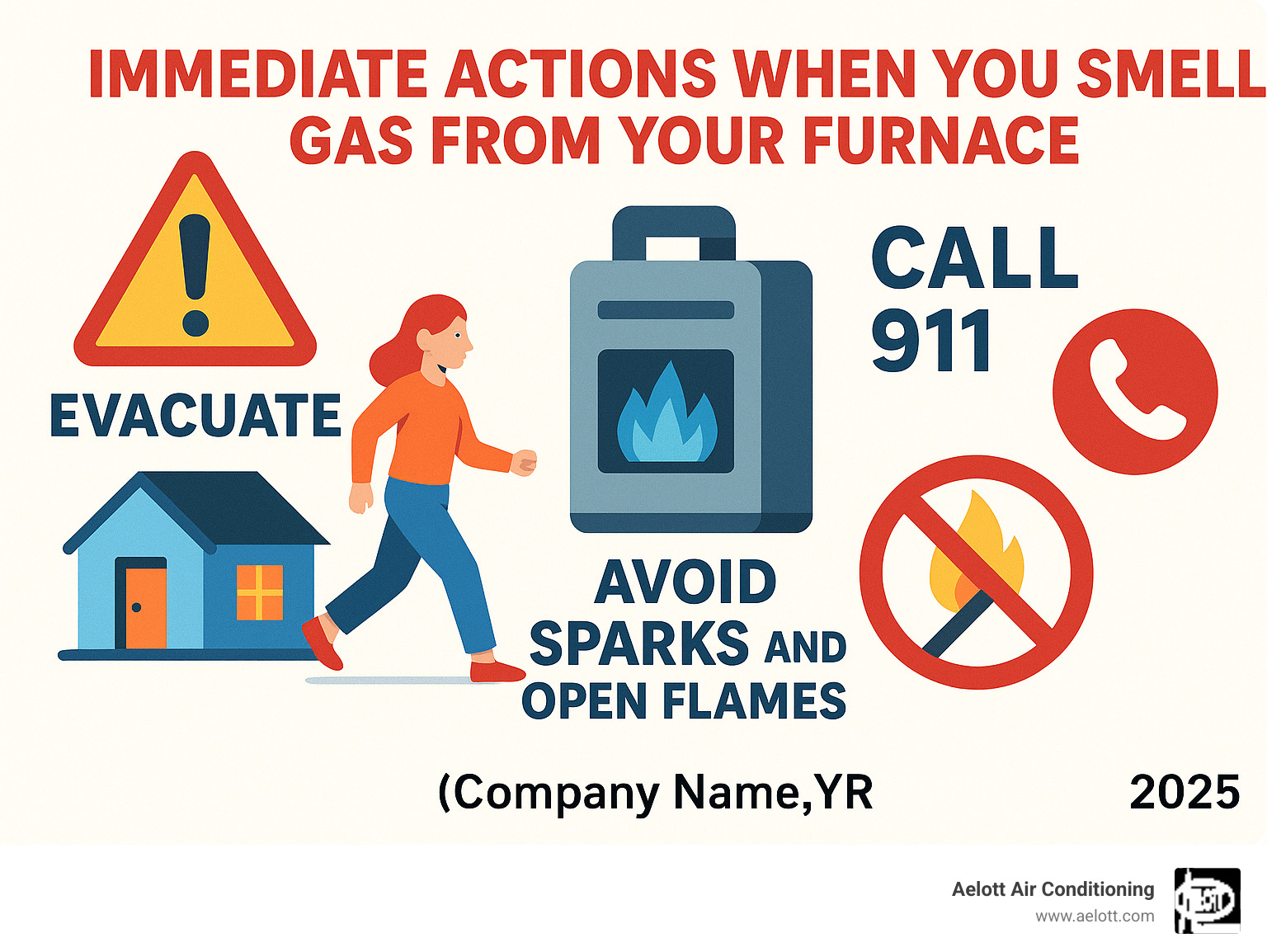
- Evacuate all occupants and pets from the home immediately, leaving the door open to allow ventilation.
- Call your local natural gas provider or 911 from outside the house.
2. Burning Plastic, Electrical Ozone, or Burning Rubber
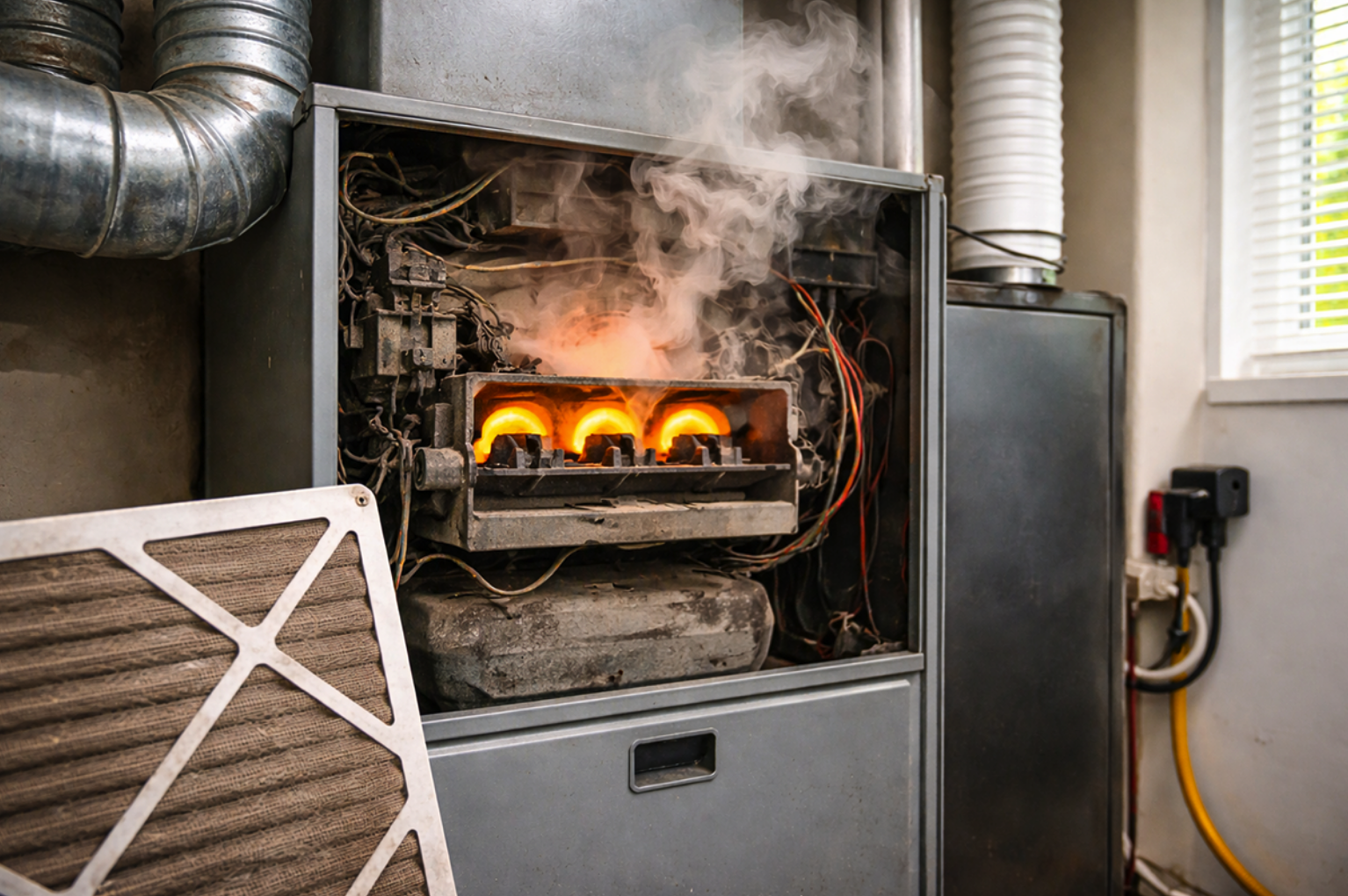
If your heating system emits an acrid, sharp metallic, or burning chemical odor, an electrical component or motor is likely overheating. Melted wire insulation, blown capacitor fluid, or a failing blower motor can trigger an electrical fire inside the furnace cabinet. Turn off the heating system at your thermostat and disconnect power at the main electrical breaker panel immediately before calling a professional technician.
3. Exhaust Gas or Heavy Burning Oil
A persistent smell of raw fuel, diesel exhaust, or heavy combustion gases indicates incomplete fuel combustion or a blocked flue pipe. High-efficiency gas furnaces and oil-fired systems require clear exhaust pathways to vent dangerous gases out of the home. If combustion products backdraft into your living space, carbon monoxide (CO) can quickly reach hazardous concentrations. Turn off the unit and verify that all household carbon monoxide detectors are operating properly. The U.S. Consumer Product Safety Commission (CPSC) provides detailed safety guidance on installing CO alarms on every level of a residence to prevent silent poisoning.
Diagnostic Guide: Identifying Furnace Odors by Scent
Recognizing the exact scent profile of your furnace allows you to narrow down the mechanical issue, assess the risk level, and decide whether to handle the problem yourself or hire a qualified technician.
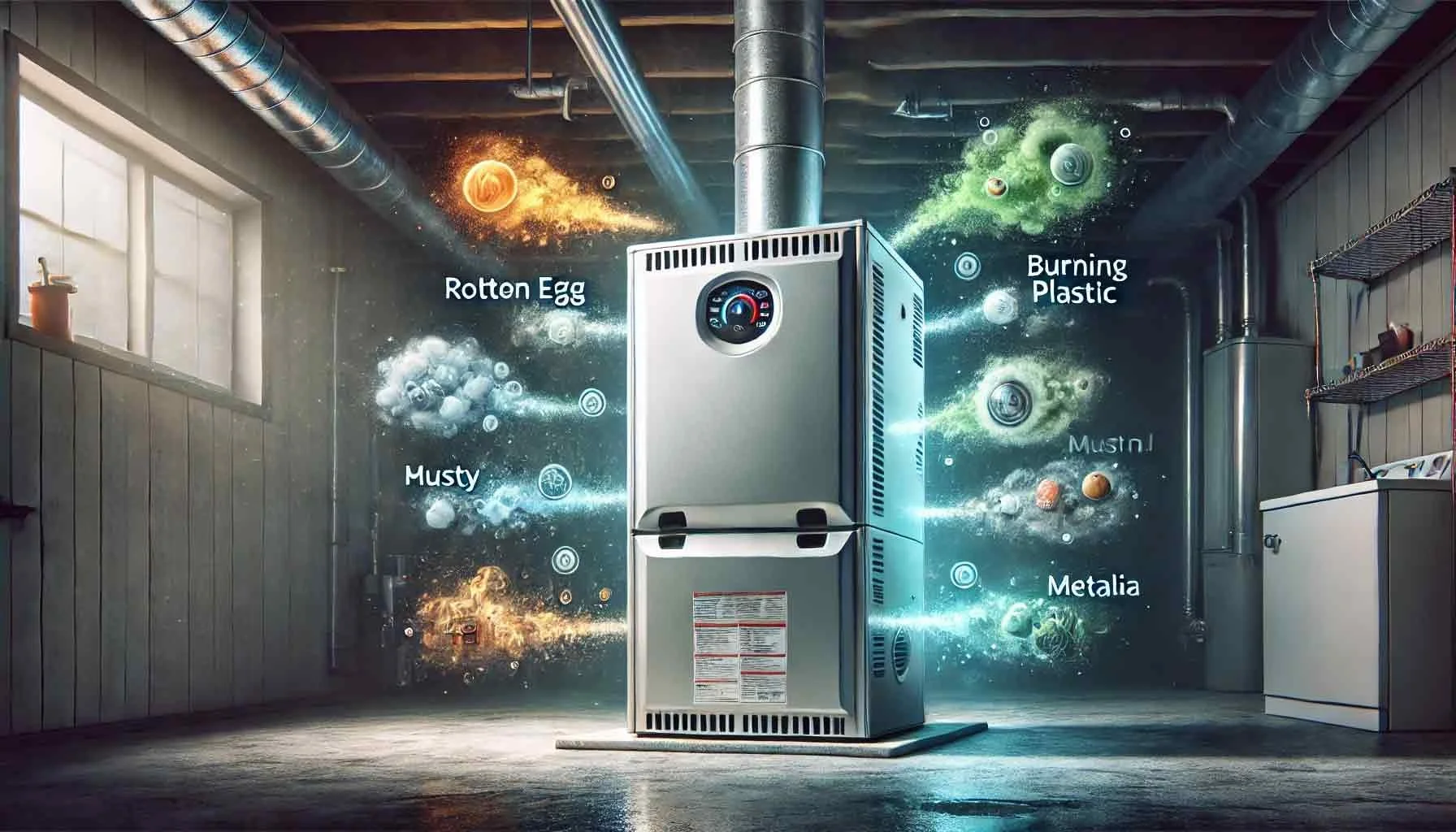
Identify the Furnace Smell Profile:
- Burning Dust
- Seasonal startup
- Harmless if < 30 mins
- Replace dirty filter
- Rotten Eggs/Sulfur
- Gas leak (Mercaptan)
- EMERGENCY: Evacuate!
- Call utility / 911
- Burning Plastic/Rubber
- Overheated motor/wiring
- Turn off power & call pro
- Inspect belts/electronics
- Musty / Dirty Socks
- Mold on coils/pan
- Clear condensate line
- Clean evaporator coils
- Chemical / Vinegar
- Cracked heat exchanger
- High CO poisoning risk
- Turn off & test CO alarm
- Oil / Smoke Exhaust
- Clogged oil nozzle/flue
- Misfire or backdraft
- Schedule burner service
1. Burning Dust Smell
- Scent Profile: Dry, smoky, burnt-dust odor resembling a hot toaster.
- Common Cause: During spring and summer, dust, pet dander, and household lint settle on the furnace heat exchanger, burners, and internal ductwork. When the heat turns on for the first time in autumn, these organic particles burn off rapidly.
- Action Required: This is normal during initial seasonal operation. Open a few windows to clear the air. The smell should dissipate completely within 20 to 30 minutes of continuous operation. If the burning dust odor persists for days, replace your furnace air filter and schedule a cabinet cleaning.
2. "Dirty Sock" or Musty Damp Smell
- Scent Profile: Stale, damp basement odor, wet cardboard, or foul athletic gear.
- Common Cause: Often referred to in the HVAC industry as Dirty Sock Syndrome, this smell occurs when condensation collects on the evaporator coil (in heat pump systems) or inside the furnace condensate drain pan, creating an environment for bacterial and fungal growth. Mold can also develop inside damp air ducts or on saturated fiberglass air filters.
- Action Required: Inspect your air filter for visible moisture or dark mold spots and replace it immediately. Clean the condensate collection tray, and flush the drain line with an approved coil cleaner or diluted vinegar solution. If mold has colonized the duct insulation, professional duct cleaning and UV disinfectant light installation may be necessary according to U.S. Environmental Protection Agency (EPA) guidelines.
3. Burning Rubber or Hot Friction Smell
- Scent Profile: Sharp, acrid smell similar to burning tires or skidding rubber.
- Common Cause: In belt-driven furnace systems, an aging rubber blower belt can slip, fray, or bind against the motor pulley, generating excessive friction heat. In modern direct-drive furnaces, this smell often points to a seized blower motor bearing causing the motor case to overheat and melt internal rubber grommets or wire coatings.
- Action Required: Shut down the system immediately. Inspect the blower housing (after disconnecting power) for broken or misaligned belts. If the belt is fine but the blower housing is hot to the touch, the motor requires replacement by an HVAC specialist.
4. Chemical, Formaldehyde, or Acidic Vinegar Smell
- Scent Profile: Pungent, sweet, sharp chemical fumes, or a smell resembling vinegar or formaldehyde.
- Common Cause: A chemical odor strongly indicates a cracked heat exchanger. The heat exchanger is a sealed metal chamber (often made of aluminized steel or stainless steel) that transfers heat from combustion gases to your indoor circulating air. Thermal stress over hundreds of heating cycles can cause the metal to crack. When this occurs, combustion byproducts react with internal metal coatings and leak into the household airstream.
- Action Required: Turn off the furnace immediately. A cracked heat exchanger allows carbon monoxide and toxic chemical gases to enter your living spaces. Contact a licensed heating contractor to perform a visual or camera inspection. In most cases, a cracked heat exchanger requires replacing the component or the entire furnace assembly.
5. Burning Oil or Raw Petroleum Smell
- Scent Profile: Diesel fuel exhaust, unburned oil, or heavy soot smell (specific to oil-fired furnaces).
- Common Cause: If an oil furnace misfires, unburned heating oil can pool at the base of the combustion chamber. Alternatively, a clogged oil filter, dirty burner nozzle, or faulty oil pump can cause incomplete atomization of the fuel, generating thick soot and oily fumes.
- Action Required: Check the floor around your furnace for liquid oil leaks. If oil is visible on the ground or the burner flame appears yellow and smoky rather than crisp blue, shut off the fuel supply valve and call an oil burner service technician.
Furnace Odor Diagnostic Matrix
The following table summarizes common furnace odors, their operational risks, primary mechanical causes, and recommended corrective actions.
| Odor Profile | Primary Cause | Danger Level | Recommended Action |
|---|---|---|---|
| Burning Dust | Dust accumulation on heat exchanger during summer | Low | Allow system to run 20–30 mins; replace dirty air filter |
| Rotten Eggs / Sulfur | Natural gas leak (methyl mercaptan additive) | Critical (Emergency) | Evacuate immediately; call gas utility or 911 from outside |
| Burning Plastic / Metallic | Overheated electrical wiring, circuit board failure | High | Shut off circuit breaker; call licensed electrician or HVAC tech |
| Burning Rubber | Slipping blower belt or seized motor bearing | High | Power down unit; inspect drive belt and motor housing |
| Dirty Socks / Moldy | Bacteria/mold on evaporator coil or condensate pan | Medium | Replace air filter; flush condensate line; clean coils |
| Chemical / Formaldehyde | Cracked metal heat exchanger | Critical | Turn off system; schedule camera inspection; check CO alarms |
| Raw Fuel / Soot Exhaust | Oil furnace misfire, dirty nozzle, or flue restriction | High | Turn off fuel valve; clear flue obstructions; service burner |
Step-by-Step Troubleshooting for Non-Emergency Odors
If you have confirmed there is no gas leak or immediate electrical fire, perform these step-by-step checks to resolve mild or non-hazardous furnace smells.
Non-Emergency Maintenance:
- Replace Air Filter
- Remove dusty MERV filter
- Install fresh filter
- Restores balanced airflow
- Clear Condensate Line
- Check drain pan for standing water
- Flush line with vinegar/water
- Prevents bacterial growth
- Inspect Exhaust Vent
- Verify PVC/flue pipe is clear
- Remove bird nests/debris
- Ensures proper draft
Step 1: Inspect and Replace the Air Filter
A clogged or saturated HVAC air filter restricts airflow across the furnace heat exchanger. Reduced airflow causes internal cabinet temperatures to spike, which can scorch accumulated dust or trigger high-limit safety switches.
- Turn off the thermostat.
- Locate the filter slot between the return duct and furnace cabinet.
- Remove the existing filter and inspect it against a light source. If no light passes through, discard it.
- Insert a new filter matching the manufacturer's nominal dimensions and recommended Minimum Efficiency Reporting Value (MERV) rating (typically MERV 8 to 11 for modern residential systems).
Step 2: Clean the Condensate Line and Drain Pan
High-efficiency furnaces (rated at 90% AFUE or higher) generate acidic water condensate during normal operation. If the drain line clogs, standing water breeds mold, algae, and bacteria, releasing a sour smell through the return vents.
- Locate the PVC condensate pipe exiting the furnace cabinet.
- Inspect the drain pan beneath the unit for standing water.
- Pour a 50/50 mixture of warm water and distilled white vinegar down the condensate T-pipe access cap to clear slime build-up.
- Verify that water flows freely to the floor drain or condensate pump unit.
Step 3: Inspect Air Vents and Register Grilles
Objects fallen into floor registers—such as food crumbs, pet toys, or spilled household liquids—can cook slowly when warm air flows through the ductwork.
- Remove supply and return vent covers across your home.
- Vacuum out dust bunnies, debris, or foreign objects using a hose attachment.
- Look for signs of moisture inside the metal boot connections, which could indicate localized duct condensation.
Step 4: Check External Exhaust Venting
Blockages in the furnace vent stack or sidewall termination pipes cause combustion gases to back up into the furnace cabinet, creating a smoky or damp odor.
- Go outside and locate your furnace exhaust pipe (metal chimney stack on the roof or PVC pipes exiting the side of your house).
- Ensure snow, ice, bird nests, or yard debris are not blocking the pipe opening.
- If an obstruction is visible but out of reach, contact a professional to clear the flue vent safely under National Fire Protection Association (NFPA) standards.
Understanding the Danger of a Cracked Heat Exchanger
One of the most consequential reasons a furnace smells bad—specifically emitting a sweet, chemical, or metallic stench—is a failure of the heat exchanger. Understanding how this component operates highlights why prompt professional diagnosis is essential.
Cracked Heat Exchanger Hazard:
- Normal Operation:
- Toxic Combustion Gases (CO, NO2, Chemicals)
- Heat Exchanger (Sealed Metal Wall)
- Clean Air to Living Space (Safe Household Heating)
- Failed / Cracked Exchanger:
- Toxic Combustion Gases (CO, NO2, Chemicals)
- Heat Exchanger (CRACK / FAILURE)
- CO & Fumes Leak into Home Air Circulation
The heat exchanger isolates toxic combustion gases produced by gas burners (including carbon monoxide, nitrogen dioxide, and sulfur compounds) from the fresh indoor air blown across its exterior walls. Over time, repeated expansion and contraction cycles cause metal fatigue.
If heat exchanger walls crack or split:
- Gas Contamination: Harmful combustion byproducts mix directly with the air supply distributed through your supply registers.
- Flame Distortion: The pressure differential between the indoor air blower and the combustion chamber can blow out gas burner flames, causing incomplete fuel burning or flame roll-out.
- Carbon Monoxide Exposure: Carbon monoxide is a colorless, odorless gas, but the accompanying unburned fuel and scorched metal coatings often produce an unpleasant chemical odor that serves as an early warning sign.
If an HVAC technician diagnoses a cracked heat exchanger, standard safety codes mandate shutting down and red-tagging the heating system until the exchanger or entire unit is replaced.
Prevention and Long-Term Furnace Maintenance
Regular preventative care eliminates standard odor sources, extends system lifespan, and ensures safe operation throughout the winter months.
1. Schedule Annual Professional Tune-Ups
Schedule a certified HVAC professional to perform a complete system inspection once a year before the heating season begins. A technician will:
- Clean dust and carbon deposits off gas burner assemblies.
- Inspect the heat exchanger using optical borescopes or combustion analyzer devices.
- Lubricate motor bearings and check drive belt tension.
- Test limit switches, flame sensors, and gas valve pressures.
2. Maintain a Consistent Air Filter Schedule
Replace standard 1-inch to 3-inch furnace filters every 60 to 90 days. If you own pets or live in a high-dust environment, inspect and replace filters every 30 days to maintain steady airflow and prevent dust accumulation on internal heating elements.
3. Maintain Carbon Monoxide Detectors
Install dual-sensor smoke and carbon monoxide alarms in every hallway outside sleeping areas and on every floor of the home. Test alarm batteries monthly and replace the entire unit every 5 to 7 years per manufacturer specifications.
Frequently Asked Questions
How long should a burning smell last when turning on the furnace for the first time?
A initial burning dust smell should last no longer than 20 to 30 minutes of continuous furnace operation. If the odor persists beyond an hour, or if it returns later in the season, turn off the furnace, replace the air filter, and have the system inspected by an HVAC professional.
Can a dirty air filter cause my furnace to smell bad?
Yes. A heavily clogged air filter restricts airflow, causing internal furnace components to overheat and scorch trapped dust particles. Extremely dirty filters can also retain trapped moisture, creating a musty or damp odor throughout your home's ductwork.
Why does my furnace smell like vinegar?
A vinegar-like or sharp chemical smell often points to an overheating electrical component, a failing circuit board transformer, or a cracked heat exchanger. In heat pump systems, it can also stem from specific strains of mold or bacteria growing on wet evaporator coils.
What is Dirty Sock Syndrome in heating systems?
Dirty Sock Syndrome occurs when harmless bacteria, mold, and micro-organisms colonize the indoor evaporator coil and condensate drainage pan of an HVAC system. When the unit switches between air conditioning and heating modes (or during defrost cycles on heat pumps), moisture heats up and releases a sour, sock-like stench into the airstream.
Is it normal for a gas furnace to smell slightly like gas when starting up?
A brief, faint gas smell right as the burners ignite (lasting only 1 to 2 seconds) can occasionally occur as unburned gas enters the ignition zone. However, any persistent gas or rotten egg smell that lasts beyond ignition is a safety hazard requiring immediate evacuation and service by your gas utility provider.
Next Steps and Professional Guidance
If your furnace emits a rotten egg, chemical, or electrical burning smell, shut down the system immediately and contact a licensed HVAC repair specialist or your local utility company. For routine dust or musty smells, start by replacing your air filter and cleaning the condensate drain line. If non-emergency odors persist after performing basic maintenance, book an annual heating system tune-up to ensure your unit operates safely, efficiently, and cleanly throughout the season.
Image Gallery