Best Balanced Mutual Funds: How to Choose the Right Asset Blend for Your Portfolio
A balanced mutual fund is a single hybrid investment vehicle that combines equities (stocks), fixed-income securities (bonds), and sometimes cash equivalents within a single portfolio to generate capital growth while reducing downside...
A balanced mutual fund is a single hybrid investment vehicle that combines equities (stocks), fixed-income securities (bonds), and sometimes cash equivalents within a single portfolio to generate capital growth while reducing downside risk. Choosing the right fund blend requires matching the portfolio's specific equity-to-bond ratio—such as 60/40, 70/30, or 50/50—to your individual risk tolerance, investment time horizon, tax status, and broader financial goals.
Contents
What Is a Balanced Mutual Fund and How Does It Work?
A balanced mutual fund, often grouped under the broader category of allocation or hybrid funds, pools investor capital to purchase a diversified combination of asset classes. The primary objective of a balanced strategy is to provide a dual benefit: capital appreciation from the stock component and income generation with capital preservation from the fixed-income component.
Unlike single-asset mutual funds that focus exclusively on equities or fixed income, balanced funds maintain a pre-defined or dynamic target allocation. For instance, a traditional moderate allocation fund typically target a 60% stock and 40% bond split.
Balanced Mutual Fund Structure
- Equity Portion (e.g., 60%)
- Large-Cap Stocks
- Dividend-Paying Equities
- International Stocks
- Fixed-Income Portion (e.g., 40%)
- Treasury Bonds
- Investment-Grade Corp.
- Municipal Bonds
- Automatic Rebalancing
- Sells outperforming assets
- Buys underperforming assets
- Maintains target ratio
The Mechanism of Automatic Rebalancing
One of the most critical structural benefits of a balanced mutual fund is internal systematic rebalancing. As asset classes fluctuate in market value, a portfolio's initial allocation naturally shifts over time.
- Market Shift Scenario: If equities experience a bull market, a 60/40 allocation might naturally shift to 70/30. This shift exposes the portfolio to greater risk than originally intended.
- Internal Rebalancing Execution: The fund manager (or index-tracking algorithm) systematically sells a portion of the appreciated equities and purchases fixed-income securities to return the portfolio to its target 60/40 ratio.
- Investor Advantage: This process enforces a discipline of selling high and buying low without requiring the investor to perform manual trades, calculate percentage shifts, or incur retail transaction fees.
Common Allocations and Types of Balanced Funds
Balanced mutual funds are not one-size-fits-all investments. Financial institutions structure allocation funds along a spectrum of risk and asset splits to accommodate different investor profiles.
- Conservative (30/70): Lower Risk / Income Focused
- Moderate (60/40): Growth & Income Focus
- Aggressive (80/20): High Growth Focus
1. Moderate Allocation Funds (The Traditional 60/40 Portfolio)
The classic 60% stock and 40% bond ratio is designed for mid-to-long-term investors seeking capital growth alongside portfolio stability. The equity portion provides equity risk premium to combat inflation, while the bond component cushions market drawdowns and generates yield. Funds following this methodology, such as the Vanguard Balanced Index Fund or the Dodge & Cox Balanced Fund, serve as foundational core holdings for broad market exposure.
2. Growth Allocation Funds (70/30 or 80/20 Blends)
Growth-oriented balanced funds allocate a larger percentage to domestic and international equities (70% to 80%), reserving 20% to 30% for high-grade fixed income. These strategies target investors with an extended investment horizon (7+ years) who can endure higher short-term equity volatility but still want a bond cushion to dampen severe market downturns.
3. Conservative Allocation Funds (30/70 or 40/60 Blends)
Conservative balanced funds prioritize capital preservation and current income over aggressive equity appreciation. With 60% to 70% of the portfolio allocated to Treasuries, agency debt, and high-grade corporate bonds, and only 30% to 40% in dividend-paying or broad market stocks, these funds are engineered for investors near or in retirement who need regular distributions with lower price fluctuations.
4. Target-Date Funds (Dynamic Allocation)
Target-date mutual funds are balanced funds that automatically shift their asset mix over time along a pre-determined "glide path." As the target date (e.g., 2045 or 2050) approaches, the fund manager systematically reduces equity exposure and increases fixed-income allocations. This transitions the fund from an aggressive growth model in the investor's early career to a conservative, income-focused model as retirement nears.
5. Tactical Asset Allocation Funds
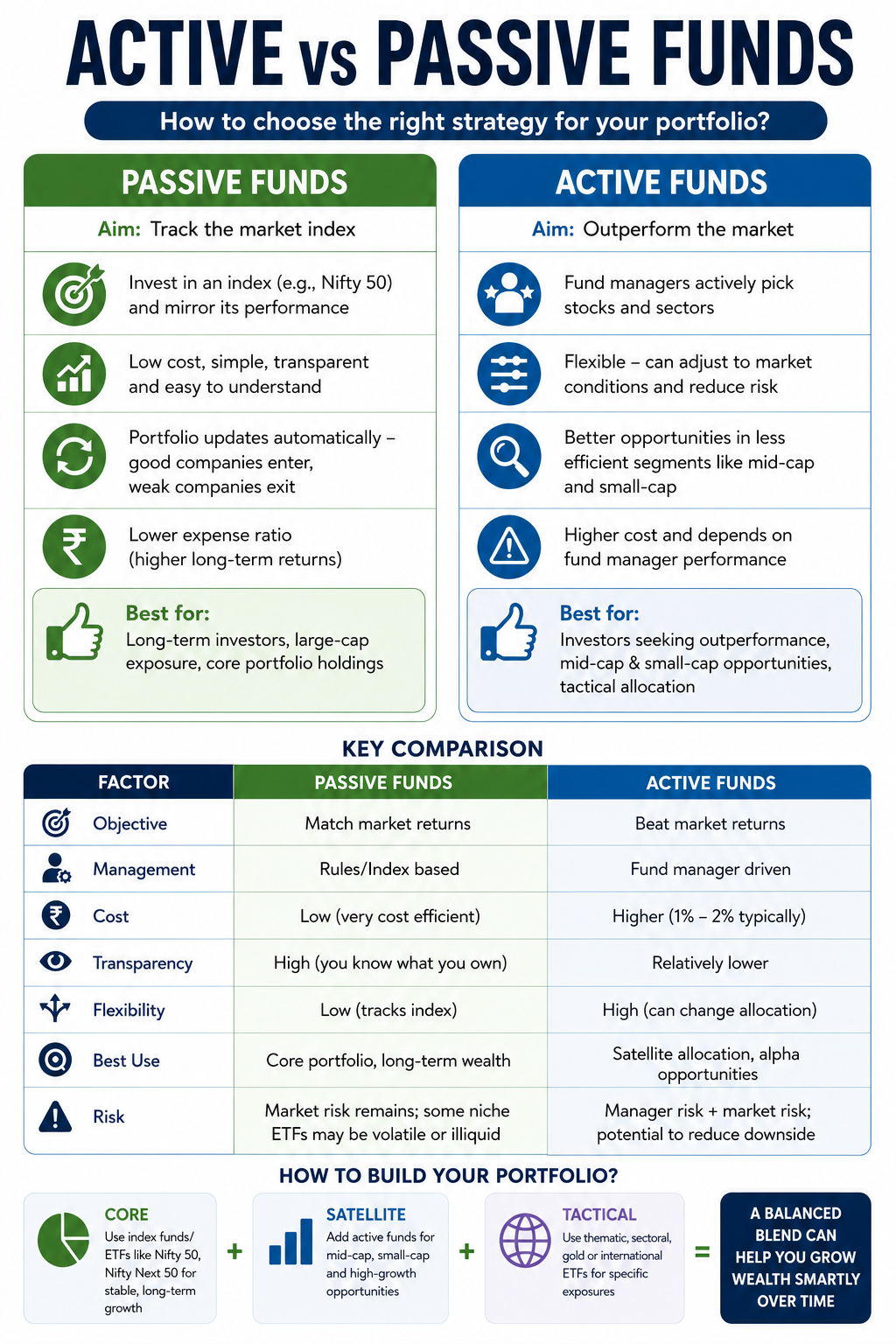
Unlike static indexed balanced funds that adhere strict strategic targets, tactical asset allocation funds allow portfolio managers discretionary flexibility. The manager can shift asset weights—for example, increasing cash positions during market instability or overweighting stocks during economic expansions—based on economic forecasts and market valuations. While tactical funds aim to outperform static benchmarks, they carry higher management fees and manager performance risk.
Key Criteria for Evaluating Balanced Mutual Funds
Selecting an appropriate allocation fund involves assessing structural metrics, expense overhead, and fixed-income characteristics rather than simply choosing historical top performers.
Fund Selection Framework
- Expense Ratio: Low cost (Index: <0.20%, Active: <0.60%)
- Asset Mix: Equity/Bond ratio matched to horizon
- Fixed-Income Quality: Investment-grade bonds vs. high-yield
- Duration Risk: Sensitivity to interest rate movements
- Turnover & Taxes: Low turnover for taxable accounts
Expense Ratios and Total Fee Impact
Because balanced funds hold a mix of stocks and bonds, paying high management fees can erode fixed-income returns, especially during low-yield environments.
- Passive Index Balanced Funds: Broad market index allocation funds often feature low expense ratios ranging between 0.05% and 0.15%.
- Actively Managed Balanced Funds: Active hybrid funds typically charge between 0.50% and 0.90%. Investors selecting active management should evaluate whether historical net-of-fee returns and risk mitigation justify the higher cost structure.
Fixed-Income Duration and Credit Quality
The bond component of a balanced fund is not risk-free. Evaluating the fund's fixed-income sleeve requires checking two key metrics available in regulatory prospectuses filed with the U.S. Securities and Exchange Commission (SEC):
- Average Effective Duration: Measures a fund's sensitivity to interest rate shifts. A bond portfolio with a 6-year duration will fall approximately 6% in price for every 1-percentage-point increase in interest rates.
- Credit Quality Rating: Ensures the bond holdings consist primarily of AAA, AA, or A-rated investment-grade securities rather than lower-grade high-yield ("junk") bonds, which behave more like equities during economic recessions.
Portfolio Turnover and Tax Efficiency
Fund turnover reflects how frequently the internal assets are bought and sold within a calendar year. High portfolio turnover (e.g., exceeding 50-100%) can lead to higher realized short-term capital gains distributions. In taxable accounts, these distributions trigger annual tax liabilities for shareholders even if the investor did not sell any mutual fund shares.
Comparative Analysis: Balanced Fund Allocation Strategies
The following table compares standard balanced fund strategies to clarify how varying equity-to-bond mixes align with different investor goals and market environments.
| Allocation Strategy | Typical Asset Mix (Equities / Fixed Income) | Volatility & Risk Profile | Expected Return Potential | Optimal Time Horizon | Primary Investor Objective |
|---|---|---|---|---|---|
| Conservative Allocation | 30% Equities / 70% Bonds | Low | Low to Moderate | 1 to 3 Years | Capital preservation, current yield generation, low price drawdown. |
| Moderate Allocation | 60% Equities / 40% Bonds | Moderate | Moderate to High | 5 to 10+ Years | Balanced capital appreciation, moderate drawdown protection, downside mitigation. |
| Growth Allocation | 80% Equities / 20% Bonds | High | High | 7 to 10+ Years | Long-term capital growth, inflation hedging, minor fixed-income cushion. |
| Target-Date Glidepath | Shifts (e.g., 90/10 down to 30/70) | Dynamic (High to Low) | Dynamic (High to Low) | Decades (Matches Target Year) | Automated turn-key retirement portfolio management across life stages. |
| Tactical Allocation | Dynamic (0% to 100% discretionary) | Variable (Manager Dependent) | Variable | 5+ Years | Alpha generation, market timing risk, opportunistic risk mitigation. |
How to Match Fund Blends to Your Personal Financial Goals
Determining the ideal asset balance requires analyzing your personal financial situation, liability timing, and psychological capacity for portfolio drawdowns.
Asset Blend Selection Decision
- Step 1: Identify Time Horizon
- Short (<3 yrs): Conservative Allocation (30/70)
- Medium (3-7 yrs): Moderate Allocation (50/50 or 60/40)
- Long (>7 yrs): Growth Allocation (70/30 or 80/20)
- Step 2: Factor in Outside Holdings
- Have Pension/Annuity?: Can take MORE equity risk
- Bond-Heavy Elsewhere?: Can lean toward higher stock mix
- Step 3: Account for Account Type
- Taxable Account: Low-turnover Index Allocation Funds
- IRAs / 401(k)s: Active/High-Yield Balanced Funds
Step 1: Define Your Investment Time Horizon
- Short-Term Horizons (1–3 years): If the invested principal is needed for a near-term purchase or liquidity event, aggressive equity allocations carry too much capital risk. A conservative allocation or cash equivalent strategy is typically appropriate.
- Intermediate Horizons (3–7 years): Moderate allocations (50/50 or 60/40) fit intermediate goals like funding mid-career sabbaticals or purchasing a home, providing equity exposure while dampening market volatility.
- Long-Term Horizons (7+ years): Investors accumulating wealth over long horizons generally require higher stock allocations (70/30 or 80/20) to maintain purchasing power against long-term inflation rates monitored by the Bureau of Labor Statistics.
Step 2: Assess Personal Drawdown Capacity
Market drawdowns present psychological challenges for investors. During a major equity market retreat (such as a 30% stock decline):
- A 100% equity portfolio falls roughly 30%.
- A 60/40 moderate allocation fund, assuming high-quality bonds hold value or appreciate, might experience a drawdown of roughly 15% to 18%. Evaluating whether you can stay invested during market downturns without panic-selling is critical to choosing the correct equity-to-bond ratio.
Step 3: Account for External Assets and Liabilities
A balanced fund should not be viewed in isolation; it must be integrated into your overall net worth:
- Guaranteed Income Streams: If you hold fixed income from a defined-benefit pension, social security, or fixed annuities, you may choose a more aggressive equity-heavy balanced fund for your liquid portfolio.
- Concentrated Stock/Real Estate Holdings: If your broader asset base is heavily weighted in real estate or employer stock, choosing a conservative balanced fund can help stabilize your cumulative portfolio.
Tax Efficiency and Asset Location Considerations
Where you hold your balanced mutual fund significantly impacts your net, post-tax investment returns.
Taxable Brokerage Accounts
Balanced funds generate recurring income from fixed-income interest payments, stock dividend distributions, and internal capital gains realizations due to rebalancing.
- Bond interest is generally taxed at ordinary income tax rates, which are higher than qualified dividend or long-term capital gain rates under IRS tax guidelines published by the Internal Revenue Service.
- Holding actively managed or high-turnover balanced funds in a taxable account can result in tax drag.
- Optimal Strategy for Taxable Accounts: Choose ultra-low-turnover index-based allocation funds, broad asset allocation ETFs, or tax-managed hybrid funds that utilize municipal bonds to reduce federal income tax exposure.
Tax-Advantaged Accounts (IRAs, Roth IRAs, 401(k)s)
Tax-deferred accounts like Traditional IRAs and 401(k)s, or tax-free accounts like Roth IRAs, shield internal distributions from current-year taxation.
- These accounts are ideal vehicles for holding active balanced funds, tactical funds, or funds holding high-yield corporate bonds.
- Rebalancing within these accounts triggers no immediate taxable events, enabling managers to shift allocations freely.
Common Pitfalls When Investing in Balanced Mutual Funds
While balanced mutual funds simplify asset allocation, investors frequently encounter structural mistakes:
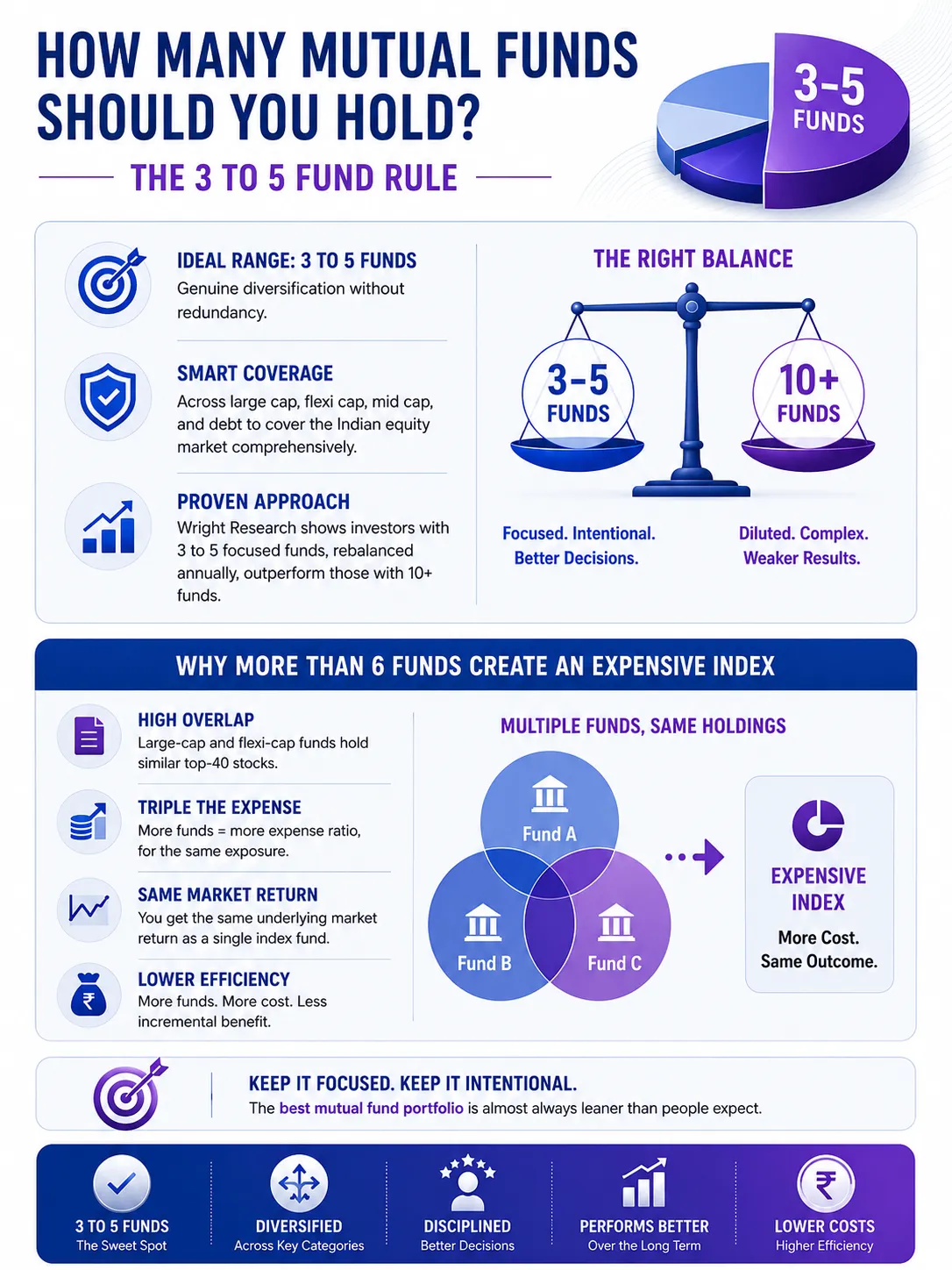
- Portfolio Duplication and Over-Diversification: Purchasing multiple moderate allocation funds from different fund families often leads to holding identical broad-market stocks and Treasury indices. This inflates expense burdens without adding diversification.
- Ignoring Bond Sleeve Credit Risk: Assuming all 60/40 funds offer equal downside protection can be a mistake. Some high-yield allocation funds hold lower-quality corporate bonds that decline alongside equities during recessions, reducing the protective value of the bond allocation.
- Failing to Adjust Holdings Over Time: Unless holding a target-date fund with a built-in glide path, a static balanced fund maintains its fixed target allocation indefinitely. An investor who buys a 70/30 fund at age 35 may find that same allocation too aggressive at age 65 if their risk tolerance changes.
- Disregarding Expense Ratio Compounding: A 0.75% expense ratio on a conservative balanced fund earning a 4% yield consumes nearly 19% of the fund's gross income. Low fee structures are critical in bond-heavy portfolios.
Frequently Asked Questions
What is the primary difference between a balanced fund and a target-date fund?
A balanced mutual fund typically maintains a fixed target asset mix (such as 60% stocks and 40% bonds) throughout its lifecycle unless modified by fund managers. A target-date fund dynamically alters its asset mix over time, shifting from an aggressive growth mix to a conservative, income-focused allocation as it approaches the designated target year.
Are balanced mutual funds safe during a market crash?
Balanced mutual funds carry market risk and can lose value during downturns. However, because fixed-income assets generally exhibit lower price volatility than stocks, balanced funds historically experience smaller peak-to-trough drawdowns than all-equity portfolios during equity market downturns.
How often do balanced mutual funds rebalance their holdings?
Rebalancing schedules depend on the fund's operational prospectus. Index-based balanced funds typically rebalance on a set schedule (monthly, quarterly, or semi-annually) or when asset allocations deviate past a specific threshold (e.g., +/- 5% from the target ratio). Active managers rebalance at their discretion based on market conditions.
Can I hold a balanced fund as my sole investment holding?
Yes. Broadly diversified moderate allocation funds or target-date funds are structured as "one-fund solutions." They provide complete asset class, sector, geographic, and fixed-income diversification within a single investment vehicle, making them appropriate as a primary core holding for turn-key portfolio management.
How are distributions from balanced mutual funds taxed?
Distributions from balanced funds held in taxable accounts are typically split into dividend income, ordinary interest income from bonds, and long-term or short-term capital gains distributions resulting from internal trading. Each component is taxed according to IRS rules based on holding periods and income types.
Next Actions for Building Your Allocation Strategy
To build a streamlined, effective portfolio using balanced mutual funds, consider taking the following steps:
- Audit Your Account Type: Determine whether the fund will be held in a tax-advantaged account (IRA/401(k)) or a taxable brokerage account to select a tax-efficient fund structure.
- Review Your Aggregate Asset Allocation: Factor in non-liquid assets, real estate holdings, pensions, and existing employer retirement accounts before choosing an equity-to-bond ratio.
- Compare Operating Costs: Evaluate low-cost, index-based allocation funds alongside actively managed options using tools provided by independent fund research sites or FINRA's Fund Analyzer tool. Select funds with competitive expense ratios aligned with your cost parameters.
- Check Bond Duration and Quality: Review the fund's underlying fixed-income Holdings tab to ensure the bond sleeve consists primarily of investment-grade debt with moderate duration metrics.
EDITORIAL CATEGORY METADATA:
Image Gallery