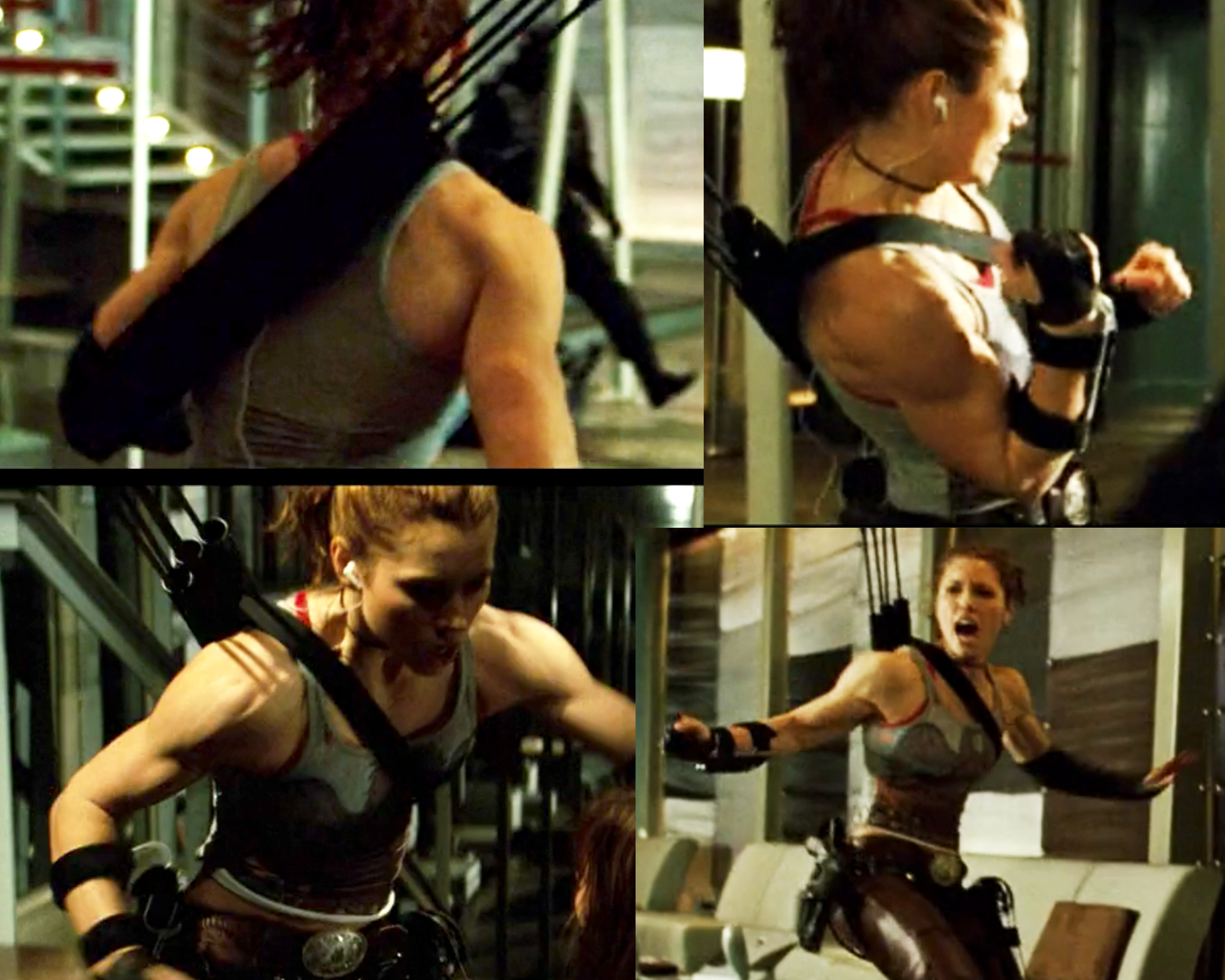
Jessica Biel Muscle: The Science and Conditioning Behind Her Iconic Physique
Jessica Biel's muscular physique is built on a foundation of heavy compound strength training, progressive eccentric loading, high-intensity plyometrics, and structured athletic movement. Her regimen emphasizes progressive overload, fu...
Jessica Biel's muscular physique is built on a foundation of heavy compound strength training, progressive eccentric loading, high-intensity plyometrics, and structured athletic movement. Her regimen emphasizes progressive overload, functional movement patterns, and adequate protein intake to support lean muscle hypertrophy, functional strength, and long-term metabolic health.
Contents
Disclaimer
This article is for informational and educational purposes only and does not constitute personal medical or professional fitness advice. Individual exercise capacities, cardiovascular readiness, and muscular recovery rates vary. Consult a qualified healthcare professional or certified strength coach before starting any high-intensity resistance training or dietary program.
The Evolution of Jessica Biel’s Athletic Conditioning
Jessica Biel has long maintained one of the most celebrated athletic frames in Hollywood. Unlike conventional celebrity fitness routines that rely primarily on low-intensity cardio or extreme caloric restriction, Biel’s training paradigm has consistently prioritized high-performance strength and athletic function.
Her background in competitive gymnastics and youth sports established an early base of kinetic awareness, joint stability, and bodyweight control. However, her physical transformation for action roles—most notably Blade: Trinity (2004), The A-Team (2010), and Total Recall (2012)—redefined public expectations for female action stars by displaying visible deltoid cap development, defined core musculature, and athletic back architecture.
Working alongside high-performance coaches such as Jason Walsh (founder of Rise Nation), Biel shifted the focus of celebrity training toward foundational strength protocols. Her routines utilize principles drawn from collegiate athletic programming rather than aesthetic-only workouts.
Key Principles of the Jessica Biel Muscle-Building Regimen
Achieving a sculpted, muscular look while maintaining low body fat requires a precise balance of mechanical tension, neuromuscular fatigue, and recovery. Biel’s routines illustrate several core training methodologies supported by modern exercise physiology.
- Foundational Mobility & Dynamic Warm-Up
- Heavy Compound Lifting (3-5 Reps)
- Builds maximum strength and dense muscle tissue
- Sub-Maximal Hypertrophy & Eccentrics
- Slow tempo negatives for structural tension
- High-Intensity Explosive Plyos
- Recruits Fast-Twitch Type II motor units & raises EPOC
- Unilateral Balance & Core Conditioning
1. Progressive Overload and Heavy Compound Lifts
Hypertrophy—the process of muscle fiber enlargement—requires progressive mechanical tension. Biel’s workouts center on multi-joint compound exercises:
- Deadlifts (Conventional and Hex-Bar): Target the posterior chain, including gluteus maximus, hamstrings, erector spinae, and upper traps.
- Hip Thrusts: Isolate and overload the gluteal complex under heavy resistance.
- Overhead Presses and Landmine Press Variations: Build shoulder caps (anterior and lateral deltoid heads) without placing excessive strain on the glenohumeral joint.
Research published by the National Strength and Conditioning Association (NSCA) confirms that multi-joint resistance training yields superior systemic hormonal responses and neuromuscular recruitment compared to single-joint isolation exercises alone.
2. Slow Eccentric Loading
A prominent element in Biel’s training is eccentric training. The eccentric phase of a movement occurs when the muscle lengthens under tension (such as lowering down during a pull-up or squat).
- Mechanism: Slowing down the eccentric phase (e.g., a 3- to 5-second descent) causes controlled micro-tears in the muscular tissue while requiring fewer motor units than concentric contraction.
- Result: Increased muscular strength, greater connective tissue density, and noticeable muscular definition without needing excessive volumetric load.
Studies indexed on the National Center for Biotechnology Information (NCBI) indicate that accentuating the eccentric phase is particularly effective for triggering localized hypertrophy and strengthening tendon attachments.
3. High-Intensity Plyometrics and Unilateral Work
To preserve functional agility alongside muscle tissue expansion, Biel incorporates athletic plyometrics and single-leg training:
- Pistol Squats and Step-Ups: Correct structural asymmetries between dominant and non-dominant limbs, reducing joint wear and engaging stabilizer muscles like the gluteus medius.
- Box Jumps and Broad Jumps: Recruit fast-twitch (Type II) muscle fibers, which possess the greatest growth potential and improve explosive power output.
- VersaClimber Conditioning: Provides non-impact, full-body cardiovascular conditioning that engages the latissimus dorsi, core, and quadriceps simultaneously.
Workout Structure Breakdown
Below is a operational framework illustrating how strength, hypertrophy, and explosive conditioning are structured within a high-performance routine modeled on Biel's training methodology.
| Workout Focus | Primary Exercises | Target Adaptations | Intensity & Volume |
|---|---|---|---|
| Maximal Strength & Posterior Chain | Trap Bar Deadlifts, Barbell Hip Thrusts | Posterior chain hypertrophy, core stiffness | 3–4 sets x 5–8 reps (80–85% 1RM) |
| Upper Body & Shoulder Sculpting | Eccentric Pull-ups, Landmine Shoulder Press, Dumbbell Rows | Lats, deltoids, upper back strength | 3–5 sets x 6–10 reps (3-sec eccentric) |
| Unilateral & Mobility | Pistol Squats, Single-Leg Romanian Deadlifts | Structural symmetry, knee/hip stability | 3 sets x 8–10 reps per leg |
| Explosive Power & Conditioning | Box Jumps, Medicine Ball Slams, VersaClimber Sprints | Fast-twitch fiber recruitment, high caloric expenditure | 4–6 rounds of 30-sec work / 30-sec rest |
Nutrition Strategy for Building and Maintaining Muscular Lean Mass
Sculpting visible muscle mass requires a nutrition framework that supports muscle protein synthesis (MPS) while managing body fat levels. Biel’s approach avoids starvation diets, emphasizing metabolic performance through balanced macronutrient timing.
| Macronutrient Distribution | Recommendation / Details |
|---|---|
| Protein | 1.6–2.2g per kg of body weight for MPS |
| Carbs | Complex sources (sweet potatoes, oats, quinoa) |
| Fats | Healthy lipids (avocado, nuts, olive oil) |
Protein Intake and Muscle Protein Synthesis
To repair micro-tears created during heavy eccentric training, muscle tissue requires adequate essential amino acids. Guidelines from the American College of Sports Medicine (ACSM) recommend daily protein intakes between 1.6 to 2.2 grams per kilogram of body weight for active individuals aiming to preserve or build lean muscle mass.
- Primary Protein Sources: Wild-caught fish, organic poultry, lean beef, and plant-based protein isolates.
- Timing: Distributing protein evenly in 30- to 40-gram increments every 3 to 4 hours maximizes systemic protein synthesis.
Carbohydrate Timing for Training Performance
Carbohydrates serve as the primary substrate for anaerobic glycolysis during intense weightlifting sessions.
- Pre-Workout Fuel: Complex carbohydrates with a low glycemic index (such as oats or sweet potatoes) eaten 90 minutes prior to lifting maintain blood glucose during heavy sets.
- Post-Workout Recovery: Faster-acting carbohydrates help replenish muscle glycogen stores, reducing post-exercise cortisol spikes.
Hydration and Micronutrients
Heavy athletic conditioning accelerates electrolyte depletion. Consuming water infused with sodium, potassium, and magnesium supports muscle contraction dynamics and prevents cramping during high-volume sessions.
Common Misconceptions About Female Muscle Growth
The widespread publicity surrounding Jessica Biel's physique has helped dismantle common myths regarding women's strength training.
Myth 1: Lifting Heavy Weights Makes Women "Bulky"
Female endocrine profiles naturally possess significantly lower baseline levels of free testosterone compared to male counterparts. Building dense, defined muscle tissue requires years of progressive resistance training and an intentional caloric surplus; it does not occur accidentally from lifting heavy weights. The lean, sculpted appearance seen in athletes like Biel is the result of developed muscle tissue paired with low body fat levels.
Myth 2: High Repetitions with Light Weights Are Required for "Toning"
The term "toning" simply describes a state of muscle definition: having sufficient muscle mass combined with a low enough body fat percentage to render that muscle visible. Light weights with 20 to 30 repetitions primarily build localized muscular endurance rather than structural hypertrophy or strength. Using challenging loads in the 6- to 12-repetition range is far more effective for creating shape and firming tissue.
Myth 3: Cardio Is Superior to Weights for Fat Loss
While steady-state cardiovascular exercise burns calories during the activity, resistance training builds metabolically active muscle tissue. Every additional pound of lean muscle increases baseline resting metabolic rate (RMR). Furthermore, high-intensity compound lifting triggers excess post-exercise oxygen consumption (EPOC), maintaining an elevated metabolic burn for hours after the workout ends.
Practical Programming: How to Safely Build Functional Muscle
To adapt these athletic concepts into a sustainable weekly routine without overtraining or joint irritation, implement a structured 4-day training split.
- Day 1: Lower Body Strength (Deadlifts, Bulgarian Split Squats, Hip Thrusts)
- Day 2: Upper Body Vertical Push/Pull (Pull-ups, Dumbbell Overhead Press)
- Day 3: Active Recovery & Mobility (Yoga, Light Walking, Foam Rolling)
- Day 4: Lower Body Hypertrophy & Unilateral Work (Leg Press, Step-ups, Lunges)
- Day 5: Upper Body Horizontal Push/Pull (Bench Press, Inverted Rows, Deltoid Flyes)
- Day 6: High-Intensity Conditioning (VersaClimber, Rowing Machine, Sprints)
- Day 7: Full System Rest
Key Principles for Execution
- Prioritize Form Over Load: Perform every lift through a full active range of motion before adding additional resistance to the barbell or machine.
- Control the Negative: Always lower weights under control (2 to 3 seconds) rather than letting gravity perform the work.
- Monitor Recovery: Aim for 7 to 9 hours of quality sleep nightly. Central nervous system recovery is essential when combining heavy strength work with plyometrics.
Frequently Asked Questions
What specific workouts built Jessica Biel's muscle for movie roles?
Biel relied on high-intensity circuit training, heavy compound lifts (deadlifts, squats, hip thrusts), eccentric strength training, plyometric box jumps, martial arts drills, and VersaClimber sessions. Her routines were structured around athletic conditioning rather than traditional bodypart isolation routines.
How many days a week does a routine like Jessica Biel's require?
An athletic hypertrophy program typically requires 4 to 5 days of structured training per week, dividing sessions between lower-body strength, upper-body sculpting, and high-intensity conditioning, alongside 2 dedicated recovery days.
Can beginners perform eccentric and plyometric training?
Beginners should first build a foundation of movement competence using bodyweight exercises and basic resistance machines. Introduce slow eccentric tempos (e.g., 3-second lowering phase on a goblet squat) before attempting advanced plyometric jumps or heavy eccentric pull-ups.
What should women eat to maintain athletic muscle definition?
A successful lean-muscle diet focuses on nutrient-dense whole foods, sufficient daily protein (1.6–2.2g per kg of body weight), complex carbohydrates timed around workouts, and adequate healthy fats to support hormone function, while avoiding extreme caloric deficits.
How long does it take to see visible muscle development?
With consistent progressive resistance training (3 to 4 times per week) and aligned nutrition, initial neuromuscular improvements occur within 2 to 4 weeks, while visible muscular hypertrophy typically becomes noticeable within 8 to 12 weeks.
Next Steps for Building Lean Athletic Muscle
Building a strong, functional, and defined physique requires a focus on progressive overload and long-term training consistency.
To adapt these athletic strength principles safely into your routine:
- Establish Baseline Movement Quality: Work with a certified coach to master foundational movement patterns: the hinge, squat, push, pull, and lunge.
- Track Progressive Overload: Keep a training journal. Focus on gradually increasing resistance, volume, or time-under-tension over 4- to 6-week programming blocks.
- Prioritize Post-Workout Recovery: Match your training volume with adequate protein intake, proper hydration, and restful sleep to allow your muscle tissue to repair and adapt.
Image Gallery