Understanding Taxes Receivable: Definition, Accounting, and Impact
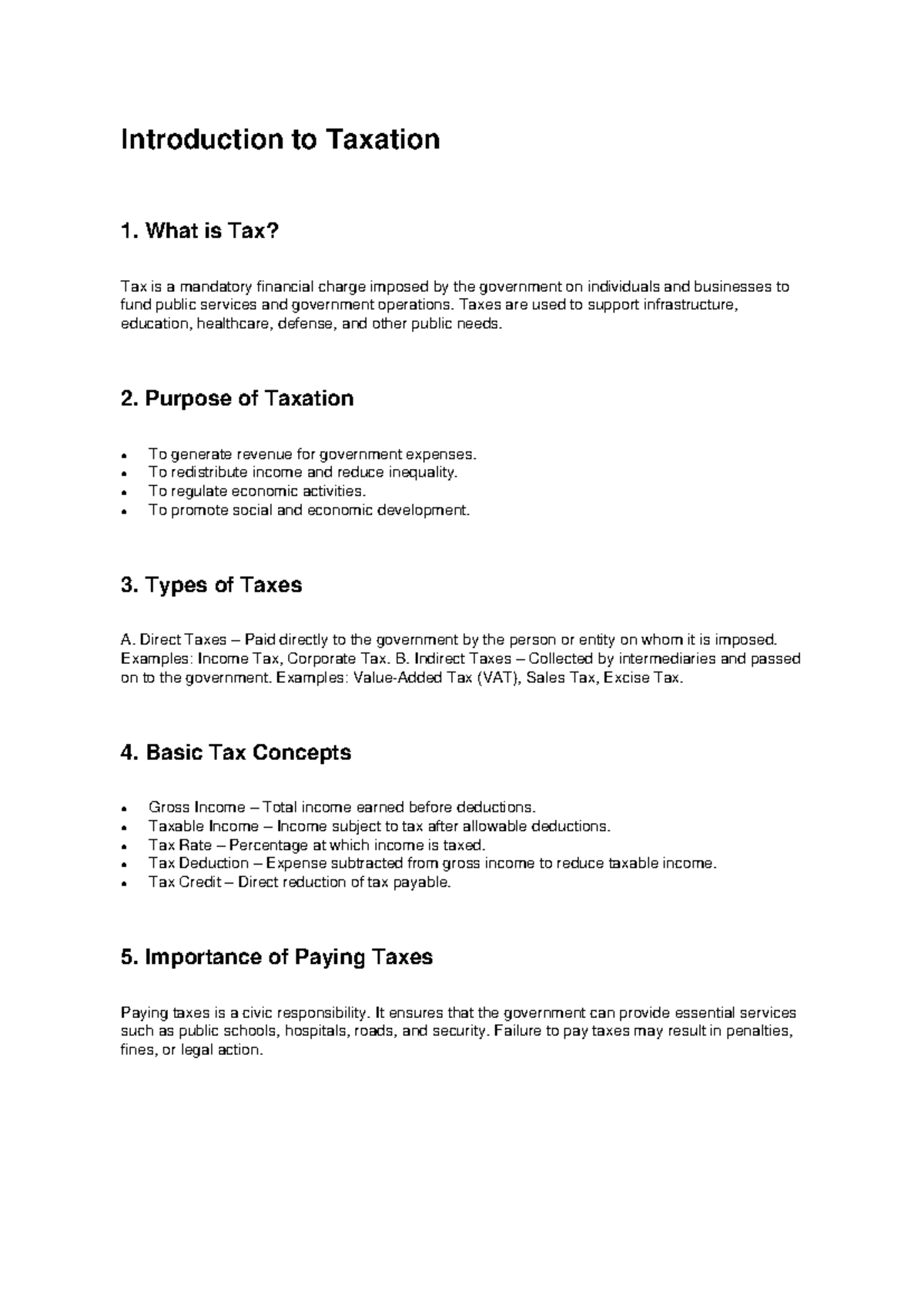
Taxes receivable represent the amount of tax revenue that a government entity has assessed and legalistically claimed from taxpayers, businesses, or properties, but which has not yet been collected as cash. This asset account bridges t...
Taxes receivable represent the amount of tax revenue that a government entity has assessed and legalistically claimed from taxpayers, businesses, or properties, but which has not yet been collected as cash. This asset account bridges the gap between the legal imposition of a tax obligation and its ultimate realization into liquid operating funds.
Contents
Defining Taxes Receivable in Public and Corporate Accounting
To fully grasp the mechanism of taxes receivable, one must examine how different accounting frameworks treat unpaid tax obligations. In government-wide financial reporting, accounting standards emphasize the modified accrual basis or full accrual basis depending on the fund type. For instance, governmental funds typically rely on the modified accrual basis, meaning revenues are recognized only when they become both measurable and available to finance expenditures of the current period. Conversely, proprietary funds and government-wide statements use the full accrual basis, recording taxes receivable the moment the tax levy is formally imposed, regardless of when cash changes hands.
The concept extends beyond municipal or federal governments. Corporate entities may occasionally encounter variations of tax receivables, such as income tax refunds receivable from tax authorities like the Internal Revenue Service (IRS). However, the classic definition of "taxes receivable" predominantly applies to public sector accounting—specifically property taxes, sales taxes, and income taxes levied by state, county, or municipal authorities that remain outstanding at the close of an accounting period.
Understanding this distinction prevents confusion between money owed by taxpayers to a government and money owed by a government to a taxpayer (such as overpaid estimated taxes). Taxes receivable are fundamentally an asset of the taxing authority, functioning as an economic claim on external entities.
The Lifecycle of Taxes Receivable: From Assessment to Collection
The existence of taxes receivable begins long before an accountant records an entry on a balance sheet. The lifecycle follows a strict legal and administrative process that ensures due process for taxpayers while securing public revenue streams.
- Statutory Authority / Tax Levy
- Tax Bill Generation & Assessment
- Recording as Taxes Receivable
- Collection or Delinquency
- Allowance for Uncollectible Taxes
1. Statutory Authority and Tax Levy
A government entity cannot arbitrarily demand funds; it must possess statutory authority granted by constitution, charter, or legislative statute. Once the governing body approves a budget and sets a tax rate (such as a millage rate for property taxes), a formal tax levy is authorized. This legal act creates the underlying obligation.
2. Assessment and Billing
Following the levy, the jurisdiction assesses individual tax liabilities based on property valuations, taxable income, or transaction volumes. Tax bills or assessments are then generated and mailed or transmitted electronically to the responsible parties. At this precise junction, the accounting department debits Taxes Receivable and credits Tax Revenue (subject to availability criteria).
3. Collection and Processing
As taxpayers submit payments, the finance office credits Taxes Receivable and debits Cash. However, payments rarely arrive simultaneously. Tax collection agencies maintain subsidiary ledgers tracking individual accounts to monitor who has paid and who remains delinquent.
4. Delinquency and Enforcement
When a tax deadline passes without payment, the receivable status shifts to delinquent. Governments apply statutory penalties and interest, adding to the total receivable balance. If delinquency persists, the jurisdiction initiates legal remedies, which may include tax liens, property seizures, or tax lien certificate sales to recover the outstanding capital.
Measurement, Valuation, and the Allowance Method
Recording the gross amount of taxes levied provides an incomplete financial picture. Not every taxpayer fulfills their obligation on time, and a portion of any tax levy ultimately proves uncollectible due to bankruptcies, corporate liquidations, or unlocatable property owners.
To comply with generally accepted accounting principles (GAAP) and relevant governmental accounting standards, finance departments must establish an Allowance for Uncollectible Taxes. This contra-asset account reduces the gross taxes receivable down to its net realizable value—the amount the government realistically expects to collect.
- Gross Taxes Receivable: The total face value of legally assessed and unpaid tax bills.
- Allowance for Uncollectible Taxes: An estimated percentage based on historical collection trends, economic indicators, and current local conditions.
- Net Taxes Receivable: The net figure reported on the balance sheet, calculated as gross receivables minus the allowance.
When a specific account is definitively identified as uncollectible, the government writes off the balance by debiting the allowance account and crediting the taxes receivable account, leaving the net realizable value unaffected at the moment of the write-off.
Comparison of Tax Receivables by Jurisdiction and Type
Different tax types exhibit distinct collection behaviors, legal enforcement mechanisms, and financial reporting nuances. The table below outlines how various forms of taxes receivable are managed and evaluated across public finance sectors.
| Tax Type | Primary Governing Level | Typical Collection Window | Principal Risk Factor | Common Enforcement Mechanism |
|---|---|---|---|---|
| Property Tax | Local (Municipal/County) | 30 to 90 days post-bill | Property devaluation, abandonment | Tax liens, foreclosure sales |
| Sales Tax | State / Regional | Monthly or Quarterly | Business insolvency, audit adjustments | License revocation, asset seizure |
| Income Tax | Federal / State | Annual (with estimated installments) | Evasion, underreporting, bankruptcy | Wage garnishment, bank levies |
| Special Assessment | Local Improvement Districts | Varies (often multi-year) | Property owner default | Special assessment liens on land |
Common Challenges and Financial Reporting Impacts
Managing taxes receivable introduces several operational and analytical challenges for public administrators, auditors, and financial analysts reviewing government balance sheets.
Cash Flow Volatility
Because tax revenues are often collected bi-annually or annually (such as traditional property tax cycles), governments frequently experience cash flow gaps. A high balance in taxes receivable does not equate to available cash for payroll, infrastructure maintenance, or debt service. Governments must rely on short-term borrowing instruments, such as tax anticipation notes (TANs), to bridge these operational deficits until receivables convert to cash.
Audit and Compliance Scrutiny
Auditors closely examine the estimation methodology behind the allowance for uncollectible taxes. Overestimating collectability artificially inflates a government's net position and reported revenues, masking structural budget deficits. Conversely, overly conservative allowances can obscure true resource availability.
Economic Sensitivity
Macroeconomic downturns directly impact the collectability of taxes receivable. When unemployment rises or commercial real estate values drop, delinquency rates spike. Financial analysts monitoring municipal bond health pay strict attention to trends in delinquent taxes receivable as an early indicator of fiscal stress within a municipality.
Frequently Asked Questions
What is the difference between taxes receivable and deferred tax revenue?
Taxes receivable represent legally assessed amounts that have not yet been collected from taxpayers. Deferred tax revenue (or unearned revenue) represents tax collections received or billed before the period in which they are legally earned or budgeted to be used. One is an asset waiting for collection; the other is a liability or deferred inflow representing collections awaiting the appropriate operational period.
How do property tax liens affect taxes receivable?
When property taxes remain unpaid past a statutory deadline, the government typically places a legal lien on the property. While this does not instantly convert the receivable into cash, it secures the government's priority claim over other creditors. The account remains a receivable (often reclassified as a delinquent or lien-encumbered receivable) until the property is redeemed by the owner or sold at a tax auction.
Are taxes receivable considered current assets?
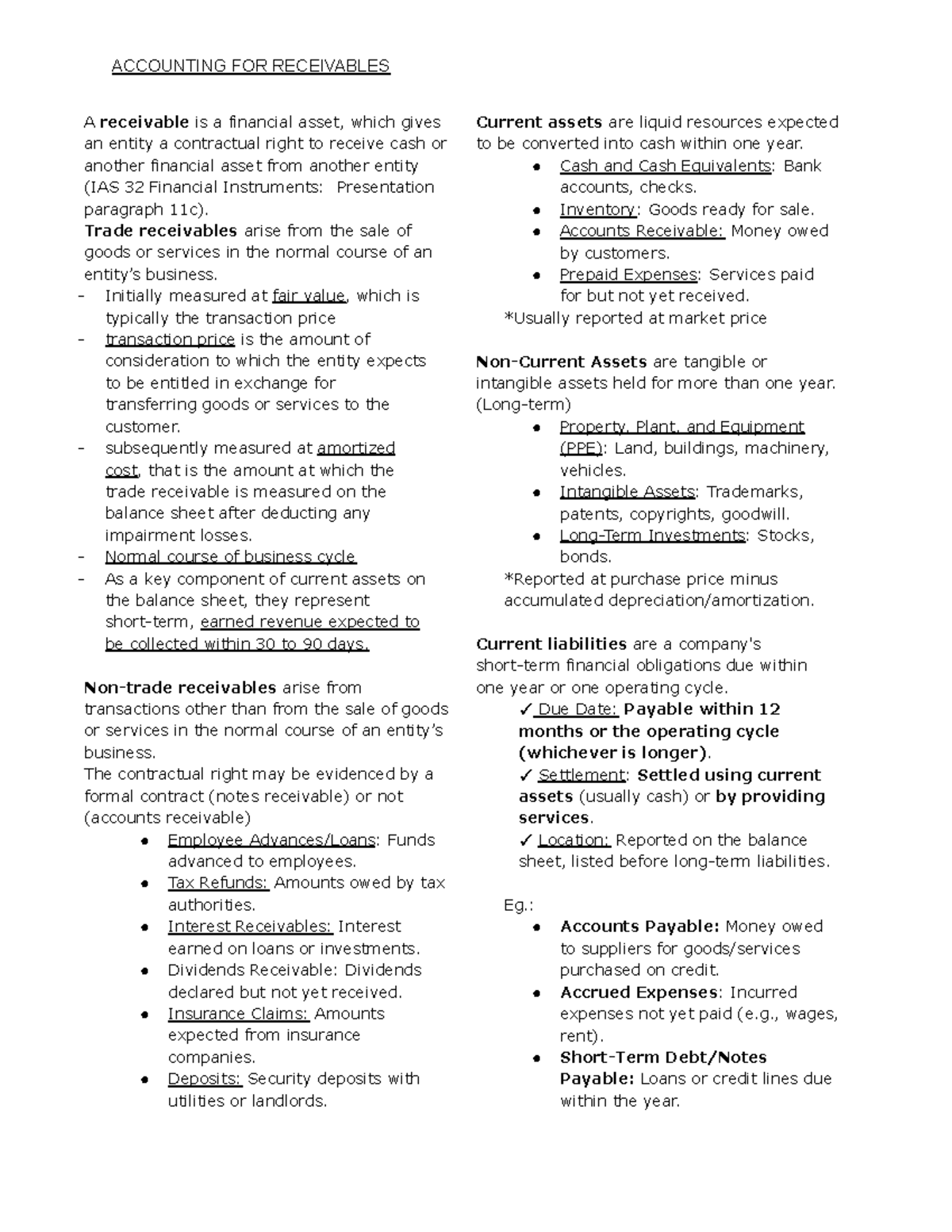
In most standard financial statements, taxes receivable due within the operating cycle or within twelve months are classified as current assets. However, certain long-term delinquent taxes or specialized installment-based assessments may be classified as non-current assets if collection is expected to extend well beyond a single fiscal year.
What happens to taxes receivable during a municipal bankruptcy?
During a municipal bankruptcy proceeding under Chapter 9 of the U.S. Bankruptcy Code, existing taxes receivable are carefully inventoried as core public assets. While debtors cannot easily wipe out statutory tax liens without court approval or consensual restructuring plans, the timing and collectability of these receivables may be significantly delayed, requiring adjustments to the allowance for uncollectibles.
Why do governments use modified accrual accounting for taxes receivable?
Governmental funds focus on near-term financial resource availability. Under modified accrual accounting, tax revenues are only recognized when they are measurable and "available" (typically defined as collected within 60 days of the fiscal year-end). This ensures that reported fund balances reflect strictly liquid or near-liquid resources available to pay current-period obligations, preventing governments from spending funds based solely on long-term, hard-to-collect receivables.
Next Actions for Financial Analysis
When evaluating an organization or government entity with significant taxes receivable balances, review the latest audited Annual Comprehensive Financial Report (ACFR). Specifically, examine the balance sheet for the ratio of the allowance for uncollectibles to gross receivables, and cross-reference the notes to the financial statements for trends in delinquent tax collections. For practitioners managing these accounts, ensure that collection subsidiary ledgers reconcile monthly with general ledger control accounts to maintain strict internal financial controls.
Image Gallery