Inside the Cockpit: The Inside Story of the C8 Stingray Interior
The interior redesign of the C8 Corvette Stingray represents a radical transformation from its predecessors. By shifting to a mid-engine layout, General Motors fundamentally altered cabin ergonomics, driver-focused controls, and materi...
The interior redesign of the C8 Corvette Stingray represents a radical transformation from its predecessors. By shifting to a mid-engine layout, General Motors fundamentally altered cabin ergonomics, driver-focused controls, and material quality, creating a cockpit engineered to rival European exotic sports cars at a fraction of the cost.
Contents
The Mid-Engine Paradigm Shift: Reimagining the Corvette Cabin
For generations, front-engine Corvette layouts dictated a long hood, a rearward-shifted seating position, and a distinct driving dynamic. When Chevrolet engineers decided to move the Small Block V8 behind the driver for the eighth-generation Corvette, the entire architecture of the interior had to be reinvented. This layout change offered a rare clean-sheet opportunity for the design team, led by interior design manager Tristan Murphy, to rethink how a driver interacts with America's sports car.
With the engine no longer residing directly in front of the firewall, the entire cockpit was moved forward by 16.5 inches. This forward shift not only optimized weight distribution and aerodynamic profiles but also fundamentally altered the spatial geometry of the cabin. Drivers now sit closer to the front axle, providing an unobstructed, panoramic view of the road ahead akin to a fighter jet canopy. This visibility upgrade addresses a long-standing criticism of earlier generations, where long hoods made spatial estimation during tight parking or track maneuvers challenging.
Furthermore, the elimination of the traditional central transmission tunnel running down the middle of the cabin allowed for a wider, more enveloping environment. While the structural backbone of the C8 remains centered around a high-strength aluminum frame, the packaging of the interior components was meticulously planned to maximize human machine interface (HMI) efficiency. Every switch, display, and surface was scrutinized to ensure it served a distinct ergonomic purpose without cluttering the driver’s field of vision.
The Driver-Centric Cockpit and the Infamous "Wall of Buttons"
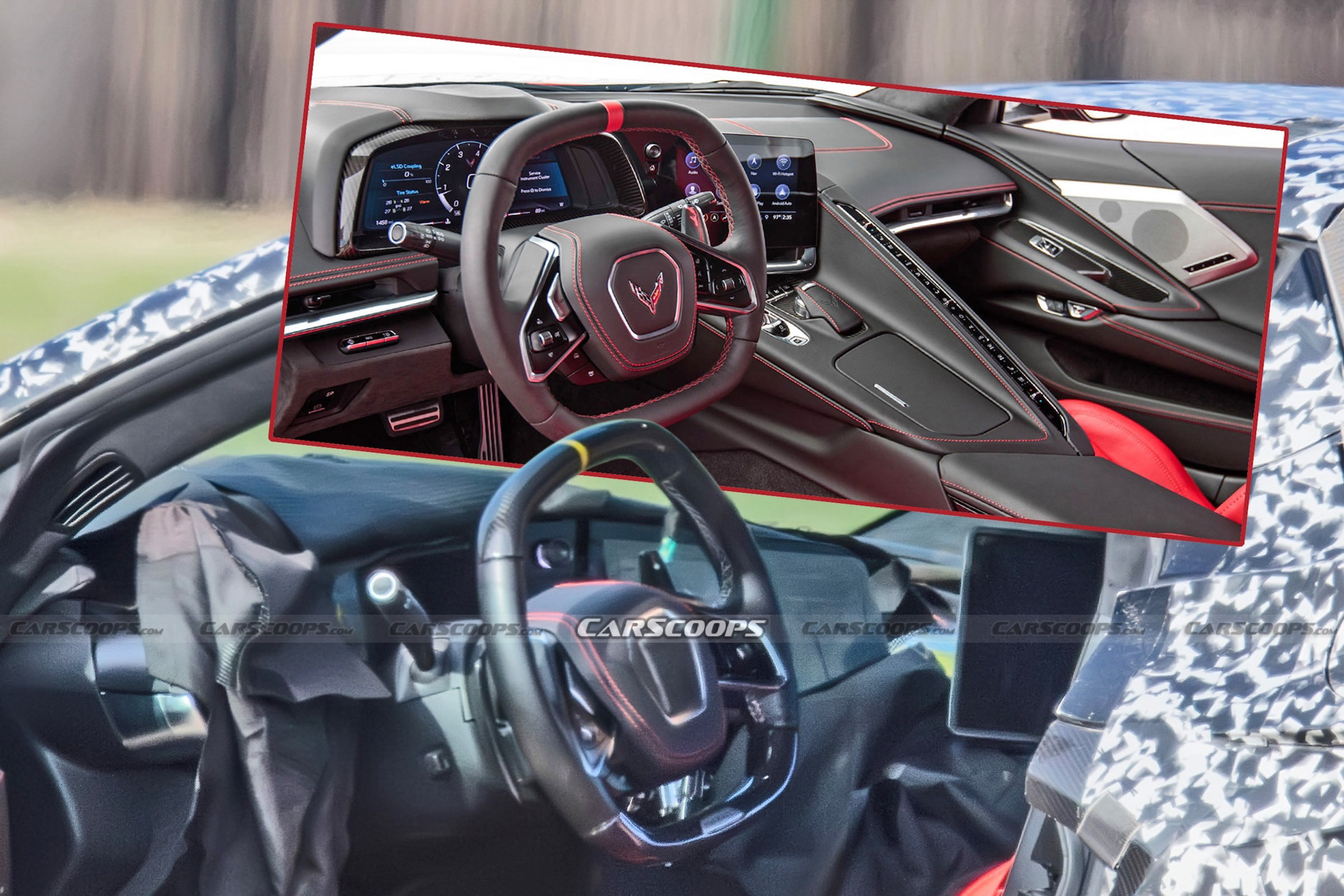
One of the most striking visual elements of the C8 Stingray interior is the dramatic wrap-around center console, colloquially dominated by what enthusiasts and automotive journalists initially dubbed the "Wall of Buttons." This steep, vertical cascade of climate control switches divides the driver and passenger, creating an intentional cockpit boundary that envelops the pilot.
Ergonomics of the Climate Strip
The climate control layout consists of a long, horizontal row of tactile buttons running vertically down the spine of the center console. While initial internet reactions questioned the unconventional aesthetics and spatial footprint of this design, the functional rationale is rooted in track ergonomics:
- Line of Sight: Placing the buttons in a linear vertical array allows the driver to locate and adjust temperature, fan speed, and seat heating without looking away from the windshield for extended periods.
- Tactile Feedback: Unlike capacitive touch panels that require visual confirmation, physical toggle switches and buttons provide distinct tactile feedback, ensuring blind operation while wearing driving gloves on a race circuit.
- Passenger Isolation: The physical barrier created by the console establishes a distinct driver's zone, emphasizing that the C8 is built first and foremost as a driver’s machine, while still affording the passenger independent climate controls on the outer edge of the strip.
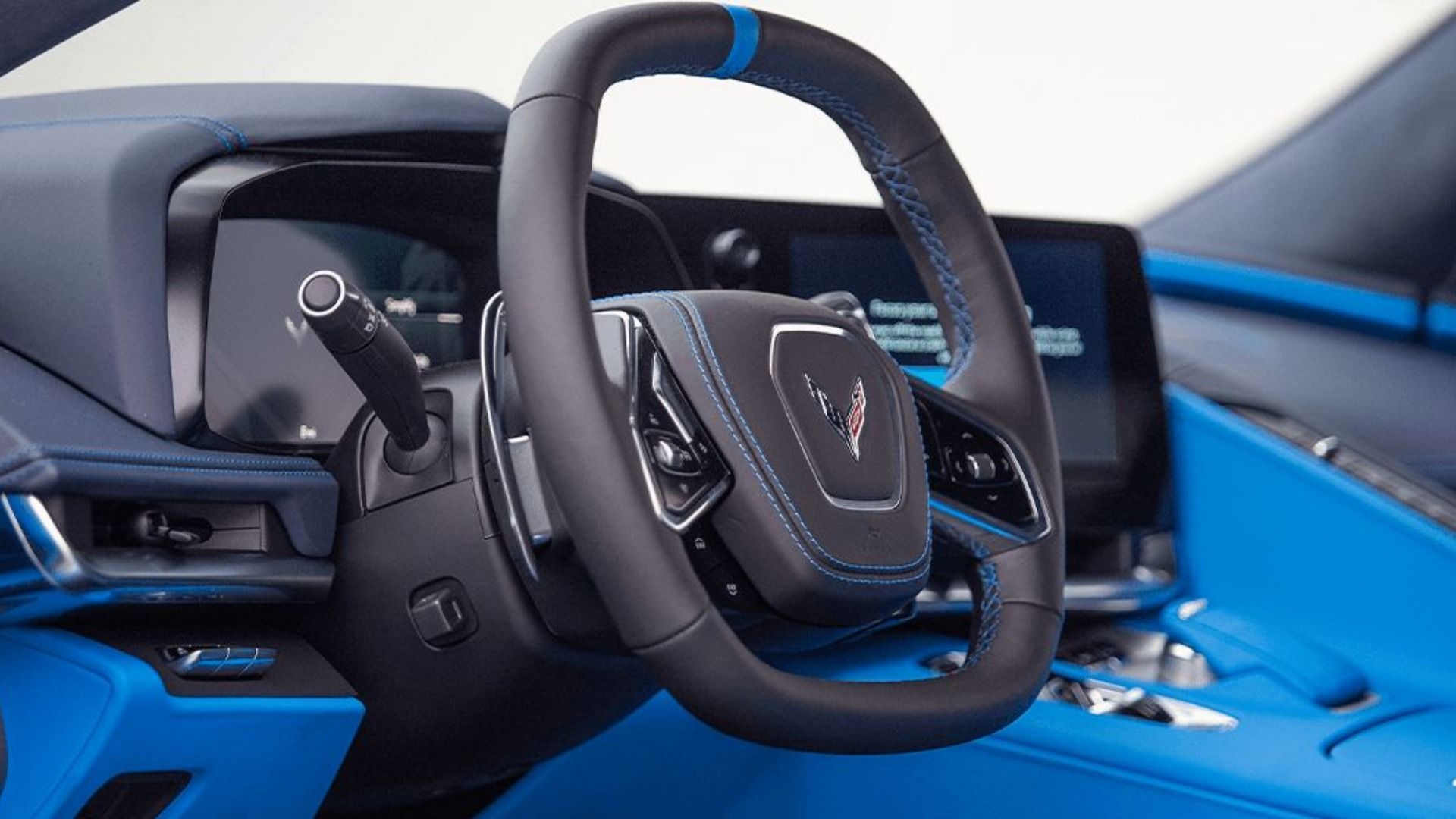
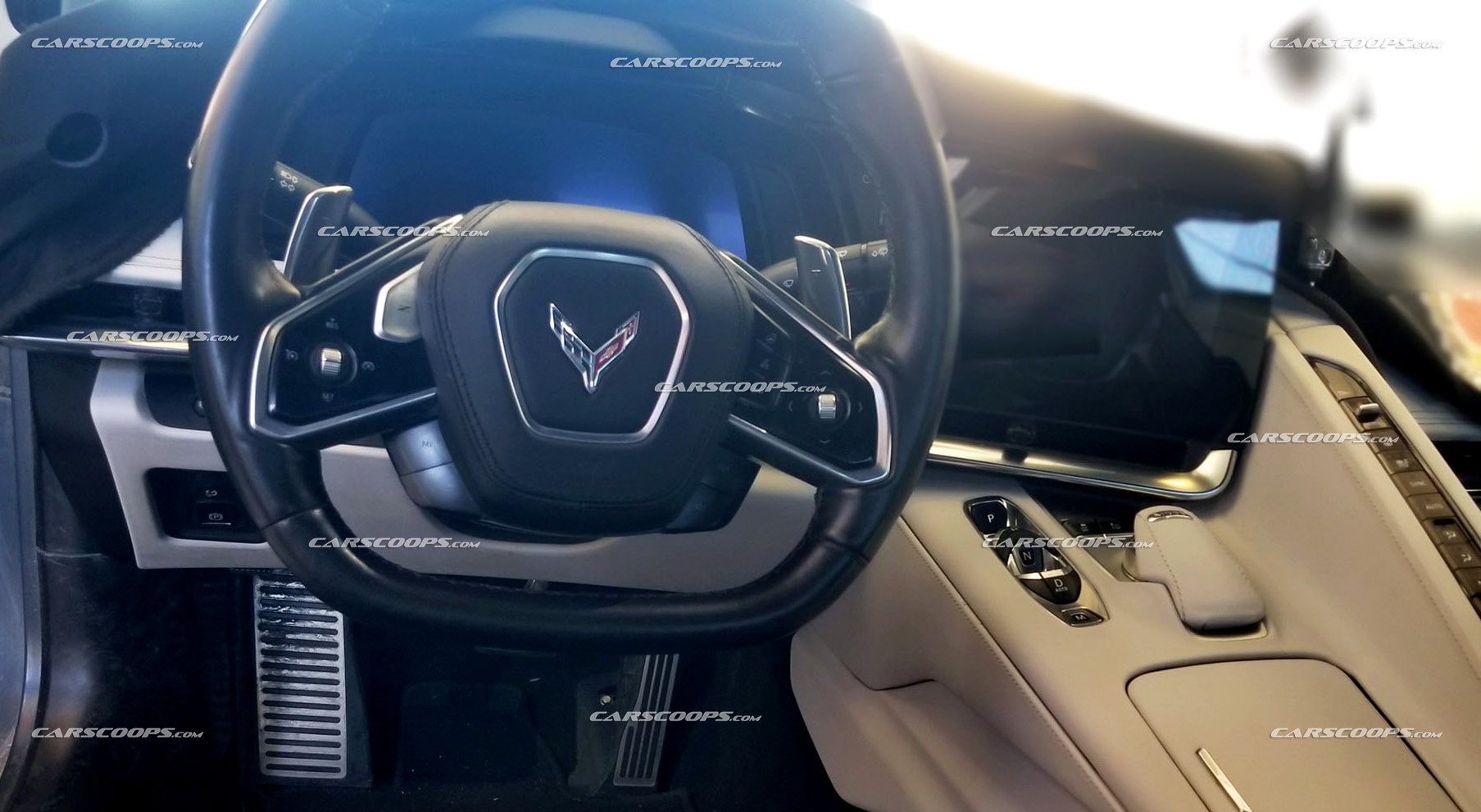
Complementing this console is the squared-off, two-spoke steering wheel. Designed specifically to clear the driver's knees while maintaining an unobstructed view of the 12-inch reconfigurable instrument cluster, the steering wheel shape is a functional nod to motorsport steering geometry. Dual paddle shifters constructed from magnesium sit proudly behind the wheel, offering crisp, immediate gear engagement for the 8-speed dual-clutch transmission.
Material Quality, Trim Levels, and Customization
Historically, Corvette interiors faced persistent scrutiny regarding material quality and fit-and-finish when compared to imported competitors from Porsche, BMW, or Audi. General Motors directly addressed this shortcoming in the C8 by implementing three distinct trim levels—1LT, 2LT, and 3LT—alongside multiple interior packages that dramatically elevate tactile and visual standards.
| Trim Level | Standard Seating Material | Audio System | Key Technology Additions |
|---|---|---|---|
| 1LT | Mulan leather (GT1 seats) | 10-speaker Bose system | 8-inch touchscreen, rear vision camera |
| 2LT | Mulan leather with heating/ventilation | 14-speaker Bose Performance Series | Head-up display, performance data recorder, blind-spot monitoring |
| 3LT | Nappa leather/Suede wrapped interior | 14-speaker Bose Performance Series | Custom leather-wrapped instrument panel, suede microfiber upper trim |
The entry-level 1LT offers a clean, driver-focused environment, but moving up to the 2LT and 3LT packages unlocks a suite of luxury appointments. The 3LT trim, in particular, wraps nearly every visible surface—including the dashboard, door panels, and upper pillars—in hand-wrapped Nappa leather or suede microfiber. Stitching options span standard black to vibrant contrasting colors like Adrenaline Red, Tension Blue, and Yellow, allowing buyers to tailor the cabin to their exact aesthetic preferences.
Carbon fiber accents further enhance the sporty ambiance. Real carbon fiber trim pieces can be optioned across the console bezel, door switch plates, and steering wheel spokes. Seat choices also dictate the character of the cabin:
- GT1 Seats: Optimized for long-distance touring, offering moderate bolstering and standard comfort adjustments.
- GT2 Seats: Inspired by racing dynamics, featuring aggressive carbon-fiber styling accents, Nappa leather, and dual-density foam for balanced track support and road comfort.
- Competition Sport Seats: Engineered for serious track enthusiasts, featuring aggressive side bolsters, maximum lateral support, and full carbon fiber trim integration.
Technology Integration and Infotainment Architecture
The digital landscape of the C8 Stingray interior revolves around two primary screens: a customizable 12-inch instrument cluster directly in front of the driver and an 8-inch infotainment touchscreen angled sharply toward the pilot.
The infotainment system runs on Chevrolet’s intuitive software suite, incorporating wireless Apple CarPlay and Android Auto integration as standard equipment. Processing speeds are fast, eliminating the lag issues that plagued older GM infotainment iterations. Menus are logically structured, allowing drivers to toggle through driving modes—Weather, Tour, Sport, Track, and the customizable Z-Mode—with immediate visual feedback on the instrument cluster.
The Performance Data Recorder (PDR)
Available on 2LT and 3LT trims, the integrated Performance Data Recorder acts as a sophisticated track telemetry and video logging system. Utilizing a forward-facing 1080p camera mounted near the rear-view mirror and a high-frequency GPS receiver, the PDR records video, audio, and comprehensive vehicle data—including steering angle, braking force, throttle position, and lap times—directly to an SD card located in the glovebox. Drivers can analyze their track performance via the infotainment screen or export the data to software like Cosworth Toolbox for deep lap-time dissection.
Practicality, Storage, and Cabin Packaging
Despite its mid-engine layout, which inherently limits cabin space compared to front-engine grand tourers, the C8 interior surprises occupants with clever storage solutions. Because the engine is positioned behind the passenger compartment, GM utilized the space traditionally reserved for a trunk to create a dual-boot configuration: the front trunk ("frunk") and the rear trunk.
Inside the cabin itself, storage is distributed carefully across limited real estate:
- Center Console Bin: Features a deep well equipped with USB-A and USB-C charging ports, an auxiliary input, and a wireless smartphone charging slot integrated neatly into the rear waterfall partition between the seats.
- Door Pockets: Slim pockets integrated into the lower door cards designed to hold small items, though bulky water bottles may struggle to fit.
- Behind-Seat Storage: Small recessed trays sit directly behind the seatbacks, providing secure areas to toss small bags, jackets, or laptops.
- Glovebox: A reasonably sized glovebox houses the SD card slot for the PDR and owner’s documentation, though its depth is constrained by the forward architecture of the passenger dash.
Visibility and climate management round out daily livability. The dual-zone automatic climate control system manages cabin temperatures efficiently, even under heavy track use or top-down cruising in convertible models. Speaking of the convertible, the hardtop mechanism folds seamlessly into a tonneau cover compartment behind the seats in just 16 seconds at speeds up to 30 mph, without sacrificing an inch of the trunk storage capacity required to stow two sets of golf clubs.
Frequently Asked Questions
Does the C8 Stingray interior feel cramped for taller drivers?
The forward-shifted cabin provides ample legroom and headroom for drivers up to roughly 6 feet 2 inches tall. However, the fixed partition wall behind the seats limits how far the seatbacks can recline, meaning extremely tall drivers may find the seating angle more upright than desired.
What is the difference between GT1, GT2, and Competition seats?
GT1 seats focus on long-distance touring comfort with moderate bolsters. GT2 seats combine racing aesthetics with enhanced Nappa leather and dual-density foam. Competition Sport seats feature aggressive lateral bolsters specifically designed to keep drivers firmly planted during high-g track maneuvers.
Can the "Wall of Buttons" climate control strip be customized or removed?
No, the vertical climate control strip is an integrated structural design element of the center console architecture and cannot be removed or relocated from the factory layout.
Is wireless Apple CarPlay and Android Auto standard?
Yes, wireless Apple CarPlay and Android Auto integration comes standard across all C8 trim levels, paired with the 8-inch central touchscreen.
How does the mid-engine layout affect cabin noise levels?
With the V8 engine residing directly behind the firewall, engine notes are more pronounced inside the cabin compared to front-engine Corvettes. Acoustic glass and strategic sound deadening keep cruising noise civilized, but under hard acceleration, the mechanical symphony of the pushrod V8 is fully audible.
Conclusion
The inside story of the C8 Stingray interior is one of bold engineering risk and meticulous execution. By casting aside decades of tradition, General Motors successfully transitioned the Corvette into world-class exotic territory. Through thoughtful ergonomics, premium material upgrades across higher trims, and driver-focused technology, the C8 cockpit proves that American performance engineering can match global standards of luxury and functional design.
Image Gallery