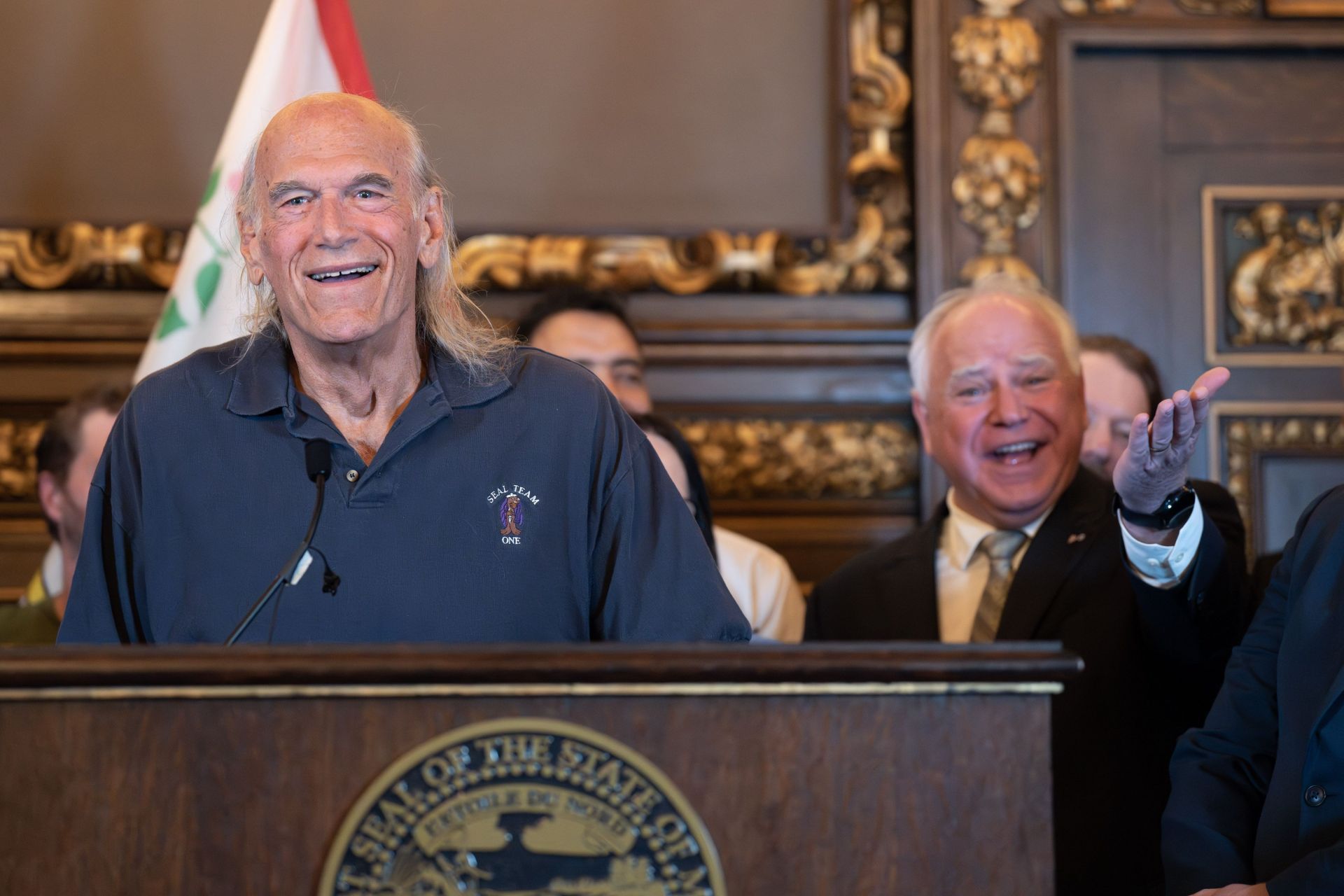
Examining Jesse Ventura's Net Worth: Career Earnings, Politics, and Media Ventures
Jesse Ventura commands an estimated net worth of approximately $6 million to $8 million, accumulated over a diverse career spanning professional wrestling, military service, Hollywood acting, municipal and state politics, and televisio...
Jesse Ventura commands an estimated net worth of approximately $6 million to $8 million, accumulated over a diverse career spanning professional wrestling, military service, Hollywood acting, municipal and state politics, and television broadcasting.
Contents
Introduction: Disentangling Public Persona and Financial Reality
Public figures who transition across entirely distinct industries frequently attract speculation regarding their personal fortunes. Jesse Ventura—born James George Janos and widely known by his wrestling and entertainment moniker "The Body"—represents a unique case study in multi-industry career diversification. From serving as a U.S. Navy Underwater Demolition Team operator to body-slamming opponents in the World Wrestling Federation (WWF), acting in major Hollywood blockbusters, serving as the 38th Governor of Minnesota, and hosting political commentary shows, Ventura has maintained a high-profile public footprint for decades.
Evaluating the financial reality behind this multifaceted career requires separating sensationalized internet estimates from verified professional milestones. While public figures rarely disclose comprehensive personal balance sheets, an analytical breakdown of Ventura's documented salaries, royalties, syndication deals, and real estate holdings provides a transparent and accurate assessment of how his wealth was generated and sustained over time.
Professional Wrestling Career and Early Financial Foundation
Long before entering public office, Jesse Ventura built his initial financial foundation in the squared circle. Entering the professional wrestling industry in the mid-1970s after returning from military service in Vietnam, Ventura adopted a flamboyant, feathered-boa-wearing persona that revolutionized heel commentary and character presentation.
The Territory Era and WWF Stardom
During the 1970s and 1980s, professional wrestling operated as a collection of regional territories before consolidating under Vince McMahon's World Wrestling Federation (WWF). Ventura wrestled for various promotions, including the American Wrestling Association (AWA), before achieving widespread prominence in the WWF both as an in-ring competitor and, more notably, as a color commentator alongside Vince McMahon.
While 1980s wrestling contracts did not offer the multi-million-dollar guaranteed base salaries seen in modern sports entertainment, top-tier performers earned substantial revenue through a combination of:
- Nightly gate percentages for live event performances
- Merchandise sales royalties (specifically action figures and promotional apparel)
- Special event bonuses, including early WrestleMania iterations
The Landmark Legal Battle Over Royalties
A pivotal financial milestone in Ventura's wrestling career occurred away from the ring and the commentary desk. In 1991, Ventura filed a lawsuit against Titan Sports (the parent company of the WWF) regarding unpaid royalties for the home video distribution of events where he provided commentary.
Ventura argued that his voice and likeness were used on VHS tapes without appropriate compensation. In a landmark legal victory, a federal jury awarded Ventura over $800,000 in royalties and interest. More importantly, this legal precedent established that performers were entitled to compensation for videotape and home media sales, fundamentally altering how professional wrestling talent negotiated merchandising rights for decades to come.
Hollywood Acting Career and Residual Income
Following his retirement from active wrestling due to health concerns, Ventura transitioned seamlessly into Hollywood cinema. His imposing physical stature, distinctive voice, and charismatic screen presence landed him supporting roles in several high-profile action films during the late 1980s and 1990s.
Major Film Credits and Box Office Impact
Ventura's filmography includes iconic appearances alongside major action stars of the era:
- Predator (1987): Playing the heavy-gunner Blain Cooper alongside Arnold Schwarzenegger, a film that grossed nearly $100 million worldwide against a $15 million budget.
- The Running Man (1987): Portraying the fictional dystopian gladiator Captain Freedom, again starring alongside Schwarzenegger.
- Batman & Robin (1997): Appearing in a minor role as an Arkham Asylum guard.
- Major League II (1994) and Demolition Man (1993): Providing memorable cameo and supporting appearances that sustained his visibility in mainstream media.
Understanding SAG-AFTRA Residuals
Participation in major studio feature films grants performers membership in the Screen Actors Guild-American Federation of Television and Radio Artists (SAG-AFTRA). Under union guidelines, actors receive residual payments whenever these films are broadcast on television, syndicated, streamed, or sold in physical and digital formats. While individual residual checks fluctuate based on syndication schedules and viewing metrics, long-running rotation on cable networks and streaming platforms provides a steady, passive stream of supplementary retirement income.
Political Career: Gubernatorial Salary and Public Service
Ventura's transition from entertainment to politics remains one of the most remarkable independent political upsets in modern American history. Running under the Reform Party banner, Ventura won the 1998 Minnesota gubernatorial election, defeating major-party candidates Norm Coleman (Republican) and Hubert H. Humphrey III (DFL).
Financial Realities of Public Office
Many observers mistakenly assume that serving as a state governor generates immense personal wealth. In reality, elected public office provides a fixed salary established by state law.
- During his single term as Governor of Minnesota (1999–2003), Ventura earned an annual gubernatorial salary of approximately $120,000.
- While the position included official housing arrangements and security details, the salary itself was modest compared to his subsequent earnings in commercial broadcasting and commercial endorsements.
- Ventura famously rejected various perks and frequently emphasized his commitment to fiscal conservatism and government transparency during his tenure, declining to run for a second term in 2002.
| Career Phase | Primary Role | Approximate Earning Mechanism | Financial Impact |
|---|---|---|---|
| Wrestling (1975–1990) | In-ring Performer & Commentator | Nightly gates, PPV bonuses, landmark 1991 lawsuit | Established initial wealth; set legal precedent for home video royalties. |
| Hollywood (1987–1999) | Supporting Actor | Upfront talent fees and ongoing SAG-AFTRA residuals | Provided diversified entertainment income and global recognition. |
| Politics (1999–2003) | Governor of Minnesota | Fixed state salary (~$120,000 annually) | Modest direct income; elevated public profile for future media work. |
| Broadcasting (2009–2017) | Television Host & Author | Network contracts, book advances, speaking fees | Substantial post-gubernatorial income generation. |
Television Hosting, Book Sales, and Public Speaking
Following his departure from the governor's mansion, Ventura capitalized on his distinct political perspective and media-friendly persona to build a lucrative post-political career in broadcasting, publishing, and public speaking.
Television Ventures
Ventura returned to television as a political commentator and investigative host:
- Conspiracy Theory with Jesse Ventura (TruTV): Ventura hosted and executive produced this investigative documentary series, which ran for three seasons from 2009 to 2012. Cable network hosting contracts for prime-time investigative series typically command substantial episodic fees.
- Off the Grid (RT America): Ventura later hosted this weekly commentary program, which provided a platform for his anti-establishment political commentary, libertarian views, and critique of mainstream media narratives.
Publishing and Literary Royalties
As an author, Ventura leveraged his polarizing public image into multiple New York Times best-selling non-fiction books. His literary portfolio includes:
- I Ain't Got Time to Bleed: Raging Politician from the Hollywood Backlot to the Governor's Mansion (1999)
- Don't Start the Revolution Without Me! (2000)
- DemoCRIPS and RePUBLICANS: The Greatest Show on Earth (2008)
- Jesse Ventura's Marijuana Manifesto (2016)
Book contracts for high-profile political figures typically involve upfront publisher advances followed by percentage royalties on hardcover, paperback, audio, and digital book sales.
Paid Speaking Engagements
Former governors, especially those with unique populist or independent backgrounds, command significant fees on the corporate and university lecture circuits. During peak periods of media activity, keynote speaking fees for high-profile political figures range from $10,000 to $25,000 per appearance.
Real Estate Holdings and Asset Management
A substantial portion of Ventura's net worth is tied up in tangible real estate assets accumulated over decades of successful entertainment and political work.
Property Portfolio
Ventura has maintained properties in regions known for privacy and natural scenery:
- Minnesota Property: For many years, Ventura maintained primary residency in Maple Grove, Minnesota, before eventually listing the home.
- Baja California, Mexico: Ventura famously spent a significant portion of his post-gubernatorial years living part-time in a beachfront home in Baja California Sur, Mexico, seeking respite from American media scrutiny and utilizing lower international cost-of-living advantages.
Real estate appreciation over a multi-decade career ensures that property acquisitions made during the height of his Hollywood and gubernatorial earnings have appreciated considerably, forming a stable bedrock for his overall net worth.
Frequently Asked Questions
How much did Jesse Ventura make as Governor of Minnesota?
During his single term from 1999 to 2003, Jesse Ventura earned an annual salary of approximately $120,000 as the Governor of Minnesota. This salary was established by state statute and represented a standard public servant compensation package rather than a wealth-generating enterprise.
What was the outcome of Jesse Ventura's lawsuit against the WWF?
In 1991, Ventura sued Titan Sports (the parent company of the WWF) for unpaid home video royalties. A federal jury ruled in his favor, awarding him over $800,000. This landmark verdict established legal precedent ensuring that professional wrestlers receive financial compensation for videotape and home media distribution of their performances.
Did Jesse Ventura serve in the military?
Yes. Before his professional wrestling career, Ventura enlisted in the U.S. Navy and served during the Vietnam War. He completed training as a U.S. Navy SEAL, serving in Underwater Demolition Team 12 (UDT-12), a background he frequently referenced throughout his public life.
What are Jesse Ventura's primary sources of income today?
Ventura's current income derives primarily from SAG-AFTRA acting residuals from his film appearances, literary royalties from his multiple published books, historical investments, real estate holdings, and occasional paid media appearances or speaking engagements.
Why did Jesse Ventura move to Mexico?
Following his term as governor, Ventura spent considerable time residing in Baja California, Mexico. He cited a desire for privacy, a slower pace of life, and personal freedom from American political media scrutiny as primary reasons for his relocation.
Conclusion and Financial Summary
Jesse Ventura's estimated net worth of $6 million to $8 million reflects a lifetime of calculated career pivots. By transitioning successfully from elite military service to professional wrestling, conquering Hollywood action cinema, capturing an improbable gubernatorial election victory, and leveraging his notoriety into television production and bestselling literature, Ventura constructed a durable and diversified financial portfolio. While internet rumors frequently inflate celebrity fortunes, Ventura's documented earnings from landmark lawsuits, studio residuals, real estate appreciation, and media contracts substantiate a comfortable and secure financial standing.
Image Gallery