Can God Do Evil? Examining Omnipotence, Morality, and Divine Nature
From a classical theological and philosophical standpoint, the prevailing consensus across major monotheistic traditions is that God cannot do evil, because doing so would contradict His inherently good, omnibenevolent, and immutable n...
From a classical theological and philosophical standpoint, the prevailing consensus across major monotheistic traditions is that God cannot do evil, because doing so would contradict His inherently good, omnibenevolent, and immutable nature.
Contents
The question of whether an all-powerful deity possesses the capability to perform evil actions sits at the very heart of the philosophy of religion, medieval scholasticism, and systematic theology. Far from being a mere abstract paradox, this inquiry directly challenges how humanity understands divine omnipotence, moral standards, and the origins of suffering in the universe. To explore whether God can do evil requires an examination of how omnipotence is defined, the relationship between God and morality, and the logical constraints that thinkers have historically placed on absolute power.
Defining Omnipotence: Historical and Philosophical Perspectives
To ask whether God can do evil is first to ask what it means for God to be omnipotent. In modern vernacular, omnipotence is often understood as the absolute ability to do literally anything. However, classical philosophers and theologians from Augustine to Thomas Aquinas made crucial distinctions regarding the boundaries of divine power.
Aquinas, writing in the Summa Theologiae, argued that omnipotence means the ability to actualize all logically possible states of affairs. It does not entail the capacity to perform logical contradictions or intrinsic absurdities. For example, an omnipotent being cannot make a square circle, make a rock too heavy for themselves to lift, or create a married bachelor. These are not limitations on power, but rather meaningless combinations of words that describe non-entities.
Applying this principle to morality, classical philosophy posits that evil is not a positive, substantive entity in its own right, but rather a privation (privatio boni)—the absence, corruption, or lack of good, much like darkness is the absence of light. Therefore, if evil lacks substantive existence and represents a deficiency, an omnipotent, perfect being performing evil would be a logical contradiction: perfection actualizing imperfection.
The Euthyphro Dilemma: Is Something Good Because God Wills It?
Any deep investigation into divine morality inevitably encounters the Euthyphro dilemma, originally posed by Plato in the context of the Greek pantheon, but later adapted by monotheistic philosophers. The dilemma asks: Is something good because God commands it, or does God command it because it is good?
Navigating this philosophical fork reveals profound implications for whether God can do evil:
- Option A (Divine Command Theory): If morality is entirely dependent on God's arbitrary will, then whatever God wills or does is definitionally good. In this view, if God were to cause suffering or destruction, it would become "good" simply because God did it. Critics argue this makes morality arbitrary, turning "goodness" into a mere descriptor of divine whim rather than an objective standard.
- Option B (Independent Moral Standard): If God commands something because it is independently good, it implies that a standard of goodness exists outside of and superior to God. In this scenario, God is bound by an external moral law, meaning God cannot do evil because doing so would violate that objective standard, placing a restriction on divine autonomy.
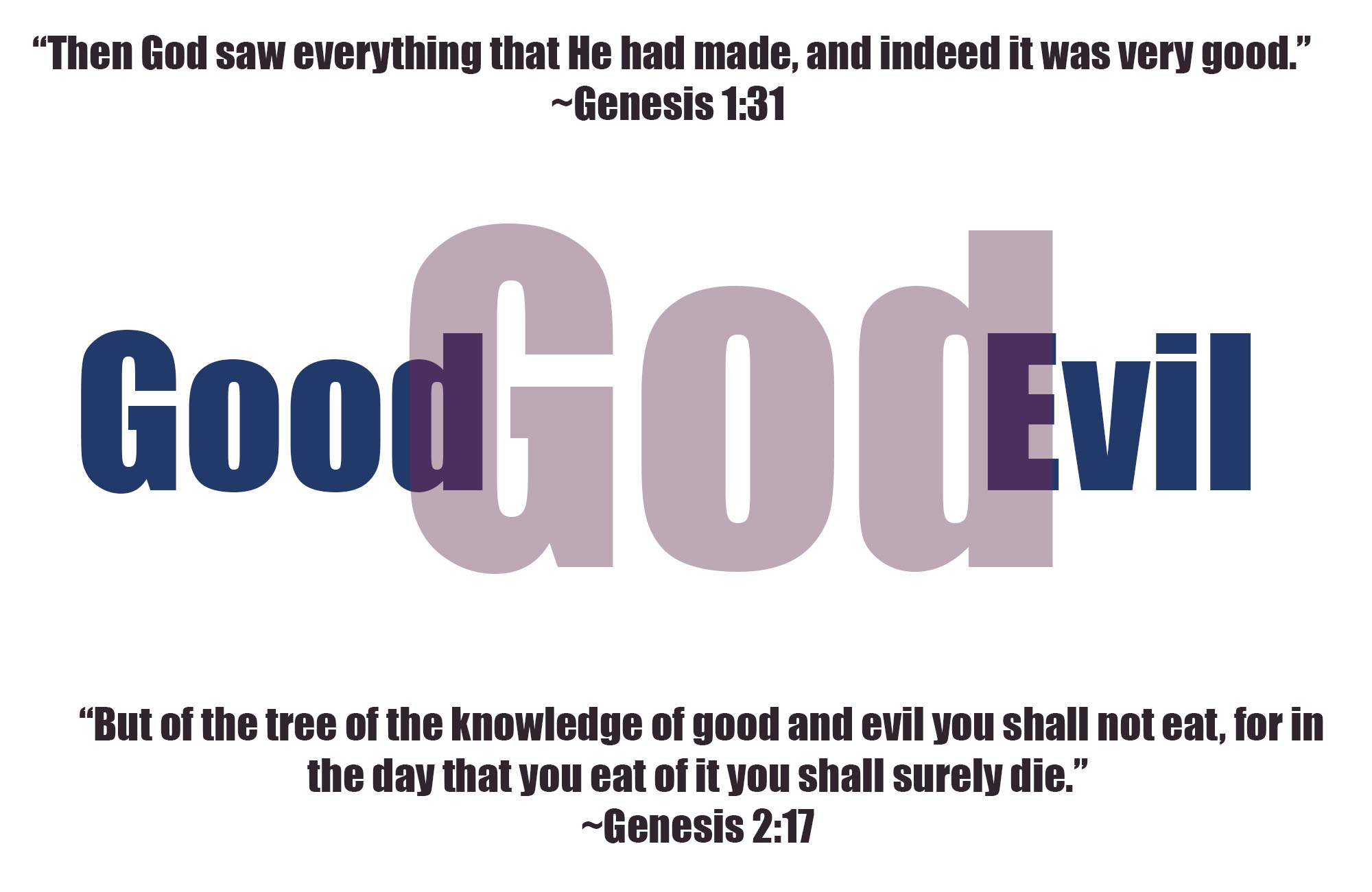
Most classical monotheistic theologians navigate this dilemma by rejecting both extremes. Instead, they argue for a third path: God’s own nature is the standard of goodness. Goodness is neither arbitrary nor external to God; rather, it flows essentially from who God is. Because God’s nature is unchangingly good, God cannot act against His own nature, making the execution of evil an internal impossibility.
| Philosophical Position | View on Divine Power | Core Implication Regarding Evil |
|---|---|---|
| Absolute Voluntarism | Power is entirely unrestricted by logic or external standards. | God could technically do anything, but chooses not to do evil. |
| Classical Thomism | Power is limited by logical coherence and divine nature. | God cannot do evil because evil is a deficiency and a logical contradiction to perfection. |
| Process Theology | Power is persuasive rather than coercive or absolute. | God works within cosmic constraints and does not unilaterally control all outcomes, including evil. |
Omnibenevolence Versus Absolute Freedom
A common critique leveled by skeptics and analytical philosophers is that if God cannot do evil, then God is not truly free. Freedom, in human terms, often requires the real capacity to choose between moral alternatives—good and bad, right and wrong. If God lacks the capacity to choose evil, is He merely an automaton of righteousness?
Theologians respond by reframing the concept of freedom in a divine context. Freedom at its highest level is not the arbitrary coin-toss between good and bad, but the unhindered ability to act in accordance with one's perfect nature.
- Impeccability: In Christian theology, this is mirrored in the concept of glorification, where redeemed humans or angelic beings reach a state where they can no longer sin, not because their free will has been forcibly stripped away, but because their perfected nature completely desires only what is good.
- Moral Necessity: By extension, God possesses maximal freedom because His actions are entirely unconstrained by external coercion, yet bound by His own infinite wisdom, love, and justice. Choosing evil would require an internal corruption or moral deficiency that is fundamentally incompatible with a maximally great being.
The Problem of Natural and Moral Evil
While philosophers debate whether God can actively do evil, everyday observers frequently ask the question because of the raw, observable presence of evil and suffering in the world. This is traditionally categorized into two types:
- Moral Evil: Suffering caused by human agency, such as cruelty, violence, and injustice.
- Natural Evil: Suffering caused by natural processes, such as earthquakes, diseases, famines, and genetic disorders.
When discussing whether God can do evil, critics often point to natural disasters or divinely mandated judgments in sacred texts as evidence of God directly authoring harmful outcomes. To address this, theologians make a vital semantic and ontological distinction between evil (moral wickedness, sin, and malice) and harm or adversity (pain, destruction, or judgment).
In various scriptural traditions, God is sometimes depicted as bringing about calamity or judgment (e.g., Amos 3:6: "Does disaster happen in a city, unless the Lord has done it?"). However, mainstream theology argues that these actions serve a righteous, corrective, or judicial purpose—akin to a surgeon inflicting pain through an incision to save a patient's life, or a judge sentencing a criminal to prison. The pain is real, but the intent and overarching framework are restorative and just, distinct from malicious moral evil.
Common Mistakes and Misconceptions
When analyzing this complex intersection of theology and philosophy, several common missteps can distort the discourse:
- Conflating Pain with Moral Evil: Assuming that any experience of pain or suffering equates to God performing moral evil, overlooking the theological arguments for soul-making, human free will, and a broader cosmic narrative.
- Ignoring Historical Context: Treating ancient religious texts as modern philosophical treatises without accounting for genre, idiom, and cultural expressions of sovereignty.
- Treating Omnipotence as Magic: Assuming omnipotence means the ability to bypass the laws of logic, thereby ignoring the rigorous definitions established by historical thinkers like Aquinas and Anselm.
Frequently Asked Questions
If God cannot do evil, is God limited?
Yes, but only by logical and intrinsic constraints, not by external forces. An omnipotent being cannot do what is logically impossible or contrary to its own perfection, such as creating a stone too heavy to lift or acting against its own righteous nature.
How does the concept of free will explain evil if God is all-powerful?
The standard defense, known as the free will defense, argues that moral evil is the byproduct of granting sentient creatures genuine autonomy. To have meaningful love and moral choice, humans must possess the real capacity to choose evil; therefore, the responsibility for moral evil rests on human agents rather than God.
Why do sacred texts sometimes depict God bringing calamity?
In classical interpretations, references to God bringing disaster or judgment are viewed through the lens of justice, discipline, or necessary correction rather than malicious wickedness. These actions are understood to uphold an objective standard of righteousness.
Can an all-good God coexist with intense worldly suffering?
This constitutes the core of the philosophical problem of evil. Theodicies (attempts to justify God's ways to humanity) argue that God permits temporary suffering for greater goods that cannot be achieved otherwise, such as moral maturation, compassion, and spiritual reliance.
Next Steps and Further Exploration
For those seeking to deepen their understanding of this topic, engaging with primary philosophical texts provides a rigorous foundation. Reading selections from Thomas Aquinas’s Summa Theologiae (specifically the treatises on divine power and goodness), Alvin Plantinga’s work on the free will defense in analytical philosophy of religion, and modern explorations of the problem of suffering will offer structured insights into how brilliant minds across centuries have grappled with the limits of divine agency and the reality of evil.
Image Gallery