The Legacy of Fortunate Son by John Fogerty in Modern Protest Music
John Fogerty’s 1969 anthem "Fortunate Son" remains one of the most enduring and frequently referenced templates for modern protest music, bridging the gap between historical anti-war sentiment and contemporary socio-economic critique....
John Fogerty’s 1969 anthem "Fortunate Son" remains one of the most enduring and frequently referenced templates for modern protest music, bridging the gap between historical anti-war sentiment and contemporary socio-economic critique.
Contents
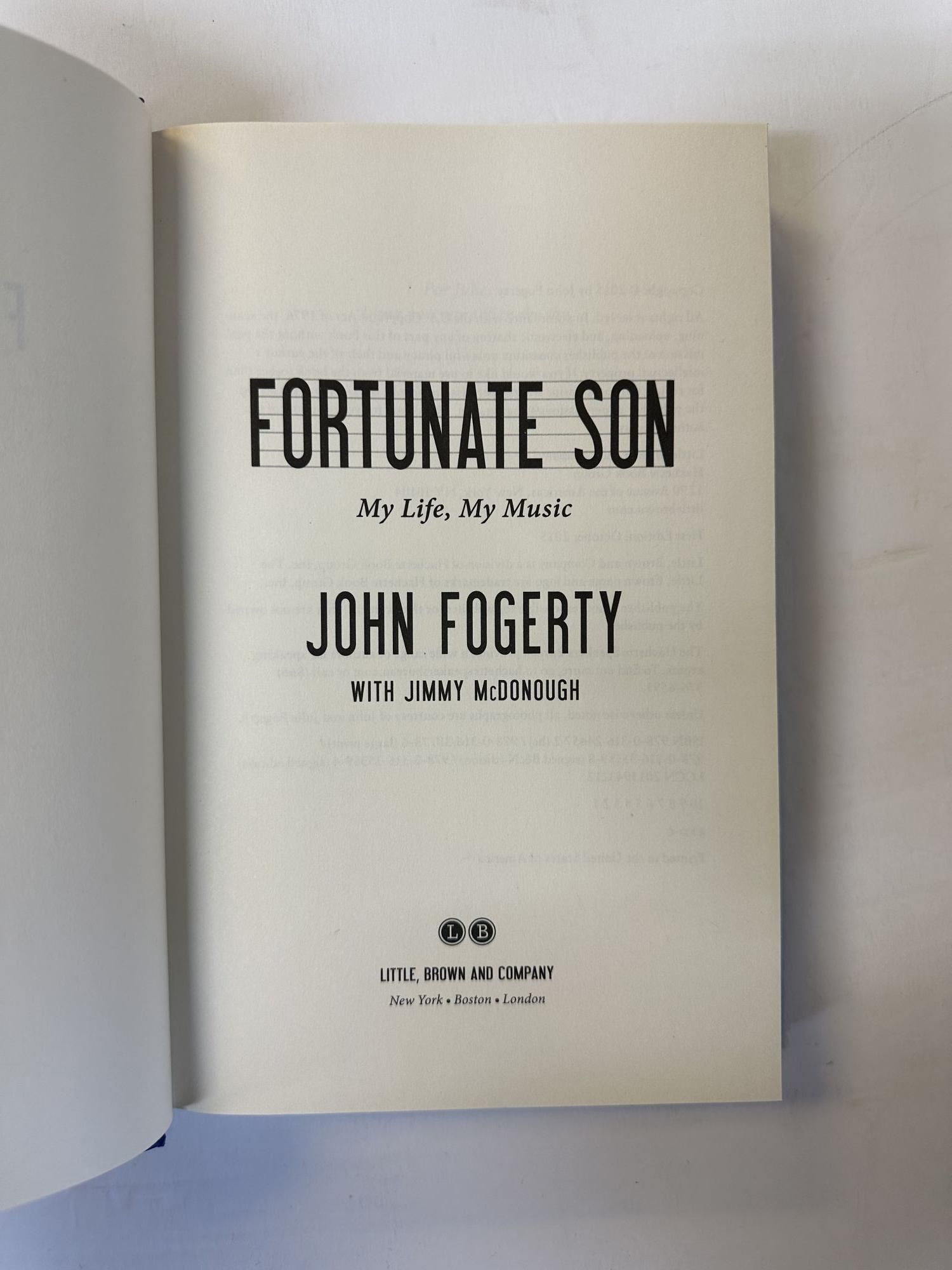
Originally released by Creedence Clearwater Revival (CCR) during the height of the Vietnam War, "Fortunate Son" captured a specific type of populist resentment: the reality that working-class youth were disproportionately drafted into military service while the children of the wealthy and politically connected evaded deployment. Written by Fogerty in roughly 20 minutes, the track combined a driving, upbeat garage-rock tempo with scathing lyrical commentary. Over five decades later, the song's underlying critique of systemic inequality, elite hypocrisy, and institutional power has not lost its edge. Instead, modern artists, activists, and commentators continually adapt its themes to address contemporary political polarization, economic injustice, and modern militarism.
Understanding this enduring legacy requires examining how the song transitioned from a period-specific Vietnam protest track into a timeless blueprint for dissent, exploring its lyrical architecture, and analyzing its deployment in twenty-first-century cultural and political discourse.
The Historical Genesis of "Fortunate Son"
To comprehend how "Fortunate Son" functions in modern protest music, one must first examine the conditions of its creation in the late 1960s. Released on the album Willy and the Poor Boys in November 1969—alongside the equally potent "Down on the Corner"—the track arrived during a period of intense domestic turmoil in the United States.
The Vietnam War was generating massive casualties, and the military draft (Selective Service System) was pulling hundreds of thousands of young Americans into active duty. However, legal deferments were widely available for college students, and those with significant financial or political capital could utilize family connections to secure positions in the National Guard, Coast Guard, or safe stateside assignments.
Fogerty observed this disparity firsthand. While working-class families watched their sons receive draft notices, public figures and wealthy scions—such as David Eisenhower, grandson of the former president—enjoyed relative immunity from frontline combat. This dynamic birthed the song's most famous refrain: "It ain't me, it ain't me, I ain't no senator's son, no."
Unlike many contemporaneous anti-war anthems that relied on gentle acoustic arrangements or abstract poetic imagery, "Fortunate Son" utilized aggressive, high-energy rock and roll. This aggressive delivery mirrored the frustration of the demographic it represented. By grounding the anti-war movement in class consciousness rather than purely ideological pacifism, Fogerty created a song that resonated far beyond the specific geopolitics of Southeast Asia.
Lyrical Architecture and Universal Class Critique
The staying power of "Fortunate Son" in modern protest music stems primarily from its lyrical focus on class disparity. While the song is historically categorized as an anti-Vietnam War anthem, Fogerty’s lyrics contain remarkably few direct references to Vietnam, communism, or specific military tactics. Instead, the composition focuses on the mechanics of privilege and power.
Consider the opening lines:
Some folks are born made to wave the flag / Ooh, they're red, white and blue / And when the band plays 'Hail to the Chief' / Ooh, they point the cannon at you, Lord.
These verses establish an immediate dichotomy between those who profit from or cynically exploit nationalist symbols ("Some folks are born silver spoon in hand") and those who bear the physical and economic consequences ("It ain't me, it ain't me, I ain't no fortunate one").
This structural critique allows the song to transcend its original 1969 context. When economic inequality widens, or when trust in public institutions declines, the lyrics naturally adapt to new grievances. Modern protest music often struggles with specificity: hyper-targeted songs can quickly feel dated, while overly vague anthems lack emotional impact. "Fortunate Son" strikes a rare balance, offering a sharply defined target—entrenched elites who escape sacrifice—while remaining broad enough to apply to subsequent generations facing different forms of institutional exploitation.
Evolution and Adaptation in the Twenty-First Century
As protest music evolved through the decades—moving from folk and classic rock into punk, hip-hop, indie rock, and electronic genres—artists continued to draw inspiration from the ethos of "Fortunate Son."
In the twenty-first century, the song's legacy manifests in two distinct ways: direct covers/samplings and stylistic emulation by modern protest musicians.
Direct Appropriation and Cultural Resonance
Because the song is deeply embedded in the American consciousness, filmmakers, television producers, and political commentators frequently use it to evoke anti-establishment cynicism or critiques of military-industrial expansion. However, this mainstream ubiquity has occasionally created irony. Politicians have periodically attempted to use "Fortunate Son" at campaign rallies without realizing the song is a direct satire of elite entitlement—a misinterpretation that Fogerty has publicly and repeatedly corrected.
This tension highlights a core challenge in modern protest music: once a radical song is absorbed into the commercial cultural mainstream, its transgressive edge can be blunted. Yet, whenever economic disparity spikes or military interventions face public scrutiny, the song reliably re-enters public discourse as a shorthand for working-class resistance.
The Influence on Modern Genre-Crossing Dissent
Modern protest musicians working in genres far removed from 1960s garage rock frequently adopt the direct, confrontational tone established by Fogerty. Whether in the politically charged verses of contemporary hip-hop artists addressing the prison-industrial complex and economic disenfranchisement, or in indie-rock and punk acts critiquing corporate greed and systemic corruption, the core question remains identical to the one posed in 1969: Who bears the cost of institutional decisions, and who is protected from them?
| Era / Context | Primary Target of Protest | Musical Medium | Lyrical Focus |
|---|---|---|---|
| Late 1960s | Vietnam War Draft Inequities | Garage Rock / Roots Rock | Class disparity in military service and elite exemption. |
| Early 2000s | Post-9/11 Foreign Policy & Corporate Lobbying | Alternative Rock / Punk | Militarism, patriotism, and government accountability. |
| Modern Era (2020s) | Economic Inequality & Systemic Power Imbalances | Cross-Genre (Indie, Hip-Hop, Folk) | Wealth concentration, institutional hypocrisy, and labor exploitation. |
Why Modern Protest Music Relies on Historical Blueprints
Contemporary songwriters face a fragmented media landscape where creating a unified cultural protest anthem is exceptionally difficult. In the 1960s, a handful of dominant television networks, radio stations, and record labels meant that a song like "Fortunate Son" could instantly galvanize a massive national audience. Today, digital platforms disperse attention across millions of niches.
Consequently, modern protest movements often look backward to establish a lineage of dissent. By anchoring contemporary political arguments in the tradition of classic protest anthems, modern artists tap into an existing cultural memory. When a modern folk singer or rock band channels the raw energy of "Fortunate Son," they are not merely covering an old track; they are participating in a continuous historical conversation about power, privilege, and the responsibilities of citizenship.
Furthermore, Fogerty’s persistent advocacy regarding the ownership and political misuse of his catalog has kept discussions of artist rights and political co-optation at the forefront of the music industry. This adds another layer to the song's legacy: it stands not only as a critique of government and class structures, but also as a testament to the independence of the artist against institutional appropriation.
Common Misinterpretations and Complexities
Analyzing the legacy of "Fortunate Son" requires acknowledging the complexities surrounding its consumption.
- The Patriotism Paradox: Because the song mentions the American flag and national symbols in its opening lines, casual listeners have historically misconstrued it as a standard patriotic anthem. In reality, the lyrics subvert these symbols, exposing how patriotism is frequently weaponized by the wealthy to justify sending working-class citizens into unnecessary conflicts.
- Commercial Overexposure: Overuse in media and advertising can dilute a protest song's potency, transforming a fierce anti-establishment critique into nostalgic background noise for action films or car commercials.
- The Risk of Nostalgia: Relying too heavily on 1960s models can sometimes make contemporary protest music feel derivative. The challenge for modern artists is to harness the clarity and populist appeal of tracks like "Fortunate Son" while addressing the distinct, highly complex technological and economic realities of the twenty-first century.
Frequently Asked Questions
What inspired John Fogerty to write "Fortunate Son"?
John Fogerty wrote the song out of frustration with the glaring inequalities of the Vietnam War draft. He observed that while ordinary working-class families were forced to send their sons into combat, wealthy elites and politically connected individuals easily secured deferments and avoided service.
Is "Fortunate Son" strictly an anti-war song?
While it originated as a critique of the Vietnam War draft, its primary theme is economic and social class inequality. The song targets systemic exploitation and elite hypocrisy, making its message applicable to various forms of institutional injustice beyond military conflict.
Why do politicians occasionally misuse the song at rallies?
Because the song features recognizable Americana imagery and a driving rock rhythm, politicians—particularly those espousing populist or nationalist platforms—have occasionally used it without closely examining the lyrics. The song actually satirizes the exact type of unearned privilege and nationalist posturing that many politicians project.
How does "Fortunate Son" influence modern protest musicians?
Modern protest musicians look to the track as a masterclass in how to combine high-energy, accessible music with sharp, class-conscious political commentary without relying on overly didactic or preachy language.
What makes a protest song endure across multiple generations?
Enduring protest songs typically focus on universal human struggles—such as power imbalances, economic fairness, and institutional accountability—rather than temporary political figures or hyper-specific news events that quickly fade from public memory.
Conclusion and Next Actions
The legacy of "Fortunate Son" by John Fogerty in modern protest music rests on its ability to distill complex socioeconomic grievances into a timeless, high-energy anthem. By shifting the focus from abstract political theory to the stark reality of class privilege, Fogerty provided a structural template that continues to guide artists navigating contemporary injustice.
For music enthusiasts, activists, and songwriters, studying this track offers valuable perspective on how art can critique power without losing its cultural resonance. When examining current social movements, listeners should look past surface-level aesthetics to evaluate how modern artists address the age-old question of who bears the burdens of society and who reaps the rewards.
Image Gallery