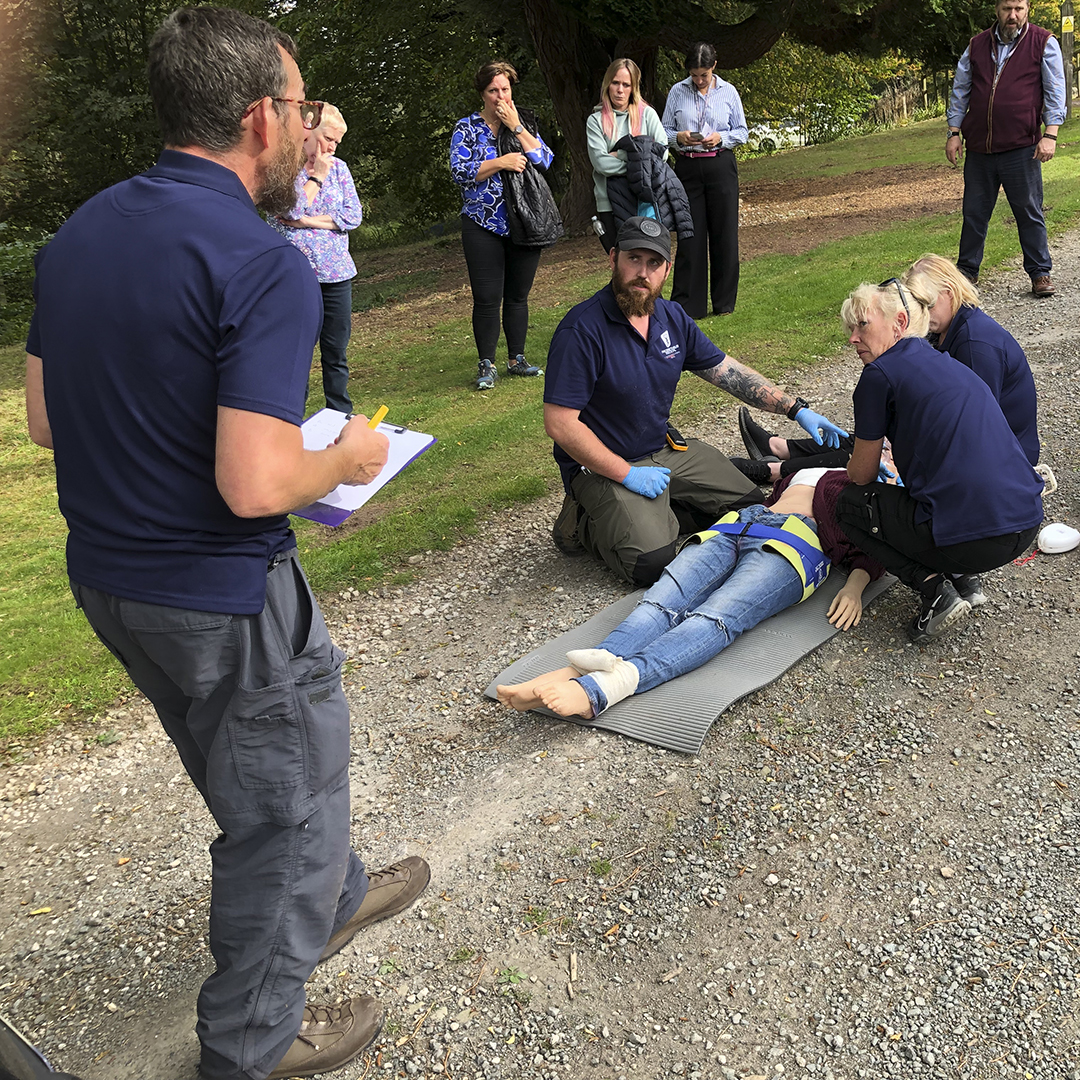
Why Medical Student Skills Training Matters for Clinical Competence and Patient Safety
Medical student skills training bridges theoretical biological knowledge and hands-on patient care. By mastering clinical procedures, diagnostic reasoning, and interpersonal communication in controlled environments before entering resi...
Medical student skills training bridges theoretical biological knowledge and hands-on patient care. By mastering clinical procedures, diagnostic reasoning, and interpersonal communication in controlled environments before entering residency, trainees significantly reduce clinical error rates, enhance patient safety, shorten procedure times, and mitigate personal cognitive overload during early postgraduate practice.
Contents
The Evolution of Medical Education: Shift to Mastery Learning
For decades, medical education relied heavily on the traditional Halstedian apprenticeship model summarized by the phrase "see one, do one, teach one." While this approach trained generations of physicians, modern clinical environments present higher patient acuity, stricter safety regulations, and reduced resident duty hours. These factors limit the feasibility of learning complex technical skills directly on vulnerable patients without prior preparation.
Medical schools have shifted toward Competency-Based Medical Education (CBME) and Simulation-Based Medical Education (SBME). Championed by medical accrediting bodies such as the Association of American Medical Colleges (AAMC) and the Accreditation Council for Graduate Medical Education (ACGME), CBME requires students to demonstrate verifiable competence before performing tasks independently.
Underpinning this shift is K. Anders Ericsson’s framework of deliberate practice, which requires:
- Defined learning objectives rather than passive observation.
- Repeated execution of specific motor or cognitive tasks.
- Immediate, actionable feedback from skilled supervisors.
- Continuous evaluation against rigorous mastery standards.
Through structured skills training, medical schools establish clear benchmarks known as Entrustable Professional Activities (EPAs). EPAs define the core tasks—such as performing a comprehensive physical exam, obtaining informed consent, or placing an intravenous line—that a graduating medical student must perform without direct supervision on day one of residency.
Core Pillars of Comprehensive Skills Training
Medical student skills training encompasses three distinct domains: procedural execution, diagnostic assessment, and clinical communication. Balanced development across all three areas is necessary to form an effective physician.
Comprehensive Skills Training:
- Technical & Procedural
- Point-of-Care Ultrasound
- Arterial Blood Gases
- Suturing & Sterile Field
- Diagnostic & Clinical
- Targeted Physical Exams
- Differential Diagnoses
- Lab & Imaging Synthesis
- Communication & Interpersonal
- SPIKES Breaking Bad News
- SBAR Handoffs
- Informed Consent
Technical and Procedural Competencies
Basic procedural proficiency prevents common in-hospital complications. Skills training introduces students to fundamental techniques long before they perform them in emergency departments or intensive care units:
- Sterile Technique and Infection Control: Learning scrub protocols, sterile draping, and glove donation to minimize surgical site infections and central-line-associated bloodstream infections (CLABSIs).
- Vascular Access: Mastering venipuncture, peripheral intravenous catheter insertion, and arterial blood gas (ABG) sampling using physical task trainers.
- Point-of-Care Ultrasound (POCUS): Utilizing bedside ultrasonography for cardiac examination, deep vein thrombosis screening, and fast abdominal assessment in trauma (FAST exams).
- Suturing and Wound Closure: Practicing simple interrupted, mattress, and intradermal suturing techniques on synthetic tissues to achieve effective wound apposition and minimize scarring.
Clinical Reasoning and Diagnostic Assessment
Skill acquisition goes beyond physical mechanics; it involves processing clinical data rapidly to guide decision-making. Skills training laboratories utilize standardized scenarios where students practice taking structured histories, executing targeted physical examinations, synthesizing laboratory findings, and narrowing down broad differential diagnoses under time constraints.
Developing diagnostic skills in simulated settings allows students to learn cognitive debiasing strategies. Trainees learn to identify common diagnostic errors, such as premature closure (stopping the diagnostic process early) and availability bias, without exposing real patients to misdiagnosis.
Communication and Interpersonal Dynamics
Communication failures remain a leading root cause of preventable adverse events in healthcare settings. Modern skills curricula dedicate significant time to interpersonal communication training using Standardized Patients (SPs)—actors trained to portray specific patient presentations consistently.
Key communication frameworks taught include:
- The SPIKES Protocol: A six-step framework (Setting, Perception, Invitation, Knowledge, Empathy, Strategy) used for delivering distressing or terminal diagnostic news to patients and families.
- SBAR Communication: A structured technique (Situation, Background, Assessment, Recommendation) utilized for clear intra-professional handoffs between physicians, nurses, and consultants.
- Informed Consent Procedures: Training students to explain complex surgical or medical interventions, discuss risks and alternatives, and verify patient comprehension while addressing health literacy barriers.
Primary Benefits of Early Skills Integration
Key Benefits of Early Training:
- Patient Safety & Harm Reduction
- PGY-1 Transition & Burnout Reduc.
- Efficiency & Resource Mgmt
Patient Harm Reduction and Error Minimization
The primary objective of skills training is to safeguard patient health. Unprepared trainees performing invasive procedures independently carry a higher risk of causing iatrogenic injuries, such as pneumothorax during central line insertions or urethral trauma during difficult catheterizations.
Simulation training allows students to complete their procedural learning curve in a zero-risk setting. Research demonstrates that hospitals introducing simulation-based central venous catheter training reduce line infection rates and procedural complications significantly, producing cost savings that outweigh the initial investment in simulation hardware.
Smooth Transition to Post-Graduate Training (PGY-1 Preparedness)
The transition from fourth-year medical student to first-year resident (PGY-1) involves a steep rise in clinical responsibility. Historically, this shift coincided with an increase in clinical errors and patient morbidity—a phenomenon often referred to as the "July effect" in teaching hospitals.
Intensive skills training in undergraduate medical education addresses this gap. Graduating students who demonstrate procedural proficiency and clear communication skills adapt faster to residency workflows. They require less immediate oversight for basic tasks, allowing supervising attendings to focus on complex management decisions while reducing the cognitive burden and anxiety that contribute to early resident burnout.
Diagnostic Efficiency and Resource Utilization
Physicians trained in rigorous bedside physical assessment and POCUS rely less on unnecessary, high-cost diagnostic testing. Mastering core examination techniques allows medical students to identify clinical markers—such as murmurs, fluid overload, or acute surgical abdominal signs—early in evaluation. This targeted diagnostic approach streamlines emergency department triage, cuts laboratory costs, and prevents unnecessary exposure to ionizing radiation from excessive computed tomography (CT) scans.
Comparative Overview of Training Modalities
Medical schools deploy a range of training tools, each tailored to specific competencies, resource levels, and feedback requirements.
| Training Modality | Primary Target Skills | Key Advantages | Operational Limitations |
|---|---|---|---|
| Low-Fidelity Task Trainers | Suturing, venipuncture, airway management, lumbar puncture | High repetition, low maintenance cost, easily accessible for self-directed practice | Lacks physiological feedback; does not replicate complex real-body anatomy |
| High-Fidelity Mannequins | Advanced cardiac life support (ACLS), hemodynamic instability management, team resuscitation | Real-time physiological responses (pupil changes, lung sounds, arrhythmias); ideal for crisis resource management | High capital and maintenance costs; requires specialized simulation technicians |
| Standardized Patients (SPs) | History taking, physical exams, breaking bad news, psychiatric evaluation | Authentic human interaction, immediate qualitative feedback on empathy and bedside manner | Variable inter-actor fidelity; higher ongoing operational labor costs |
| Virtual Reality (VR) / AI Trainers | Laparoscopic surgery, robotic procedures, complex anatomical dissection | Precise haptic feedback, automated metric tracking, remote self-assessment capabilities | Limited soft-skill evaluation; software updates and hardware obsolescence risks |
Overcoming Structural Challenges in Skills Education
While the value of skills training is well recognized, implementing these programs across medical curricula presents several administrative and operational hurdles.
Resource Allocation and Capital Expenses
Establishing modern simulation centers requires capital investments for high-fidelity mannequins, ultrasound hardware, task trainers, and audiovisual recording equipment. Medical institutions offset these expenses through multi-departmental resource sharing, combining undergraduate medical education (UME), graduate medical education (GME), and nursing education under a single simulation umbrella.
Objective Assessment and Faculty Standardization
Ensuring that every student meets verified competency standards requires objective assessment criteria rather than subjective evaluator ratings. Institutions address this by implementing Objective Structured Clinical Examinations (OSCEs).
During an OSCE, students rotate through timed stations presenting standardized scenarios. Evaluators utilize validated, binary checklists and global rating scales to score clinical steps, reducing grading variability between faculty members.
OSCE Station Workflow:
- Station Entry: Review Patient Chart & Briefing Prompt (1-2 mins)
- Active Encounter: Perform Targeted Exam / Communication (8-12 mins)
- Immediate Scoring: Evaluator Completes Binary Checklist & Rating Scale
- Structured Debrief: Targeted Feedback Delivered to Trainee
Recommended Action Plan for Trainees and Educators
To maximize the benefits of skills training, both students and institutional leaders can follow specific best practices:
For Medical Students
- Schedule Deliberate Self-Practice: Use open simulation lab hours to practice motor skills (e.g., suturing, IV line placement) until the action becomes automatic, rather than stopping once a single successful attempt is achieved.
- Request Granular Feedback: Move beyond asking supervisors general questions like "How did I do?" Instead, ask specific questions such as, "Did my hand placement during the lumbar puncture compromise my sterile field at any point?"
- Engage in Video-Assisted Reflection: Record simulated encounters (with patient/institution permission) to observe personal body language, speech patterns, and procedural micro-movements critically.
For Curricular Directors
- Integrate Skills Vertically: Introduce core skills early in Year 1 (e.g., basic hygiene, physical exams) and build systematically toward complex procedural simulations in Year 4 (e.g., emergency airway management).
- Align Assessment with EPAs: Ensure skills center check-offs directly correspond to national Entrustable Professional Activities so residency program directors receive clear evidence of trainee capability.
- Prioritize Multidisciplinary Simulations: Conduct joint simulation exercises involving medical students, nursing students, and pharmacy trainees to build interprofessional communication habits early.
Frequently Asked Questions
Why is simulation training preferred over direct patient practice for beginners?
Simulation training eliminates risk to patients while allowing students to practice procedures without time pressure or anxiety. It enables trainees to make mistakes, witness the physiological consequences of those errors in controlled settings, and perform corrected repetitions until they reach proficiency.
What are Entrustable Professional Activities (EPAs) in medical training?
EPAs are core clinical tasks that graduating medical students must be able to perform safely without direct supervision upon entering residency. Examples include taking a focused clinical history, presenting an oral case synthesis, placing peripheral IV lines, and recognizing a patient requiring urgent or emergent medical care.
How does early communication skills training impact patient outcomes?
Structured communication training improves patient compliance with treatment plans, reduces diagnostic missteps caused by incomplete medical histories, decreases malpractice litigation risk, and enhances patient satisfaction scores.
What is the difference between low-fidelity and high-fidelity simulation?
Low-fidelity simulation uses basic anatomical models (such as arm task trainers for IV placement) to teach specific motor mechanics. High-fidelity simulation utilizes computerized mannequins or virtual environments that react in real time with realistic physiological responses, such as changes in blood pressure, heart rhythm, or oxygen saturation.
How do medical schools evaluate procedural competence objectively?
Institutions use Objective Structured Clinical Examinations (OSCEs), standardized rubrics, and video analysis. Evaluators score students against validated step-by-step checklists to confirm consistent execution of safety steps, sterile technique, and communication.
Image Gallery