Navigating Santa Cruz Car Accident Lawyers: What to Know After a Collision
Navigating the aftermath of a traffic collision in Santa Cruz requires understanding how local car accident lawyers evaluate claims, manage California insurance laws, and handle litigation within the Santa Cruz County Superior Court sy...
Navigating the aftermath of a traffic collision in Santa Cruz requires understanding how local car accident lawyers evaluate claims, manage California insurance laws, and handle litigation within the Santa Cruz County Superior Court system. Choosing the right legal representation helps injured parties secure fair compensation for medical bills, property damage, and lost wages while dealing with complex liability disputes.
Contents
Understanding the Role of Santa Cruz Car Accident Lawyers
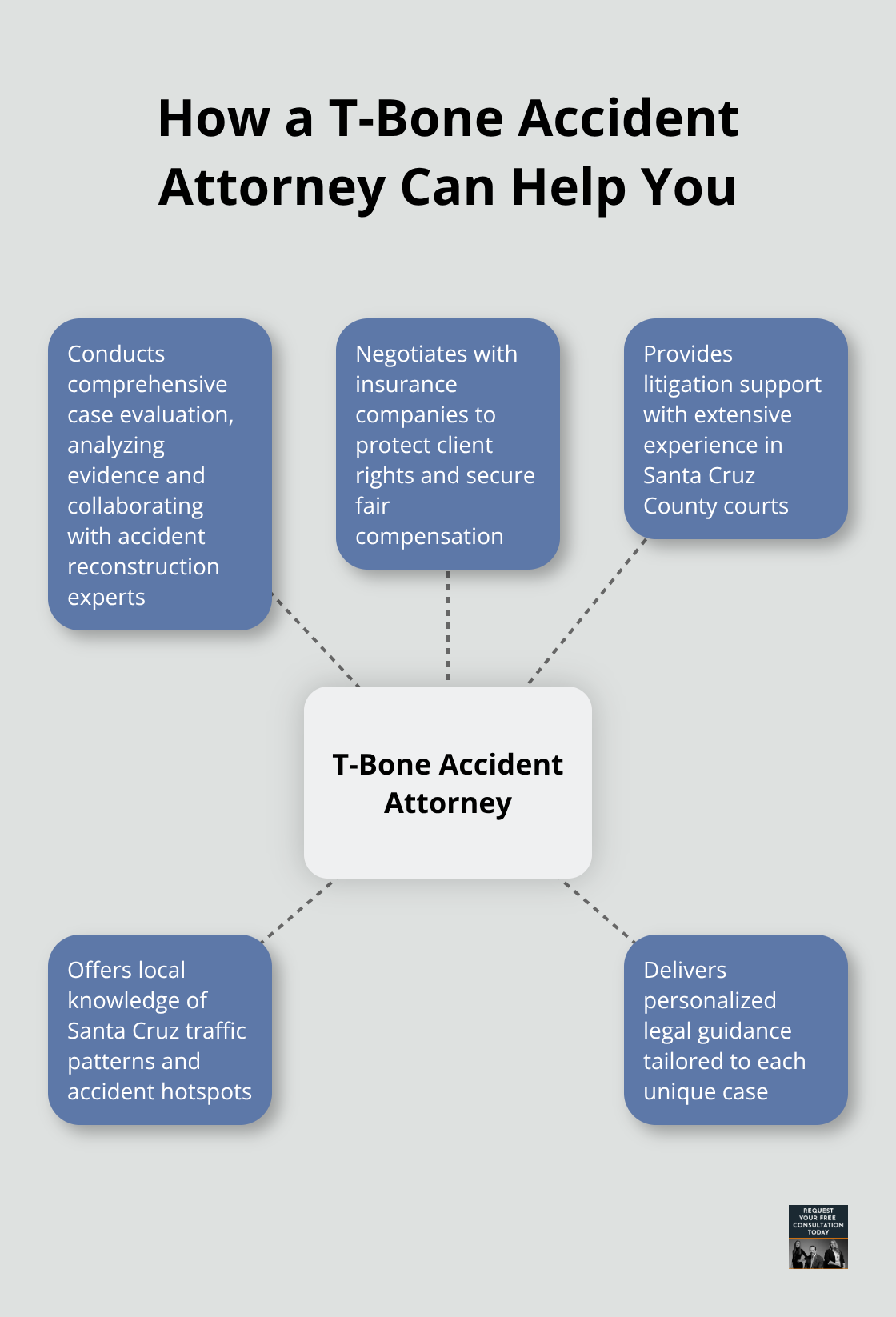
When a motor vehicle collision occurs on local roadways—ranging from the winding stretches of Highway 17 and Highway 1 to local thoroughfares like Ocean Street or Mission Street—accident victims often face immediate financial and physical strain. A qualified Santa Cruz car accident lawyer steps in to manage the civil justice process on behalf of the injured party. Their primary responsibility is to investigate the crash, preserve time-sensitive evidence, and negotiate with insurance adjusters who frequently attempt to minimize payouts.
Local legal professionals understand the nuances of practicing law within Santa Cruz County. They are familiar with the local court schedules, the tendencies of regional insurance defense counsel, and the typical settlement valuations assigned by local juries. This localized experience matters because accident dynamics in Santa Cruz often involve specific regional hazards, such as coastal fog visibility issues, steep grades on mountain passes, heavy tourist traffic, and complex multi-vehicle pileups.
Furthermore, retaining an attorney shifts the burden of communication away from the victim. Insurance companies often contact injured parties shortly after a crash, requesting recorded statements or offering quick, low-ball settlements before the full scope of injuries becomes apparent. A dedicated attorney acts as a protective shield, handling all correspondence and ensuring that statements do not inadvertently compromise the claim.
California Legal Framework Governing Car Accidents
To evaluate the strength of a potential case, Santa Cruz attorneys apply California’s specific statutory framework governing negligence, damages, and insurance coverage. Understanding these legal pillars helps clients grasp why certain strategic decisions are made during the life of a claim.
Comparative Negligence Principles
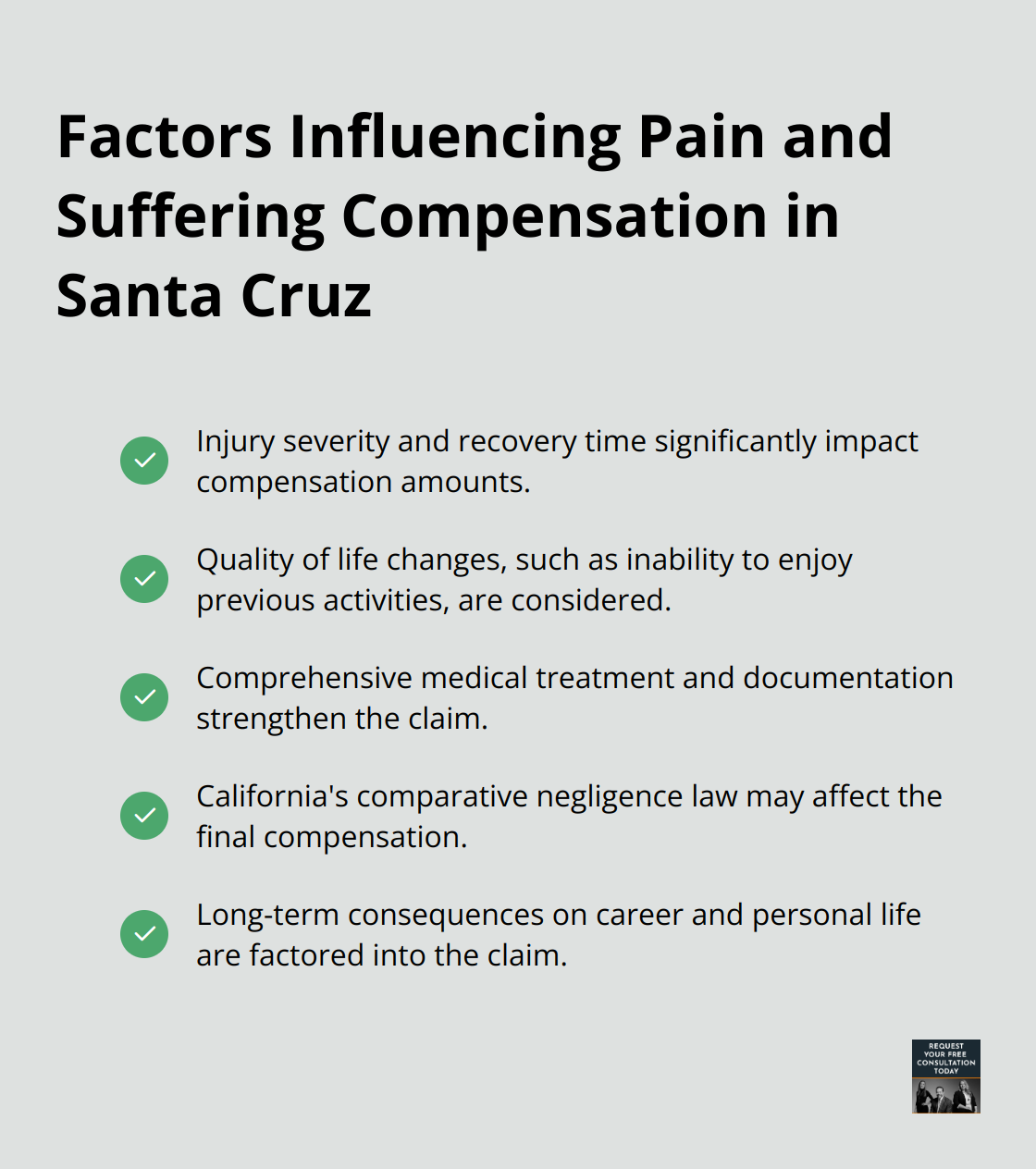
California operates under a pure comparative negligence system (as outlined in civil jury instructions and established by landmark state case law). This means that even if a plaintiff is partially at fault for a car crash—for instance, driving slightly over the speed limit while another driver ran a red light—they can still recover financial damages. However, the total compensation award is reduced by the exact percentage of the plaintiff's assigned fault. Insurance adjusters frequently exploit this rule by assigning inflated percentages of blame to victims, making skilled legal advocacy crucial for establishing proper liability shares.
Statutes of Limitations
Timing is one of the most critical elements in any personal injury matter. Under California Code of Civil Procedure Section 335.1, the general statute of limitations for personal injury and wrongful death lawsuits arising from a motor vehicle accident is two years from the date of the incident. If the crash involves government-owned property or vehicles—such as a Santa Cruz Metropolitan Transit District (METRO) bus or a city maintenance truck—the deadline changes dramatically. Under the California Government Claims Act, claimants typically have only six months to file an administrative claim against a public entity before a lawsuit can be initiated. Missing these strict deadlines generally bars a claimant from recovering any compensation permanently.
Insurance Coverage Mandates
California law requires all drivers to carry minimum liability insurance (often referred to as 15/30/10 coverage: $15,000 for injury/death to one person, $30,000 for total injuries per accident, and $10,000 for property damage). However, these minimum limits are frequently insufficient to cover severe collisions involving major medical intervention, surgical procedures, or long-term rehabilitation. Attorneys frequently explore alternative coverage avenues, such as Uninsured/Underinsured Motorist (UM/UIM) policies, umbrella policies, or commercial liability insurance if a corporate vehicle was involved.
| Legal Concept | California Rule / Standard | Practical Implication for Claimants |
|---|---|---|
| Statute of Limitations | 2 years from accident date (Personal Injury) | Lawsuits filed after 2 years are routinely dismissed by courts. |
| Government Claims | 6 months from accident date | Shorter deadline applies if a city, county, or state agency is liable. |
| Comparative Fault | Pure comparative negligence | Compensation is reduced by your exact percentage of fault. |
| Minimum Liability | 15/30/10 policy limits | Often inadequate for serious injuries; highlights need for UM/UIM coverage. |
Key Steps Handled by Car Accident Attorneys
A comprehensive personal injury practice involves a methodical sequence of investigative, administrative, and adversarial steps. When a client retains a Santa Cruz attorney, the firm initiates a structured workflow designed to build a robust evidentiary file.
Evidence Preservation and Investigation
Proving liability requires concrete proof. Attorneys immediately work to secure police reports from the Santa Cruz Police Department or the California Highway Patrol (CHP). They also seek out independent witnesses, traffic camera footage from local intersections, commercial surveillance videos from nearby businesses, and electronic data from modern vehicle event data recorders (often called "black boxes"). In complex crashes involving commercial trucks or severe multi-car collisions, attorneys frequently retain accident reconstruction experts to analyze skid marks, point-of-impact vectors, and roadway geometry.
Medical Documentation and Economic Valuation
An insurance claim is only as strong as the medical documentation supporting it. Legal teams coordinate with healthcare providers across Santa Cruz County—such as Dominican Hospital or Sutter Maternity & Surgery Center—to gather complete medical records, diagnostic imaging reports, and physician statements.
Calculating damages requires accounting for both economic and non-economic losses:
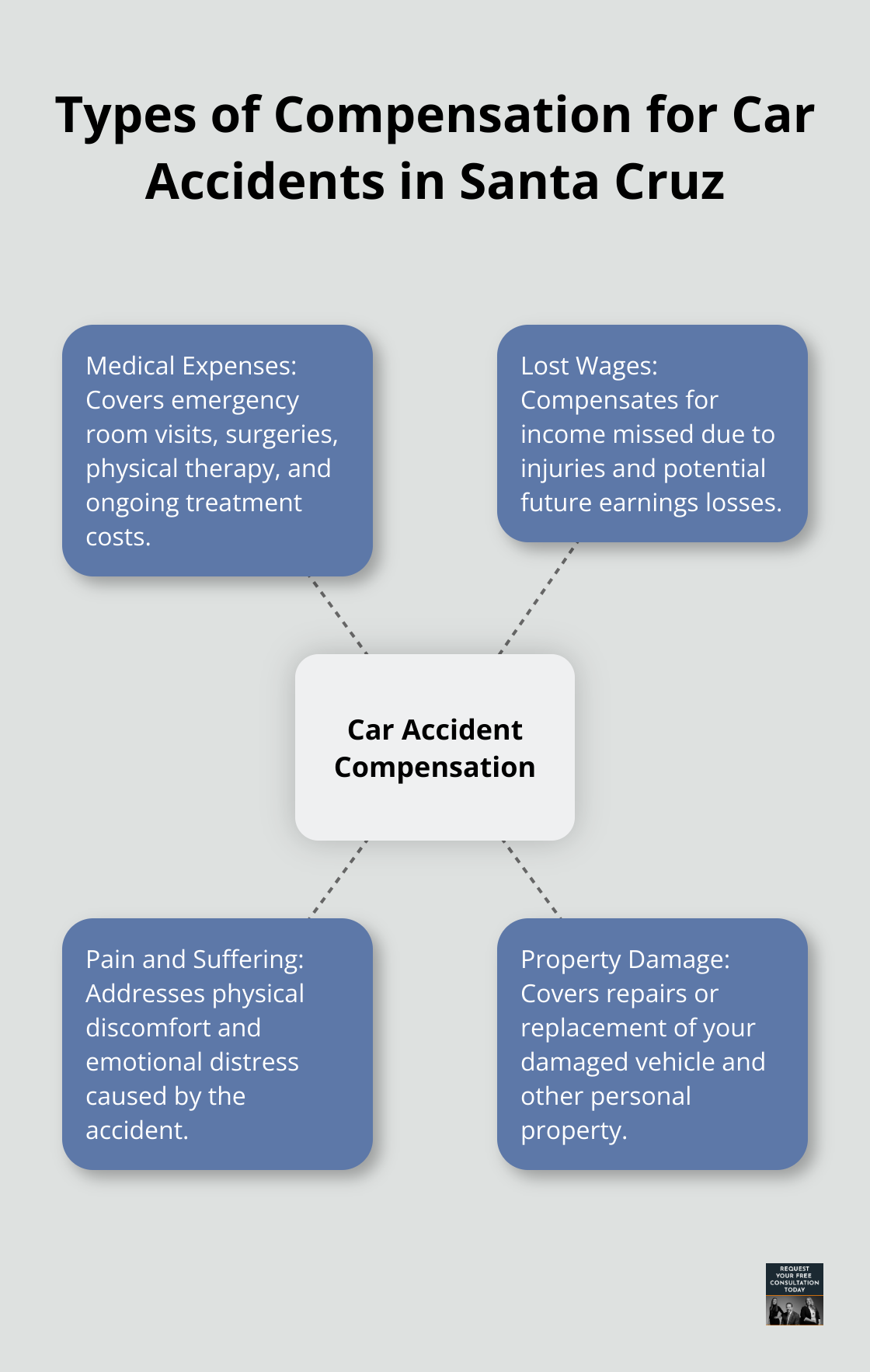
- Economic Damages: Past and future medical bills, physical therapy expenses, lost wages, diminished earning capacity, and out-of-pocket property repair or replacement costs.
- Non-Economic Damages: Physical pain and suffering, emotional distress, loss of enjoyment of life, and loss of consortium.
Negotiation Versus Litigation
The vast majority of car accident claims resolve through structured out-of-court settlements. Once maximum medical improvement (MMI) is reached, the attorney drafts a comprehensive demand package outlining liability and damages. Negotiations follow. If the insurance carrier refuses to offer a fair settlement that reflects the true value of the losses, the attorney files a formal complaint in the Santa Cruz County Superior Court to initiate litigation, preparing the case for trial while continuing settlement discussions.
Fee Structures and Financial Considerations
Many individuals hesitate to contact a lawyer due to concerns over upfront legal fees. Fortunately, reputable personal injury attorneys in California operate on a contingency fee basis.
Under a contingency fee arrangement, the client pays no hourly rates or upfront retainers. Instead, the attorney's fee is a predetermined percentage of the final monetary recovery obtained through a settlement or court judgment. If the case yields no recovery, the client owes no attorney fees for the legal work performed.
Clients should always review the written fee agreement carefully to understand how litigation costs—such as expert witness retainers, court filing fees, and medical record retrieval charges—are handled. Reputable firms typically advance these costs and deduct them from the settlement proceeds at the conclusion of the case, ensuring complete transparency regarding all financial disbursements.
Choosing the Right Legal Representation in Santa Cruz
Selecting the appropriate counsel involves evaluating several practical criteria to ensure the firm possesses the necessary competence, resources, and communication style to handle a specific case effectively.
- Local Court Familiarity: Attorneys practicing regularly in Santa Cruz understand local judicial procedures, mediation protocols, and regional defense strategies.
- Trial Experience: While most cases settle, insurers offer higher settlements when they know an attorney has a proven track record inside a courtroom and is fully prepared to take a case to trial.
- Specialized Knowledge: Accidents involving commercial vehicles, motorcycles, pedestrians, or catastrophic injuries require specialized technical knowledge regarding state and federal safety regulations.
- Client Communication: A responsive legal team keeps clients informed at every stage, explaining complex legal concepts clearly and returning inquiries promptly.
Frequently Asked Questions
What should I do immediately after a car accident in Santa Cruz?
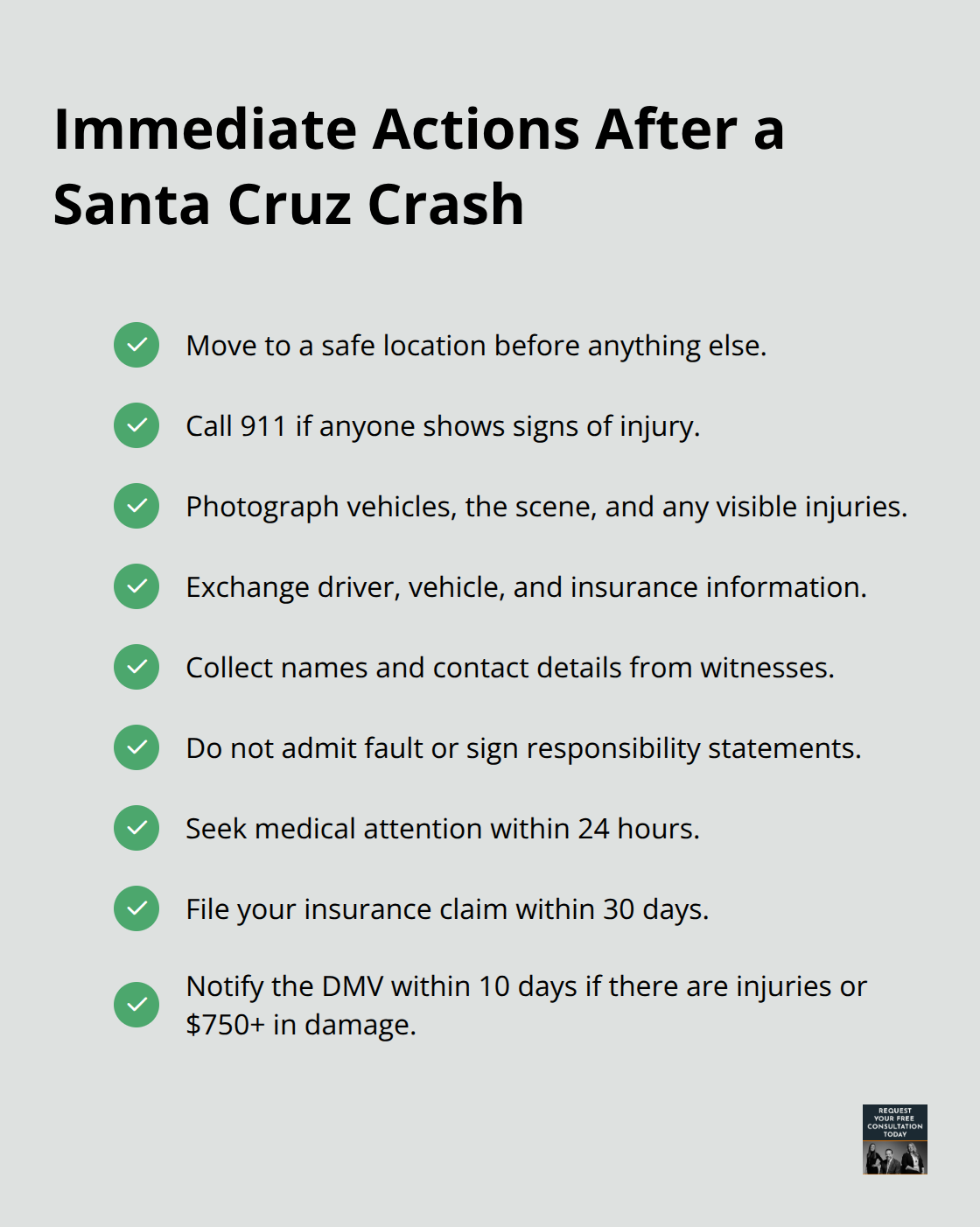
First, ensure safety by moving to a secure location if possible and checking for injuries. Call 911 to summon police and emergency medical services. Document the scene by taking photographs of vehicle damage, road conditions, and license plates. Exchange insurance and contact information with the other drivers, but avoid admitting fault or discussing details of the crash with anyone other than law enforcement officers.
How long will it take to resolve my car accident claim?
The timeline varies depending on the severity of the injuries, the clarity of liability, and the insurance carrier's willingness to negotiate. Simple claims involving minor property damage and quick medical recovery may settle within a few months. Cases involving catastrophic injuries, disputed liability, or ongoing medical treatment often take a year or longer to ensure all future medical needs are properly factored into the valuation.
Can I still recover compensation if I was partly at fault for the crash?
Yes. Under California's pure comparative negligence laws, you can recover damages even if you bear the majority of the blame for the collision. Your final recovery amount is simply reduced by your established percentage of fault. For example, if you are awarded $100,000 in damages but found to be 20% at fault, your final payout will be $80,000.
What types of compensation can I claim after a collision?
Injured parties may pursue both economic and non-economic damages. Economic damages cover verifiable financial losses such as emergency room bills, ongoing doctor visits, rehabilitation, lost wages from missed work, and vehicle repairs. Non-economic damages compensate for subjective impacts like physical pain, emotional trauma, anxiety, and a diminished quality of life.
How much do Santa Cruz car accident lawyers charge?
Most personal injury attorneys in Santa Cruz work on a contingency fee basis. This means they take a fixed percentage of the financial recovery secured for you, usually ranging from 33% to 40% depending on whether the case settles before or after a lawsuit is filed. You do not pay any hourly attorney fees out of pocket while the case is pending.
Next Actions
If you or a loved one has been injured in a collision on local roads, schedule an initial consultation with a qualified Santa Cruz car accident lawyer promptly. Prepare for the meeting by gathering the police report, insurance information, medical records, and photographs of the scene. Acting quickly ensures that evidence is preserved, statutory deadlines are met, and your legal rights are protected from the outset.
Image Gallery