How to Read My Coverage on State Farm Auto Insurance Card
Your State Farm auto insurance card contains a concise breakdown of your policy limits, policy number, effective dates, and vehicle details formatted into standardized alphanumeric codes. Understanding these sections allows you to quic...
Your State Farm auto insurance card contains a concise breakdown of your policy limits, policy number, effective dates, and vehicle details formatted into standardized alphanumeric codes. Understanding these sections allows you to quickly verify your liability limits, deductible amounts, and active status during a traffic stop, after an accident, or when reviewing your personal financial protection plan.
Contents
Understanding the Purpose and Legal Role of Your State Farm Insurance Card
Your State Farm auto insurance card serves as official physical or digital proof of financial responsibility. Every state requires drivers to carry this documentation while operating a motor vehicle. When law enforcement officers pull over a driver or when motorists exchange information following a collision, presenting this card confirms that the vehicle is backed by an active policy meeting state-mandated minimum coverage requirements.
Beyond serving as a legal pass during traffic stops, the card acts as a quick-reference guide for policyholders. While it does not list every single endorsement or rider attached to your comprehensive insurance package, it captures the foundational architecture of your policy. It tells you who is insured, which vehicle is covered, the duration of the policy term, and the primary numerical boundaries of your liability protection. Knowing how to interpret these numbers prevents confusion when filing claims or verifying that your coverage matches your asset-protection goals.
Locating Key Identifiers and Policy Information
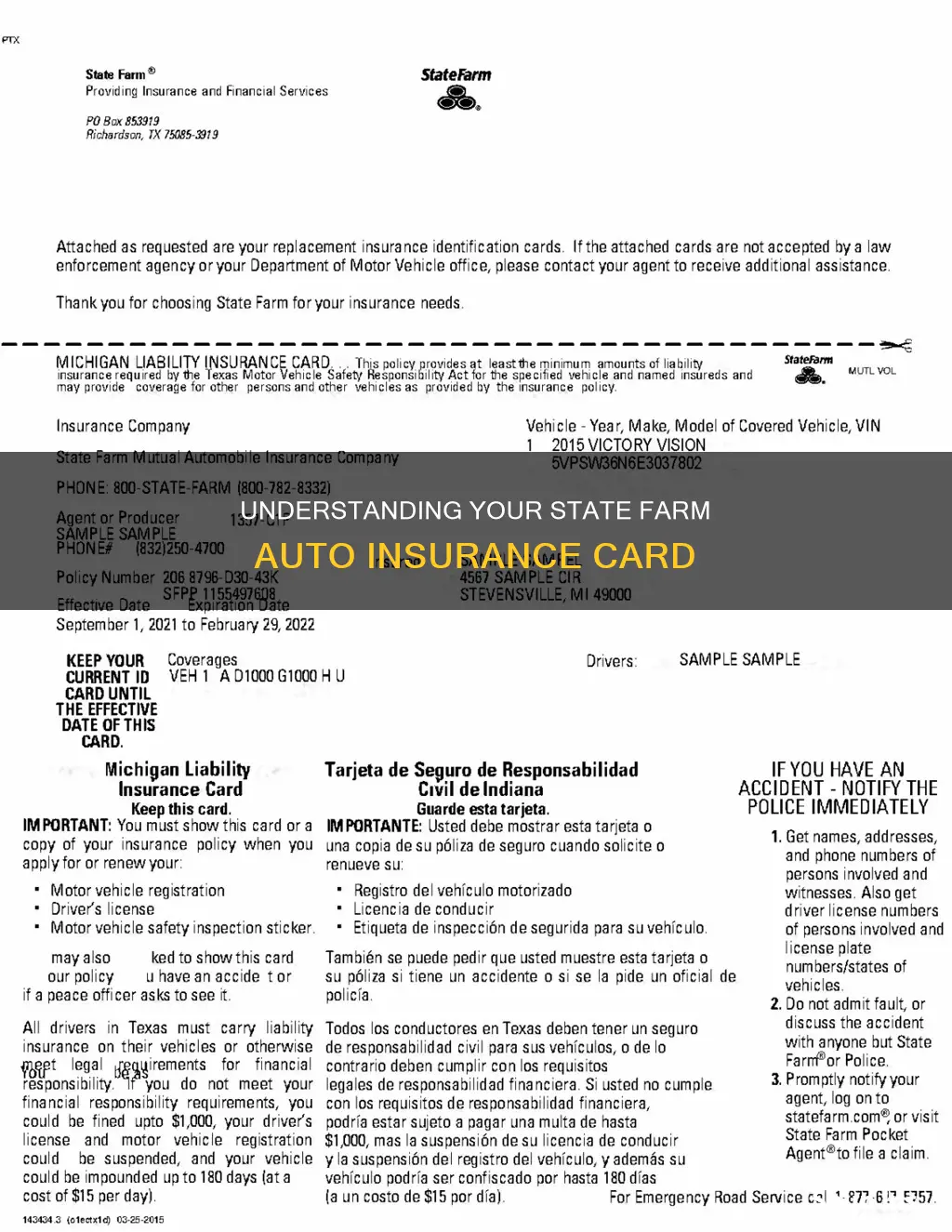
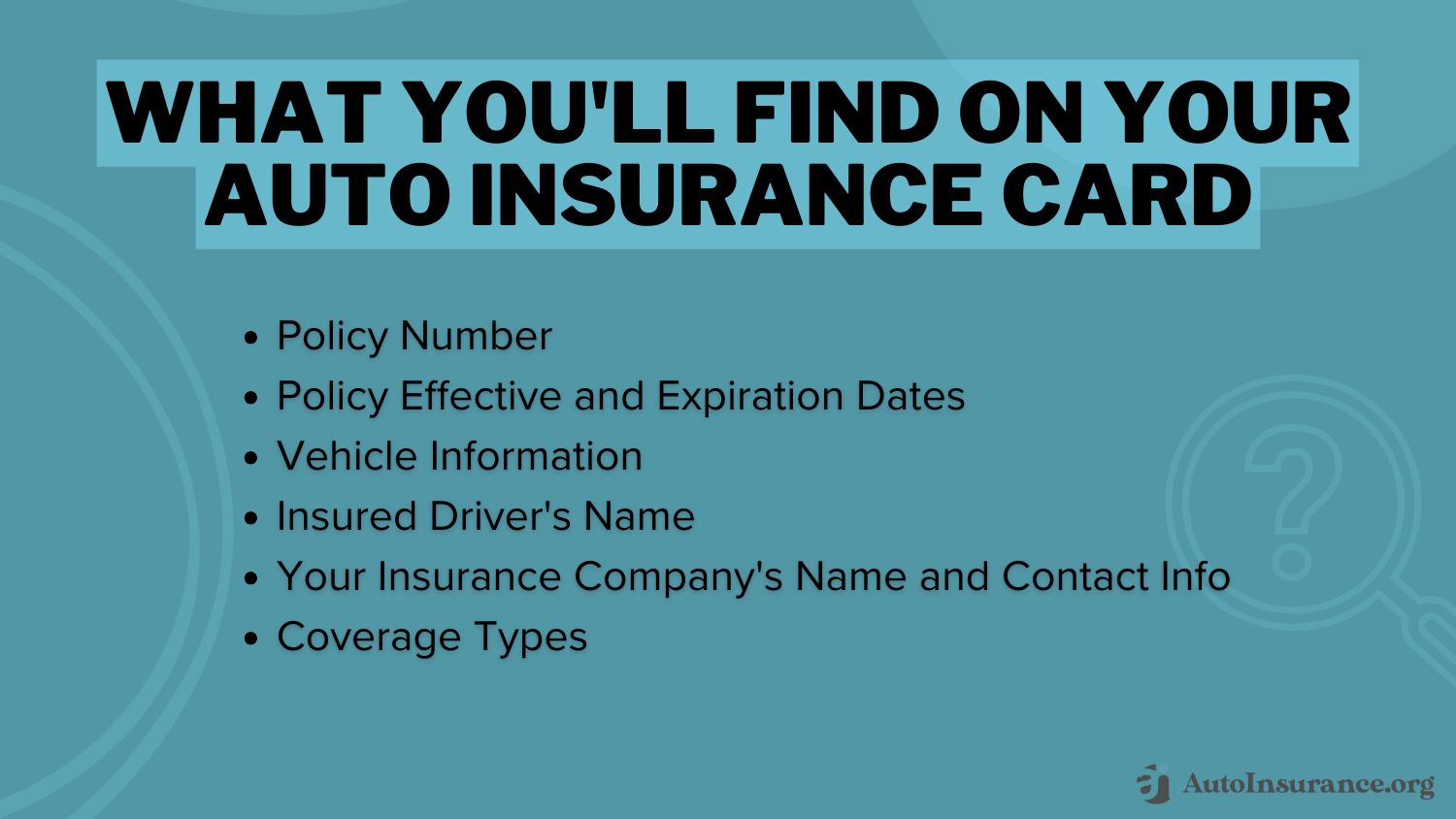
When you look at your State Farm insurance card, the top section typically displays the company name, your unique policy number, and the effective dates of coverage. These elements are the most critical administrative data points on the document.
The policy number is a distinct alphanumeric string assigned exclusively to your account. Insurance representatives, claims adjusters, and repair shops require this number to pull up your file instantly. Below or adjacent to the policy number, you will find the effective date and the expiration date. These dates define the active window during which the insurance contract is legally binding. Driving a vehicle outside these dates—even by a single day—means operating without verified insurance, which can result in severe legal penalties, fines, or license suspension.
STATE FARM MUTUAL AUTOMOBILE INSURANCE COMPANY Policy Number: 123-4567-A12-30 Effective Dates: 01/01/2026 to 07/01/2026
Named Insured: Jane Doe Vehicle: 2024 Honda Civic VIN: 1HGBH42...
Next to the policy identifiers, the card lists the named insured and the specific vehicle description. The named insured is the primary policyholder (and potentially other listed household members). The vehicle section displays the year, make, model, and the complete Vehicle Identification Number (VIN). Verifying the VIN on your card against your physical vehicle dashboard ensures that the insurance company is covering the correct asset, preventing administrative disputes during a total-loss claim or police report verification.
Decoding Coverage Types and Numerical Limits
The most challenging part of reading an auto insurance card is interpreting the shorthand used for coverage types and liability limits. State Farm, like most major auto insurers, compresses complex contractual limits into standardized numerical formats.
Liability Coverage Splits Explained
Liability coverage is typically broken down into three primary numbers, often presented in a format like 100/300/50 or expressed as split limits. Each segment represents a maximum dollar amount (usually measured in thousands) that State Farm will pay out if you are at fault in an accident causing injury or property damage.
- First Number (Bodily Injury Per Person): This specifies the maximum dollar amount the insurer will pay for injuries sustained by a single individual in another vehicle whom you injure during an at-fault accident. For example, a
100in this position represents $100,000 per person. - Second Number (Bodily Injury Per Accident): This sets the aggregate ceiling for all combined bodily injury claims arising from a single accident, regardless of how many people were hurt. Using the previous example, a
300indicates a total pool of $300,000 per collision. - Third Number (Property Damage Per Accident): This dictates the maximum payout for physical damage you cause to other people's property, such as another vehicle, guardrails, buildings, or utility poles. A
50in this slot means up to $50,000 in property damage coverage.
Single-Limit Policies
Some State Farm policyholders choose or qualify for a combined single limit (CSL) instead of split limits. Under a CSL structure, you will see a single lump-sum figure—such as $300,000—printed on the card or declarations page. This means that a single pool of money is available to cover any combination of bodily injury and property damage resulting from an accident, offering greater flexibility during severe multi-vehicle claims.
Recognizing Deductibles and Optional Coverages on Your Card
While standard liability limits dominate the physical layout of most insurance cards, some cards or accompanying digital summaries also reference deductibles and optional physical damage coverages. A deductible is the out-of-pocket amount you must pay before State Farm begins paying for repairs under comprehensive or collision coverage.
- Collision Coverage: Pays for damage to your own vehicle when it collides with another car or object, or rolls over. Common deductible amounts listed on supporting policy documents range from $500 to $1,000.
- Comprehensive Coverage: Protects your car against non-collision incidents, such as theft, fire, animal strikes, vandalism, hail, or windshield cracking.
It is important to note that physical pocket cards often abbreviate these details or omit exact deductible figures due to space constraints, directing you instead to your digital State Farm mobile app or full declarations page for precise financial breakdowns.
Digital vs. Physical Cards: What Changed and What Stays the Same
In recent years, digital insurance cards accessed through mobile applications have largely replaced or supplemented traditional paper documents. State Farm provides an official digital insurance card via the State Farm mobile app and website portal, which is legally accepted by law enforcement agencies in all 50 states and the District of Columbia.
Whether you pull up your card on your smartphone screen or keep a laminated paper card in your glove compartment, the structural layout remains consistent. Both versions contain the mandatory legal text required by state departments of motor vehicles, your policy number, vehicle details, and emergency contact numbers.
| COMPARISON OF INSURANCE CARD FORMATS | ||
|---|---|---|
| Feature | Physical Paper | Digital Mobile App |
| Legal Acceptance | 50 States | 50 States |
| Update Frequency | Upon Renewal | Real-Time / Immediate |
| Durability | Susceptible to wear | Dependent on battery |
| Accessibility | Glove compartment | Smartphone / Portal |
The primary advantage of the digital card is real-time synchronization. If you adjust your coverage limits, change your vehicle, or renew your policy mid-term, the digital card updates automatically within the application. Conversely, paper cards require you to manually swap out old slips when new policy packets arrive in the mail.
Common Mistakes When Interpreting Insurance Cards
Policyholders frequently misread their cards due to unfamiliarity with insurance terminology. Recognizing these common pitfalls helps prevent misunderstandings regarding your actual level of protection.
- Confusing Limits with Deductibles: Drivers often mistake liability limits (what the insurance company pays to others) for deductibles (what the driver pays out-of-pocket). Your card displays limits for what you owe third parties, not your personal collision deductible.
- Assuming Full Coverage: Seeing an active insurance card does not automatically mean you carry comprehensive and collision insurance. If you drive an older car with a loan paid off, you might carry liability-only coverage, meaning damage to your own vehicle is completely unprotected regardless of what the card says.
- Ignoring State Minimum Traps: Carrying the minimum limits required by your state guarantees legal compliance, but it rarely covers major multi-car accidents. A limit of
25/50/25can be exhausted quickly in a modern collision involving luxury vehicles or severe medical bills.
Troubleshooting Missing Information and Policy Discrepancies
If you examine your State Farm auto insurance card and notice missing information, outdated vehicle data, or an incorrect policy number, immediate action is required to avoid administrative or legal complications.
- Check the Expiration Date: Ensure the card reflects your current active term. If your renewal date has passed and you are holding an old card, law enforcement may issue a citation for failure to provide proof of insurance even if your payments are current.
- Verify Vehicle Details: If you purchased a newly acquired vehicle but the card lists your traded-in car, contact your State Farm agent immediately to process the vehicle swap. Most standard policies provide a brief grace period for new vehicle additions, but relying on an outdated card during a traffic stop creates unnecessary friction.
- Access the State Farm Portal: Log into your online account via the official State Farm website or mobile app to download a fresh, updated PDF version of your card or request a physical replacement via mail.
Frequently Asked Questions
What do the three numbers on my State Farm insurance card mean?
The three numbers represent your split liability limits in thousands of dollars. For example, 50/100/25 means $50,000 for bodily injury per person, $100,000 for total bodily injury per accident, and $25,000 for property damage per accident.
Are digital State Farm insurance cards legally accepted by police officers?
Yes, digital insurance cards displayed on your smartphone via the State Farm mobile app are accepted by law enforcement agencies and departments of motor vehicles across all 50 states.
Where can I find my exact collision and comprehensive deductibles?
Your physical pocket insurance card often omits specific deductible amounts to save space. To view your exact deductibles, log into your online State Farm account or review the detailed declarations page of your policy packet.
How do I update my vehicle information on my insurance card?
You can update your vehicle information by contacting your local State Farm agent directly, calling customer service, or utilizing the policy management section within the official State Farm mobile application.
What should I do if my insurance card lists an expired policy date?
Do not drive with an expired card. Access the State Farm mobile app to download your current digital card instantly, or contact your agent to ensure your recent premium payment was successfully processed.
Next Actions for Policyholders
Review your current State Farm insurance card today to ensure your policy number matches your records, your vehicle's VIN is accurate, and your coverage limits align with your personal financial security needs. If you find discrepancies or wish to adjust your liability limits, log into your digital account or schedule a consultation with your local State Farm agent to optimize your protection before your next renewal period.
Image Gallery