Understanding the Texas Certificate of Mold Damage Remediation (CMDR-1)
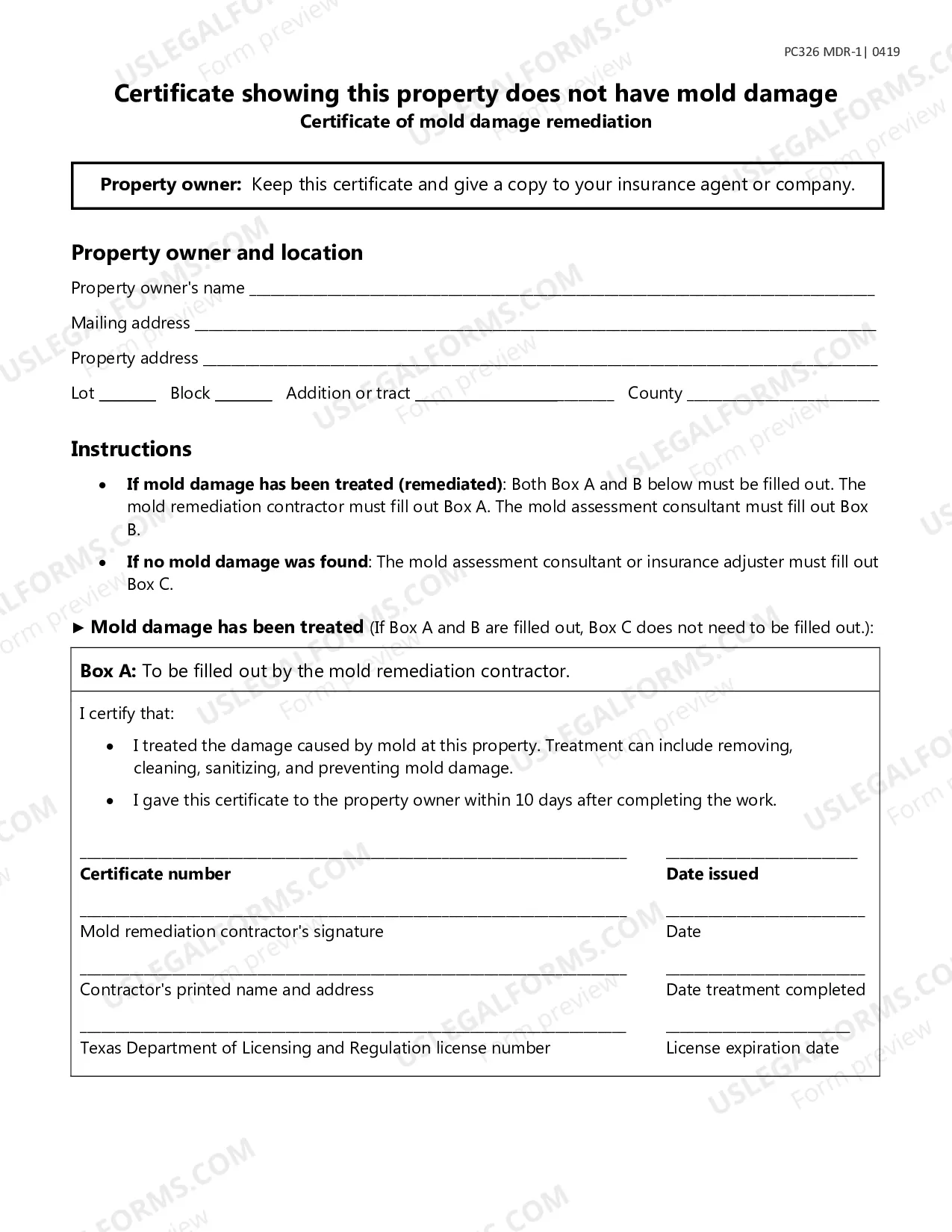
A Texas Certificate of Mold Damage Remediation (Form CMDR-1) is an official document issued by a licensed mold remediation contractor verifying that a property has been successfully remediated according to state standards. It confirms...
A Texas Certificate of Mold Damage Remediation (Form CMDR-1) is an official document issued by a licensed mold remediation contractor verifying that a property has been successfully remediated according to state standards. It confirms that the underlying cause of the mold was corrected and that the property passed a formal post-remediation assessment by an independent consultant.
Contents
In the state of Texas, mold remediation is governed by strict regulatory frameworks designed to protect property owners and ensure public health. Whether you are a homeowner dealing with a sudden leak, a buyer evaluating a property with a history of water damage, or a real estate professional closing a deal, understanding the nuances of the Texas Certificate of Mold Damage Remediation is essential. As of 2026, these regulations remain a cornerstone of Texas property law, influencing everything from insurance eligibility to resale value.
What is the Texas Certificate of Mold Damage Remediation?
The Texas Certificate of Mold Damage Remediation, commonly referred to as Form CMDR-1, is the final output of a legally compliant mold cleanup project. It serves as a "clean bill of health" for a specific area of a building or the entire structure following a mold infestation.
Under the Texas Administrative Code and the Texas Insurance Code, the certificate is not merely a receipt of services; it is a legal instrument. It must be issued by a licensed Mold Remediation Contractor no later than the 10th day after the date a project is completed. However, a contractor cannot simply sign this form at their own discretion. The issuance is predicated on a Post-Remediation Assessment, performed by a licensed Mold Assessment Consultant, which proves that the remediation was successful and the mold levels have returned to a "normal" or "safe" state as defined by the initial remediation protocol.
The Significance of the CMDR-1 in 2026
In 2026, the real estate market continues to place a high premium on environmental transparency. A property with a history of mold but no CMDR-1 is often viewed as a significant liability. The certificate provides three primary layers of protection:
- Legal Compliance: It proves the work followed the Texas Department of Licensing and Regulation (TDLR) guidelines.
- Insurance Protection: It prevents insurance companies from denying future coverage or raising premiums based solely on the prior mold claim.
- Marketability: It provides a paper trail that simplifies the mandatory disclosure process during property transfers.
The Legal Framework: TDLR and the Texas Insurance Code
The oversight of mold remediation in Texas falls under the Texas Department of Licensing and Regulation (TDLR). The rules are codified in the Texas Administrative Code, Title 16, Part 4, Chapter 78. These regulations are some of the most robust in the United States, designed specifically to prevent "fly-by-night" operations from performing substandard work that could lead to recurring health issues or structural rot.
The Conflict of Interest Rule
One of the most critical aspects of Texas law regarding the CMDR-1 is the mandatory separation of roles. To prevent a conflict of interest, the law generally prohibits the same company from performing both the assessment and the remediation on the same project.
- The Consultant: Identifies the mold, writes the "Remediation Protocol," and performs the final "Clearance" testing.
- The Contractor: Executes the physical cleanup according to the Consultant’s protocol.
Without an independent clearance from a consultant, a contractor cannot legally issue a CMDR-1. This ensures that the person grading the work is not the same person who performed it.
The 5-Year Insurance Rule
According to the Texas Insurance Code §21.21-11, if a property owner receives a CMDR-1, an insurance company cannot:
- Exclude mold coverage from the property’s policy.
- Surcharge the policy for a mold claim.
- Refuse to insure the property.
This protection applies for five years from the date the certificate is issued. If you are selling a home in 2026 that had mold remediation in 2023, providing the CMDR-1 to the buyer’s insurance company is the only way to ensure the new policy remains unaffected by the old claim.
The Step-by-Step Process to Obtaining a CMDR-1
Obtaining a valid certificate is a linear process that requires coordination between the property owner, a consultant, and a contractor. Skipping any of these steps usually results in the inability to secure the final document.
1. The Initial Mold Assessment
When mold is suspected or discovered, a Licensed Mold Assessment Consultant must inspect the property. They will determine the source of the moisture—as mold cannot grow without water—and the extent of the contamination. The consultant then produces a Mold Remediation Protocol. This document acts as the roadmap for the contractor, specifying exactly which materials must be removed, what cleaning agents should be used, and what containment measures (like plastic barriers and HEPA air scrubbers) are required.
2. Hiring a Licensed Contractor
With the protocol in hand, the owner hires a Licensed Mold Remediation Contractor. In Texas, any project involving more than 25 contiguous square feet of mold must, by law, be handled by a licensed professional. The contractor must provide the owner with a "Consumer Protection Information" document before work begins and notify the TDLR of the project at least 10 days before starting (unless it is an emergency).
3. The Remediation Work
The contractor follows the protocol to remove the mold. During this phase, the primary goal is containment. You do not want mold spores migrating from a flooded bathroom into the HVAC system or other bedrooms. Professional contractors use negative air pressure and specialized filtration to ensure the rest of the home remains uncontaminated.
4. Post-Remediation Assessment (Clearance)
Once the contractor believes the work is done, the Consultant returns. This is the "Clearance" phase. The consultant visually inspects the area and typically takes air or surface samples to ensure mold levels are within acceptable limits compared to the outdoor environment or unaffected indoor areas.
5. Issuance of the CMDR-1
If the project passes clearance, the consultant issues a Passed Clearance Report. Only after receiving this report can the contractor sign and issue the Texas Certificate of Mold Damage Remediation (Form CMDR-1). The contractor must give the original to the property owner and keep a copy for their records.
Comparing Key Roles in the Texas Mold Process
To better understand who handles which part of the certification process, refer to the table below:
| Feature | Mold Assessment Consultant | Mold Remediation Contractor |
|---|---|---|
| Primary Responsibility | Inspection, testing, and protocol design. | Physical cleanup and removal of mold. |
| Licensing Agency | TDLR (Texas Dept. of Licensing & Regulation). | TDLR (Texas Dept. of Licensing & Regulation). |
| Key Deliverable | Remediation Protocol & Clearance Report. | Form CMDR-1 (The Certificate). |
| Timing | Before and after the work. | During the work. |
| Independence | Must be independent of the contractor. | Must follow the consultant’s protocol. |
| Legal Authority | Verifies that the property is "clean." | Signs the certificate confirming work was done. |
Why the CMDR-1 is Essential for Real Estate Transactions
In Texas, the "Seller’s Disclosure Notice" is a mandatory document where a homeowner must list any known defects or past issues with the property. Mold is a specific line item on this disclosure.
Disclosure Obligations
If you have remediated mold, you must disclose it to a potential buyer. However, disclosing mold without having a CMDR-1 can lead to "stigma" on the property, potentially lowering the sale price or causing buyers to back out during the inspection period. When you present a CMDR-1 along with the disclosure, you are providing evidence that the problem was professionally resolved and verified by the state’s regulatory standards.
Transferring the Certificate
The CMDR-1 stays with the property, not the owner. When a home is sold in 2026, the seller should provide the buyer with copies of any CMDR-1s issued for the property within the last five years. This allows the buyer to secure insurance without the "mold exclusion" penalty that often plagues homes with undocumented water damage history.
Common Mistakes and How to Avoid Them
The most frequent issue homeowners face is the "Handyman Trap." Hiring an unlicensed individual to clean up mold might save money upfront, but it is legally impossible for an unlicensed person to issue a CMDR-1.
The Consequences of Unlicensed Work
If you hire an unlicensed contractor:
- You cannot receive a CMDR-1.
- Your insurance company may deny future claims related to that area of the house.
- You may face significant hurdles when trying to sell the property.
- The underlying moisture issue may not have been correctly identified, leading to the mold returning within months.
Missing the 10-Day Window
Contractors are legally required to provide the CMDR-1 within 10 days of project completion. If a contractor is withholding the certificate, it is often because they haven't received the final clearance from the consultant or there is a payment dispute. Property owners should ensure that the requirement for a CMDR-1 is explicitly written into their service contract.
Frequently Asked Questions
Can I get a CMDR-1 if I cleaned the mold myself?
No. A Texas Certificate of Mold Damage Remediation can only be issued by a licensed mold remediation contractor for work that has been cleared by a licensed mold assessment consultant. While homeowners are permitted to perform their own remediation on their primary residence, they cannot "self-certify" the work for insurance or legal purposes.
How long does a Texas Mold Certificate remain valid?
The CMDR-1 itself is a permanent record that the work was performed. However, its specific statutory protection for insurance purposes—which prevents insurers from denying coverage or surcharging the policy—lasts for five years from the date of issuance.
Does every mold cleanup project in Texas require a CMDR-1?
The law requires a licensed professional and a certificate for projects involving more than 25 contiguous square feet of mold. For smaller areas (e.g., a small patch of mold under a kitchen sink), a certificate is not legally mandated, though it is still recommended if you intend to sell the property or file an insurance claim.
What should I do if I lost my CMDR-1?
If the certificate was issued within the last few years, you should contact the contractor who performed the work; they are required to maintain records. You can also check with the TDLR, as contractors must notify the state when projects are completed, though the state may not always have a copy of the specific form on file.
Is the CMDR-1 the same as a mold inspection report?
No. A mold inspection report (or assessment) identifies the presence of mold. The CMDR-1 is the final document that proves the mold has been removed and the area is safe. You need the inspection report to get the CMDR-1, but they are separate documents.
Next Actions for Property Owners
If you are currently facing a mold issue in Texas, your first step should be to contact a Licensed Mold Assessment Consultant. Do not start tearing out drywall or hiring a general contractor until a protocol has been established. Once the assessment is complete, ensure you hire a Licensed Mold Remediation Contractor who is familiar with TDLR reporting requirements.
Upon completion of the work, verify that the consultant has performed a successful clearance test. Only then should you make the final payment to your contractor and collect your signed Form CMDR-1. Store this document in a safe place along with your home's titles and deeds; it is one of the most important environmental documents you can possess as a Texas property owner.
Image Gallery