USAA Auto Insurance Rates for a Speeding Ticket in Oregon (2026)
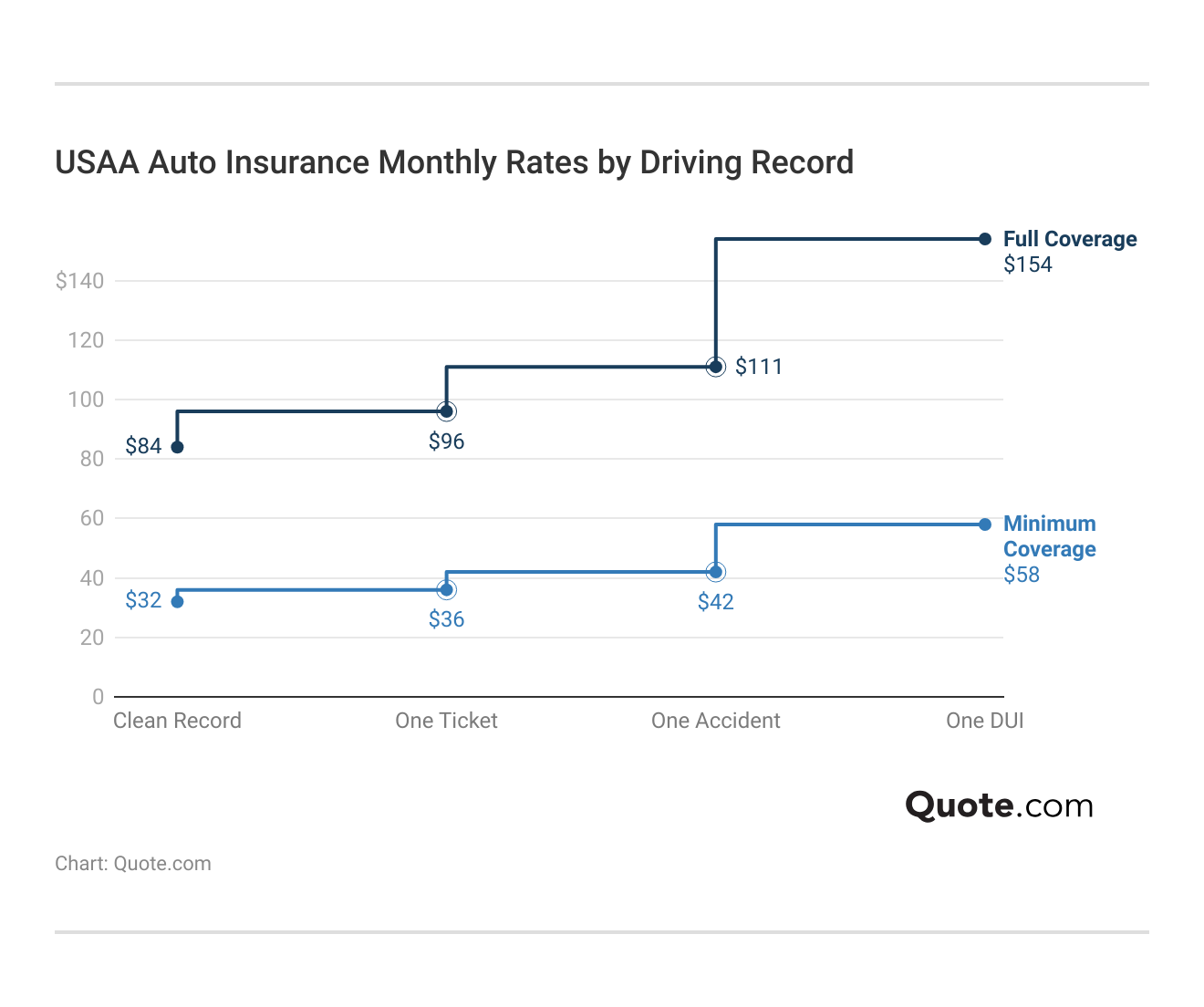
In Oregon, receiving a speeding ticket while insured through USAA typically results in an annual premium increase ranging from 15% to 23%, depending on the severity of the violation. For most policyholders in 2026, this translates to a...
In Oregon, receiving a speeding ticket while insured through USAA typically results in an annual premium increase ranging from 15% to 23%, depending on the severity of the violation. For most policyholders in 2026, this translates to an additional $280 to $450 per year in premiums, often persisting for a three-year lookback period.
Contents
Understanding How USAA Evaluates Oregon Speeding Violations
When an Oregon driver receives a speeding citation, the impact on their USAA policy is determined by how the violation is reported to the Oregon Department of Transportation (ODOT) Driver and Motor Vehicle Services (DMV). USAA, like most major carriers, utilizes an internal risk-scoring algorithm that weighs the "degree of risk" associated with a specific conviction. In 2026, the intersection of Oregon’s unique "Basic Rule" speeding laws and USAA’s underwriting guidelines creates a specific set of financial outcomes for military members and their families.
Oregon does not use a traditional "point system" where points are added to a license until a threshold is met. Instead, the DMV records convictions directly on the driving record. USAA reviews these records during policy renewals or when a driver applies for a new policy. A single speeding ticket signals to USAA’s underwriters that the driver has a higher statistical probability of being involved in a future collision. Even if the driver has a decade-long history of clean driving, the actuarial data used in 2026 suggests that a moving violation is a primary indicator of future claims.
The impact is often two-fold: an immediate surcharge on the base premium and the potential loss of "Safe Driver" or "Good Student" discounts. For USAA members, who often enjoy some of the lowest rates in the Pacific Northwest, the loss of these tiered discounts can sometimes be more expensive than the surcharge itself.
Oregon Speeding Ticket Classifications and Their Financial Impact
Oregon categorizes speeding violations into four distinct classes (A, B, C, and D) based on how much the driver exceeded the posted limit or the "designated speed." USAA’s rate adjustments are closely aligned with these classifications because they reflect the severity of the risk.
Class D Violations (1–10 MPH Over)
These are the least severe infractions. While some insurance companies might overlook a single Class D violation, USAA in 2026 generally applies a modest increase. Policyholders can expect a rate hike of approximately 10% to 12%. The primary concern here is not the speed itself, but the pattern of behavior.
Class C Violations (11–20 MPH Over)
This is the most common category for Oregon citations. A Class C conviction typically triggers a more substantial response from USAA, often resulting in a 15% to 18% increase. In many cases, this level of speeding is the threshold where the "Safe Driver" discount is stripped from the policy for the next three years.
Class B Violations (21–30 MPH Over)
At this level, the risk profile changes significantly. USAA views 21+ MPH over the limit as a sign of aggressive driving. Rates can jump by 20% to 25%. Furthermore, if the violation occurred in a school zone or a highway work zone, the surcharges may be even higher due to the increased statutory fines and the perceived negligence.
Class A Violations (31+ MPH Over)
Exceeding the limit by more than 30 MPH is a major violation. In 2026, USAA policyholders in Oregon facing a Class A conviction may see their rates spike by 30% or more. In extreme cases, particularly if the driver has other recent infractions, USAA may choose to non-renew the policy or move the driver into a higher-risk (and more expensive) subsidiary.
Estimated Rate Increases: USAA vs. Oregon State Average (2026)
To understand the value of USAA even after a ticket, it is helpful to compare their projected 2026 rates against other major carriers operating in Oregon. While USAA remains competitive, the "ticket penalty" is a standardized reality across the industry.
| Insurance Carrier | Avg. Annual Rate (Clean Record) | Avg. Rate After Speeding Ticket (11-20 MPH Over) | Estimated Percentage Increase |
|---|---|---|---|
| USAA | $1,420 | $1,704 | 20% |
| State Farm | $1,650 | $1,947 | 18% |
| Geico | $1,580 | $1,975 | 25% |
| Progressive | $1,820 | $2,330 | 28% |
| Oregon State Average | $1,617 | $1,988 | 23% |
Note: These figures are estimates for 2026 based on historical trend lines and projected inflationary adjustments in the Oregon insurance market. Individual rates vary based on zip code, vehicle type, and credit-based insurance scores.
The Role of the "Safe Driver" Discount and USAA SafePilot
For many USAA members in Oregon, the most frustrating aspect of a speeding ticket is the disqualification from the Safe Driver Discount. This discount can save members up to 30% on their premiums. When a conviction hits the record, this discount is usually removed at the next renewal period.
However, USAA offers a mitigation tool known as SafePilot. This is a telematics-based program that uses a smartphone app to monitor driving habits, including braking, acceleration, and phone usage. In 2026, Oregon policyholders who maintain high scores in the SafePilot program can earn a discount of up to 30%, which can effectively "wash out" the increase caused by a single speeding ticket.
It is important to note that while SafePilot can lower your rate, it does not erase the ticket from your record. The base rate will still reflect the speeding conviction, but the telematics discount is applied to that higher base, providing a significant buffer for members who are willing to prove they have returned to safe driving habits.
How Oregon's "Basic Rule" Affects Your Policy
Oregon is unique in its application of the "Basic Rule," which states that a driver must always drive at a speed that is reasonable and prudent under existing conditions, regardless of the posted limit. For example, if it is pouring rain on I-5, a driver could technically be cited for speeding even if they are doing 55 MPH in a 65 MPH zone if the officer deems that speed unsafe for the conditions.
If you are cited under the Basic Rule rather than for exceeding a numerical "presumptive" speed, USAA’s treatment of the incident remains largely the same. Their underwriters look at the conviction code sent by the Oregon DMV. If the code indicates a moving violation for speed, the surcharge applies.
Strategies to Minimize the Impact on Your USAA Premium
If you have already received a ticket in Oregon, you are not necessarily stuck with high rates for the next three years. There are several proactive steps you can take to manage the financial fallout.
1. Diversion Programs
Some Oregon counties offer "Traffic School Diversion" programs. If you are eligible (usually meaning you haven't had a ticket in the last 2 to 3 years), you can pay the fine and complete an approved safety course in exchange for the court dismissing the ticket. If the ticket is dismissed, it is not reported as a conviction to the DMV, and USAA will never see it. This is the single most effective way to protect your rates.
2. Contesting the Ticket
In Oregon, you have the right to a trial by declaration or an in-person hearing. If the citing officer fails to provide sufficient evidence or does not appear, the ticket may be dismissed. Even a reduction from a Class B to a Class C violation can save you hundreds of dollars in insurance premiums over the 36-month lookback period.
3. Adjusting Policy Coverages
If the rate increase makes your premium unmanageable, you may consider increasing your deductibles. Moving from a $500 deductible to a $1,000 deductible can often offset the surcharge from a speeding ticket. However, this increases your out-of-pocket risk in the event of an accident.
4. Bundling and Loyalty Discounts
Ensure you are taking full advantage of USAA’s other discounts. In 2026, bundling renters or homeowners insurance with your auto policy remains one of the most effective ways to lower the overall cost of coverage. USAA also provides "Loyalty" and "Multi-Vehicle" discounts that remain intact even if you have a speeding violation.
Duration of the Rate Increase
In Oregon, a speeding ticket typically impacts your USAA insurance rates for three years. This period begins from the date the conviction is entered onto your record, not the date you were pulled over.
Once the three-year mark passes, the violation is usually "aged out" of USAA's primary rating tier. While the ticket may stay on your Oregon DMV record for longer (typically five years for minor violations), insurance companies in the state generally stop using it as a surcharge factor after the 36-month window, provided no further violations have occurred.
Frequently Asked Questions
Does USAA offer accident forgiveness for speeding tickets in Oregon?
No, USAA’s "Accident Forgiveness" program specifically applies to at-fault accidents, not moving violations like speeding. While having a long history with USAA might prevent your policy from being canceled after a ticket, it does not typically prevent the rate increase associated with a conviction.
Will a speeding ticket from another state affect my USAA Oregon rates?
Yes. Oregon is a member of the Driver License Compact (DLC). This means that if you are an Oregon license holder and get a speeding ticket in another participating state (like Washington or California), that state will report the conviction back to the Oregon DMV. USAA will see the conviction on your Oregon motor vehicle record and adjust your rates accordingly.
Can I attend traffic school to remove a ticket that has already been reported to USAA?
Generally, no. In Oregon, traffic school must usually be completed as part of a court-ordered diversion program before the conviction is finalized. Once the conviction is reported to the DMV and USAA has processed it during a renewal, attending a defensive driving course may earn you a small "voluntary safety course" discount (if applicable in 2026), but it will not remove the existing speeding surcharge.
How much does a speeding ticket in a construction zone increase USAA rates?
Speeding in a construction zone (when workers are present) or a school zone is viewed with higher severity. In Oregon, fines are doubled for these offenses. USAA mirrors this severity by applying higher risk surcharges, often 5% to 10% higher than a standard speeding ticket of the same MPH over the limit.
Does a "No Contest" plea prevent USAA from raising my rates?
A "No Contest" (Nolo Contendere) plea in an Oregon court has the same effect as a "Guilty" plea regarding your driving record. The court will enter a conviction, the DMV will record it, and USAA will use that record to adjust your premiums.
Practical Recommendations
If you receive a speeding ticket in Oregon, your first action should be to check the back of the citation for Diversion Program eligibility. If you qualify, the cost of the class is a fraction of what you would pay in increased USAA premiums over three years.
If diversion is not an option, wait until your next USAA renewal to see the exact impact on your premium. At that point, immediately enroll in the USAA SafePilot program. By demonstrating safe driving habits via the app, you can often earn a discount that neutralizes the financial penalty of the speeding ticket. Lastly, maintain a clean record for the next 36 months; Oregon's insurance market is sensitive to "frequency," and a second ticket within the same three-year window could lead to a much more aggressive rate hike or a transition to a high-risk insurance tier.
Image Gallery