Comprehensive Guide to the Minnesota Property Tax Refund in 2026
The Minnesota Property Tax Refund provides essential financial relief to eligible homeowners and renters whose property taxes are high relative to their household income. In 2026, residents can claim this refund by filing Form M1PR for...
The Minnesota Property Tax Refund provides essential financial relief to eligible homeowners and renters whose property taxes are high relative to their household income. In 2026, residents can claim this refund by filing Form M1PR for homeowners or including the Renter’s Property Tax Credit on their individual income tax return. Eligibility depends on specific income thresholds, residency status, and the total amount of property tax paid or rent contributing to property taxes during the 2025 calendar year.
Contents
Understanding the Minnesota Property Tax Refund System
Minnesota’s approach to property tax relief is designed to ensure that housing remains affordable by "buying down" the tax burden for those with lower or moderate incomes. By 2026, the system is bifurcated into two primary tracks: the Homestead Credit Refund for homeowners and the Renter’s Property Tax Credit.
While both programs aim to provide relief, the mechanism for claiming them differs. Homeowners continue to use the standalone Form M1PR, while renters have transitioned to claiming their credit directly on their Minnesota individual income tax return (Form M1). This transition, which began in the 2024 tax year, was designed to streamline the process for renters, allowing them to receive their tax relief at the same time as their standard income tax refund.
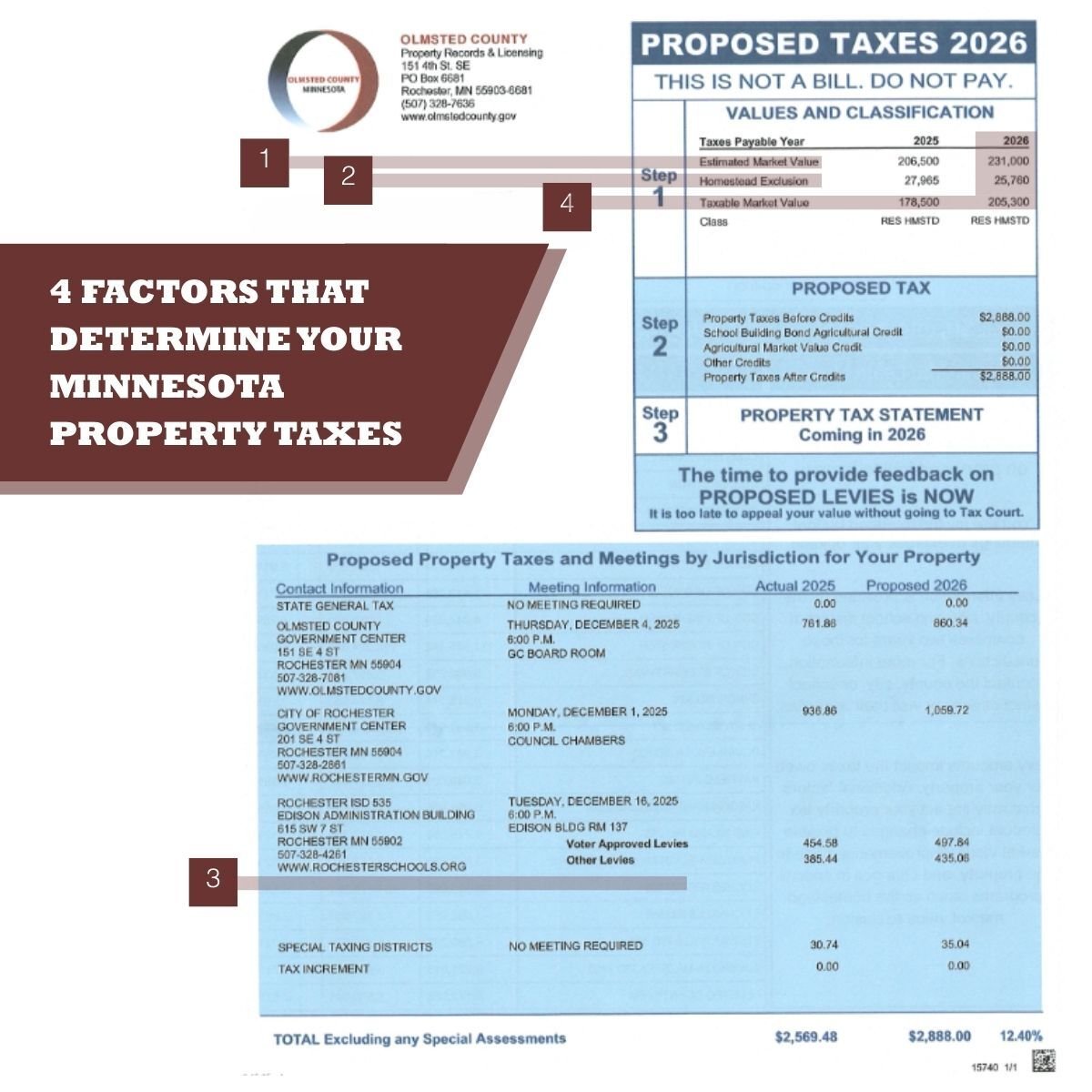
For homeowners, there is also a "Special" property tax refund. This is a unique provision that is not based on income. Instead, it serves as a safety valve for homeowners who experience a sharp, one-year spike in their property tax assessment. If your taxes increased by more than 12% over the previous year, you may be eligible for this additional relief regardless of your total household earnings.
Eligibility Requirements for Homeowners in 2026
To qualify for the Homestead Credit Refund (the "Regular" refund) in 2026, you must meet several strict criteria set by the Minnesota Department of Revenue. These requirements ensure that the funds are directed toward primary residents rather than investors or second-home owners.
Residency and Ownership
You must have been a resident of Minnesota for all or part of 2025. Furthermore, you must have owned and occupied your home as your primary residence on January 2, 2026. The property must be classified as a homestead for property tax purposes. If you purchased your home mid-year in 2025, your refund will be pro-rated based on the period you owned and occupied the property.
Income Thresholds
The refund is heavily dependent on your Household Income, which is a broader measure than Federal Adjusted Gross Income (AGI). For the 2025 tax year (filed in 2026), the maximum household income limit for homeowners is approximately $145,000 (subject to annual inflation adjustments). As your income increases, the percentage of property tax the state will refund decreases.
The Special Property Tax Refund
Even if your income exceeds the $145,000 threshold, you should still check your eligibility for the Special Property Tax Refund. To qualify:
- You must have owned and lived in the same home on January 2, 2025, and January 2, 2026.
- Your net property tax must have increased by more than 12% from 2025 to 2026.
- The increase must be at least $100.
- The increase must not be due to new construction or physical improvements made to the property.
Eligibility Requirements for Renters in 2026
For renters, the 2026 filing season continues the integrated approach where the credit is claimed on the 2025 Form M1. The credit is based on a portion of the rent you paid that goes toward the property taxes on the building.
Qualifying as a Renter
To claim the credit, you must be a Minnesota resident and have lived in a unit where the owner was required to pay property taxes (or made payments in lieu of taxes). This includes most apartments, rented houses, and even some assisted living facilities. However, if your unit is tax-exempt—such as some university housing or certain non-profit residences—you generally cannot claim this credit.
The Certificate of Rent Paid (CRP)
The most critical document for any renter is the Certificate of Rent Paid (CRP). By January 31, 2026, your landlord is legally required to provide you with a 2025 CRP. This form details the total rent paid and the specific "rent constituting property taxes" (usually a percentage of your total rent). If you lived in multiple apartments during 2025, you must obtain a CRP from each landlord and aggregate the figures.
Income Limits for Renters
The income limit for renters is significantly lower than for homeowners. For the 2025 tax year, the household income limit for the Renter’s Property Tax Credit is approximately $75,000. Like the homeowner refund, the credit amount scales downward as income rises toward this limit.
Defining "Household Income"
A common mistake when filing for the Minnesota Property Tax Refund is using the wrong income figure. The state uses Household Income, which includes both taxable and certain non-taxable income received during the year.
When calculating your household income for 2025, you must include:
- Federal Adjusted Gross Income (AGI): This is the starting point from your federal return.
- Non-taxable Social Security benefits: Even the portions of Social Security not taxed at the federal level must be included.
- Tax-exempt interest: Interest earned on municipal bonds or other tax-free vehicles.
- Public assistance payments: Including MFIP or other state-funded support.
- Pensions and annuities: Both taxable and non-taxable distributions.
- Contributions to retirement plans: Money you deferred into 401(k) or IRA accounts.
You are allowed to subtract certain items from this total, such as a specific allowance for dependents and an allowance if you or your spouse are 65 or older or disabled.
How to File for Your Refund in 2026
The filing process depends on whether you are a homeowner or a renter. In both cases, the Minnesota Department of Revenue encourages electronic filing for faster processing and increased accuracy.
For Homeowners (Form M1PR)
Homeowners should wait until they receive their 2026 property tax statement from their county (usually mailed in March) before filing. This statement contains the necessary figures for the 2025 "payable 2026" taxes.
- Electronic Filing: Use the Minnesota Department of Revenue’s MNDirect application or certified tax software.
- Paper Filing: Download Form M1PR and the accompanying instructions from the state website.
- Documentation: You do not need to attach your tax statement to an electronic return, but you must keep it in your records.
For Renters (Form M1)
Because the Renter’s Credit is now part of the individual income tax return, you file it at the same time you file your 2025 state taxes.
- Schedule M1REF: Use this schedule to calculate your credit based on your CRP information.
- Direct Deposit: Opt for direct deposit to receive your credit faster.
- Timing: If you file your income tax return in February or March 2026, you will receive the renter's credit as part of your overall refund shortly after.
| Feature | Homeowner (Regular/Special) | Renter (Property Tax Credit) |
|---|---|---|
| Primary Form | Form M1PR | Form M1 (Schedule M1REF) |
| 2026 Income Limit | ~$145,000 | ~$75,000 |
| Key Document | Property Tax Statement | Certificate of Rent Paid (CRP) |
| Filing Deadline | August 15, 2026 | April 15, 2026 (standard tax deadline) |
| Payment Timing | September or October 2026 | With standard income tax refund |
Key Deadlines and Payment Timelines
Missing a deadline can delay your refund or, in some cases, cause you to forfeit it entirely.
- April 15, 2026: The standard deadline for renters to file their 2025 Form M1. If you file for an extension for your income taxes, the credit will be delayed accordingly.
- August 15, 2026: The official due date for the homeowner Form M1PR.
- Final Deadline: You have up to one year from the original due date to file. For the 2025 refund, the final absolute cut-off is August 15, 2027. Returns filed after this date will not be honored.
Payment Schedule:
- Renters: Payments typically arrive within weeks of filing their income tax return in early 2026.
- Homeowners: If you file by the August 15 deadline, you can expect your refund in late September or early October 2026. Filing electronically usually results in a payment a few weeks earlier than paper filing.
Common Pitfalls and How to Avoid Them
The Minnesota Department of Revenue frequently flags returns for errors, which can delay refunds by months.
1. Inaccurate Income Reporting
Many filers forget to add back their non-taxable Social Security or their 401(k) contributions. The Department of Revenue cross-references your M1PR with your federal and state income tax data. If the numbers don't align, your return will be pulled for manual review.
2. Duplicate Claims on a Single Property
Only one property tax refund can be claimed per homestead. If two people live together but are not married, they must decide who will claim the refund or divide the household income and taxes proportionally. If both file for the full amount, both returns will be rejected.
3. Missing CRP Information
Renters must ensure the landlord's Global ID or Federal Employer Identification Number (FEIN) is included from the CRP. If the landlord refuses to provide a CRP, you must contact the Department of Revenue to request a "Renter's Certificate of Rent Paid" (RCRP) after providing proof of rent paid (like cancelled checks).
4. Incorrect Banking Information
Because these refunds are often substantial, an error in a routing or account number can lead to a paper check being mailed, which adds significant time to the process or, worse, leads to the funds being sent to the wrong account.
Frequently Asked Questions
Can I claim the refund if I owe back taxes?
Yes, you can still file for the refund, but the State of Minnesota has the right to "capture" or offset your refund to pay for delinquent state taxes, unpaid child support, or certain other government debts. You will receive a notice from the Department of Revenue if your refund is applied to an outstanding debt.
What if I moved during 2025?
If you moved from one rental to another, you must aggregate all CRPs. If you moved from a rental to a home you purchased, you may be eligible for a partial renter’s credit and a partial homeowner’s refund. The instructions for Form M1PR provide a specific worksheet for these "part-year" scenarios to ensure you are not double-claiming for the same months.
Does my mobile home count for the homeowner refund?
Yes. Owners of manufactured homes (mobile homes) are eligible for the property tax refund. Note that mobile home owners often have a different tax payment schedule—taxes on the home are usually due in late summer, and the filing process for the refund follows the homeowner timeline.
What if my landlord hasn't sent my CRP by February?
Minnesota law requires landlords to provide CRPs by January 31. If you haven't received yours by mid-February, first contact your landlord in writing. If they still fail to provide it, you can call the Minnesota Department of Revenue to initiate a formal request for a Renter's Certificate of Rent Paid.
Is the refund taxable on next year's return?
The Minnesota Property Tax Refund is not taxable on your Minnesota state return. However, if you itemize deductions on your federal return and deducted your property taxes, you may need to report the refund as income on your federal return the following year.
Next Steps for Residents
To ensure you receive your maximum eligible refund in 2026, start by organizing your 2025 financial records. Renters should verify they have received a CRP for every unit they occupied in 2025. Homeowners should keep a lookout for their property tax statements in March 2026 and review the "Special" refund criteria if they notice a significant tax increase.
If you are unsure of your eligibility or need assistance with the calculations, the Minnesota Department of Revenue offers a "Where’s My Refund?" tracking tool and a variety of free tax preparation sites (VITA) for low-to-moderate-income residents. Filing early and choosing direct deposit remains the most effective strategy for securing your property tax relief promptly.
Image Gallery