Why the Index of Credit Cards Matters for Your Financial Health in 2026
An index of credit cards serves as a critical benchmark that aggregates market data on interest rates, rewards structures, and eligibility requirements across the financial sector. Understanding this index allows you to identify whethe...
An index of credit cards serves as a critical benchmark that aggregates market data on interest rates, rewards structures, and eligibility requirements across the financial sector. Understanding this index allows you to identify whether your current accounts offer competitive value or if market shifts have rendered your existing credit portfolio obsolete or unnecessarily expensive.
Contents
In the complex financial landscape of 2026, a credit card is no longer just a piece of plastic or a digital token in a mobile wallet; it is a sophisticated financial instrument. For the modern consumer, the "index of credit cards" refers to the comprehensive database of available products and the fluctuating benchmarks—such as average Annual Percentage Rates (APRs) and rewards valuation—that define the current market. Monitoring these indices is essential for maintaining a healthy debt-to-income ratio and maximizing the return on every dollar spent.
Defining the Credit Card Index as a Market Benchmark
When financial analysts or informed consumers discuss the index of credit cards, they are typically referring to a structured collection of data points that represent the "average" or "top-tier" offerings in the market. This index functions similarly to a stock market index, providing a snapshot of health and trends within the lending industry. In 2026, these indices have become more granular, categorizing cards not just by broad labels like "travel" or "cash back," but by AI-driven risk tiers and hyper-specific spending categories.
The primary function of such an index is to provide a point of comparison. Without a centralized understanding of what the market offers, a consumer might continue using a card with an 18% APR when the current market index for their credit profile suggests a 14% APR is attainable. Furthermore, the index tracks "reward inflation," a phenomenon where the purchasing power of points or miles fluctuates based on devaluations by airlines, hotels, or retailers. By watching the index, you can determine if your "2x points" card is still performing at a high level or if its real-world value has plummeted compared to new market entries.
The Direct Impact of Interest Rate Fluctuations
The most significant reason the index of credit cards matters for you involves the cost of borrowing. Credit card interest rates are typically pegged to the Prime Rate, which is influenced by the Federal Reserve’s decisions. However, the "margin" that banks add to that Prime Rate varies. The credit card index tracks these margins across hundreds of institutions.
If the index shows a downward trend in APRs for "Excellent" credit tiers, it signals an opportunity for you to negotiate a lower rate with your current issuer or to transfer a balance to a more favorable product. Conversely, if the index shows rising rates, it serves as a warning to minimize revolving balances before the cost of debt becomes unsustainable. According to data from the Federal Reserve, monitoring interest rate trends is the first line of defense against compounding interest traps.
In 2026, many cards have transitioned to "dynamic APRs," which can change more frequently than the traditional monthly billing cycle. Staying informed via a market index ensures you are not caught off guard by these shifts, which often happen silently in the fine print of digital terms of service.
Rewards Optimization and Value Retention
For many consumers, credit cards are a tool for wealth generation through rewards. However, the value of a "point" is never static. The index of credit cards tracks the effective "cents-per-point" (CPP) across various ecosystems. This is crucial because a card that offers 50,000 points as a sign-up bonus might seem lucrative, but if the index reveals those points are only worth 0.5 cents each, the offer is inferior to a 20,000-point bonus valued at 2.0 cents per point.
The Dynamics of Reward Devaluation
Banks frequently adjust their redemption catalogs and transfer partner ratios. An index monitors these changes in real-time. For example, if a major airline alliance changes its redemption table, the index of cards linked to that airline will reflect a decrease in overall value. By observing these trends, you can "burn" your points before they lose value or switch your primary spending to a card whose index remains stable.
The Shift Toward Merchant-Specific Indexing
By 2026, we have seen a rise in "merchant-level indexing," where the index of credit cards breaks down which cards offer the best returns for specific retailers or sustainable energy purchases. If your spending habits shift—perhaps you are spending more on electric vehicle charging or decentralized services—the index points you toward the specific niche cards that have been created to capture that market share.
Comparative Analysis of Credit Card Categories (2026 Market Data)
The following table illustrates how different segments of the credit card index compare in the current 2026 financial environment. These figures represent the aggregate averages found in top-tier financial indices.
| Card Category | Average APR (Excellent Credit) | Primary Reward Type | Typical Annual Fee | Market Trend |
|---|---|---|---|---|
| Premium Travel | 21.49% | Transferable Points | $550 - $695 | Increasing emphasis on lounge access & lifestyle credits |
| Flat-Rate Cash Back | 18.24% | 2% - 2.5% Cash | $0 | High competition; margins are narrowing |
| Tiered Cash Back | 19.99% | 3% - 6% on Categories | $0 - $95 | Shift toward AI-selected "top spend" categories |
| Balance Transfer | 0% (Intro) / 24% | Minimal | $0 | Shorter intro periods (12-15 months vs 21 months) |
| Secured / Builder | 26.99% | Credit Reporting | $0 - $39 | Integration with rent-payment reporting |
Strategic Portfolio Management
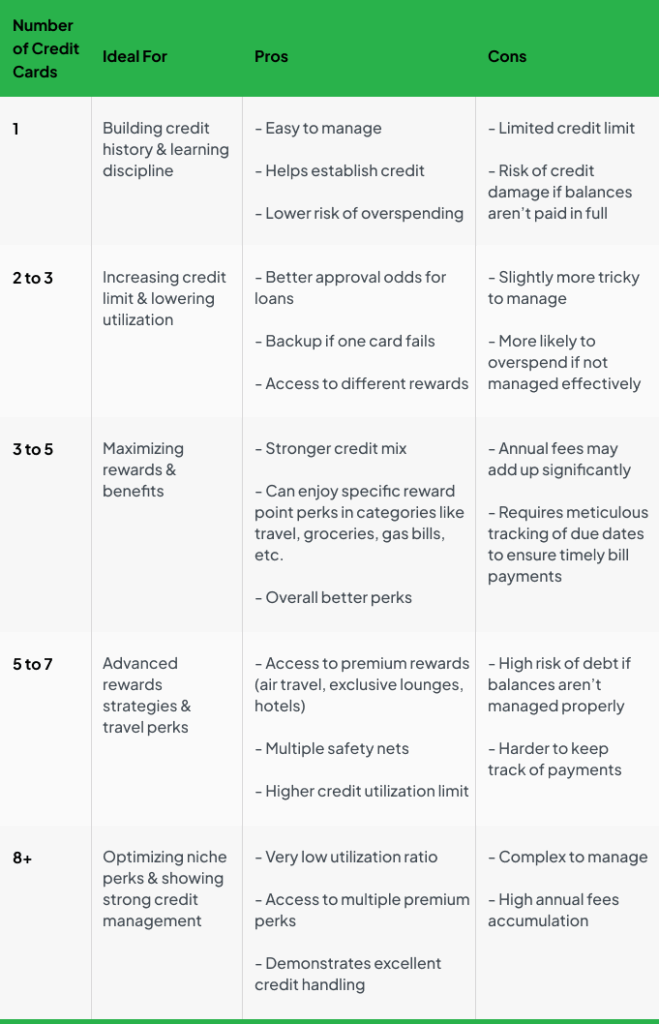
Viewing your personal collection of cards as a "mini-index" allows for better strategic management. Financial experts recommend auditing your cards against the national index at least twice a year. This process involves checking if the annual fees you pay are still justified by the current market value of the benefits provided.
If the index of credit cards indicates that "no-annual-fee" cards are now offering benefits previously reserved for "gold" or "platinum" tiers—such as primary cell phone insurance or basic trip delay coverage—you may be able to downgrade your high-fee cards without losing essential protections. This "downgrade strategy" protects your credit age (a vital component of your credit score) while eliminating unnecessary costs.
Furthermore, the index helps you understand "velocity rules." Many issuers have internal indices or rules (like the famous "5/24 rule") regarding how many cards you can apply for within a certain timeframe. A comprehensive index tracks these invisible requirements, saving you from "hard inquiries" on your credit report that lead to automatic denials. The Consumer Financial Protection Bureau (CFPB) provides resources to understand how these inquiries impact your overall financial standing.
Identifying and Avoiding Predatory Patterns
One of the most vital reasons the index matters is the identification of outliers. If the general index of credit cards for "subprime" borrowers shows an average APR of 29%, and you are offered a card with a 36% APR and a "monthly maintenance fee," the index serves as a red flag.
In 2026, "fee-harvesting" cards have become more sophisticated, often disguising themselves as fintech innovations. By comparing any offer against a reputable index, you can quickly see if the terms are outside the standard deviation of the market. This awareness is particularly important for those in the process of rebuilding credit, who are often targeted by lenders offering terms that make actual financial progress nearly impossible.
The Role of AI and Real-Time Indexing in 2026
The technology behind indexing has evolved significantly. In 2026, many consumers use AI assistants that plug directly into live credit card indices. These tools can analyze your transaction history and tell you exactly which card in the index you should have applied for six months ago, based on your actual spending patterns.
This "hyper-personalization" means the index is no longer just a static list; it is a dynamic recommendation engine. If a new card enters the index that offers a 10% rebate on a category where you spend $1,000 a month, the index alerts you to the opportunity cost of not switching. This level of transparency has forced banks to be more competitive, but it requires the consumer to be proactive in monitoring the data.
Common Pitfalls: Why Ignoring the Index Costs You
Many consumers fall into the "loyalty trap," staying with a specific bank for decades. While loyalty can occasionally result in better customer service, the index of credit cards often reveals that long-term customers are paying a "loyalty tax." This occurs when a bank offers lucrative "new member" rates or rewards while keeping existing customers on older, less favorable terms.
Without the index, you wouldn't know that your "Legacy Rewards" card is earning 1 point per dollar while the "New Horizon" card from the same bank—available to new applicants—earns 1.5 points for the same spending. Utilizing the index allows you to call your issuer and request a "product change," ensuring your account is updated to the current market standard without the need for a new credit application.
Frequently Asked Questions
How often should I check the index of credit cards?
You should check market trends at least quarterly. Significant shifts often occur following Federal Reserve meetings or at the beginning of a new calendar year when banks refresh their product lineups and marketing budgets. If you are planning a major purchase or a balance transfer, a more thorough check of the current index is advised.
Can the index of credit cards help me improve my credit score?
Yes, indirectly. By using the index to find cards with higher credit limits or better "utilization" management features, you can lower your credit utilization ratio, which is a major factor in your credit score. Additionally, the index helps you find "credit builder" products that report to all three major bureaus, Equifax, Experian, and TransUnion.
Are all indices of credit cards the same?
No. Some indices are maintained by financial news organizations, others by independent research firms, and some by affiliate marketing sites. It is important to use an index that is transparent about its methodology and covers a wide range of institutions, including credit unions and smaller regional banks, rather than just the major national issuers.
Does the index account for hidden fees?
A high-quality index will include a breakdown of the "Total Cost of Credit," which includes annual fees, foreign transaction fees, late fees, and cash advance rates. In 2026, looking at the APR alone is insufficient; you must look at the indexed "effective cost" which factors in these ancillary charges.
How do I use the index if I have a low credit score?
The index is arguably most important for those with lower scores. You should look for the "Subprime Index," which compares secured cards and "second chance" accounts. This allows you to avoid cards with "hidden" fees, such as "application fees" or "credit limit increase fees," which are common in the subprime market.
Practical Next Steps for Consumers
To make the most of the current credit card index, start by conducting a "Portfolio Audit." List every card you currently hold, its APR, its annual fee, and its primary reward rate. Then, compare these figures against a reputable 2026 credit card index.
If you find that your cards are underperforming—either because the APR is more than 2% higher than the index average for your credit tier or because your reward rate is below the 2% benchmark—contact your issuers. Request a rate reduction or a product change to a more modern offering. If they refuse, use the index to identify a new product that aligns with your financial goals and provides the most value for your specific spending profile. Staying informed through the index is the most effective way to ensure your credit cards are working for you, rather than the other way around.
Image Gallery