How the Coil Alignment Technique Boosts Magnetic Precision
Coil alignment techniques boost magnetic precision by minimizing spatial field distortions and maximizing flux density. By ensuring geometric symmetry and optimal positioning, these methods reduce stray fields and signal noise, resulti...
Coil alignment techniques boost magnetic precision by minimizing spatial field distortions and maximizing flux density. By ensuring geometric symmetry and optimal positioning, these methods reduce stray fields and signal noise, resulting in higher homogeneity. This is critical for high-fidelity imaging, efficient wireless energy transfer, and accurate particle guidance in scientific instrumentation.
Contents
Magnetic precision is the cornerstone of modern resonance imaging, particle acceleration, and wireless power delivery. At its core, the ability to control a magnetic field depends not just on the amount of current flowing through a conductor, but on the exact spatial orientation of the coils generating that field. Even a minor deviation in the pitch, yaw, or lateral position of an electromagnetic coil can lead to field gradients that compromise the integrity of the entire system. In 2026, as industries push toward sub-micron accuracy in manufacturing and femto-Tesla sensitivity in sensors, the coil alignment technique has transitioned from a basic assembly step to a complex, multi-layered engineering discipline.
The Fundamental Physics of Magnetic Precision
To understand how alignment boosts precision, one must first look at the Biot-Savart Law, which describes how magnetic fields are generated by electric currents. The law dictates that the magnetic field at any point in space is the vector sum of the contributions from every segment of the wire. When multiple coils are used together—such as in a Helmholtz configuration—their fields are designed to overlap and create a region of near-perfect uniformity.
If the coils are perfectly aligned, the opposing gradients cancel each other out, leaving a stable, homogenous central field. However, if one coil is tilted by even a fraction of a degree, the vector sums no longer balance. This results in field inhomogeneity, where the magnetic strength varies across the target area. In applications like Nuclear Magnetic Resonance (NMR) spectroscopy, such inhomogeneity causes spectral lines to broaden, effectively "blurring" the data and making it impossible to distinguish between closely related chemical structures.
The Role of Flux Linkage and Coupling Coefficients
In the context of Wireless Power Transfer (WPT) and transformer design, precision is measured by the coupling coefficient (k). This value represents the fraction of magnetic flux produced by the primary coil that successfully links to the secondary coil.
- Perfect Alignment: Results in a high coupling coefficient (approaching 1.0), ensuring maximum energy transfer and minimal heat loss.
- Misalignment: Causes flux leakage. When magnetic lines of force fail to intersect the receiving coil, they instead induce eddy currents in surrounding metal components. This not only reduces efficiency but can cause dangerous overheating in high-power applications like electric vehicle (EV) charging.
Advanced Coil Alignment Methodologies
In 2026, the techniques used to achieve this alignment have evolved into three primary categories: mechanical, active feedback-driven, and software-assisted computational alignment.
Mechanical Shimming and Physical Constraints
The most traditional method is mechanical shimming. This involves placing thin pieces of material (shims)—often made of non-magnetic metals or specialized polymers—to physically nudge the coils into the correct position. In large-scale magnets, such as those found in industrial MRI machines, mechanical alignment is the first line of defense against manufacturing tolerances.
Engineers use laser interferometry to measure the distance between coils with nanometer precision. By mapping the physical geometry of the housing, they can calculate exactly where the coil sits relative to its theoretical "magnetic center." In 2026, robotic assembly arms often perform this task, applying micro-adjustments that would be impossible for a human technician to achieve consistently.
Active Feedback and Dynamic Alignment
As systems operate, they generate heat. Thermal expansion is a major enemy of magnetic precision; as a coil heats up, its physical dimensions change, and the supporting structure may warp. Active feedback alignment addresses this by using sensors—typically Hall effect sensors or fluxgate magnetometers—to monitor the field in real-time.
If the sensors detect a shift in the magnetic center, the system can respond in two ways:
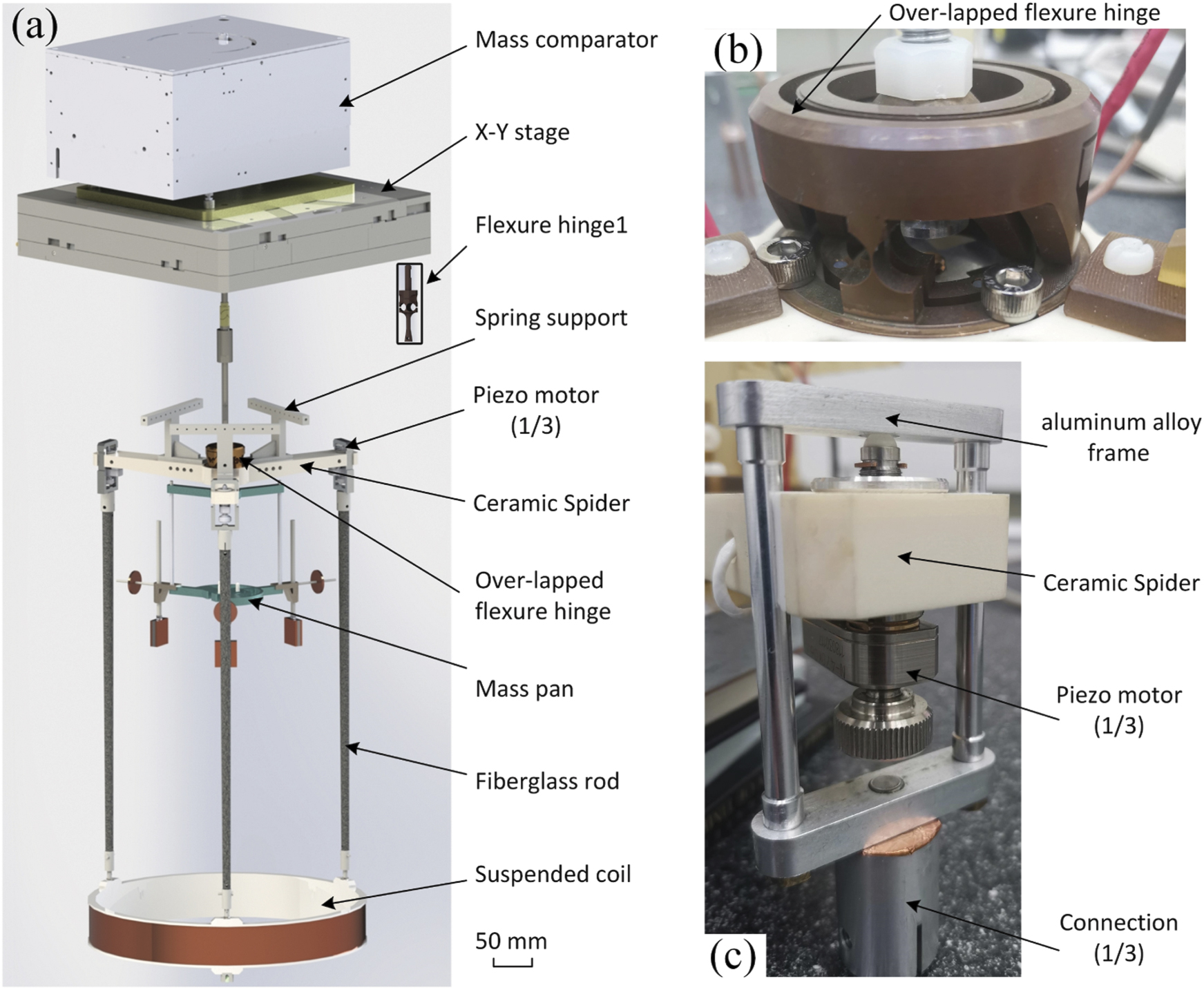
- Piezoelectric Actuators: These tiny motors can physically move the coil mounts by microscopic increments to compensate for thermal drift.
- Correction Coils: Instead of moving the main coil, the system energizes small "shim coils" that produce a corrective field to counteract the distortion. This is often referred to as "electronic alignment."
Software-Assisted Computational Mapping
Modern precision also relies on "virtual alignment." Before a system is even powered on, high-fidelity Finite Element Analysis (FEA) models predict how misalignment will occur under various loads. During operation, software algorithms analyze the output data (such as an image or a power flow) and use mathematical transforms to "de-warp" the results. While this doesn't physically align the coils, it mitigates the effects of precision loss, provided the misalignment stays within a calibrated threshold.
Industry-Specific Impacts of Enhanced Precision
The benefits of coil alignment are not uniform across industries; rather, they manifest as specific performance breakthroughs in different high-tech sectors.
Medical Imaging (MRI and MEG)
In Magnetic Resonance Imaging (MRI), the goal is a field homogeneity of roughly 1 part per million (ppm) over a large volume. If the gradient coils are misaligned with the main static magnet (B0), the spatial encoding of the signal fails. This leads to geometric distortion in the final image, where a square object might appear skewed or stretched.
In 2026, the latest 7-Tesla and 11-Tesla scanners utilize cryogenic alignment, where the coils are aligned while at superconducting temperatures. This prevents the "shifting" that occurs when a system is calibrated at room temperature and then cooled down to near absolute zero.
Particle Accelerators and Synchrotrons
Scientific research facilities use massive strings of magnets to steer subatomic particles at nearly the speed of light. Here, coil alignment is a matter of safety as much as science. A misaligned quadrupole magnet can cause the particle beam to diverge, hitting the vacuum chamber walls and causing a catastrophic "quench" or hardware damage. Alignment in these facilities often involves specialized surveying equipment and GPS-synchronized timing to ensure that kilometers of magnets are perfectly phased.
Wireless Power Transfer for EVs
For the EV market in 2026, alignment has become a user-experience priority. High-power "parking pad" chargers require the vehicle's internal coil to be perfectly centered over the ground-based coil. Coil alignment techniques here often involve magnetic resonance coupling, where the system is tuned to a specific frequency. When the coils are aligned, the "Q factor" (quality factor) peaks. Advanced systems now use Z-axis alignment, where the ground pad physically rises to meet the vehicle, minimizing the air gap and maximizing magnetic precision.
Technical Comparison of Alignment Techniques
The following table outlines the performance characteristics of various alignment methods currently utilized in 2026.
| Alignment Technique | Precision Level (Typical) | Complexity | Primary Application | Cost Factor |
|---|---|---|---|---|
| Manual Shimming | 100 - 500 ppm | Low | Basic motors, transformers | Low |
| Laser-Guided Robotic | 5 - 20 ppm | Moderate | High-end industrial sensors | Moderate |
| Active Feedback (Piezo) | 1 - 5 ppm | High | Lab-grade mass spectrometry | High |
| Cryogenic Auto-Correction | < 1 ppm | Very High | Ultra-high field MRI (7T+) | Extreme |
| AI-Predictive Modeling | Variable | Moderate | Consumer WPT, EV charging | Low-Moderate |
Troubleshooting Common Alignment Failures
Even with the best techniques, magnetic precision can degrade over time. Maintaining precision requires a proactive approach to troubleshooting.
Identifying Vibration-Induced Drift
In industrial environments, mechanical vibration is a frequent cause of coil displacement. Over millions of cycles, even "fixed" mounts can settle. If a system shows a gradual decrease in SNR (Signal-to-Noise Ratio) or power efficiency, vibration-induced drift is the likely culprit. The solution involves using damped mounting systems or non-magnetic locking adhesives that prevent micro-movements.
Managing Electromagnetic Interference (EMI)
Sometimes, the coils are physically aligned, but the "apparent" magnetic field is distorted by nearby ferrous materials or competing EMI. This is common in factories where large steel beams or other motors are present. Precision alignment must account for these "boundary conditions." In 2026, active shielding is often used alongside coil alignment to create a "magnetic vacuum," ensuring that the precision achieved through alignment isn't ruined by external noise.
Addressing Thermal Hysteresis
Thermal hysteresis occurs when a coil is heated and cooled repeatedly, and it fails to return to its exact original position. This is a significant issue in high-duty-cycle electromagnets. Precision is maintained by implementing "warm-up" protocols where the system reaches a stable thermal equilibrium before critical measurements or power transfers are initiated.
The Future of Coil Alignment: AI and Smart Materials
As we look further into 2026 and beyond, the next frontier in coil alignment involves shape-memory alloys and self-healing structures. These materials can change their physical shape in response to an electrical trigger, allowing the coil housing itself to act as the alignment mechanism.
Furthermore, Machine Learning (ML) is being integrated into the alignment process. By analyzing years of historical data on field drift, AI can now predict when a coil is likely to fall out of alignment before the precision loss is even measurable by traditional means. This "predictive alignment" allows for maintenance during scheduled downtime, preventing costly failures in medical and scientific research.
FAQs
What is the primary difference between physical and magnetic alignment?
Physical alignment refers to the geometric positioning of the coil's housing or wire, while magnetic alignment refers to the centering of the actual magnetic field produced. Because of manufacturing defects in the wire or uneven winding density, the magnetic center of a coil may not perfectly match its physical center. High-precision systems always prioritize magnetic alignment over physical geometry.
How does coil alignment impact the lifespan of a system?
Proper alignment reduces internal stress and heat generation. When coils are misaligned, the system often has to "over-drive" the current to compensate for lost efficiency, which leads to faster degradation of insulation and structural components. Precision alignment typically extends the operational life of high-power magnets by 20-30%.
Can software completely fix a misaligned coil?
No. While software can calibrate out some "static" errors (like a constant tilt), it cannot recover the signal lost to flux leakage or the noise generated by eddy currents. Software-assisted alignment is a "correction" tool, not a "prevention" tool. Physical alignment remains the foundation of high-performance magnetism.
Are there non-magnetic materials that can interfere with alignment?
Yes. While non-magnetic materials like aluminum or copper won't distort a static magnetic field, they can interfere with AC (alternating current) fields by hosting eddy currents. If these materials are misaligned relative to the coil, they can create secondary magnetic fields that disrupt the primary field's precision.
How often should high-precision coils be re-aligned?
The frequency depends on the environment. For stationary MRI machines, alignment is checked during semi-annual maintenance. For mobile units or systems subject to vibration (like ship-based sensors), alignment may need to be verified monthly or even weekly using automated self-test sequences.
Practical Recommendations for Engineers
To maximize magnetic precision in any coil-based system, focus first on the structural rigidity of the coil mounts. Using materials with low coefficients of thermal expansion, such as specialized ceramics or carbon-fiber composites, provides a stable baseline.
Secondly, implement a mapping phase during initial setup. Do not assume that the coils are aligned simply because they are bolted into place. Use a 3-axis Gauss meter to map the field volume and identify any gradient errors. If precision requirements are tighter than 10 ppm, integrate an active feedback loop using piezoelectric actuators to compensate for environmental changes in real-time. By combining physical stability with electronic correction, you ensure that the system remains precise under any operational load.
Image Gallery