10 Examples of Blue Chip Stocks for Long-Term Stability
Blue chip stocks are shares of large, well-established, and financially sound companies that have operated for many years and possess dependable earnings. These industry leaders typically command market capitalizations in the billions,...
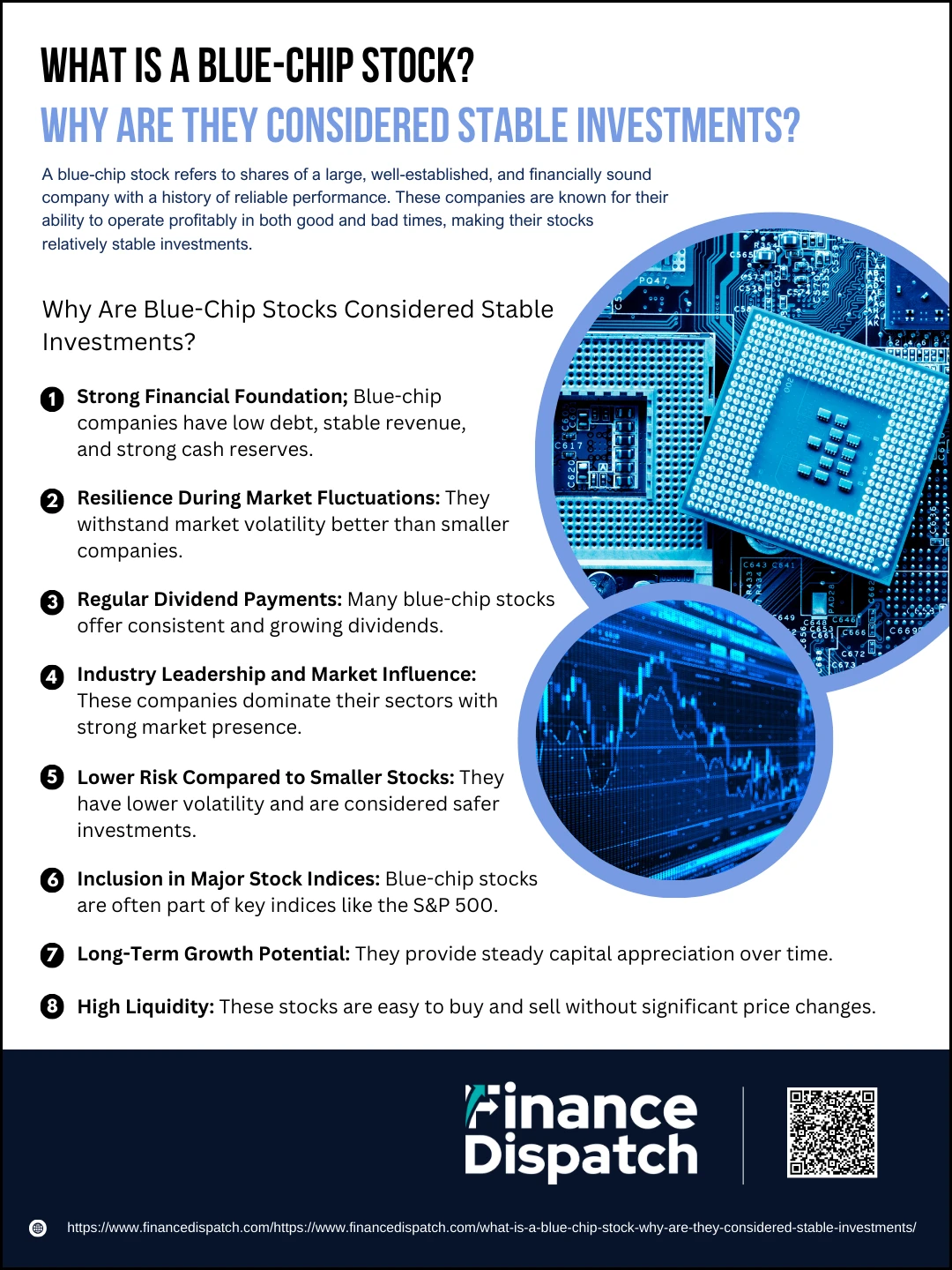
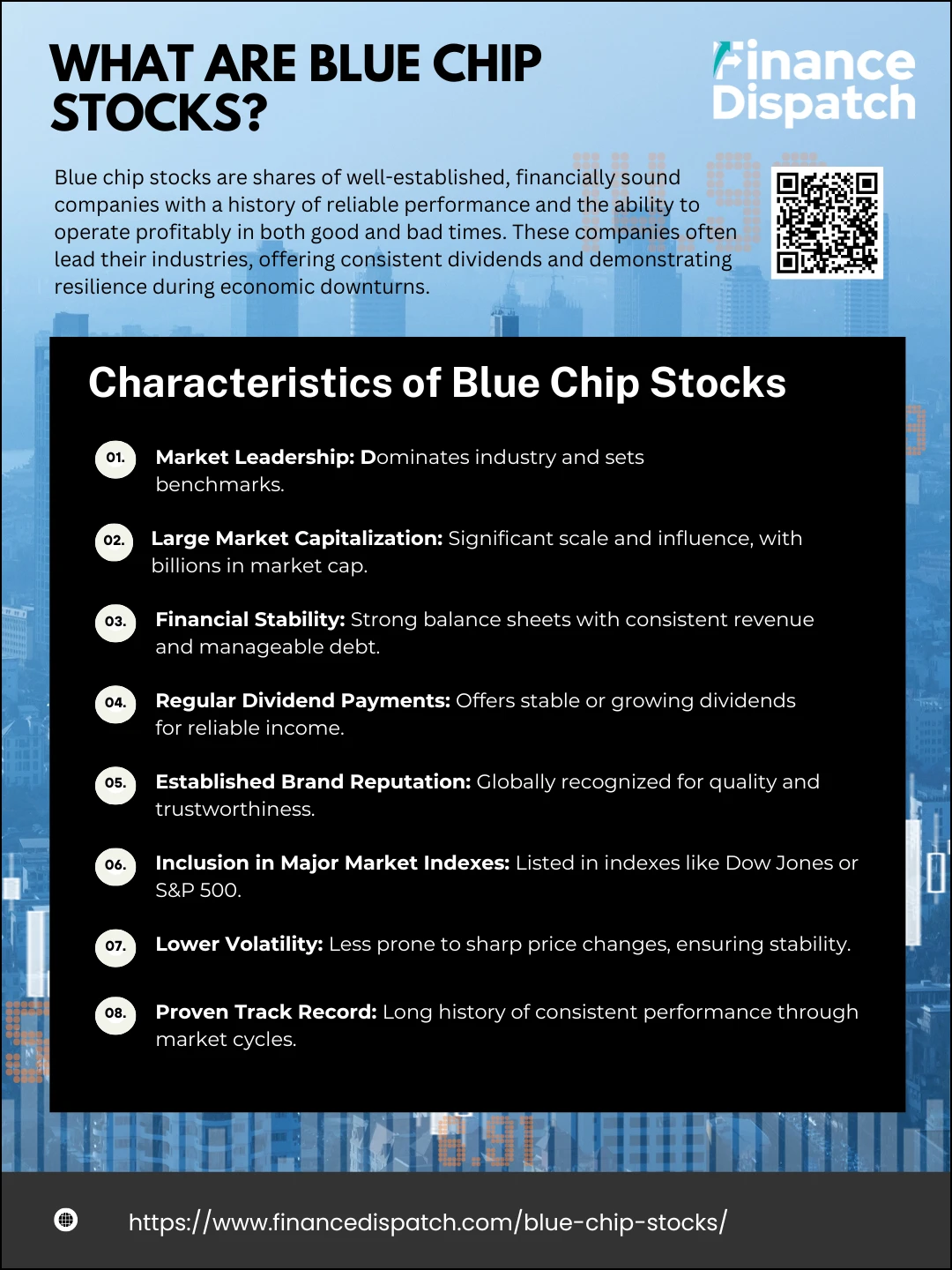
Blue chip stocks are shares of large, well-established, and financially sound companies that have operated for many years and possess dependable earnings. These industry leaders typically command market capitalizations in the billions, offer consistent dividend payments, and maintain a reputation for quality and reliability even during periods of high market volatility.
Contents
Defining the Blue Chip Standard in 2026
The term "blue chip" originated from the game of poker, where blue chips hold the highest value. In the financial world, these companies represent the bedrock of a diversified portfolio. As we navigate the economic landscape of 2026, the criteria for a blue chip stock have evolved to include not just historical longevity, but also technological adaptability and sustainable cash flow.
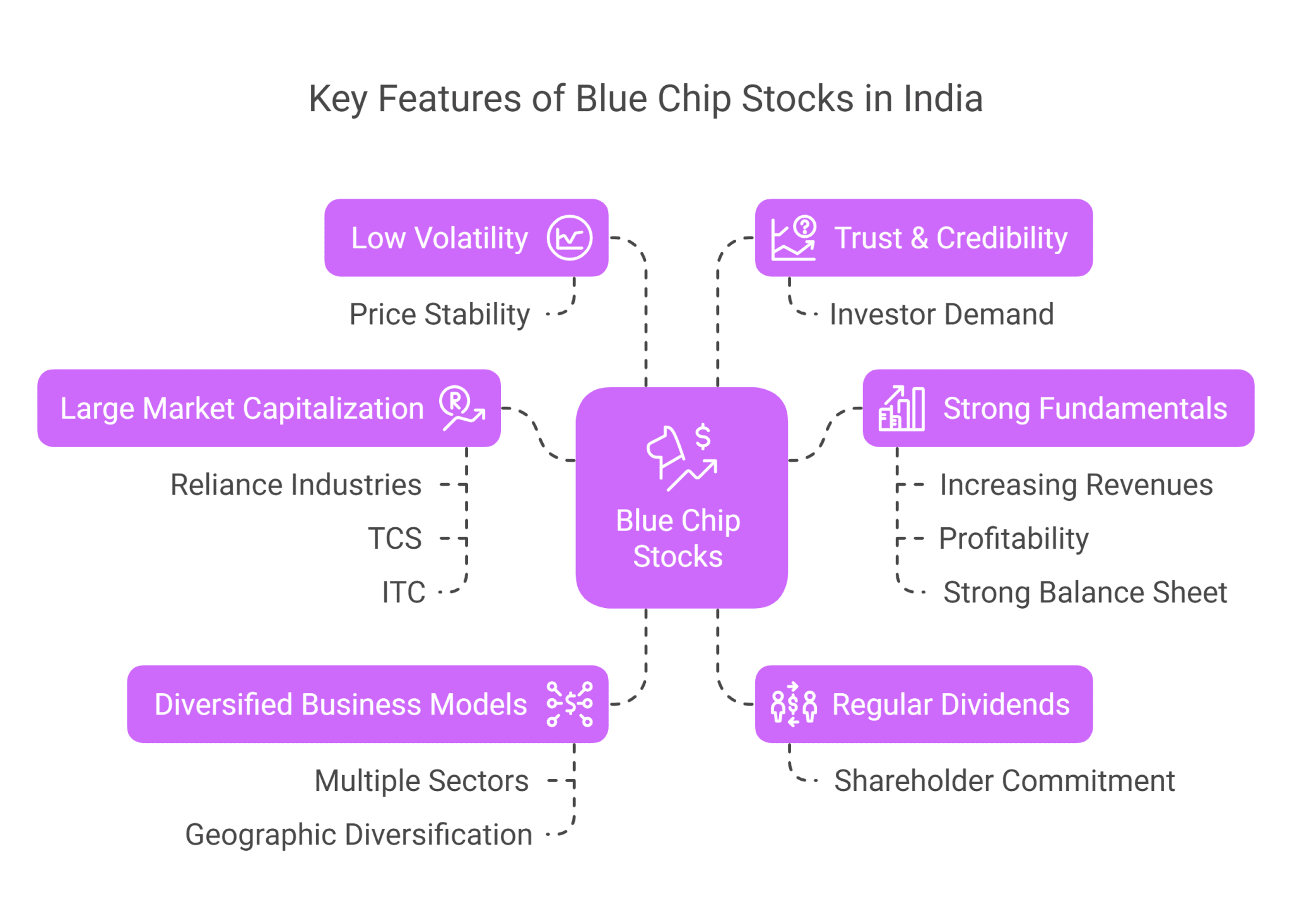
To be classified as a blue chip, a company generally meets several criteria:
- Market Capitalization: Usually in the tens or hundreds of billions of dollars.
- Index Inclusion: Most are components of major indices like the Dow Jones Industrial Average (DJIA) or the S&P 500.
- Dividend History: A track record of paying—and often increasing—dividends over decades.
- Institutional Ownership: High levels of investment from pension funds and large insurance companies.
- Lower Volatility: While no stock is "safe," blue chips typically experience less drastic price swings than small-cap or speculative growth stocks.
1. Apple Inc. (AAPL)
Apple remains the quintessential blue chip stock due to its massive cash reserves and unparalleled brand loyalty. As of 2026, the company has successfully transitioned from a hardware-centric model to a services-heavy powerhouse. Its ecosystem—comprising the iPhone, Mac, and iPad integrated with iCloud and various subscription services—creates a "moat" that is difficult for competitors to breach.
Apple’s inclusion in this list is supported by its consistent ability to generate high Return on Equity (ROE). For investors, Apple offers a combination of modest dividend growth and aggressive share buyback programs, which historically support the stock price.
2. Microsoft Corporation (MSFT)
Microsoft has cemented its status as a blue chip through its dominance in the enterprise software and cloud computing sectors. By 2026, its Azure cloud platform and integration of generative AI into the Office suite have made it indispensable to global businesses. Microsoft’s revenue streams are highly diversified across gaming (Xbox), professional networking (LinkedIn), and cloud infrastructure.
The company maintains one of the few AAA credit ratings from S&P Global, signifying extreme financial strength. This allows Microsoft to invest heavily in R&D while maintaining a consistent dividend payout ratio for shareholders.
3. Johnson & Johnson (JNJ)
In the healthcare sector, Johnson & Johnson is a "Dividend King," a title reserved for companies that have increased their dividends for at least 50 consecutive years. Despite the 2023 spin-off of its consumer health business (Kenvue), the core pharmaceutical and medical device segments remain highly profitable.
JNJ's strength lies in its diversified healthcare portfolio, which includes life-saving oncology drugs and advanced surgical robotics. The essential nature of healthcare ensures that JNJ’s products remain in demand regardless of whether the economy is in a recession or an expansionary phase.
4. JPMorgan Chase & Co. (JPM)
As the largest bank in the United States, JPMorgan Chase represents the "fortress balance sheet" philosophy. Under long-standing leadership, the bank has navigated numerous financial crises, often emerging stronger by acquiring distressed competitors. In 2026, JPM continues to lead in investment banking, asset management, and retail banking.
Financial stocks are often sensitive to interest rates, but JPMorgan’s scale allows it to generate significant net interest income while managing risks through sophisticated hedging. It is a staple for investors seeking exposure to the financial heart of the global economy.
5. The Coca-Cola Company (KO)
Coca-Cola is perhaps the most recognized brand globally. It operates a capital-light business model by focusing on selling concentrates and syrups to independent bottling partners. This allows the company to maintain high margins and a global reach that spans over 200 countries.
Coca-Cola is a classic "defensive" blue chip. Even during inflation or economic downturns, consumers tend to continue purchasing small indulgences like beverages. This consumer behavior supports the company's 60-plus-year streak of dividend increases, making it a favorite for income-focused investors.
6. Procter & Gamble (PG)
Procter & Gamble is the leader in consumer staples, owning brands such as Tide, Gillette, Pampers, and Crest. These are "essential" goods; people need to wash their clothes and brush their teeth regardless of the economic climate. This necessity translates into incredibly stable and predictable cash flows.
PG’s management is known for operational efficiency and a commitment to returning capital to shareholders. The stock's low beta—a measure of volatility relative to the broader market—makes it an excellent "anchor" for a volatile portfolio in 2026.
7. Visa Inc. (V)
Visa does not actually issue credit cards; instead, it provides the digital infrastructure for global payments. Every time a consumer swipes a card or uses a digital wallet on the Visa network, the company earns a small fee. This "toll booth" business model is highly scalable with very low overhead costs.
As the world continues to move away from cash toward digital transactions, Visa benefits from a structural tailwind. Its dominance in the payments space, combined with high operating margins, qualifies it as a modern tech-oriented blue chip.
8. Chevron Corporation (CVX)
While the energy sector is known for cyclicality, Chevron has maintained its blue-chip status through disciplined capital management and a strong focus on its "Dividend Aristocrat" status. Chevron operates across the entire energy value chain, from exploration and production to refining and chemicals.
In 2026, Chevron’s investments in lower-carbon technologies and renewable natural gas have helped it stay relevant as the energy transition progresses. Its ability to maintain a strong payout even when oil prices fluctuate makes it the preferred energy play for conservative investors.
9. Walmart Inc. (WMT)
Walmart is the world’s largest retailer and a dominant force in the grocery industry. Its "Everyday Low Price" strategy is a massive draw during inflationary periods, as seen in the mid-2020s. By 2026, Walmart has significantly expanded its e-commerce and advertising divisions, allowing it to compete directly with digital-first retailers.
The company’s massive physical footprint serves as a logistics network for last-mile delivery, providing a competitive advantage that few can match. Walmart’s stability is rooted in its role as a primary provider of food and household essentials for millions of families.
10. UnitedHealth Group (UNH)
UnitedHealth Group is a titan in the managed healthcare space. It operates two primary businesses: UnitedHealthcare (insurance) and Optum (health services and data analytics). This vertical integration allows the company to manage costs more effectively than its peers while capturing revenue at multiple points in the healthcare delivery process.
As the population ages, the demand for managed care and Medicare Advantage plans continues to grow. UNH’s consistent earnings growth and its increasing role in healthcare technology have made it a top performer in the S&P 500 over the last decade.
Comparative Overview of Top Blue Chip Stocks (Projected 2026)
| Ticker | Sector | Market Cap Category | Dividend Profile | Primary Competitive Advantage |
|---|---|---|---|---|
| AAPL | Technology | Mega-Cap | Growth/Buybacks | Ecosystem Lock-in |
| MSFT | Technology | Mega-Cap | Consistent Growth | Enterprise Integration |
| JNJ | Healthcare | Large-Cap | Dividend King | Diversified IP Portfolio |
| JPM | Financials | Large-Cap | Cyclical/Strong | Scale and Risk Management |
| KO | Consumer Staples | Large-Cap | Dividend King | Global Brand Equity |
| PG | Consumer Staples | Large-Cap | Dividend King | Essential Goods Portfolio |
| V | Financials/Tech | Large-Cap | High Growth | Network Effect |
| CVX | Energy | Large-Cap | High Yield | Operational Efficiency |
| WMT | Consumer Staples | Large-Cap | Stable Growth | Logistics and Scale |
| UNH | Healthcare | Large-Cap | High Growth | Vertical Integration |
The Role of Fundamental Analysis
When selecting blue chip stocks, investors should look beyond the name. Fundamental analysis is the process of examining a company's financial statements to determine its intrinsic value.
Key Metrics to Monitor:
- Debt-to-Equity Ratio: Blue chips should not be overly leveraged. A lower ratio suggests the company can weather economic storms without the risk of insolvency.
- Free Cash Flow (FCF): This is the cash a company generates after accounting for cash outflows to support operations and maintain its capital assets. FCF is what pays dividends and funds acquisitions.
- Price-to-Earnings (P/E) Ratio: While blue chips often trade at a premium, comparing a stock's P/E to its historical average or its industry peers can help identify if it is currently overvalued.
Risks and Considerations
Even the most stable companies are not immune to risk. Investors should be aware of:
- Technological Disruption: Former blue chips like Kodak or General Electric fell from grace because they failed to adapt to changing technologies.
- Regulatory Changes: Large-cap companies, especially in tech and healthcare, are frequently the targets of antitrust investigations or price-capping legislation.
- Inflationary Pressures: While many blue chips have "pricing power," sustained high inflation can eventually erode profit margins if costs rise faster than the company can increase prices.
Note: This article provides financial information for educational purposes and does not constitute professional investment advice. Investing in the stock market involves risk, and past performance is not indicative of future results.
Frequently Asked Questions
Are blue chip stocks safe for beginners?
Blue chip stocks are generally considered safer than small-cap or penny stocks because they represent companies with proven business models. However, "safe" is relative; all stocks carry the risk of price depreciation. For beginners, blue chips provide a more stable entry point into the market, often offering dividends that provide a return even if the stock price remains flat.
Do all blue chip stocks pay dividends?
While the vast majority of blue chip stocks pay dividends, it is not a legal requirement. Most pay dividends because they have mature business models and generate more cash than they need for internal reinvestment. Some tech-focused blue chips may offer lower yields but prioritize share buybacks, which can also return value to shareholders by increasing the ownership stake of each remaining share.
How often should I review my blue chip holdings?
Even though these are "buy and hold" investments, a quarterly review is recommended. Investors should check earnings reports for any significant changes in debt levels, management shifts, or competitive threats. A blue chip stock can lose its status over several years if its fundamentals deteriorate, as seen historically with companies that failed to innovate.
Can a blue chip stock go bankrupt?
It is rare but possible. Notable historical examples include Lehman Brothers during the 2008 financial crisis. This is why diversification is essential. Even a portfolio of the "best" 10 blue chip stocks should be spread across different sectors—such as tech, healthcare, and consumer goods—to ensure that a downturn in one industry doesn't devastate the entire portfolio.
What is the difference between a Blue Chip and a Dividend Aristocrat?
A "Blue Chip" is a broad term for a high-quality, large-cap company. A "Dividend Aristocrat" is a specific designation for a company in the S&P 500 that has increased its dividend payout every year for at least 25 consecutive years. Many stocks, like Procter & Gamble or Johnson & Johnson, belong to both categories.
Next Steps for Investors
To begin building a blue-chip-heavy portfolio, consider using a brokerage account that allows for fractional shares. This enables you to invest in high-priced stocks like Microsoft or UnitedHealth Group with as little as $10 or $20. Alternatively, many investors opt for an Exchange-Traded Fund (ETF) that tracks the Dow Jones Industrial Average or the S&P 100, which automatically provides exposure to dozens of blue chip companies in a single transaction.
Image Gallery