Understanding High Cash Value Low Death Benefit Whole Life Insurance
High cash value low death benefit whole life insurance is a specialized financial product designed to maximize early and long-term cash accumulation while minimizing the cost of pure insurance protection. By deliberately selecting a de...
High cash value low death benefit whole life insurance is a specialized financial product designed to maximize early and long-term cash accumulation while minimizing the cost of pure insurance protection. By deliberately selecting a design that reduces the net amount at risk for the insurer, policyholders can direct a significantly larger portion of their premium dollars toward cash value growth, dividend accumulation, and tax-advantaged liquidity.
Contents
What is High Cash Value Low Death Benefit Whole Life Insurance?
Traditional whole life insurance is often marketed primarily as a permanent death benefit with a secondary savings component. In contrast, a high cash value low death benefit whole life insurance policy flips these priorities. It is engineered from inception to build liquid cash reserves as quickly as possible. This is achieved by adjusting the underwriting and policy design parameters—often utilizing specific riders and paid-up additions—to compress the death benefit as low as internal revenue service (IRS) guidelines and insurance company underwriting limits will allow.
To understand this structure, one must examine the mechanics of ordinary life insurance. Every whole life policy splits premium payments between two primary components: the cost of insurance (COI), which covers the mortality risk, and the cash value accumulation account. When the death benefit is high relative to the premium, a larger share of early payments goes toward administrative fees and the cost of insurance, resulting in a sluggish cash value growth curve in the policy’s early years.
By contracting the death benefit to the statutory minimum relative to the cash value—frequently utilizing a Paid-Up Additions (PUA) rider—the proportion of the premium allocated to pure insurance drops dramatically. Consequently, more capital enters the cash accumulation engine immediately. This makes the instrument appealing to individuals seeking a conservative, tax-advantaged asset class for wealth preservation, cash management, and estate planning, rather than those primarily looking to replace income for dependents.
Core Structural Mechanics and Riders
Achieving a high cash value and low death benefit profile requires intentional structuring. Insurance companies do not typically offer this as a standard out-of-the-box retail product; rather, it is custom-designed by an experienced insurance producer or financial advisor.
The Role of Paid-Up Additions (PUAs)
The cornerstone of any high cash value policy is the PUA rider. A PUA allows the policyholder to inject additional capital directly into the cash value account beyond the base premium. These additions immediately purchase small blocks of fully paid-up insurance, which concurrently increase both the cash value and the total death benefit by a proportional amount. Because PUAs have very low internal load fees compared to base premiums, they accelerate the break-even point—the moment when total cash surrender value equals or exceeds total cumulative premiums paid.
Minimizing the Base Premium
To keep the death benefit as low as legally permissible while funding the policy heavily, the base policy must be kept to the absolute minimum size that the insurance carrier will accept. The bulk of the annual funding is then channeled through the PUA rider. This structure respects the Corridor Test mandated by the Internal Revenue Code (specifically Section 7702), which requires a specific minimum ratio of death benefit to cash value to maintain the policy's tax-advantaged status. If the cash value gets too close to the death benefit, the policy risks becoming a Modified Endowment Contract (MEC), which alters the tax treatment of withdrawals and loans.
Financial Advantages of Low Death Benefit Designs
Individuals and business owners utilize high cash value whole life policies for several distinct financial advantages. While returns are generally conservative compared to equities, the stability and liquidity profile offer unique strategic benefits.
Tax-Advantaged Growth and Access
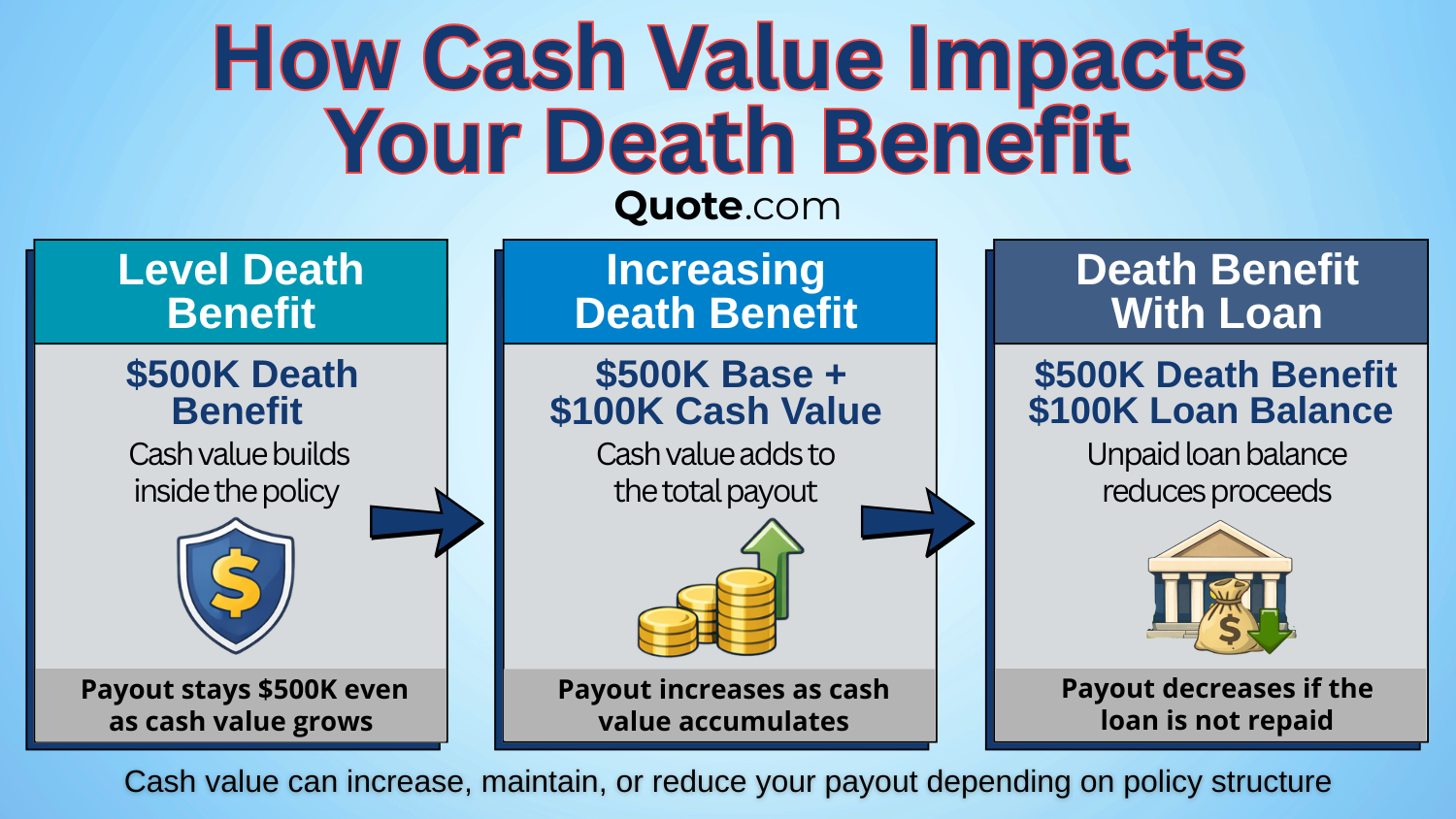
Whole life insurance cash value grows on a tax-deferred basis, meaning policyholders do not pay annual income taxes on the interest or dividends credited to the policy. Furthermore, policyholders can access this cash value during their lifetime through policy loans. When structured correctly as a loan against the policy—rather than a direct withdrawal—the cash value remains in the policy continuing to earn dividends and interest, while the borrowed funds are received income-tax-free.
Liquidity and Asset Protection
Unlike qualified retirement accounts such as traditional IRAs or 401(k)s, whole life insurance cash value does not carry early withdrawal penalties from the federal government prior to age 59½. This makes the cash value an accessible emergency fund or capital reserve for business opportunities, real estate acquisitions, or personal investments. Additionally, depending on state jurisdiction, life insurance cash values often enjoy substantial protection from creditors and legal judgments.
| Feature | Standard Whole Life Policy | High Cash Value / Low Death Benefit Policy |
|---|---|---|
| Primary Objective | Maximum permanent death benefit protection. | Maximum cash accumulation and liquidity. |
| Premium Allocation | Higher percentage allocated to cost of insurance (COI). | Maximized allocation to cash value via PUA riders. |
| Early Cash Value Growth | Slow; often takes 7 to 10 years to break even. | Rapid; can achieve cash surrender parity much sooner. |
| Death Benefit Size | Large relative to premiums paid. | Minimized to the IRS statutory minimum (Corridor Test). |
| Underwriting Focus | Mortality risk and longevity. | Financial qualification and MEC limit compliance. |
Evaluating Potential Drawdowns and Risks
Despite the structural benefits, high cash value whole life insurance is not suitable for every financial plan. A thorough evaluation requires examining the constraints and potential downsides.
Opportunity Cost and Returns
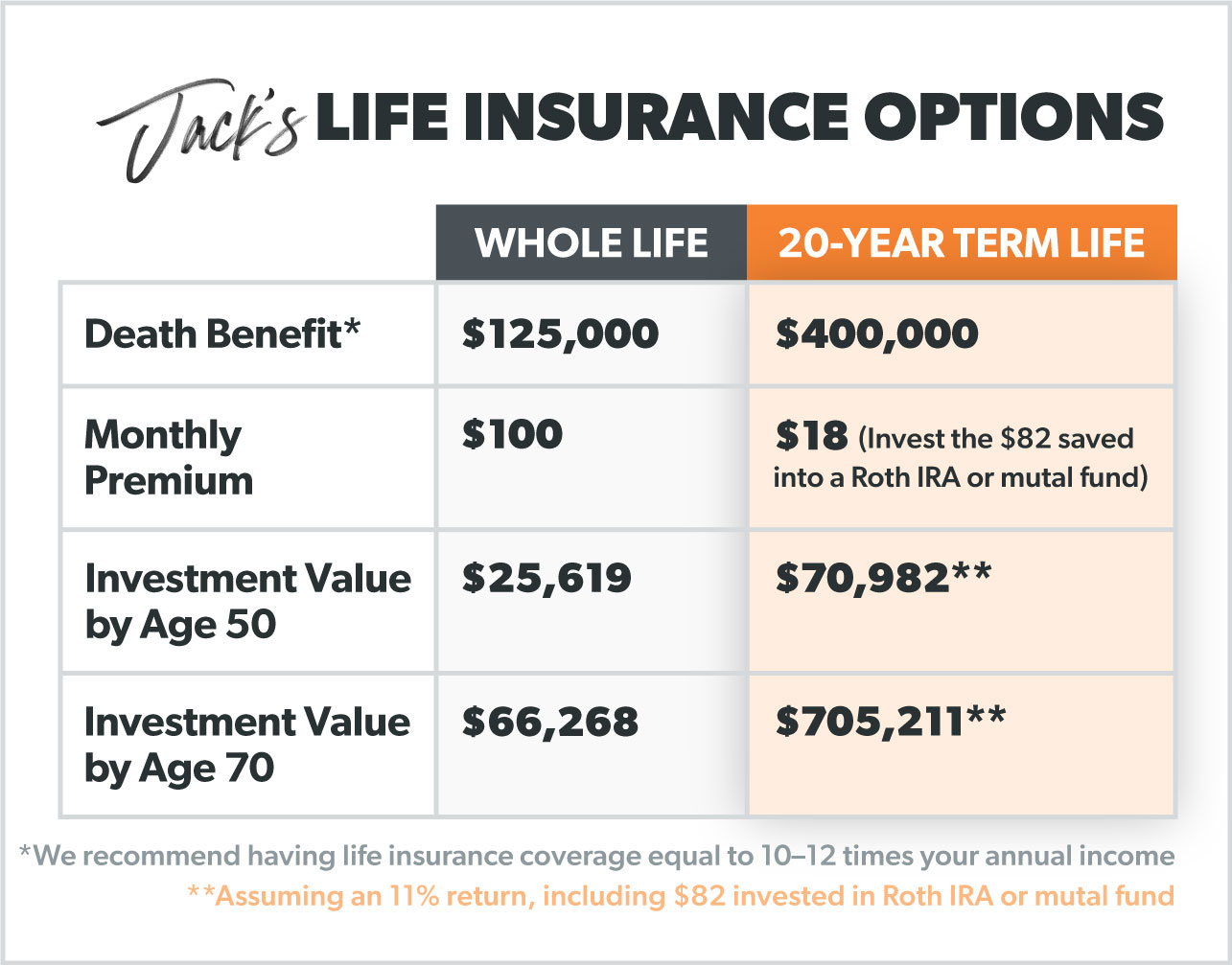
Whole life policies are conservative financial instruments backed by the general accounts of mutual life insurance companies, which typically invest heavily in high-grade corporate bonds, commercial mortgages, and government securities. The net internal rate of return, particularly after accounting for early-year fees and insurance costs, is generally lower than the historical long-term average of broad equity markets. Policyholders trade higher potential equity returns for capital preservation, downside protection, and guaranteed liquidity.
Ongoing Premium Commitments
Whole life insurance is a long-term contractual obligation. While PUA riders offer flexibility to reduce optional funding in certain years, the base premium is mandatory. Failing to pay the scheduled premiums can lead to policy lapse or forced reduction, which can trigger severe tax consequences if the policy has outstanding loans exceeding the basis. Consequently, these policies require stable, predictable cash flow to fund properly over a multi-year horizon.
Mutual Companies and Dividend Performance
When selecting an insurer for a high cash value design, the choice of company is critical. Policies are typically structured through mutual insurance companies rather than stock-owned companies. Mutual companies are owned by their policyholders rather than outside shareholders.
This corporate structure often translates into the distribution of annual dividends to eligible policyholders. While dividends are never legally guaranteed by insurance carriers, top-tier mutual companies possess multi-decade track records of paying continuous dividends through various economic cycles. These dividends can be directed back into the policy via paid-up additions, further compounding the cash value growth engine.
Common Strategic Applications
High cash value low death benefit whole life insurance is frequently deployed within specific advanced financial strategies:
- Infinite Banking Concept (IBC): Using the policy cash value as a personal financing system to fund major purchases, eliminating the need to rely on traditional commercial lenders.
- Estate Liquidity: Providing immediate, tax-free liquidity to cover estate taxes, probate fees, or unequal inheritance distributions without forcing the liquidation of illiquid real estate or business assets.
- Corporate Balance Sheet Management: Businesses utilizing corporate-owned life insurance (COLI) to build liquid reserves that can offset executive benefit liabilities or serve as collateral for commercial operating lines of credit.
Frequently Asked Questions
What happens if my cash value exceeds the legal death benefit ratio?
If cash accumulation pushes the policy past the limits defined by Internal Revenue Code Section 7702, the policy automatically classifies as a Modified Endowment Contract (MEC). Once a policy becomes an MEC, any withdrawals or policy loans are treated as taxable income first (Last-In, First-Out rule) rather than a return of basis, and a 10% federal penalty tax may apply to distributions taken before age 59½. Experienced policy designers monitor this threshold closely to prevent unintentional MEC status.
Can I change a standard whole life policy into a high cash value policy later?
Generally, you cannot retroactively alter the structural design of an existing base policy once it has been issued. Transitioning to a high cash value structure typically requires purchasing a new policy specifically engineered with minimum base sizing and maximum PUA riders, or executing a tax-free 1035 exchange from the existing policy into a newly optimized contract, subject to new underwriting and surrender charge periods.
Are the dividends paid on whole life policies taxable?
No. Dividends paid by a mutual life insurance company are legally classified by the IRS as a return of premium (a refund of overcharged insurance costs) rather than taxable income, provided the cumulative dividends do not exceed the total cost basis of the policy. If dividends are left on deposit with the insurer to earn interest, the interest earned on those dividends is taxable annually.
How long does it take for a high cash value policy to break even?
The break-even point—where the cash surrender value equals or exceeds the total cumulative premiums paid—varies based on the carrier, the insured's age, and the exact rider configuration. While traditional whole life policies often take 7 to 12 years to break even, highly optimized high cash value designs with efficient PUA allocations can frequently achieve break-even status within 3 to 5 years.
What is Section 7702 and why does it matter?
Section 7702 of the Internal Revenue Code defines what legally qualifies as life insurance versus an ordinary investment account. To maintain tax-advantaged status, the law requires a corridor between the cash value and the death benefit. If a policy fails this test, it loses its tax-free growth and distribution benefits, making compliance essential during the design phase.
Next Steps for Prospective Policyholders
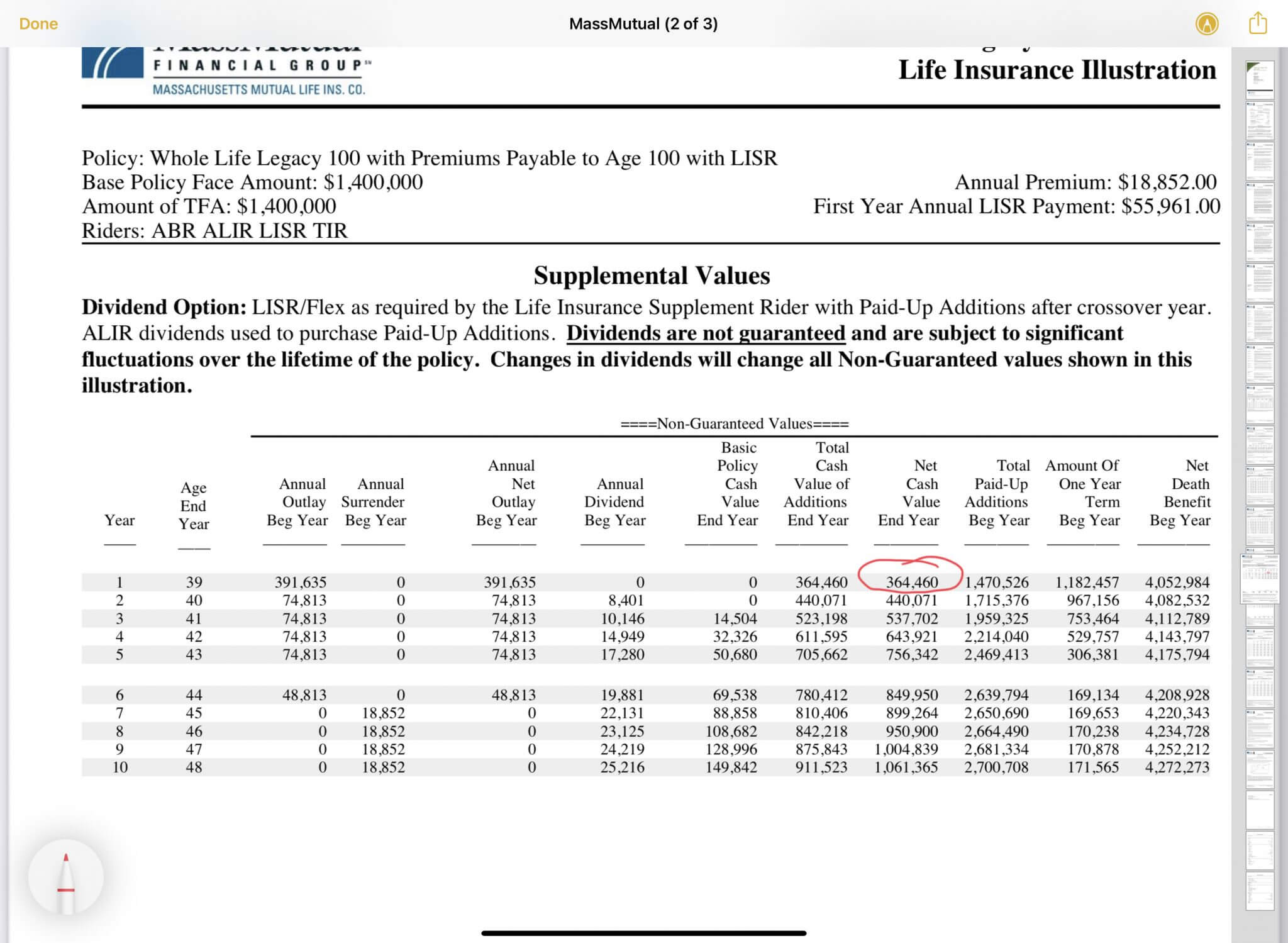
Before committing capital to a high cash value low death benefit whole life insurance policy, conduct a comprehensive cash flow analysis to ensure long-term premium commitments are sustainable without financial strain. Request detailed, year-by-year ledger illustrations from multiple mutual insurance carriers, paying close attention to guaranteed versus non-guaranteed cash value projections, internal expense loads, and historical dividend performance. Consult with an independent financial professional or fee-based fiduciary who specializes in permanent insurance structuring to verify that the policy design aligns precisely with your broader wealth management objectives.
Image Gallery