Why Is Claude Free? Understanding Anthropic’s Strategy and Access in 2026
Claude is free to use because Anthropic employs a "freemium" business model designed to lower the barrier to entry for advanced artificial intelligence. By providing a no-cost tier, Anthropic gains valuable interaction data to refine i...
Claude is free to use because Anthropic employs a "freemium" business model designed to lower the barrier to entry for advanced artificial intelligence. By providing a no-cost tier, Anthropic gains valuable interaction data to refine its safety protocols, builds brand loyalty in a competitive market, and creates a clear conversion path for users who eventually require the higher limits and advanced features found in paid subscriptions.
Contents
As we move through 2026, the landscape of generative AI has shifted from novelty to a standard utility. Anthropic, the safety-focused AI research company, continues to offer its flagship model, Claude, to the public without a mandatory subscription fee. This strategy is not merely an act of corporate altruism but a calculated move involving market positioning, technical feedback loops, and infrastructure partnerships. Understanding the "why" behind Claude’s free access requires looking at how AI companies balance massive operational costs against the need for long-term growth.
The Freemium Model: Scaling Through Accessibility
The primary reason Claude remains free is the "freemium" SaaS (Software as a Service) model. In this framework, a core version of the product is offered at no cost to build a massive user base, while premium features are locked behind a paywall. For Anthropic, the free tier serves as the most effective marketing tool available.
Building a User Habit
By allowing users to interact with Claude for free, Anthropic integrates its technology into the daily workflows of millions of people. Whether it is a student summarizing a research paper or a developer debugging a snippet of code, the free tier ensures that Claude becomes a "top of mind" tool. Once a user becomes accustomed to Claude’s specific writing style, reasoning capabilities, and "Constitutional AI" safeguards, they are less likely to switch to a competitor.
The Conversion Funnel
The free tier acts as the top of a conversion funnel. While many users will never pay for AI, a significant percentage—power users, freelancers, and small business owners—eventually hit the "usage limits" of the free version. When a user finds that Claude significantly boosts their productivity, the jump to a paid tier like Claude Pro or Claude Team becomes a logical business expense rather than a luxury. This revenue from paid subscribers helps subsidize the compute costs for the free user base.
Data Collection and Model Refinement
In the AI industry, user interaction is a form of currency. Every prompt and subsequent correction provided by a free user serves as a data point for future model training. This is particularly crucial for Anthropic's specific mission of "AI Safety."
Reinforcement Learning from Human Feedback (RLHF)
Anthropic utilizes a process called Reinforcement Learning from Human Feedback (RLHF) to make Claude more helpful, honest, and harmless. By offering the model for free, Anthropic gains access to a diverse range of prompts across hundreds of languages and thousands of use cases. When a user "thumbs down" a response or provides a follow-up correction, they are effectively helping Anthropic’s engineers identify edge cases where the model might hallucinate or provide biased information.
Testing "Constitutional AI"
Anthropic is pioneer of "Constitutional AI," a method where the model is trained to follow a specific set of rules (a "constitution") to guide its behavior. Free users act as a global testing group for these safety guardrails. Monitoring how the free model handles complex ethical queries or attempted "jailbreaks" allows Anthropic to harden the model's defenses before deploying more powerful versions to enterprise and government clients.
Competitive Positioning Against AI Giants
The AI market in 2026 is hyper-competitive, with major players like OpenAI (ChatGPT), Google (Gemini), and various open-source initiatives vying for dominance. If Anthropic were to charge for Claude immediately, they would likely lose significant market share to these competitors who also offer free tiers.
Parity with Market Standards
Free access has become the industry standard. When OpenAI introduced a free tier for its GPT models, it set a precedent that others had to follow to remain relevant. Anthropic maintains a free version of Claude to ensure it stays in the conversation alongside the most popular AI assistants. If a user can get world-class reasoning for free elsewhere, Anthropic must provide a comparable entry point to showcase why their model might be superior in nuance or safety.
Brand Differentiation
Anthropic positions itself as the "thoughtful" and "safe" alternative to other AI models. Offering a free tier allows the company to demonstrate these values to the public. By making high-level intelligence accessible to everyone, regardless of their ability to pay, Anthropic bolsters its reputation as a company that cares about the democratization of AI, which is a powerful narrative in the current tech climate.
Strategic Partnerships and Infrastructure
Running a model as complex as Claude requires an immense amount of computational power. A common question is how Anthropic can afford to give away such an expensive resource. The answer lies in their multi-billion dollar partnerships.
The Role of Amazon and Google
Anthropic has received massive investments from tech giants, most notably Amazon and Google. These partnerships are often tied to cloud computing credits. By using Amazon Web Services (AWS) or Google Cloud infrastructure, Anthropic can scale its free tier more efficiently. These investors are willing to back Anthropic’s free tier because it drives traffic to their respective cloud ecosystems and ensures that one of the world's leading AI models is optimized for their hardware (such as AWS Trainium and Inferentia chips).
Cost Reduction through Optimization
Over the last few years, leading up to 2026, the "cost per inference" (the cost of generating a single response) has plummeted. Through techniques like model distillation—where a smaller, faster model is trained to mimic the behavior of a larger one—Anthropic can offer a "Claude Instant" or a "Haiku" level of performance to free users at a fraction of the cost of their frontier models. This allows them to maintain a free tier without it becoming a financial drain on the company.
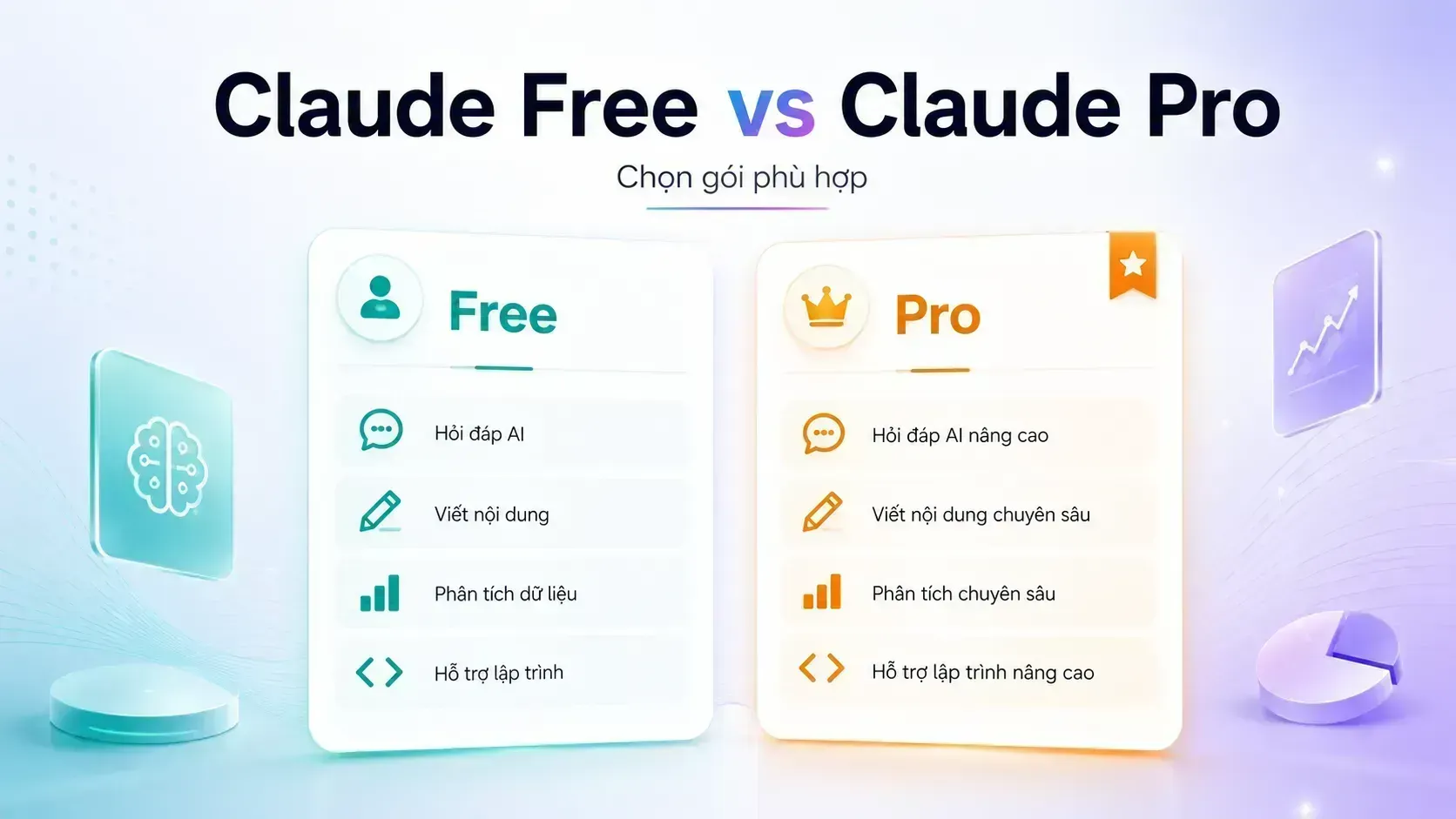
Claude Tier Comparison: Free vs. Paid (2026 Standards)
To understand what you get for free, it is helpful to compare the different access levels available in 2026.
| Feature | Claude Free | Claude Pro | Claude Team |
|---|---|---|---|
| Model Access | Latest optimized model (e.g., Claude 3.5/4) | Full access to all models, including Frontier | Full access + early access to new features |
| Usage Limits | Standard daily limits (resets every 24h) | 5x more usage than the free tier | Higher limits for collaborative work |
| Context Window | Standard (approx. 200k tokens) | Expanded context for large documents | Enterprise-grade context management |
| Feature Set | Artifacts, basic file uploads | Projects, custom instructions, priority access | Admin console, team billing, shared projects |
| Support | Community-based | Priority email support | Dedicated account management |
| Cost | $0/month | $20/month | $30/user/month (min. 5 users) |
Limitations of the Free Tier: The Trade-offs
While Claude is free, it is not "unlimited." There are specific constraints designed to manage server load and incentivize upgrades.
- Message Quotas: Free users have a set number of messages they can send within a specific timeframe (usually 24 hours). Once this limit is reached, users must wait for the quota to reset or upgrade to Claude Pro.
- Peak Hour Throttling: During times of extreme demand, free users may experience slower response times or temporary lockouts as Anthropic prioritizes its paying subscribers.
- Advanced Feature Gating: While features like "Artifacts" (the ability to view code or websites in a side-by-side window) are often available to free users, more advanced tools like "Projects" (which allow users to upload entire knowledge bases for Claude to reference) are typically reserved for Pro and Team tiers.
FAQs
Is my data safe when using the free version of Claude?
Anthropic maintains high privacy standards for both free and paid users. However, by default, data from the free tier may be used to improve their models unless you opt-out or are using a specific enterprise implementation. It is important to review Anthropic's current 2026 Privacy Policy, as they allow users to control whether their conversations help train future versions of the AI.
Why does Claude sometimes tell me I've reached my limit?
This happens because providing AI responses requires significant GPU (Graphics Processing Unit) resources. To ensure that the service remains available to as many people as possible, Anthropic caps the number of messages a free user can send. These limits can fluctuate based on current server demand.
Can I use the free version of Claude for business?
Yes, you can use the free version for business tasks such as writing emails, drafting reports, or brainstorming. However, you will likely find the message limits restrictive for full-time professional use. For teams, the Claude Team tier offers better security and collaborative features that the free tier lacks.
Will Claude always be free?
While Anthropic has not committed to a permanent free tier, the current market dynamics of 2026 suggest that a free "entry-level" version is essential for user acquisition. It is likely that a free version will persist, though the specific model used (e.g., a "Haiku" or "Sonnet" equivalent) may change as newer, more powerful models are released.
Does the free version of Claude have the same "intelligence" as the paid version?
Generally, yes. Anthropic often provides its latest "Sonnet" or "mid-tier" model to free users, which is highly capable. However, the "Frontier" model (the most powerful version currently available, such as Claude 4 Opus in 2026) is frequently reserved for paying subscribers due to the extreme costs associated with running it.
Recommendation for Users
If you are a casual user looking for high-quality writing and logical reasoning, the free tier of Claude is currently one of the best values in the AI space. To make the most of it, try to consolidate your prompts to save your message quota. For those who find themselves relying on Claude for more than three hours a day or who need to upload massive amounts of data, upgrading to Claude Pro is the recommended next step to unlock the full potential of the platform.
Image Gallery