Understanding Leadership ATI in Higher Education: A Comprehensive Guide for Nursing Success
Leadership ATI in higher education refers to a specialized curriculum module and proctored assessment developed by the Assessment Technologies Institute (ATI) to prepare nursing students for management roles and the NCLEX-RN licensure...
Leadership ATI in higher education refers to a specialized curriculum module and proctored assessment developed by the Assessment Technologies Institute (ATI) to prepare nursing students for management roles and the NCLEX-RN licensure exam. It focuses on delegating tasks, prioritizing patient care, and navigating the legal and ethical complexities of clinical environments.
Contents
In the landscape of modern nursing education, technical clinical skills are only half of the equation. As we move through 2026, the demand for nurses who can function as effective unit managers and interprofessional collaborators has never been higher. Higher education institutions utilize the ATI Leadership module to bridge the gap between being a competent clinician and becoming a resilient leader. This guide explores the structure, core competencies, and strategic importance of the ATI Leadership framework within the nursing curriculum.
The Role of ATI Leadership in Nursing Curricula
Nursing programs in higher education are increasingly pressurized to produce "practice-ready" graduates. The ATI Leadership module is an integrated component of many Bachelor of Science in Nursing (BSN) and Associate Degree in Nursing (ADN) programs. It serves as both a teaching tool and a high-stakes assessment that predicts a student’s ability to manage care effectively under the Next Generation NCLEX (NGN) standards.
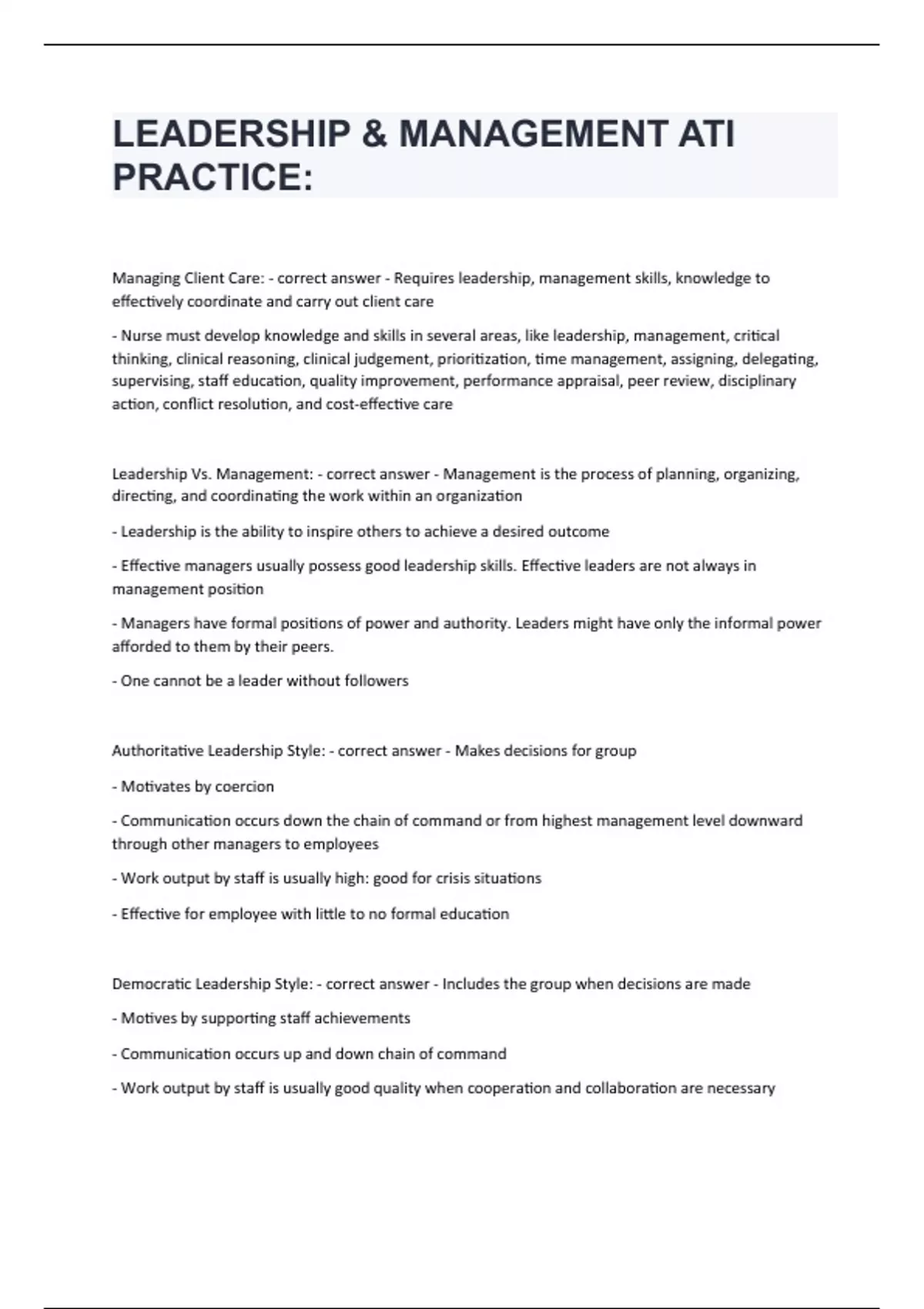
Institutions use ATI Leadership to standardize the teaching of "soft skills," which are often the hardest to quantify. These include conflict resolution, time management, and the ethical allocation of resources. By using a standardized platform, universities can compare their students' performance against national benchmarks, ensuring that their curriculum meets the rigorous demands of the healthcare industry. For students, it provides a structured path to mastering the non-clinical aspects of nursing that are critical for patient safety and organizational efficiency.
Core Competencies of the Leadership ATI Framework
The ATI Leadership assessment is not a generic management test; it is deeply rooted in the clinical realities of nursing. To succeed, students must master several specific domains that higher education faculty prioritize during the final semesters of a nursing program.
Prioritization and Care Management
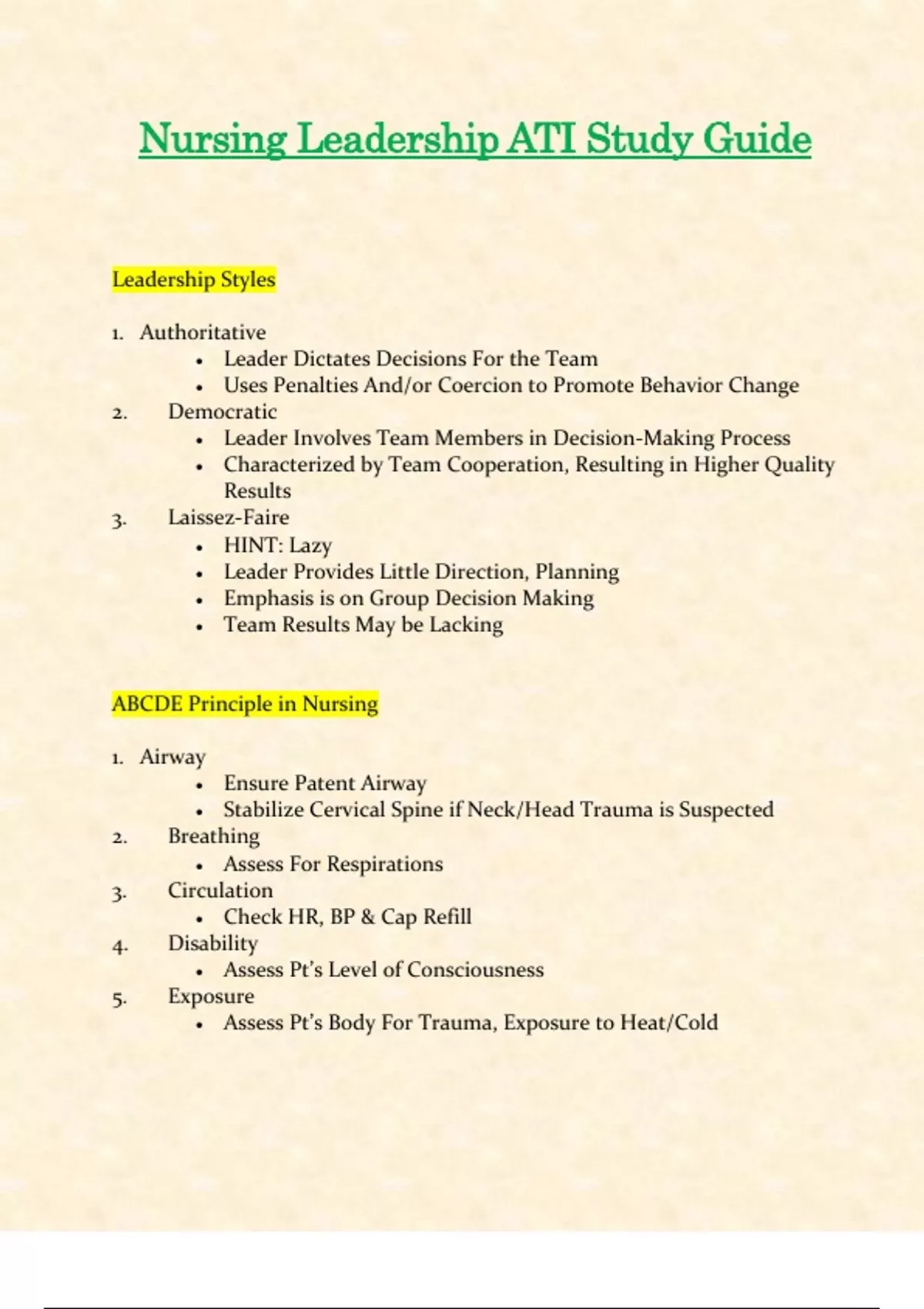
At the heart of the ATI Leadership module is the ability to prioritize care for multiple patients. Students are tested on their ability to use frameworks such as Maslow’s Hierarchy of Needs, the ABC (Airway, Breathing, Circulation) framework, and the distinction between acute and chronic conditions. In a clinical setting, a leader must decide which patient to see first and which intervention is the most time-critical. ATI forces students to move beyond "what is wrong" to "what needs to happen first."
The Five Rights of Delegation
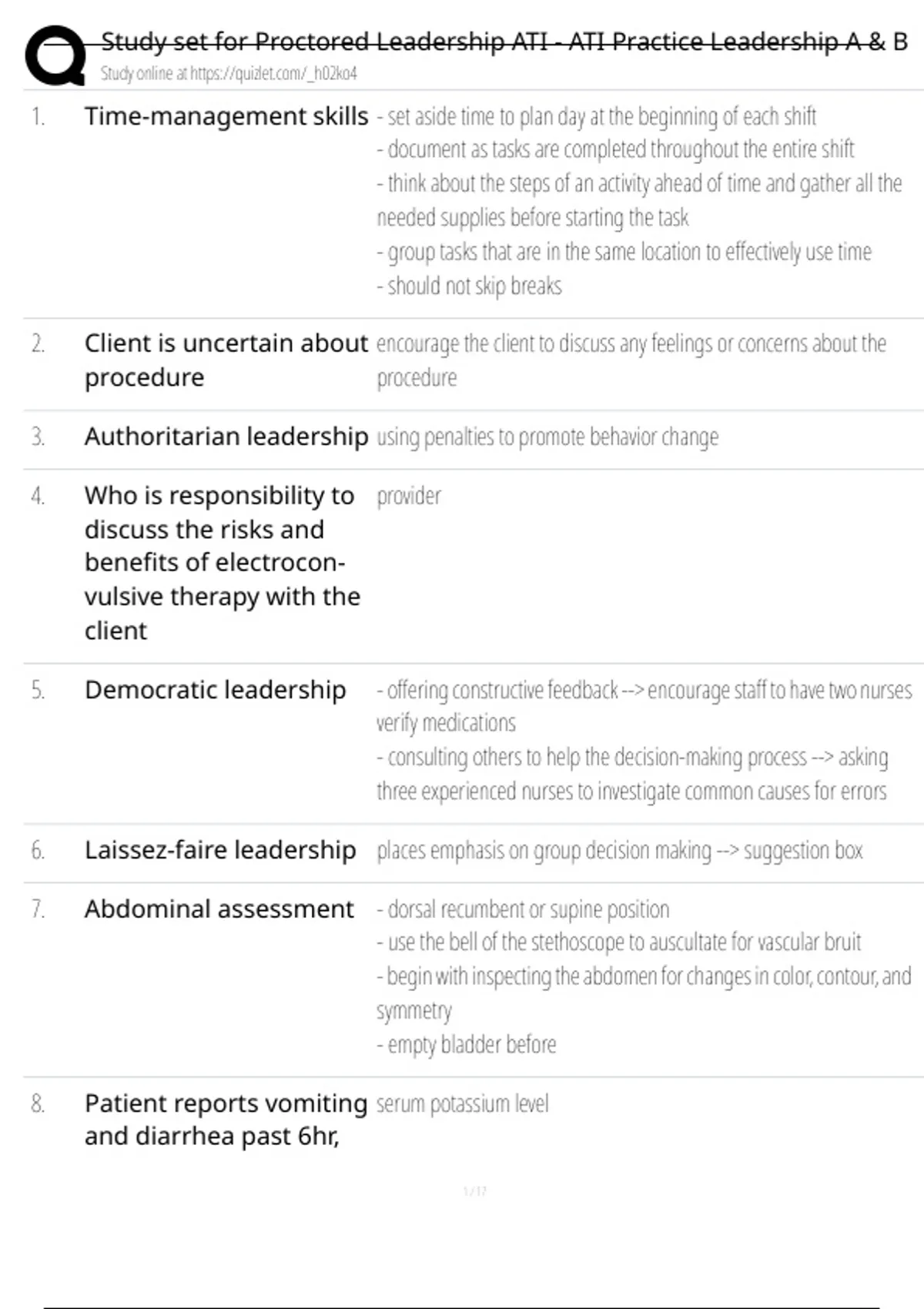
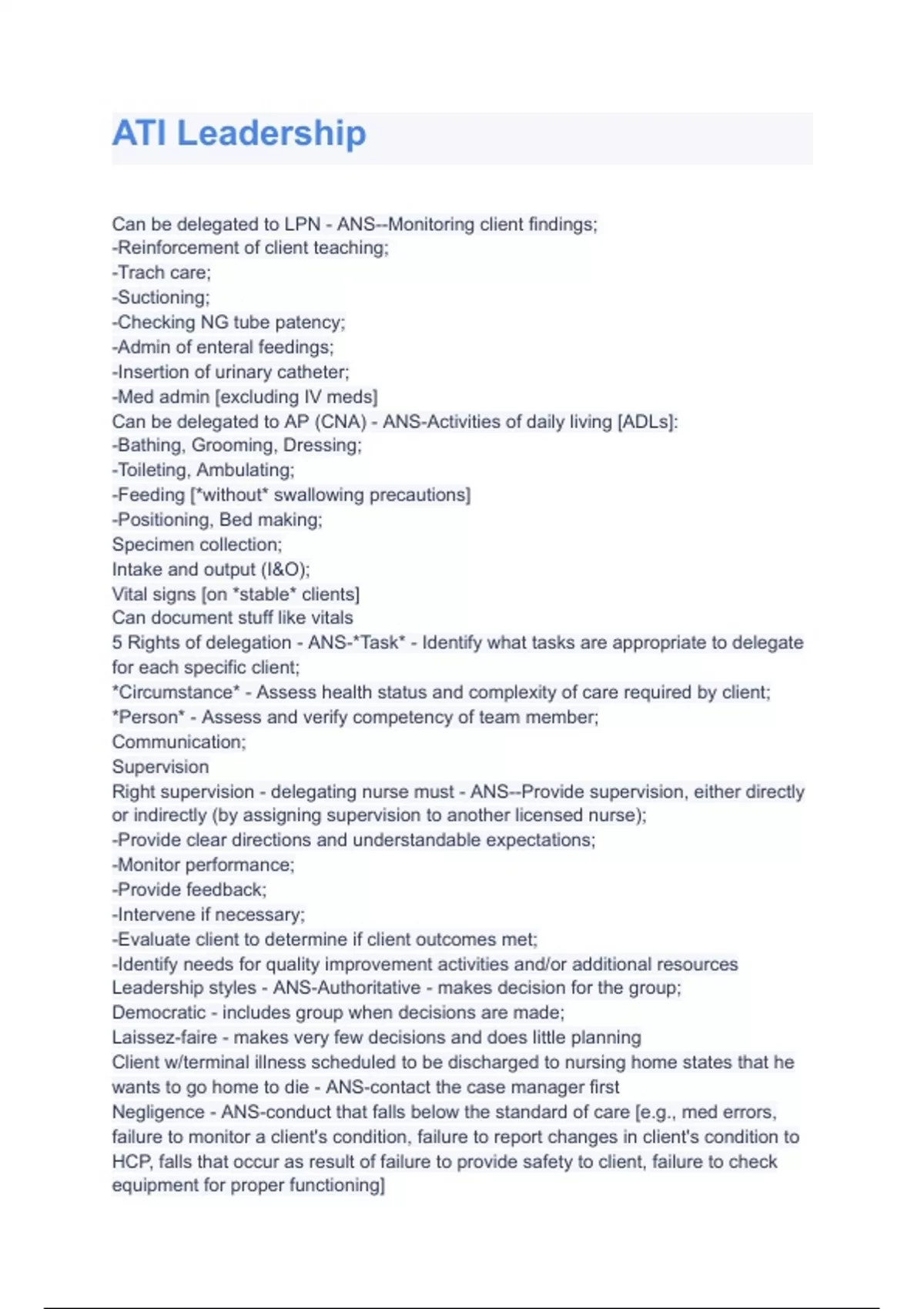
Delegation is one of the most challenging skills for new nurses to acquire. The ATI Leadership content emphasizes the Five Rights of Delegation: the right task, the right circumstance, the right person, the right direction or communication, and the right supervision or evaluation. Students must understand the scope of practice for Licensed Practical Nurses (LPNs) and Assistive Personnel (AP). Mismanagement in this area is a leading cause of medical errors, making this a high-priority topic in higher education assessments.
Legal and Ethical Frameworks
Leadership ATI requires a sophisticated understanding of nursing jurisprudence. This includes concepts such as Informed Consent, the Emergency Medical Treatment and Labor Act (EMTALA), and the Patient Self-Determination Act. Ethically, students are evaluated on their application of autonomy, beneficence, non-maleficence, and justice. In 2026, as healthcare technology and telehealth expand, understanding these legal boundaries is essential for any nurse moving into a leadership or supervisory capacity.
Technical Access and Platform Integration
Accessing the ATI Leadership modules is typically done through the institution's student portal. Most nursing programs bundle ATI services into their tuition or laboratory fees. Once a student is enrolled, they gain access to a suite of tools including:
- Online Practice Assessments: These are non-proctored exams that students can take multiple times to identify weaknesses.
- Learning Modules (Tutorials): Interactive lessons that break down management theories and clinical scenarios.
- The Proctored Assessment: This is the formal exam administered by the university, usually towards the end of the leadership or "capstone" course.
Higher education administrators monitor "Pulse Reports" within the ATI platform to track student progress. This data-driven approach allows faculty to intervene early if a cohort is struggling with specific concepts like quality improvement or interprofessional collaboration. For students, the platform provides a personalized "Focused Review," which creates a custom study plan based on the questions they missed during practice sessions.
Scoring and Proficiency Levels
Understanding how ATI scores are interpreted is vital for students in higher education. Unlike traditional grading scales where a 90% is an A, ATI uses Proficiency Levels to categorize student readiness.
| Proficiency Level | Description | Recommended Action |
|---|---|---|
| Level 3 | Exceeds NCLEX standards; demonstrates high level of competency. | Continue maintenance; focus on complex case studies. |
| Level 2 | Meets NCLEX standards; represents the "Target" for most students. | Remediation of specific missed topics. |
| Level 1 | Below NCLEX standards; significant gaps in knowledge. | Intensive remediation and mandatory faculty consultation. |
| Below Level 1 | Does not meet basic standards. | Comprehensive re-learning of the module content. |
In many nursing programs, achieving a Level 2 is required to pass the leadership course. Level 3 is often the goal for students aiming for competitive residency programs, as it demonstrates an advanced grasp of clinical judgment and management.
Effective Study Strategies for the Proctored Exam
Success in Leadership ATI requires a shift in mindset from clinical tasks to systems thinking. Students often fail because they answer questions based on what they would do as a bedside nurse, rather than what they should do as a charge nurse or manager.
- Utilize the Focused Review: After taking a practice exam, do not just look at the score. Spend time in the Focused Review, which links directly to the ATI eBook. This is the most efficient way to close knowledge gaps.
- Practice Delegation Scenarios: Create a matrix of tasks that can be delegated to LPNs and APs. Remember that "E-A-T" (Evaluation, Assessment, and Teaching) cannot be delegated by the RN.
- Understand Conflict Resolution Styles: Be able to distinguish between avoiding, accommodating, competing, compromising, and collaborating. The ATI exam frequently uses scenarios where a nurse manager must choose the most effective style for a specific team dynamic.
- Focus on Quality Improvement (QI): Study the steps of the QI process, including data collection and the implementation of new protocols. This is a heavy focus of the 2026 NCLEX standards.
Leadership ATI vs. The Next Generation NCLEX (NGN)
While the ATI Leadership module is a standalone educational tool, its primary purpose in higher education is to serve as a predictor for NCLEX success. The NGN, which was fully integrated into nursing licensure by 2026, emphasizes Clinical Judgment. The Leadership ATI has evolved to match this, moving away from simple recall questions to complex case studies.
In a traditional management course, you might learn the history of leadership theory (e.g., Trait Theory vs. Situational Leadership). While ATI covers these, it spends significantly more time on Safety and Infection Control, Resource Management, and Continuity of Care. These are the categories that the National Council of State Boards of Nursing (NCSBN) identifies as critical for safe entry-level practice.
Professional Growth and the Transition to Practice
The utility of the ATI Leadership module extends beyond the classroom. As students enter the workforce in 2026, the principles learned—such as advocacy and time management—become daily realities. Modern healthcare environments are characterized by high acuity and rapid turnover, making the leadership skills honed through ATI indispensable.
Higher education institutions that emphasize the Leadership ATI module often see higher job placement rates for their graduates in specialty areas like the ICU or Emergency Department. This is because these units require immediate leadership presence and the ability to prioritize under pressure. By mastering the ATI content, students prove they are not just capable of following orders, but are prepared to lead a multidisciplinary team to improve patient outcomes.
Frequently Asked Questions
What is the most important topic in Leadership ATI?
Delegation and prioritization are consistently the most heavily weighted topics. Students must know exactly what tasks are appropriate for different members of the healthcare team and how to use clinical judgment frameworks to rank patient needs.
Is the ATI Leadership Proctored Exam hard?
It is considered one of the more challenging ATI exams because it requires a high level of critical thinking. Unlike pharmacology or fundamentals, which are more fact-based, leadership questions are situational and often have multiple "correct" answers where one is the most appropriate.
How does the ATI score affect my grade in university?
This varies by institution. Most nursing programs in higher education assign a percentage of the total course grade to the ATI proctored exam score. Achieving a Level 2 or Level 3 often earns the student full "ATI points" for that semester.
Can I use ATI Leadership to prepare for the NCLEX?
Yes, it is one of the best tools for the "Management of Care" section of the NCLEX, which typically makes up 17% to 23% of the total exam questions.
What should I do if I score a Level 1?
Do not panic. A Level 1 indicates you have some knowledge but need to refine your clinical judgment. Use the "Focused Review" tool on the ATI website to spend at least 2–4 hours reviewing the specific chapters associated with your missed questions before attempting a retake.
Final Recommendation
To maximize the benefits of Leadership ATI in your higher education journey, treat the practice assessments as "real" exams. Do not use outside resources while taking them. Once completed, dedicate significant time to the Active Learning Templates provided by ATI. These templates help you organize information about legal issues, delegation, and management styles in a way that promotes long-term retention. By the time you reach your proctored assessment, these leadership frameworks should be second nature, allowing you to transition seamlessly from a student to a professional nurse leader.
Image Gallery