Canada Health Care Explained for Small Businesses
Canada’s public health care system covers essential physician and hospital services, but it does not pay for prescription drugs, dental care, vision care, registered massage therapy, chiropractic treatment, or private hospital rooms. F...
Canada’s public health care system covers essential physician and hospital services, but it does not pay for prescription drugs, dental care, vision care, registered massage therapy, chiropractic treatment, or private hospital rooms. For small business owners, understanding how these coverage gaps intersect with provincial regulations, federal tax laws, and employee expectations is vital for building a competitive compensation package. Because statutory public plans—such as the Ontario Health Insurance Plan or Alberta Health Care Insurance Plan—leave these ancillary medical expenses to private payers, employers must navigate a distinct landscape of group insurance plans and Private Health Services Plans to support their workforce while optimizing their corporate tax strategy.
Contents
Understanding the Landscape of Canadian Health Care
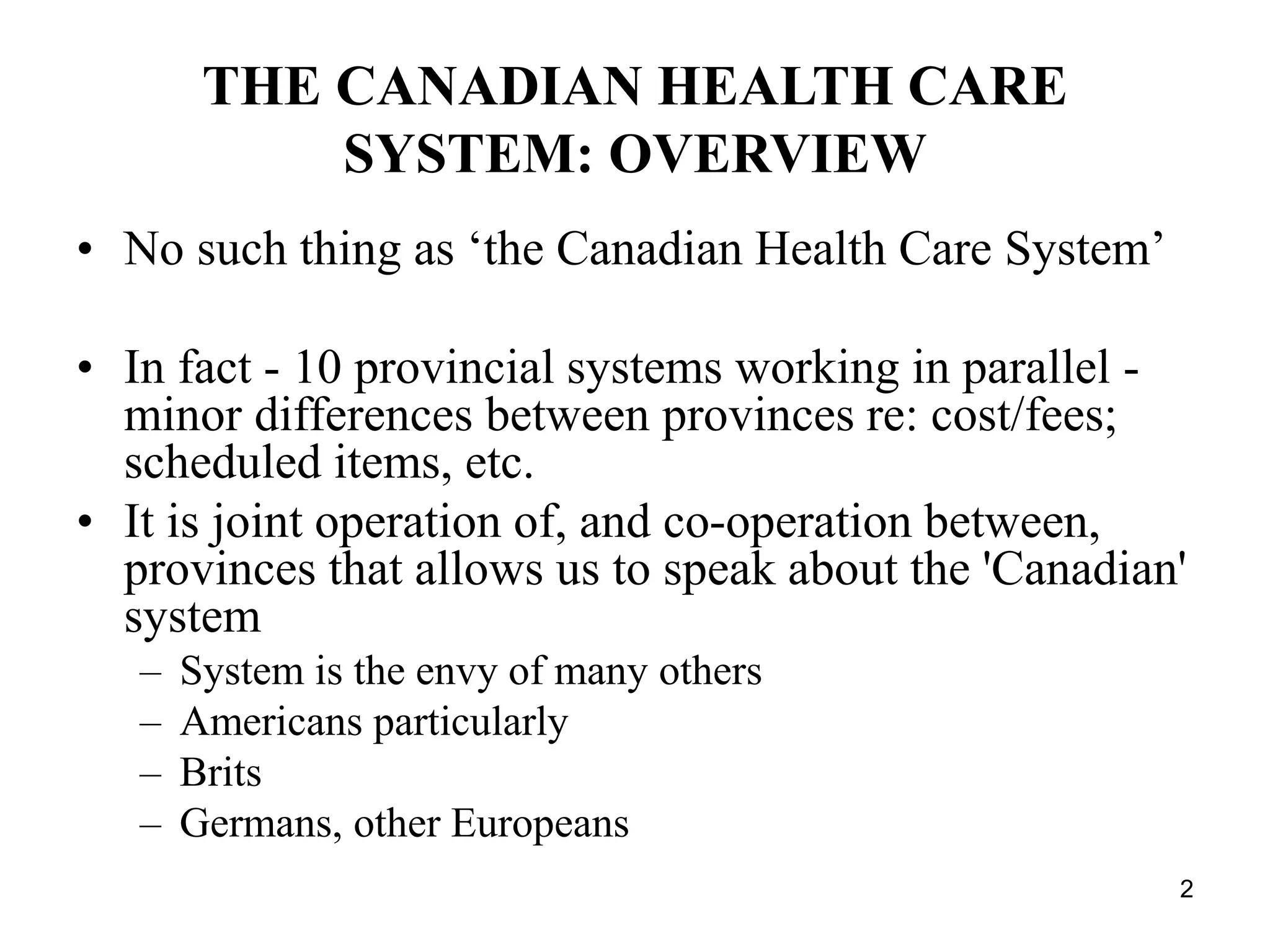
The Canadian health care framework is defined by the Canada Health Act, a federal statute that sets out the criteria and conditions for provincial and territorial health insurance plans to receive federal transfer payments. Under this framework, medically necessary hospital and physician services are publicly funded and universally accessible to residents without direct out-of-pocket user fees at the point of service. However, the legislation does not mandate public coverage for out-of-hospital prescription medications, dental procedures, optometry for adults, or paramedical services.
These supplementary health services form the foundation of private the health benefits market in Canada. While large corporations often deploy traditional, fully-insured group benefit plans with complex underwriting and fixed monthly premiums, small businesses face unique financial vulnerabilities. An unexpected major health claim in a small group can dramatically spike renewal rates the following year. Consequently, small business owners must evaluate their risk tolerance, cash flow stability, and recruitment needs before selecting a mechanism to fund supplemental health care for their employees.
Traditional Group Insurance vs. Private Health Services Plans (PHSPs)
When structuring health benefits, Canadian small business owners typically choose between traditional fully-insured group insurance and a Private Health Services Plan, commonly structured as a Health Spending Account. Each model operates under entirely different financial mechanics, risk profiles, and tax treatments.
Traditional group insurance functions much like auto or property insurance. The business pays a fixed monthly premium per employee to an insurance carrier, regardless of whether employees use the medical services. If the company claims less than it pays in premiums, the insurer keeps the profit; if claims exceed premiums, the insurer absorbs the risk until the next annual rate renewal.
Conversely, a Private Health Services Plan operates on a reimbursement model governed strictly by Section 248(1) of the Canadian Income Tax Act. Under a PHSP, the business only pays out money when an eligible medical expense is actually incurred and submitted by an employee or owner. There are no monthly premiums, no rate hikes based on catastrophic claims, and complete budget predictability.
| Feature | Traditional Group Insurance | Health Spending Account (PHSP) |
|---|---|---|
| Cost Predictability | Fixed monthly premiums that fluctuate annually based on claims history. | 100% predictable; costs are limited to actual claims plus modest administration fees. |
| Coverage Scope | Broad mix of medical, dental, life, and accidental death and dismemberment (AD&D). | Flexible reimbursement for a wide array of Canada Revenue Agency-approved medical expenses. |
| Risk Profile | High risk of sudden rate spikes for small groups experiencing high utilization. | Zero underwriting risk; the employer dictates the maximum annual contribution limit. |
| Tax Treatment | Premiums are generally tax-deductible as a business expense and generally non-taxable to employees. | 100% of reimbursements are tax-deductible for the corporation and completely tax-free to the employee. |
| Suitability | Best for stable businesses wanting predictable, comprehensive day-to-day coverage. | Best for unpredictable cash flows, sole proprietors, or micro-businesses seeking maximum flexibility. |
Tax Advantages and Regulations for Small Business Owners
The Canadian tax code provides significant incentives for business owners to fund health care benefits through corporate structures, provided the arrangements comply with Canada Revenue Agency guidelines. For incorporated businesses—including Canadian-Controlled Private Corporations—providing health benefits through a formal plan is an efficient way to extract corporate earnings on a pre-tax basis.
When a corporation pays for employee health benefits through a traditional insurance premium or a qualified PHSP, those expenditures are treated as a deductible business expense. In many corporate jurisdictions, these expenses reduce active business income, thereby lowering corporate income tax liabilities. Furthermore, unlike cash bonuses or salary increases, health benefit reimbursements are generally classified as non-taxable benefits for the employee under the Income Tax Act. This means the employee receives the full value of the medical reimbursement without having taxable income added to their T4 slips.
Sole proprietors and unincorporated small businesses operate under different restrictions. Because the Canada Revenue Agency does not view a sole proprietorship as a separate legal entity from the owner, the tax deduction rules for health benefits are more stringent. Unincorporated business owners often must look to personal medical expense tax credits on their individual tax returns rather than corporate deductions, though specific rules apply if they employ arm's length workers or establish structured trusts.
Choosing the Right Plan for Your Team Size and Budget
Designing a health care strategy requires balancing the specific health needs of your staff against the financial realities of your operating budget. Small businesses generally fall into three distinct operational tiers, each requiring a tailored approach to health benefits management.
Micro-Businesses (1 to 5 Employees)
For businesses with just a handful of workers, traditional group insurance is rarely cost-effective. Insurance carriers often impose high minimum participation rules and administrative fees that penalize very small groups. A Health Spending Account is frequently the optimal vehicle here. It allows owners to allocate a fixed annual dollar amount—for instance, $1,500 per employee—that workers can draw down for dental work, glasses, or prescriptions. This gives employees total autonomy over how they spend their health allocation while protecting the company from unexpected financial liability.
Growing Small Businesses (6 to 25 Employees)
As a business scales, employee demographics diversify. A hybrid model often yields the best results at this stage. Employers can combine a core, low-cost catastrophic insurance plan—which protects against major medical emergencies, long-term disability, and out-of-country medical expenses—with a complementary Health Spending Account. The insurance handles high-risk, low-frequency events, while the spending account absorbs predictable, everyday wellness costs.
Established Small Businesses (26 to 50+ Employees)
At this size, traditional fully-insured or administrative services only plans become economically viable. Insurers can spread risk across a larger pool of participants, leading to more stable pricing. Employers at this level often implement tiered benefit classes—distinguishing between management, full-time staff, and part-time workers—to manage costs while maintaining competitive recruitment advantages in tight labor markets.
Step-by-Step Implementation Guide
Establishing a corporate health benefit plan involves deliberate administrative steps to ensure full compliance with provincial insurance regulations and federal tax laws.
- Assess Workforce Demographics and Needs: Survey your employees anonymously to understand which medical services they value most. A young team may prioritize paramedical services and vision care, whereas an older demographic may require robust prescription drug and dental coverage.
- Establish a Realistic Budget: Calculate the maximum annual expenditure your cash flow can sustain. For traditional plans, request quotes from multiple group insurance brokers. For a Health Spending Account, determine the exact cap per employee class (e.g., $1,000 for single employees, $2,500 for employees with families).
- Draft the Plan Document: If implementing a PHSP or Health Spending Account, you must draft a formal written agreement that outlines eligibility criteria, eligible expense categories, claim submission deadlines, and maximum annual limits. This document must exist before any claims are incurred to satisfy Canada Revenue Agency compliance standards.
- Partner with a Third-Party Administrator or Insurer: Select a licensed broker, insurance carrier, or specialized PHSP administrator to manage claims adjudication, privacy compliance, and payout distributions. Avoid informal, self-administered reimbursement arrangements, as the Canada Revenue Agency routinely disallows deductions for informal plans that lack a true insurance risk transfer or formal trust structure.
- Onboard Employees: Distribute clear digital or print documentation explaining what is covered, how to submit receipts, and who to contact for customer support. Reiterate that all claims must qualify under the Income Tax Act guidelines.
Frequently Asked Questions
Are health benefits mandatory for small businesses in Canada?
No. Canadian labor codes and provincial employment standards do not legally require employers to provide supplemental health, dental, or life insurance benefits. Providing health benefits is entirely voluntary, though many employers use them as a tool to attract and retain talent in competitive job markets.
Can sole proprietors without employees set up a Health Spending Account?
Yes, provided the sole proprietor has incorporated their business as a Canadian-Controlled Private Corporation or uses a structured PHSP framework that accommodates incorporated independent contractors. However, pure unincorporated sole proprietors cannot deduct PHSP expenses in the same manner as corporations because they cannot employ themselves under tax law.
What types of medical expenses are eligible under a PHSP?
Eligible expenses generally mirror those approved for the federal Medical Expense Tax Credit under Section 118.2(2) of the Income Tax Act. This includes prescription drugs, registered dental treatments, prescription eyeglasses and contact lenses, professional fees for registered massage therapists, chiropractors, physiotherapists, and private ambulance services. Cosmetic procedures and over-the-counter medications without a doctor's prescription are generally excluded.
How do rate renewals work on traditional small business insurance plans?
Insurers review your group's claims utilization data annually. If your employees and their dependents file claims that exceed the premiums paid into the pool, the insurer will typically issue a rate increase for the subsequent year. Small groups are particularly susceptible to sharp rate jumps driven by a single high-cost medical claim within the pool.
Can different classes of employees receive different health benefit amounts?
Yes. Employers can legally establish different benefit classes—such as separating executives, hourly workers, and salaried staff—provided the classification criteria are based on objective business distinctions like job function, length of service, or employment status, rather than arbitrary discrimination.
Next Actions for Small Business Owners
To move forward effectively, review your current corporate tax filings and consult with a certified corporate accountant or licensed group insurance advisor. Ask them to run a comparative analysis showing the difference in cash-flow impact between a traditional fully-insured plan and a customized Health Spending Account tailored to your specific employee headcount. Establishing a compliant plan early protects your operational cash flow while delivering tangible financial value to your workforce.
Image Gallery