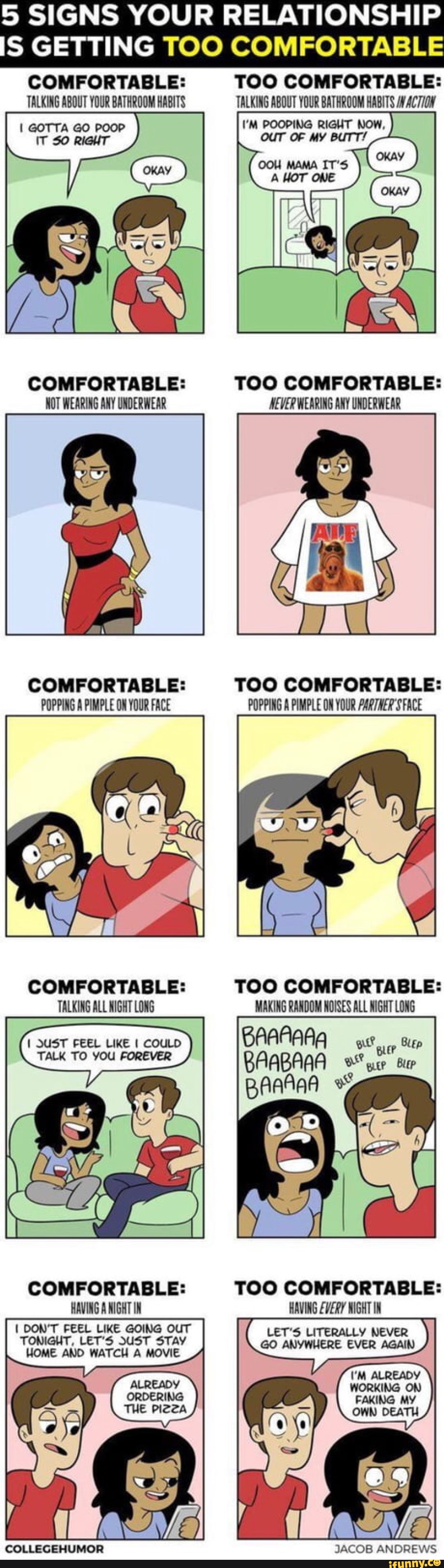
Signs He Is Getting Too Comfortable in the Relationship: Indicators of Complacency
Recognizing signs he is getting too comfortable involves distinguishing between healthy security and relationship complacency. While comfort indicates trust and emotional safety, complacency manifests as a lack of effort, decreased emo...
Recognizing signs he is getting too comfortable involves distinguishing between healthy security and relationship complacency. While comfort indicates trust and emotional safety, complacency manifests as a lack of effort, decreased emotional curiosity, and a stagnation of shared growth. If the "best version" of your partner has disappeared entirely, it may signal a shift from being settled to being stagnant.
Contents
The Psychological Shift from Security to Complacency
In the evolution of a long-term partnership, reaching a state of comfort is usually a milestone to be celebrated. It signifies that the "probationary period" of the relationship has ended, and both parties feel safe enough to be their authentic selves. However, in 2026, relationship experts distinguish between "secure attachment" and "emotional idling."
Complacency occurs when one partner stops "dating" their spouse or partner because they assume the relationship no longer requires maintenance. This is often driven by the "arrival fallacy"—the mistaken belief that once a relationship goal is reached (moving in, marriage, or a certain anniversary), the work is done. When a man becomes too comfortable in a way that leads to complacency, he stops investing in the emotional bank account, assuming the balance will remain high without further deposits.
Understanding this distinction is vital. Healthy comfort means you can wear sweatpants and be silent together while still feeling prioritized. Complacency means the sweatpants are a symptom of no longer caring how you perceive him, and the silence is a result of having nothing left to say.
Primary Indicators of Relationship Complacency
Detecting complacency requires looking at the frequency and intention behind daily actions. It is rarely one single event but rather a slow erosion of effort.
1. The Death of Active Curiosity
One of the earliest signs he is getting too comfortable is the cessation of "discovery." In the early stages of a relationship, partners ask deep questions about dreams, fears, and daily experiences. When complacency sets in, these questions are replaced by functional logistics—"What's for dinner?" or "Did you pay the electric bill?"
In 2026, the Gottman Institute continues to emphasize "Love Maps," which are the internal templates we keep of our partner’s inner world. When a man becomes complacent, he stops updating this map. He assumes he already knows everything there is to know, leading to a disconnection where you feel more like a roommate than a romantic partner.
2. Disregard for Personal Presentation and Hygiene
While it is natural to relax grooming standards compared to the first date, a total disregard for hygiene or physical appearance can be a sign of complacency. This isn't about aging or weight fluctuations; it is about the intent to remain attractive to one’s partner. If he has stopped showering regularly, wears tattered clothes exclusively, or ignores basic health needs without a medical or mental health reason (like depression), it may indicate he feels he no longer needs to earn your admiration.
3. The Shift to "Parallel Play"
Parallel play is a term often used in child development where two children play near each other but not together. In adult relationships, this manifests as two people sitting on the same couch, both on their phones or individual devices, for hours every night. While some downtime is healthy, if this has become the only form of interaction, the relationship has entered a state of complacency. The effort to engage in a shared activity—even something as simple as a board game or a walk—has been abandoned in favor of the path of least resistance.
4. Lack of Gratitude and Increase in Entitlement
Complacency often brings a shift in how favors and daily tasks are viewed. When a partner is "too comfortable," they begin to view your contributions—whether domestic, financial, or emotional—as a given. The words "thank you" become rare. He may stop acknowledging the effort you put into the relationship because he feels "safe" enough to take it for granted. According to research published in Psychological Science, gratitude is a key "booster shot" for relationships; without it, the bond begins to wither.
Comparing Healthy Comfort vs. Dangerous Complacency
It can be difficult to tell the difference between a partner who is simply "relaxed" and one who is "complacent." The following table outlines the key differences in behavior and intent.
| Aspect | Healthy Comfort (Security) | Relationship Complacency |
|---|---|---|
| Communication | Open, honest, and frequent. | Logistical, brief, or non-existent. |
| Effort | Consistent, even if low-key. | Minimal or non-existent; reactive only. |
| Date Nights | Still planned and prioritized. | Replaced entirely by "Netflix and chill." |
| Appearance | Relaxed but maintains basic care. | Complete disregard for partner's attraction. |
| Conflict | Resolved through healthy dialogue. | Avoided entirely or met with defensiveness. |
| Future Planning | Excitement about shared goals. | Indifference to future milestones. |
| Affection | Frequent non-sexual touch. | Only occurs when seeking sex. |
The Impact of Digital Fatigue in 2026
In the current landscape of 2026, digital saturation has intensified complacency. The "scroll-hole" phenomenon—where partners lose themselves in algorithmic feeds—provides a dopamine hit that can replace the effort required for interpersonal connection.
When he is too comfortable, he may prioritize his digital life over your physical presence. This is often justified by the phrase, "I'm just decompressing," but when decompression lasts from 6:00 PM until bedtime every night, it is no longer about recovery; it is about withdrawing from the responsibilities of the relationship.
How to Address Complacency Without Causing Conflict
If you recognize these signs, the solution is not necessarily confrontation, but rather "intentional disruption." Complacency thrives on routine. Breaking that routine can often wake a partner up to the fact that the relationship is slipping.
Initiate a "State of the Union" Meeting
Borrowing a technique from modern relationship therapy, suggest a weekly 15-minute check-in. This is not for venting grievances but for asking two questions: "What did I do this week to make you feel loved?" and "What can I do next week to support you better?" This forces a complacent partner to move from an "automatic" mindset back into an "intentional" one.
Set New Boundaries for "Quality Time"
If parallel play has become the norm, establish device-free zones or times. For example, the first 30 minutes after both partners are home, or dinner time, should be phone-free. This removes the digital crutch and forces the re-emergence of conversation.
Reintroduce the "Pursuit" Phase
Sometimes, a partner becomes complacent because they feel the "chase" is over. While you shouldn't have to "play games" in a long-term relationship, re-establishing your own independence can help. Pursuing your own hobbies, spending time with your own friends, and focusing on your self-growth reminds him that you are an individual with your own life, not just a permanent fixture of his household.
When Comfort Becomes a Red Flag
While most complacency can be fixed with communication and effort, there are instances where being "too comfortable" is a precursor to deeper issues. If your partner refuses to acknowledge the lack of effort even after multiple discussions, or if they respond with gaslighting (e.g., "You're just being needy"), the complacency may be a symptom of a loss of respect or a desire to exit the relationship without being the one to end it.
Frequently Asked Questions
Is being "too comfortable" always a bad thing?
No. Being comfortable means you feel safe, accepted, and able to be your true self. It only becomes "bad" when it transitions into complacency, which is defined by a lack of effort and a disregard for your partner's emotional needs.
How do I tell him he’s getting too complacent without hurting his feelings?
Use "I" statements rather than "You" statements. Instead of saying, "You never take me out anymore," try "I’ve been feeling a bit disconnected lately, and I really miss our date nights. I’d love for us to plan something special this weekend." This focuses on the solution rather than the blame.
Can a relationship recover from long-term complacency?
Yes, but it requires effort from both parties. The complacent partner must acknowledge that the relationship requires maintenance, and the other partner must be willing to allow space for that change to happen.
Does complacency lead to cheating?
Complacency itself isn't a direct cause of infidelity, but it creates an emotional vacuum. When one or both partners feel neglected or taken for granted, they may be more susceptible to seeking validation outside the relationship.
Is it normal for the "honeymoon phase" to end and complacency to start?
It is normal for the honeymoon phase to end and be replaced by a deeper, more stable form of love. It is not normal for that stability to be used as an excuse to stop trying entirely. Healthy long-term relationships involve a series of "mini-honeymoons" created by intentional effort.
Practical Next Steps for Your Relationship
If you have identified these indicators in your partner, the next step is a clear, calm conversation. Start by acknowledging the positive aspects of your comfort—tell him you value the safety and trust you share. Then, transition into the need for more intentionality.
In 2026, with the stresses of work and technology, it is easy to fall into a pattern of least resistance. However, a relationship is a living entity that requires consistent "feeding." By identifying the signs of he is getting too comfortable early, you can pivot back toward a dynamic that balances the security of home with the excitement of a partnership that is actively growing.
Image Gallery