Do You Need to Disclose Accidents to Auto Insurance? Legal & Policy Rules Explained
Yes, in almost all cases, you are contractually required to disclose auto accidents to your insurance provider. Car insurance policies contain a standard "Duties After an Accident or Loss" clause that mandates prompt reporting of any i...
Yes, in almost all cases, you are contractually required to disclose auto accidents to your insurance provider. Car insurance policies contain a standard "Duties After an Accident or Loss" clause that mandates prompt reporting of any incident involving third-party property damage, bodily injury, or multi-vehicle collisions, regardless of fault or whether you intend to file a claim.
Contents
Contractual Obligations vs. Personal Decisions
When drivers get into a minor collision, their immediate instinct often centers on premium hikes. This creates a strong temptation to settle damage out-of-pocket with the other driver without notifying their insurance company. However, car insurance is a legally binding contract, not merely a service subscription.
The agreement between a driver and an insurer hinges on risk distribution and full disclosure. While state laws dictate when an accident must be reported to the Department of Motor Vehicles (DMV) or law enforcement, your insurance policy contract dictates when you must inform your carrier.
Failing to disclose an accident can compromise your legal protections, void your policy coverages, and leave you personally exposed to severe financial liabilities if the other party changes their mind or develops delayed medical symptoms.
Key Insurance Policy Clauses That Require Reporting
Insurance policies are structured around specific contractual clauses that outline explicit obligations following an incident. Understanding these terms clarifies why insurance providers maintain strict disclosure mandates.
- Motor Vehicle Incident Occurs
- Multi-Vehicle / Injury / Third-Party Property Damage
- Mandatory Insurance Report
- Duties After Loss Clause
- Cooperation Clause
- Prevents Unreported Liability
- Mandatory Insurance Report
- Single-Vehicle / Minor Private Property
- Policy Contract Review
- Exclusively your property?
- Below deductible?
- No potential third-party claim?
- Policy Contract Review
- Insurance Underwriting Record (Tracked via LexisNexis C.L.U.E.)
- Multi-Vehicle / Injury / Third-Party Property Damage
The "Duties After an Accident or Loss" Clause
Every standard personal auto policy—including those based on models developed by the Insurance Services Office (ISO)—contains a dedicated section outlining your duties after a loss. This clause states that the insured must provide "prompt notice" or "immediate notification" to the insurer detailing how, when, and where the accident took place, along with the names and contact details of any witnesses and involved parties.
"Prompt notice" is generally interpreted by courts as notification made within a reasonable timeframe under the circumstances—typically within 24 to 72 hours, or as soon as physically possible.
The Cooperation Clause
The cooperation clause requires the policyholder to assist the insurer throughout any subsequent investigation, settlement, or litigation process. If you fail to report an accident immediately, you deny your insurer the ability to collect physical evidence, interview witnesses, or inspect vehicle damage while details are fresh. If an unreported incident later leads to a third-party claim, your failure to cooperate promptly can give the carrier legal grounds to deny coverage entirely.
Concealment, Misrepresentation, and Fraud Provisions
Most insurance contracts specify that hiding facts or making false statements about a loss invalidates coverage. If you conceal an accident and later attempt to obtain coverage for damage under a subsequent pretense, the insurer may initiate a fraud investigation.
Furthermore, when applying for new auto insurance or renewing an existing policy, carriers ask whether you have had any collisions within the past 3 to 5 years. Omitted details on these applications constitute material misrepresentation, which allows insurers to cancel the policy retroactively (rescission) or deny future claims.
When Is Disclosing an Accident Mandatory?
While single-vehicle minor incidents on private property might seem discretionary to some drivers, standard policy conditions make disclosure mandatory across specific, high-risk scenarios:
- Accidents Involving Other Vehicles: Regardless of how minor the cosmetic damage appears, any collision involving another driver must be disclosed. Vehicle repairs frequently reveal hidden structural damage beneath plastic bumpers, and initial verbal agreements between drivers rarely survive mechanics' repair estimates.
- Accidents Resulting in Physical Injury: Symptoms of soft-tissue injuries, whiplash, or concussions often do not manifest until 24 to 72 hours after impact. If an injured party later consults an attorney or seeks medical care, their healthcare provider or legal counsel will file a claim directly with your insurer.
- Damage to Public or Third-Party Property: Striking stationary objects such as guardrails, utility poles, mailboxes, parked cars, or commercial structures requires formal disclosure. Municipalities and property owners actively pursue reimbursement for municipal repairs.
- Incidents Where Law Enforcement Responded: If a police officer responds to the scene and generates an official crash report, that report is transmitted to state databases. Insurers routinely cross-reference these public records during underwriting reviews.
The Hidden Risks of Private Cash Settlements
Many drivers attempt to resolve minor collisions privately by offering cash payment for repairs to avoid an insurance record. While this approach appears straightforward, it exposes the paying driver to significant legal and financial risks.
Non-Binding Informal Agreements
Private agreements, hand-written receipts, or informal cash transfers do not automatically extinguish legal liability unless a formal, legally enforceable liability release waiver is drafted and signed by all parties. Even then, an informal waiver written at the scene of an accident rarely holds up in court if the other party later claims undue pressure, unforeseen physical injuries, or concealed structural vehicle damage.
Unilateral Claim Filing by the Other Party
A frequent pitfall of private settlements occurs when one driver accepts cash at the scene but later files a claim through their own insurance policy or contacts your carrier directly. Once the other party's insurer opens a subrogation claim against you, your carrier will demand to know why the collision was not reported immediately.
Because you failed to report the accident promptly, your insurer may assert that your breach of contract compromised their ability to investigate the scene, leaving you personally exposed to claims exceeding your policy terms.
State Reporting Mandates vs. Insurance Disclosure
It is crucial to distinguish between legal mandates enforced by state departments of motor vehicles (DMV or DOT) and contractual obligations enforced by your insurance provider.
| Parameter | State DMV / Law Enforcement Reporting | Auto Insurance Carrier Disclosure |
|---|---|---|
| Governing Authority | State Vehicle Code / Department of Transportation | Private Insurance Contract / Policy Agreement |
| Primary Requirement | Mandatory if damage exceeds state dollar threshold or involves injury/death | Mandatory per policy terms for any third-party loss, injury, or liability risk |
| Typical Thresholds | Property damage usually between $500 and $2,500 depending on state | Any financial or legal liability exposure, regardless of dollar amount |
| Timeframe | Usually 10 days to 30 days post-incident | Promptly (typically within 24 to 72 hours) |
| Consequences of Omission | License suspension, traffic fines, administrative penalties | Claim denial, policy cancellation, non-renewal, or coverage rescission |
| Database Tracking | State motor vehicle records (MVR) | LexisNexis C.L.U.E. Auto Loss History Database |
State reporting laws operate independently of insurance policy conditions. For instance, according to the California Department of Insurance, drivers must file an SR-1 report with the DMV within 10 days if an accident results in bodily injury, death, or property damage exceeding $1,000.
Failing to submit required state reports can result in driver's license suspensions. Conversely, even if an accident falls below a state's DMV reporting threshold, your insurance policy contract may still legally require you to notify the carrier.
How Insurers Track Unreported Accidents
Drivers often assume that if police are not called and no claims are submitted, their insurer will never discover an incident. In practice, insurance companies rely on shared data networks and administrative mechanisms to uncover unreported losses:
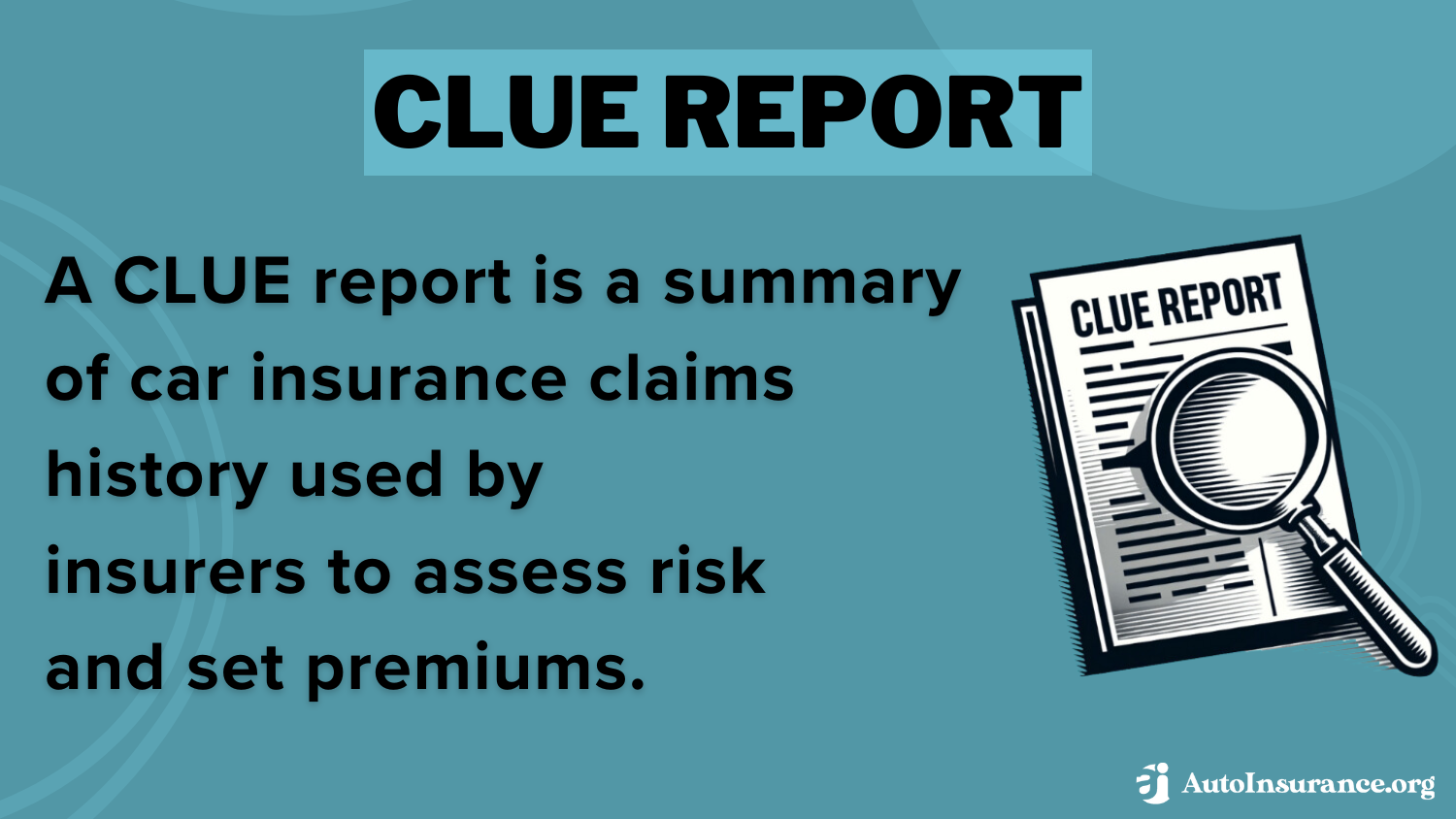
- C.L.U.E. (Comprehensive Loss Underwriting Exchange): Managed by LexisNexis, this central database collects insurance loss data across the industry. If another party's insurer opens an inquiry or files an informational loss report associated with your Vehicle Identification Number (VIN) or driver's license number, it automatically populates in your history.
- State Motor Vehicle Records (MVR): If a police officer files a report, or if another driver files a state accident report, the event is attached to your official driving record. Insurers review MVRs automatically prior to policy renewals.
- Body Shop Management Software: Modern collision repair centers utilize centralized estimating platforms like Mitchell, Audatex, or CCC ONE. When a shop enters your VIN to order parts or calculate repair costs, structural damage history can be flagged and shared with vehicle history aggregators such as Carfax and AutoCheck, which insurers can cross-reference.
Step-by-Step Guide: How to Handle an Accident Disclosure
If you are involved in a motor vehicle collision, following a structured process helps safeguard your contractual rights and legal protections.
- Document the Scene
- Photos of vehicle positions & VINs
- Weather conditions & property damage
- Exchange contact & driver license numbers
- Call Law Enforcement
- Request official incident report
- Required for third-party dispute protection
- Review Contractual Terms
- Identify "Notice of Loss" requirements
- Check collision/comprehensive deductibles
- Contact Insurance Carrier
- Provide factual details only
- State clearly if filing "Information Only"
- Preserve All Documentation
- Store police report numbers
- Keep repair estimates & correspondence
1. Document the Scene Thoroughly
Collect objective evidence at the collision site. Take clear photographs of vehicle positions, close-up and wide shots of physical damage, license plates, VIN tags, street signs, weather conditions, and property features. Exchange full names, street addresses, telephone numbers, driver's license details, insurance policy numbers, and vehicle registration credentials with all operators.
2. Request a Police Report
Contact local law enforcement or highway patrol to file an official on-scene report. If officers are unable to respond due to low severity or heavy emergency call volume, file an administrative walk-in or online report at the local police precinct within 24 hours. An official police report provides neutral documentation that protects against fabricated claims.
3. Contact Your Carrier for "Information Only" Reporting
When notifying your carrier about a minor incident where you do not intend to collect payment for repairs under your policy, explicitly state that you are calling to report an incident for informational purposes due to contractual compliance.
Reporting an incident creates a record of the event without automatically opening an active payout claim, preserving your contractual compliance while establishing that you are not seeking immediate indemnification for your own vehicle damage.
4. Stick to Factual Details
When speaking with insurance claims adjusters or representatives, describe events using objective facts:
- State times, locations, speeds, and weather conditions accurately.
- Do not speculate on mechanical failures or offer premature opinions on fault.
- Do not state "I was not injured" at the scene or immediately afterward; state instead that you are "evaluating your medical status," as soft-tissue symptoms frequently emerge days later.
Impact of Accident Disclosure on Rates and Coverage
A primary reason policyholders avoid disclosing collisions is the fear of premium increases. Understanding how underwriting guidelines process reported incidents can help you evaluate potential financial impacts accurately.
Rate Adjustments and Surcharges
Insurance carriers evaluate reported accidents using risk-rating algorithms established through state regulatory filings, such as guidelines monitored by the National Association of Insurance Commissioners (NAIC). Premium adjustments are determined by specific risk criteria:
- At-Fault vs. Non-Fault Accidents: If an insurer determines you were at fault (usually defined as being more than 50% responsible), an insurance surcharge is typically applied at your next renewal cycle, lasting between 3 to 5 years. If another driver was entirely responsible and their carrier indemnifies the loss, your rates may remain unaffected, depending on state regulations.
- Accident Forgiveness Programs: Many auto policies offer optional accident forgiveness endorsements. If you qualify, your carrier waives the premium surcharge for your first at-fault collision, provided contractual notice requirements are met.
- Loss of Good Driver Discounts: In states like California, statutory rules regulate "Good Driver" discounts. An at-fault collision that adds points to your motor vehicle record may disqualify you from these mandatory rate reductions.
Frequently Asked Questions
Do I need to report an accident if it was entirely the other driver's fault?
Yes. You should report the accident to your own insurance provider even if the other driver was 100% at fault. If the at-fault driver is underinsured, uninsured, or if their insurance company delays or denies the claim, your carrier needs prior record of the incident to step in under your Uninsured/Underinsured Motorist (UM/UIM) or Collision coverage.
What happens if I don't report a minor single-vehicle accident?
If you hit a stationary object on your own private property (such as scraping your garage door) with no third-party involvement or injuries, choosing not to file a claim or report the loss typically presents minimal contractual risk if repair costs fall below your physical damage deductible. However, if any third-party property or public infrastructure is damaged, disclosure remains mandatory under your policy contract.
Can an insurance company cancel my policy for failing to disclose an accident?
Yes. Insurance contracts explicitly grant carriers the right to deny coverage, refuse policy renewal, or cancel coverage for breach of the cooperation and prompt notification clauses. Additionally, hiding an accident when applying for policy renewals or transferring to a new carrier constitutes material misrepresentation, which can void policy coverage entirely.
Does reporting an accident automatically increase my insurance rates?
Not automatically. Rate changes depend on state regulations, policy endorsements (such as accident forgiveness), fault determination, and the total claim payout. In many jurisdictions, insurers are restricted from raising rates for non-fault collisions where another party's insurer pays full restitution.
How long do I have to report an accident to my insurance company?
Most auto insurance contracts require you to report an accident "promptly" or "within a reasonable timeframe." In practice, standard policy guidelines expect notice within 24 to 72 hours of the incident. Delaying notification by weeks or months without a valid medical excuse can compromise your policy coverages.
Practical Recommendations for Policyholders
To protect your financial security, driving record, and insurance coverage:
- Always report collisions involving third parties: Never rely on informal cash agreements at the scene of an accident. Contractual disclosure protects you if the other driver later files a personal injury lawsuit or supplementary property damage claim.
- Review your policy's "Duties After Loss" section: Familiarize yourself with your carrier's specific reporting timeframes, emergency call lines, and claim handling procedures before an emergency occurs.
- Document everything objectively: Maintain detailed records, photos, police report reference numbers, and representative names for every interaction following a collision.
- Consult state-specific resources: If you face unfair rate increases or claim denials after reporting an accident, file an inquiry or grievance through your state's Department of Insurance or consumer protection division.
EDITORIAL CATEGORY METADATA:
Image Gallery