Understanding the 2018 Starbucks Arrests: Incident, Legal Settlements, and Corporate Impact
On April 12, 2018, two Black entrepreneurs, Donte Robinson and Rashon Nelson, were arrested for trespassing at a Starbucks location in Philadelphia while waiting for a business meeting without making a purchase. The viral incident spar...
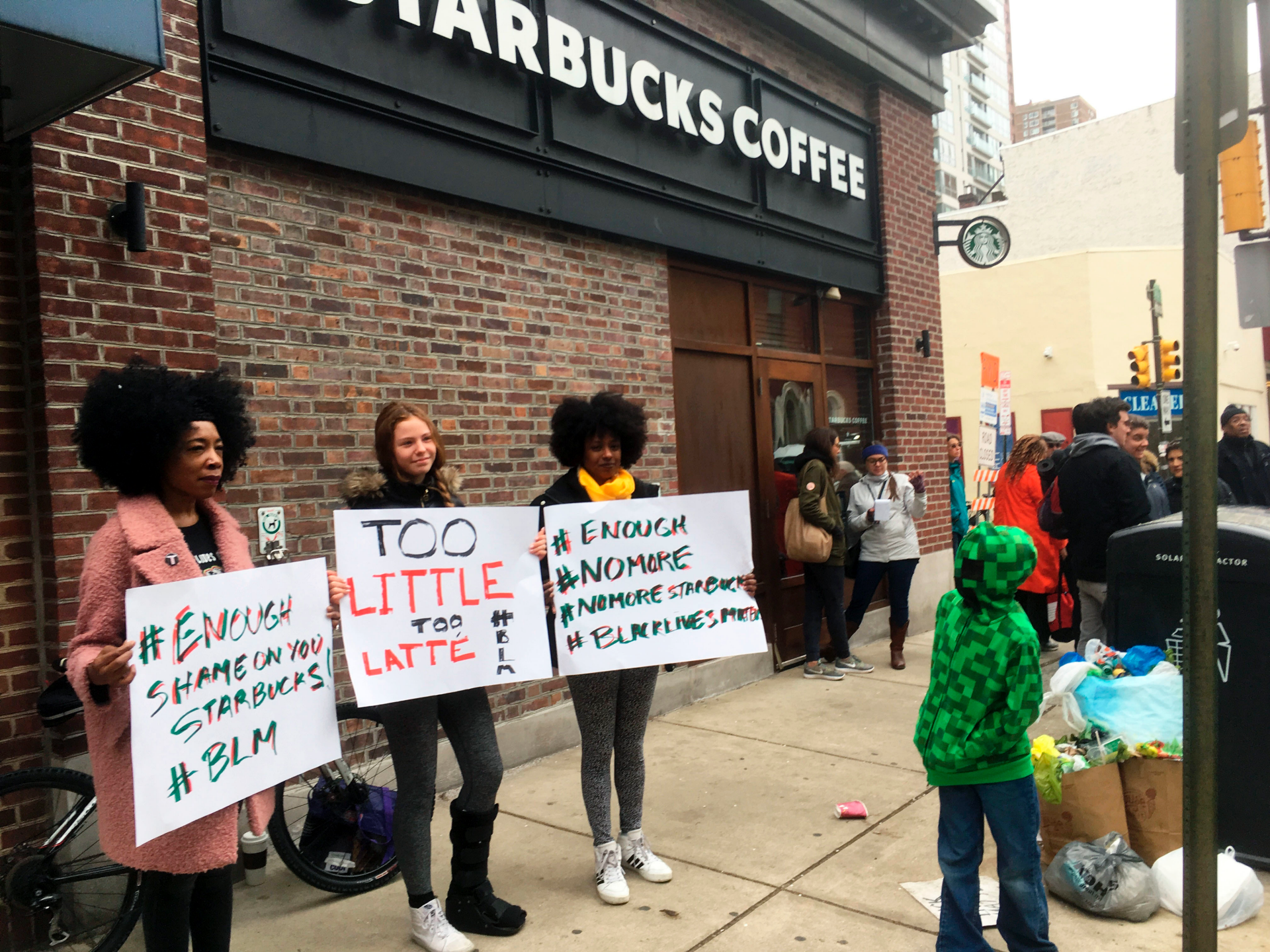
On April 12, 2018, two Black entrepreneurs, Donte Robinson and Rashon Nelson, were arrested for trespassing at a Starbucks location in Philadelphia while waiting for a business meeting without making a purchase. The viral incident sparked nationwide protests, confidential legal settlements, municipal community grants, a nationwide store closure for anti-bias training, and significant shifts in corporate public-access policies.
Contents
Chronology of the Rittenhouse Square Incident
The events unfolded on a Thursday afternoon at a Starbucks coffee shop located at 18th and Spruce Streets near Rittenhouse Square, an affluent neighborhood in Philadelphia. Donte Robinson and Rashon Nelson, both 23 years old at the time, entered the store to conduct a business meeting with a local real estate developer, Andrew Yaffe.
Shortly after entering, one of the men asked to use the customer restroom. A staff member denied access because they had not made a purchase. The men then sat in the main seating area to await their meeting partner without ordering food or beverages. According to witness statements and contemporary records, a store manager approached the men and asked if they needed help. After they explained that they were waiting for a business meeting and declined to order, the manager asked them to leave the premises. When they refused, stating they had a legitimate reason to be there, the store management placed a 911 call reporting two men who were trespassing and refusing to leave or make a purchase.
Philadelphia Police Department officers arrived at the coffee shop within minutes. Bystanders captured video footage showing multiple officers surrounding Robinson and Nelson, who remained calm and offered no physical resistance. During the encounter, Andrew Yaffe arrived at the store and attempted to intervene, asking the officers why the men were being targeted and confirming that he was there to meet them.
Despite Yaffe's intervention and vocal objections from other customers in the store, officers handcuffed Robinson and Nelson and escorted them from the building. They were taken to a police station, fingerprinted, photographed, and held for approximately eight hours before being released without charge. Philadelphia District Attorney Larry Krasner declined to file criminal trespassing charges, citing a lack of evidence that any crime had occurred.
A video recorded by customer Melissa DePino was published on social media shortly after the arrest. The clip quickly amassed tens of millions of views globally, igniting widespread public outrage, calls for boycotts, and intense media scrutiny surrounding racial profiling in commercial establishments.
Corporate Response and the Nationwide Store Closure
The public reaction to the arrests placed immense pressure on Starbucks leadership. CEO Kevin Johnson issued a public apology calling the arrests "reprehensible" and acknowledging that store management’s decision to call law enforcement was entirely unnecessary under the circumstances. Executive Chairman Howard Schultz also publicly expressed shame over the incident, admitting that the company’s unwritten policies regarding restroom access and customer seating created an environment susceptible to selective, biased enforcement.
In response to the growing crisis, Kevin Johnson traveled to Philadelphia to meet personally with Robinson and Nelson to express his apology in person and discuss substantive remedies. Beyond verbal apologies, corporate leadership undertook several immediate administrative and structural actions:
- Executive Oversight and Managerial Separation: The store manager involved in calling the police left the company shortly after the incident.
- Nationwide Anti-Bias Training: On May 29, 2018, Starbucks took the unprecedented step of closing more than 8,000 company-operated stores across the United States for an afternoon. Approximately 175,000 employees participated in mandatory implicit bias education curriculum developed in collaboration with civil rights leaders, legal experts, and social scientists, including former U.S. Attorney General Eric Holder and Sherrilyn Ifill, then-president of the NAACP Legal Defense and Educational Fund.
- Financial and Operational Costs: The half-day store closure resulted in an estimated loss of tens of millions of dollars in direct sales revenue, alongside substantial operational expenses required to distribute curriculum materials and coordinate regional staffing.
The training initiative focused on recognizing implicit bias, managing public spaces equitably, and establishing clear de-escalation protocols designed to limit law enforcement involvement to genuine security emergencies or threats of violence.
Legal Outcomes, Financial Settlements, and Community Investments
Following the incident, Robinson and Nelson pursued remedies aimed at structural reform and youth empowerment rather than engaging in drawn-out civil litigation. Their efforts led to separate agreements with both the corporate entity and municipal authorities.
Settlement with Starbucks
In May 2018, Starbucks reached a confidential financial settlement with Donte Robinson and Rashon Nelson. While the exact monetary terms were not disclosed publicly, the agreement included a commitment by Starbucks to provide financial support to the men to pursue their business ventures. Additionally, the agreement included a joint pledge between the company and the two entrepreneurs to collaborate on initiatives targeting equity and opportunities for young business leaders from underrepresented backgrounds.
Settlement with the City of Philadelphia
Robinson and Nelson negotiated a distinct settlement with the City of Philadelphia. Rather than accepting a standard financial payout for civil rights violations, the two men agreed to resolve their claims against the city for a symbolic payment of $1 each.
As part of the negotiated agreement, the City of Philadelphia committed to funding a $200,000 grant program dedicated to supporting young public high school students in Philadelphia who aspire to become entrepreneurs. The initiative was set up in partnership with the Philadelphia Education Fund to provide seed funding, mentorship, and business development resources to high school students enrolled in local public schools.
- Philadelphia Starbucks Incident (April 12, 2018)
- Starbucks Settlement
- Confidential financial compensation.
- Joint initiative supporting young entrepreneurs.
- Nationwide mandatory anti-bias training program.
- City of Philadelphia Settlement
- $1 symbolic payout to each entrepreneur.
- $200,000 grant fund for public high school youth.
- Public police apology & procedural review.
- Starbucks Settlement
Law Enforcement Review and Apology
The incident also prompted significant internal evaluation within the Philadelphia Police Department. Police Commissioner Richard Ross initially defended the arresting officers, stating publicly that the officers had acted within police policy because store management had formally issued a trespassing warning.
However, following a review of the circumstances and intense public criticism, Commissioner Ross retracted his initial defense. He issued a public apology to Robinson and Nelson, acknowledging that his initial remarks were wrong and that the department should have recognized the nuances of the situation rather than immediately enforcing a commercial request that stemmed from racial bias. The police department subsequently updated its internal guidelines regarding how officers respond to trespassing calls made by private commercial establishments.
Evolution of the "Third Place" Policy and Public Accommodations
The sociological concept of the "Third Place"—a term coined by sociologist Ray Oldenburg to describe social environments separate from the two primary environments of home ("first place") and work ("second place")—had long been a cornerstone of the brand identity constructed by Starbucks. Historically, the company positioned its coffee shops as community gathering hubs. However, prior to April 2018, individual store managers exercised broad discretion over whether non-paying visitors could sit in dining areas or use restroom facilities.
The 2018 Open-Access Policy Mandate
Following the Philadelphia incident, corporate leadership formally codified its customer access guidelines into an explicit open-access policy. Under the policy instituted in May 2018, Starbucks declared that:
- Any individual who enters a Starbucks space—including patios, seating areas, and restrooms—is considered a customer, regardless of whether they make a financial purchase.
- Store employees were instructed to treat all visitors with dignity and respect while maintaining a welcoming environment.
- Law enforcement should only be contacted if a visitor poses an immediate safety risk, engages in disruptive behavior, or commits a violent or illegal act.
Subsequent Safety Adjustments and Operational Realities
Over the years following the 2018 implementation, maintaining an unrestricted open-door policy introduced operational challenges across certain urban markets. Store managers reported increasing incidents involving public drug use, property damage, mental health crises, and safety threats directed at retail staff.
By 2022 and moving into subsequent operational frameworks, Starbucks modified its stance to balance broad public access with worker safety. The company introduced updated safety training protocols and granted store managers local authority to modify seating layouts, restrict restroom access with digital locks, or, in extreme cases, permanently close specific store locations where safety could not be guaranteed. These updates signaled a shift toward flexible operational management while maintaining formal policies against arbitrary or biased exclusion based on race or background.
Key Overview: Incident Facts, Settlements, and Policy Shifts
| Category | Initial Status / Incident Details | Action Taken / Outcome | Long-Term Organizational Impact |
|---|---|---|---|
| Incident Details | Two Black men arrested for trespassing while waiting for a meeting at a Philadelphia store. | District Attorney dropped all charges due to lack of evidence of criminal intent. | Triggered public scrutiny over selective enforcement in retail settings. |
| Corporate Settlement | Legal claims threatened standard civil liability and reputational damage. | Confidential financial payout; collaborative support for young entrepreneurs. | Mandated structural review of manager training and store access rules. |
| Municipal Settlement | Potential civil rights lawsuit against Philadelphia Police Department. | Men accepted $1 each; City allocated $200,000 to launch a youth entrepreneur fund. | Revised municipal police procedures for handling commercial trespass calls. |
| Corporate Policy | Informal manager discretion regarding non-paying visitors and restrooms. | Instituted open-access "Third Place" policy permitting space use without purchase. | Shifted standard retail protocols; later refined to address workplace safety. |
| Employee Training | Standard retail customer service and security orientation. | May 29, 2018: Closed 8,000+ US stores for mandatory implicit bias education. | Established a benchmark for corporate crisis management and anti-bias curricula. |
Public Accommodations Law and Risk Management for Commercial Enterprises
The 2018 Philadelphia incident highlighted critical legal concepts surrounding public accommodations under Title II of the Civil Rights Act of 1964 and state-level human rights legislation. Title II prohibits discrimination on the basis of race, color, religion, or national origin in places of public accommodation, including restaurants, cafeterias, and retail establishments operating in interstate commerce.
Navigating Property Rights vs. Civil Rights Protections
Commercial property owners maintain private property rights, including the general right to manage access and address disruptions. However, these rights are constrained by federal, state, and municipal civil rights laws:
- Selective Enforcement Risk: Establishing informal rules—such as requiring purchases before using restrooms or seating—creates significant legal and reputational exposure if those rules are enforced selectively against protected classes while ignored for others.
- Implicit Bias in Trespass Warnings: Under traditional criminal trespass statutes, a business can ask an individual to leave, and failure to do so can constitute a misdemeanor. However, if the initial request to leave is motivated by implicit racial bias or results in discriminatory treatment, the business exposes itself to public accommodations lawsuits and civil rights investigations.
- Delegation of Security Oversight: Relying on frontline retail workers to interpret security risks without standardized operational criteria frequently leads to inconsistent decision-making and unnecessary law enforcement calls.
Risk Mitigation Strategies for Retail Operations
For corporate leaders and retail operations executives, the lessons of the Philadelphia incident emphasize the necessity of structured operational policies. Key management practices include:
- Clear Public Access Criteria: Establish objective, written criteria for customer conduct rather than relying on discretionary rules regarding purchasing status.
- De-escalation and Security Protocols: Provide employees with clear frameworks for addressing non-disruptive, non-paying visitors without immediately resorting to emergency services.
- Continuous Managerial Education: Replace one-time anti-bias training sessions with ongoing management development focused on conflict resolution, crisis management, and equitable customer service enforcement.
Frequently Asked Questions
Who were the two Black men arrested at the Philadelphia Starbucks in 2018?
The two men were Donte Robinson and Rashon Nelson, two Black entrepreneurs who were 23 years old at the time of the incident. They had entered the coffee shop to meet with a local real estate developer, Andrew Yaffe, to discuss potential business opportunities.
What were the terms of the legal settlements following the incident?
Starbucks reached a confidential financial settlement with Robinson and Nelson that included funds to support their business initiatives. The City of Philadelphia settled separately by paying a symbolic $1 to each man and committing $200,000 to establish a grant program administered by the Philadelphia Education Fund for aspiring young entrepreneurs in local public high schools.
Why did Starbucks close thousands of stores on May 29, 2018?
Starbucks closed more than 8,000 company-owned U.S. stores for half a day to conduct mandatory anti-bias training for approximately 175,000 employees. The executive team initiated the closure to address systemic implicit bias, retrain staff on public space access, and prevent future incidents of racial profiling.
What is Starbucks' policy regarding non-paying customers using seating and restrooms?
In May 2018, Starbucks implemented an open-access "Third Place" policy stating that anyone could enter its cafes, sit in dining areas, and use restrooms without making a financial purchase, provided they maintain a safe and respectful environment. While the company later provided store managers with expanded discretion to address safety concerns and disruptive conduct, the core policy emphasizes welcoming visitors without requiring proof of purchase.
Did the Philadelphia Police Department change its policies after the arrests?
Yes. Following the incident and public criticism, then-Police Commissioner Richard Ross publicly apologized to Robinson and Nelson for the department's handling of the situation. The Philadelphia Police Department subsequently re-examined its guidelines concerning how officers respond to private commercial requests for trespassing enforcement when no threat or crime is present.
Practical Recommendations for Retail Management and Public Establishments
To avoid selective enforcement risks and foster an inclusive environment, commercial establishments should implement structured access and security guidelines:
- Draft Standardized, Written Facility Guidelines: Ensure that rules regarding seating, restroom usage, and duration of stay are written down, clearly communicated to staff, and applied uniformly to all visitors regardless of appearance or background.
- Establish Objective Thresholds for Law Enforcement Involvement: Train employees to reserve emergency calls for situations involving credible physical threats, safety hazards, or explicit illegal activity. Non-disruptive presence should be handled through internal customer service channels.
- Implement Ongoing Staff Training: Incorporate implicit bias awareness, workplace safety, and de-escalation methods into regular employee onboarding and annual professional development modules rather than treating crisis training as a single event.
- Engage in Community-Oriented Resolution: When operational breakdowns occur, prioritize transparent communication, independent procedural review, and constructive remedies over reflexive denial or prolonged litigation.
EDITORIAL CATEGORY METADATA:
Image Gallery