Why Detroit Auto Insurance Rates Remain High
Detroit drivers consistently pay some of the highest auto insurance premiums in the United States. While Michigan’s landmark 2019 auto insurance reform modified mandatory unlimited medical coverage rules, rates in Detroit remain elevat...
Detroit drivers consistently pay some of the highest auto insurance premiums in the United States. While Michigan’s landmark 2019 auto insurance reform modified mandatory unlimited medical coverage rules, rates in Detroit remain elevated due to widespread uninsured drivers, high litigation rates, urban property crime risks, increasing bodily injury claims, and nationwide inflation in vehicle repair costs.
Contents
Understanding Detroit’s Unique Insurance Landscape
To understand why car insurance rates in Detroit remain high, one must look at Michigan’s unique insurance regulatory system. For decades, Michigan operated under a strict no-fault insurance system that mandated every driver purchase unlimited Personal Injury Protection (PIP) medical coverage. Under this framework, an injured driver’s own insurance policy paid for all reasonable and necessary medical treatment for life following a motor vehicle accident, regardless of who caused the collision.
In 2019, the Michigan Legislature passed Public Act 21, a major bipartisan reform aimed at curbing the state’s exorbitant insurance premiums. Effective July 2020, the law allowed Michigan motorists to choose from several tiers of PIP medical coverage rather than forcing everyone into unlimited coverage. The law also introduced medical fee schedules to cap what health providers could charge auto insurers and banned insurance companies from using specific non-driving factors, such as credit scores, education levels, homeownership status, and postal zip codes, when setting insurance rates.
Despite these legislative adjustments, Detroit residents still experience baseline premiums that significantly exceed state and national averages. The persistence of high rates stems from structural economic factors, jurisdictional legal realities, and broader auto industry trends that reform alone could not eliminate.
Core Factors Driving Detroit Auto Insurance Costs
Auto insurance pricing is an actuarial calculation of risk. Insurers analyze the likelihood that a policyholder will file a claim and the expected cost of settling that claim. In Detroit, several intersecting factors keep these baseline claims costs exceptionally high.
Key Drivers of High Detroit Premiums:
- High Rate of Uninsured Motorists
- Elevated Bodily Injury (BI) and Tort Litigation
- Urban Risk Factors (Vehicle Theft, Vandalism, Collisions)
- MCCA Assessments & Uncapped Legacy Claims
- Rising Vehicle Repair & Labor Costs (ADAS & Inflation)
High Percentage of Uninsured Motorists
One of the most significant contributors to high rates in Detroit is the high proportion of uninsured drivers operating vehicles within city limits. Industry estimates and historical data from the Michigan Department of Insurance and Financial Services (DIFS) suggest that historically, between 30% and 50% of drivers in Detroit operated vehicles without valid auto insurance.
When a large percentage of drivers on the road do not carry coverage, insurance companies must absorb higher risks through Uninsured and Underinsured Motorist (UM/UIM) claims. When an insured driver is struck by an uninsured motorist, the insured driver's policy covers the bodily injury and property damage. Insurers pass these anticipated costs onto all paying policyholders in the area, creating a self-reinforcing cycle: high rates lead to more uninsured drivers, which in turn drives rates higher for those who remain insured.
Medical Fee Caps vs. Bodily Injury Claims
While the 2019 insurance reform placed fee schedules on medical providers for PIP claims, it simultaneously altered the landscape for Bodily Injury (BI) liability lawsuits. Under the reformed framework, the statutory default minimum for Bodily Injury liability coverage increased from $20,000 per person / $40,000 per accident ($20k/$40k) to $250,000 per person / $500,000 per accident ($250k/$500k), though drivers may select lower limits down to $50k/$100k by signing an explicit waiver.
Because medical providers can no longer bill unlimited PIP for non-capped expenses, injured parties and personal injury attorneys increasingly utilize third-party tort lawsuits to recover excess medical expenses and non-economic damages (pain and suffering). As a result, bodily injury liability claims in Wayne County have increased in frequency and severity, offsetting a substantial portion of the savings generated by PIP medical caps.
The Michigan Catastrophic Claims Association (MCCA)
The Michigan Catastrophic Claims Association (MCCA) is a private, non-profit association created by the state legislature to reimburse auto insurers for personal injury protection medical claims that exceed a specific threshold (e.g., $600,000 per claim). All drivers who choose unlimited PIP coverage must pay an annual per-vehicle MCCA assessment fee.
While the MCCA assessment fee has fluctuated—and even yielded refund checks to policyholders in prior years—the association's long-term deficit assessments and the ongoing cost of managing catastrophic, lifelong spinal cord and traumatic brain injury claims continue to add a baseline charge to every policy choosing full coverage.
Urban Population Density and Property Loss Risks
Vehicle theft, vandalism, and traffic collision frequencies are naturally higher in densely populated urban centers like Detroit than in suburban or rural municipalities. Urban driving environments involve:
- Greater traffic density, increasing the frequency of stop-and-go collisions.
- Higher rates of vehicle theft and contents theft.
- Greater exposure to uninsured vehicle damage while parked on public streets.
Even though insurers are prohibited from using a policyholder's precise zip code as a rating factor under Public Act 21, insurance companies are permitted to group risks by broader territorial zones based on population density, traffic patterns, and local claim frequencies.
Vehicle Repair Costs and Advanced Automotive Technology
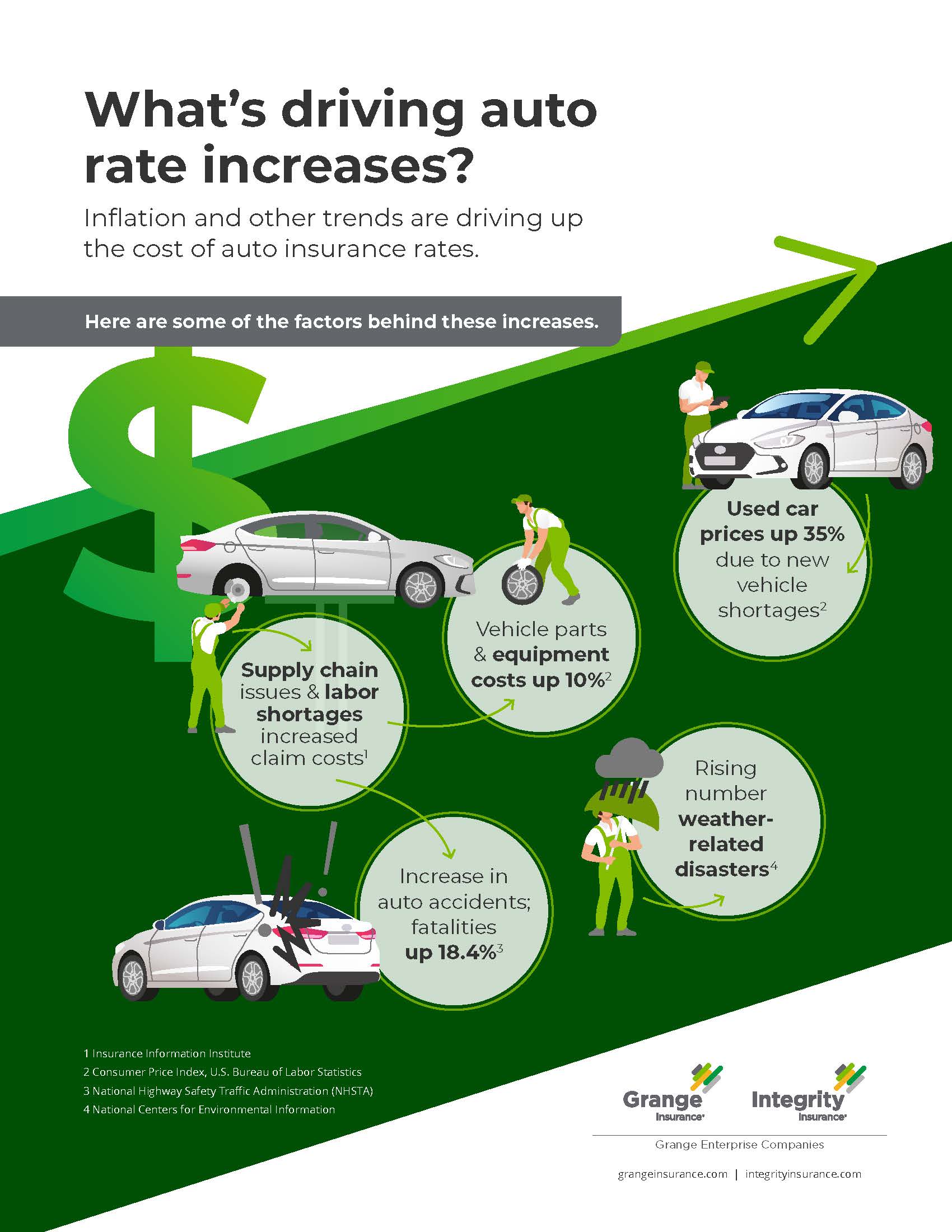
Modern vehicles are equipped with sophisticated technology, including Advanced Driver Assistance Systems (ADAS) such as lane-departure sensors, radar, and cameras embedded in bumpers and windshields. Minor fender-benders that once required simple sheet-metal repairs now require complex sensor recalibration and expensive OEM replacement parts.
Combined with regional shortages of certified auto repair technicians and elevated labor rates across Southeast Michigan, the average severity of property damage claims has grown significantly statewide.
2019 Reform Outcomes vs. Current Realities
The primary goal of Public Act 21 was to give Michigan consumers choice and lower overall premiums. While the law achieved structural changes, its long-term impact in Detroit displays a mix of relief and persistent cost burdens.
| Feature | Pre-July 2020 Framework | Current Framework |
|---|---|---|
| PIP Medical Requirement | Mandatory Unlimited for all | Tiered Options ($50k to Unlimited / Opt-Out) |
| BI Liability Defaults | $20,000 / $40,000 | $250,000 / $500,000 |
| Rating Restrictions | Zip Codes, Credit, Gender Permitted | Prohibits Zip Codes, Credit Scores, Education |
| Legal Recourse Focus | Primarily PIP Claims | Shifted toward Tort / Bodily Injury Lawsuits |
The Shift in Non-Driving Rating Factors
Under Public Act 21, insurers are explicitly prohibited from using non-driving factors such as credit score, homeownership, education level, marital status, and postal zip code to determine premiums. However, insurance carriers have adjusted their pricing models by utilizing permissible factors, such as:
- Driving record and claims history.
- Annual mileage driven.
- Vehicle make, model, year, and safety equipment.
- Broad territorial risk zones (such as metropolitan statistical areas) based on actuarial loss history.
While these statutory prohibitions prevent direct discrimination based on specific neighborhood zip codes, broad regional claims data in Detroit continues to reflect higher loss costs than surrounding counties.
Rating Factors Breakdown for Detroit Drivers
The table below outlines how specific policy parameters and risk factors directly influence auto insurance pricing in Detroit.
| Insurance Factor | Impact Level on Premium | Primary Mechanism | Recommended Strategy for Cost Reduction |
|---|---|---|---|
| PIP Medical Limit Choice | Very High | Determines policy exposure for medical expenses ($50k, $250k, $500k, Unlimited). | Align PIP limit with existing qualified health coverage (e.g., Medicare or private health insurance). |
| Bodily Injury (BI) Limits | High | Sets maximum insurer liability for third-party injuries caused by policyholder. | Select limits matching personal asset protection needs; avoid dropping below $100k/$300k if assets exist. |
| Uninsured Motorist (UM/UIM) | Medium-High | Protects driver if struck by an uninsured driver in high-risk zones. | Maintain robust UM/UIM limits to avoid out-of-pocket loss from uninsured drivers. |
| Comprehensive & Collision Deductibles | Medium | Out-of-pocket cost before insurer pays for theft, vandalism, or crash repair. | Raise deductibles (e.g., from $500 to $1,000 or $1,500) to lower annual base premium. |
| Driving Record (MVR) | High | Moving violations, at-fault accidents, and license suspensions add surcharges. | Complete state-approved defensive driving courses and maintain a clean record. |
| Vehicle Type & Technology | Medium | Repair difficulty, theft rates, and safety rating of the vehicle. | Choose vehicles with high safety ratings and lower replacement/repair costs. |
Strategic Steps Detroit Drivers Can Take to Reduce Costs
Although macro-level market forces drive high baseline costs in Detroit, drivers can take concrete, legal steps to lower their annual auto insurance expenditure.
Cost-Reduction Action Plan:
- Review & Optimize PIP Medical Limits
- Audit Bodily Injury & Property Damage Coverage
- Increase Physical Damage Deductibles
- Apply for Permissible Discounts (Telematics, Group, Multi)
- Compare Rate Filings Across Multiple Insurers
1. Optimize Personal Injury Protection (PIP) Selections
Under Michigan law, drivers are no longer forced to buy unlimited medical coverage. Evaluating your health insurance policy is the most effective way to lower PIP premiums:
- Qualified Health Coverage (QHC): If your private employer-sponsored health plan covers auto accident injuries and has a deductible below statutory limits, you may qualify to select a lower PIP limit or opt out of PIP medical coverage entirely (if enrolled in Medicare Parts A and B).
- Tiered Limits: Drivers can choose coverage limits of $50,000 (for Medicaid enrollees), $250,000, $500,000, or Unlimited. Selecting a $250,000 or $500,000 cap significantly reduces the PIP portion of the insurance bill while providing substantial emergency protection.
2. Leverage Telematics and Usage-Based Programs
Because Michigan law prohibits insurers from using credit scores or zip codes, insurance carriers place greater reliance on telematics—mobile applications or plug-in devices that track real-time driving behavior. Drivers who maintain low annual mileage, avoid hard braking, and refrain from late-night driving can earn discounts ranging from 10% to 30%.
3. Adjust Deductibles for Comprehensive and Collision
In high-risk areas, physical damage coverage (Collision and Comprehensive) represents a large portion of the bill. Raising collision and comprehensive deductibles from $500 to $1,000 or $1,500 drops the annual premium considerably. Policyholders should ensure they keep the designated deductible amount in an accessible savings account in case an emergency repairs claim occurs.
4. Shop Rate Filings across Regional and National Carriers
Insurers apply different underwriting algorithms to broad territorial risk categories. Rates for the exact same vehicle and driver profile can vary by thousands of dollars between insurance carriers. Working with an independent insurance agent who represents multiple regional and national carriers allows Detroit drivers to compare multiple quotes simultaneously.
Frequently Asked Questions
Why did my insurance rates go up even though I have a clean driving record?
Insurance rates in Detroit are influenced by system-wide loss trends in addition to individual driving records. Increases in vehicle repair labor, higher medical settlement costs, inflation on replacement vehicle parts, and high regional uninsured motorist claims cause insurers to adjust baseline rate filings upward for all policyholders within a given market risk category.
Is zip code rating completely illegal in Michigan?
Under Public Act 21 of 2019, insurance companies are prohibited from using a policyholder's specific postal zip code as an explicit rating factor. However, insurers are legally permitted to use broader territorial risk definitions based on regional loss data, urban density, and statistical claim frequency across broader geographical zones.
Should Detroit drivers select $50,000 or Unlimited PIP medical coverage?
Choosing the right PIP coverage depends on your personal health insurance status, risk tolerance, and asset structure. While opting for a $50,000 or $250,000 limit reduces premiums, unlimited PIP offers lifetime coverage for catastrophic care, rehabilitation, and long-term attendant care that traditional health insurance policies often limit or exclude.
How does the Michigan Catastrophic Claims Association (MCCA) fee affect my bill?
The MCCA charges an annual assessment fee for every vehicle insured under a policy that selects Unlimited PIP coverage. If you choose a capped PIP limit ($50k, $250k, or $500k) or opt out of PIP medical coverage entirely, you are exempt from the full MCCA catastrophic assessment fee, lowering your total premium.
Does carrying high Uninsured Motorist (UM) coverage matter in Detroit?
Yes. Given the high rate of uninsured drivers operating vehicles in urban centers, carrying robust Uninsured and Underinsured Motorist (UM/UIM) coverage is crucial. UM/UIM protects you and your passengers financially if you are injured in an accident caused by a driver who carries no insurance or flees the scene.
Strategic Summary and Next Steps
The reason Detroit auto insurance rates remain high stems from a combination of structural factors: elevated uninsured motorist rates, high bodily injury tort litigation, urban property crime risk, and nationwide auto repair inflation. While the 2019 Michigan insurance reform introduced choice and capped medical fee structures, it did not eliminate the underlying actuarial risks inherent to operating vehicles in a dense metropolitan area.
To manage costs effectively, Detroit drivers should re-examine their policies annually:
- Verify whether your health insurance qualifies as Qualified Health Coverage (QHC) to safely adjust PIP medical limits.
- Evaluate your Bodily Injury liability limits to balance asset protection with affordability.
- Utilize usage-based telematics programs to demonstrate safe driving habits directly to insurers.
- Solicit quotes from multiple independent carriers to secure competitive territorial pricing.
Image Gallery