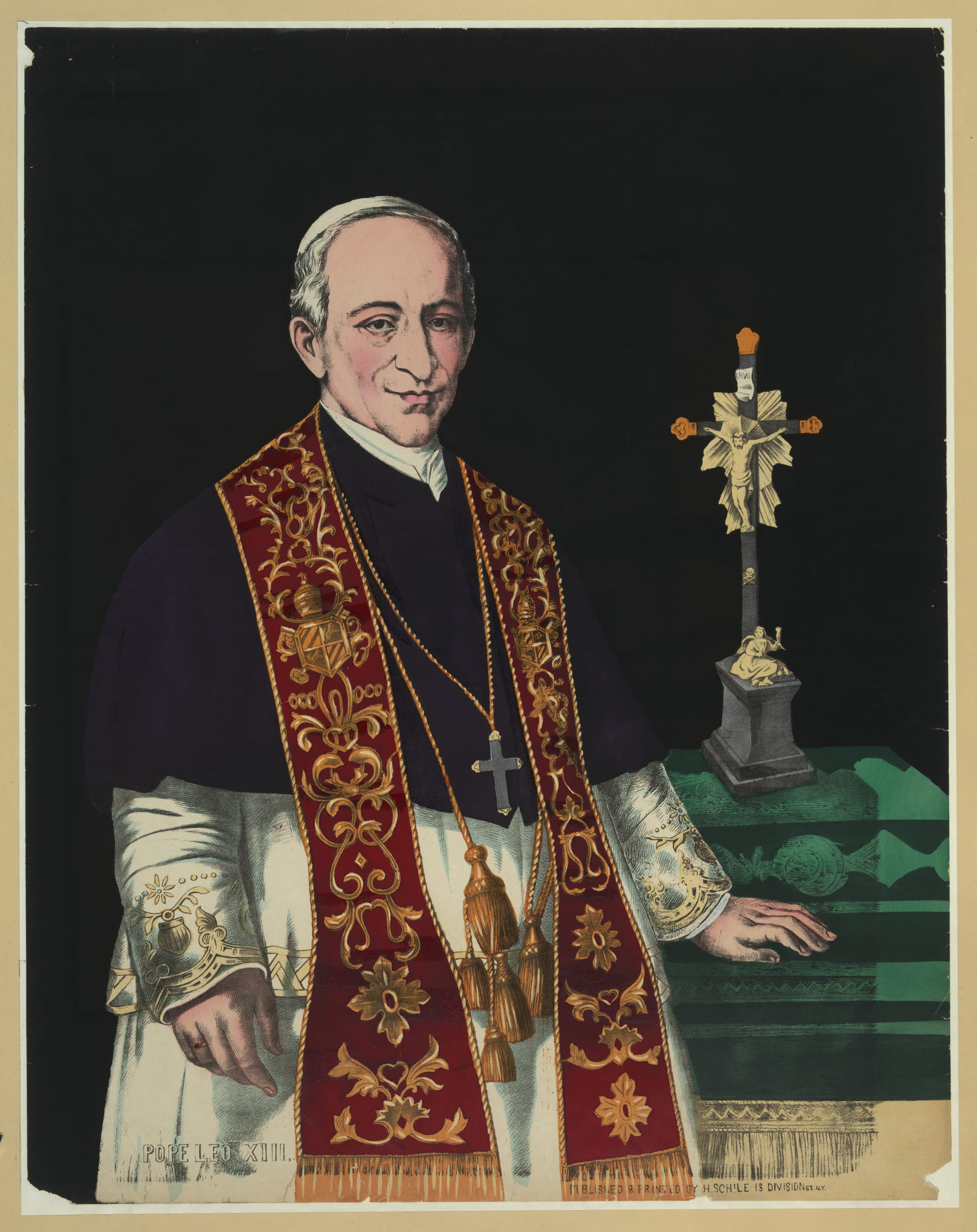
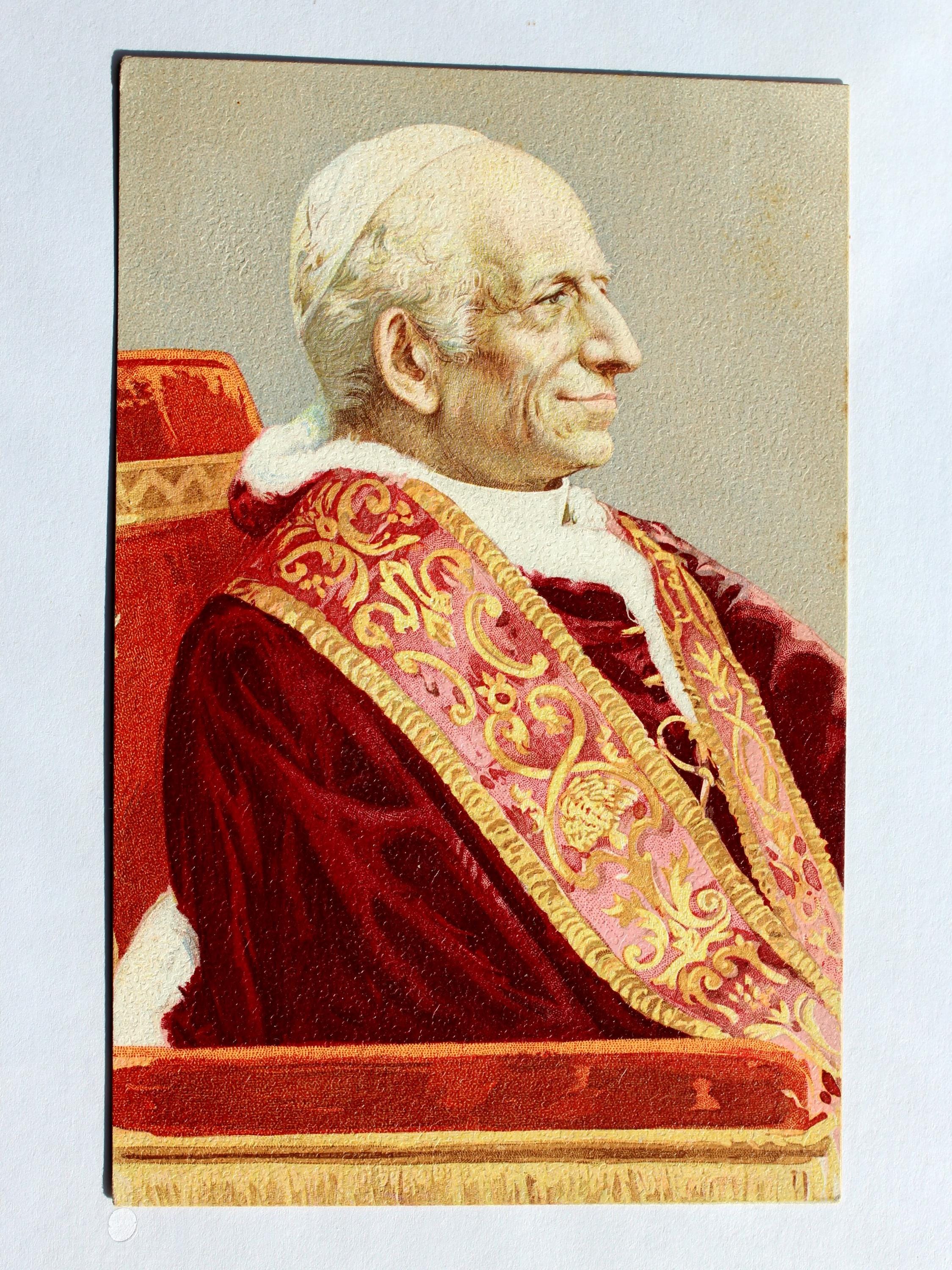
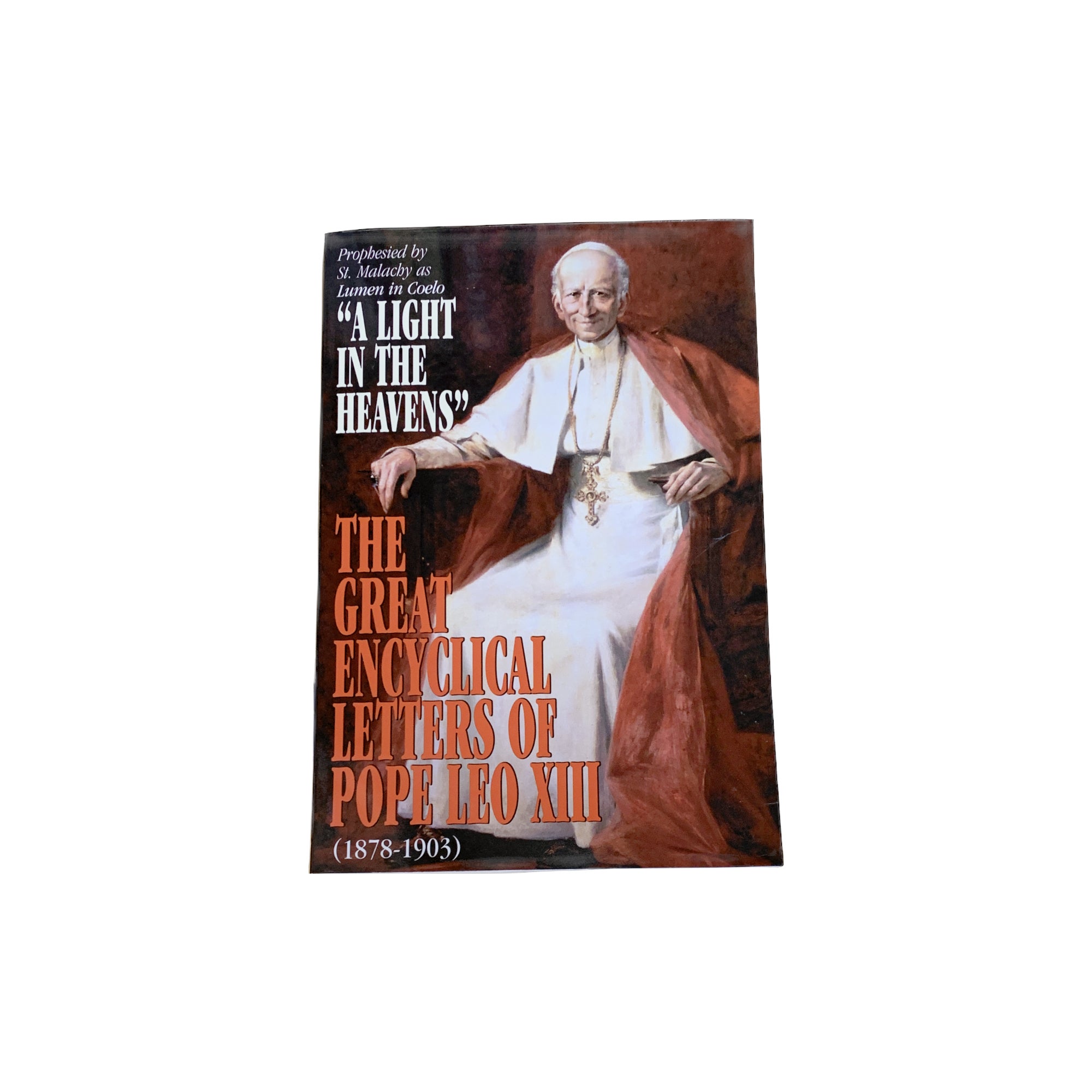
Pope Leo XIII Biography: The Architect of Modern Catholic Social Teaching
Pope Leo XIII, born Vincenzo Gioacchino Pecci, led the Catholic Church from 1878 to 1903, leaving a profound legacy defined by his landmark encyclical Rerum Novarum, which laid the foundations of modern Catholic social teaching. His pa...
Pope Leo XIII, born Vincenzo Gioacchino Pecci, led the Catholic Church from 1878 to 1903, leaving a profound legacy defined by his landmark encyclical Rerum Novarum, which laid the foundations of modern Catholic social teaching. His papacy successfully bridged traditional theology with the realities of the Industrial Revolution, steering the Church through an era of rapid modernization, scientific advancement, and intense geopolitical shifts.
Contents
Early Life, Education, and Ecclesiastical Rise
Vincenzo Gioacchino Pecci was born on March 2, 1810, in Carpineto Romano, near Rome, into a noble yet financially modest family. His upbringing instilled in him a deep sense of discipline, classical learning, and unwavering piety.
Formative Years and Jesuit Education
Pecci began his formal education at the Jesuit College in Viterbo at the age of eight, where he excelled in humanities, rhetoric, and Latin composition. In 1824, he moved to the Collegio Romano in Rome to continue his studies under the Society of Jesus, absorbing traditional scholastic philosophy and theology. Demonstrating exceptional intellectual capability, he entered the Academy of Noble Ecclesiastics in 1832, an elite institution training future diplomats and high-ranking officials for the Vatican diplomatic corps. During his time at the academy, he earned doctorates in both civil and canon law by 1837, establishing a rigorous legal and administrative foundation that would shape his entire ecclesiastical career.
Early Administrative and Diplomatic Assignments
Recognizing his sharp administrative acumen and diplomatic tact, Pope Gregory XVI appointed Pecci as a domestic prelate and subsequently sent him as apostolic delegate to Benevento in 1838. In this impoverished and lawless papal province, Pecci successfully dismantled local banditry, reformed the corrupt tax system, and stimulated economic trade, earning a reputation as an effective reformer.
In 1843, at the young age of thirty-three, he was consecrated as titular archbishop of Damietta and dispatched as nuncio to Belgium. His tenure in Brussels proved politically delicate, as he navigated intense conflicts between Catholics and liberals over state control of education. Although his direct diplomacy faced friction with the Belgian government, his exposure to industrialized Western Europe deeply influenced his understanding of the emerging working-class struggles and the nascent labor movement.
Episcopate in Perugia and Elevation to the Cardinalate
In 1846, Pecci was reassigned as Bishop of Perugia, a major see in central Italy, where he remained for over three decades. During his thirty-two-year episcopate in Perugia, he focused heavily on reforming the clergy, improving seminary education, and fostering intellectual rigor by promoting the revival of Thomism—the philosophical system of Thomas Aquinas.
As a bishop, he experienced firsthand the unification of Italy (Risorgimento), which stripped the papacy of its temporal territories in the Papal States. Despite the hostile political climate created by the newly formed Italian secular government, Pecci maintained a pastoral focus, writing numerous pastoral letters addressing the moral dangers of materialism and the challenges of modern secularism. In December 1853, Pope Pius IX elevated Pecci to the cardinalate, naming him Cardinal-Priest of Santa Prisca. As his tenure in Perugia lengthened, he gained widespread respect within the College of Cardinals for his administrative prudence, intellectual depth, and diplomatic equilibrium.
The Papal Conclave of 1878 and Strategic Vision
Following the death of Pope Pius IX on February 7, 1878, the College of Cardinals convened in a conclave marked by intense geopolitical tension. The Papal States had fallen, Rome was the capital of a united Italy, and the Church found itself isolated from contemporary European political structures.
The Conclave of 1878
The conclave opened on February 18, 1878, with sixty-one cardinals participating. In an atmosphere shaped by the pressures of secular European governments and internal church debates over how to respond to modernity, Cardinal Pecci was widely regarded as a moderating intellectual force. As Camerlengo of the Holy Roman Church, he managed the administrative transition during the sede vacante.
The voting cardinals were divided between intransigent conservatives who favored a continued, unyielding stance against modern secular states and moderates who believed the Church needed to engage constructively with contemporary society. On the third ballot, held on February 20, 1878, Pecci was elected pope, choosing the regnal name Leo XIII in honor of Pope Leo XII, whom he admired for his commitment to education and Church governance.
A Shift in Papal Diplomacy
At his ascension at age sixty-eight, many contemporaries viewed Leo XIII as a transitional figure due to his advanced age and fragile health. However, his pontificate spanned twenty-five years—the third-longest in papal history.
Leo XIII immediately signaled a strategic shift in papal diplomacy. While maintaining his predecessor's protests regarding the loss of temporal sovereignty in Rome, Leo abandoned isolationist strategies. He actively sought rapprochement with secular European governments, encouraging French Catholics to accept the Third Republic (ralliement), mediating international disputes such as the Caroline Islands crisis between Germany and Spain, and re-establishing diplomatic channels with Otto von Bismarck's German Empire during the aftermath of the Kulturkampf. Through pragmatic diplomacy, Leo XIII transformed the papacy from an isolated territorial sovereign into a respected global moral authority.
Rerum Novarum and the Birth of Catholic Social Teaching
The defining achievement of Leo XIII's pontificate was the issuance of his encyclical Rerum Novarum ("Of New Things") on May 15, 1891. This landmark document directly addressed the condition of the working classes and established the foundational framework for modern Catholic social doctrine.
Historical Context of Industrialization
By the late nineteenth century, the Industrial Revolution had radically altered European and American societies. Unregulated capitalism had led to widespread worker exploitation, dangerous factory conditions, abysmal wages, child labor, and the rapid growth of impoverished urban slums. Simultaneously, Marxist socialism was gaining traction by offering a revolutionary alternative that called for the violent overthrow of private property and class structures.
Faced with this polarized crisis, Leo XIII intervened to articulate a distinct Catholic "Third Way" that rejected both unfettered laissez-faire capitalism and coercive state socialism.
Core Principles of Rerum Novarum
Rerum Novarum established several enduring principles that continue to guide Catholic social ethics:
- The Right to Private Property: Leo XIII strongly defended private property as a natural right rooted in human labor and personal responsibility, arguing that socialism's abolition of property harmed workers rather than helping them.
- Dignity of Labor and Just Wages: The encyclical asserted that labor is not a mere commodity to be bought and sold on an open market. Employers are morally obligated to pay a "just wage" sufficient to support a frugal, upright worker and his family.
- The Duty of the State: While favoring the principle of subsidiarity—meaning higher authorities should not interfere in local matters that individuals or smaller groups can handle—the pope maintained that the state has a positive duty to intervene and protect vulnerable workers when private actors fail to ensure justice.
- The Right to Associate: Leo XIII explicitly endorsed the right of workers to form private associations, unions, and mutual-aid societies to protect their interests and negotiate collectively.
| Economic System | Leo XIII's Assessment in Rerum Novarum |
|---|---|
| Unfettered Capitalism | Rejected for treating human labor as a commodity and enabling the severe exploitation of the working class. |
| Marxist Socialism | Rejected for attacking private property, inflaming class warfare, and undermining natural human rights. |
| The "Third Way" (Catholic Social Teaching) | Endorsed; balances the right to private property with strict moral limits, a just wage, state protection of the weak, and labor unions. |
Intellectual Revival and Theological Modernization
Beyond social economics, Leo XIII sought to revitalize Catholic intellectual life to ensure that the Church could engage effectively with modern science, philosophy, and biblical scholarship.
The Thomistic Revival (Aeterni Patris)
In his 1879 encyclical Aeterni Patris ("Of the Eternal Father"), Leo XIII mandated the revival of Scholastic philosophy, specifically the teachings of St. Thomas Aquinas (Thomism), across all Catholic seminaries and universities. He believed that the rigorous, rational framework of Thomistic thought provided the necessary intellectual armor to counter nineteenth-century skepticism, rationalism, and materialism. To support this initiative, he established the Pontifical Academy of St. Thomas Aquinas and personally funded critical editions of Aquinas’s collected works (Leonine Edition).
Engagement with Scripture and Science
Leo XIII also addressed biblical studies through his 1893 encyclical Providentissimus Deus ("The Most Provident God"). While defending biblical inerrancy against rising historical-critical methodologies, he encouraged Catholic scholars to study ancient languages, historical contexts, and textual transmission to better understand the human dimensions of sacred scripture.
Furthermore, despite controversies surrounding evolutionary theory and secular science, Leo XIII demonstrated openness to empirical inquiry. He famously opened the Vatican Secret Archives to qualified scholars of all nationalities and faiths in 1881, asserting that "the Church does not fear the truth." He also modernized the Vatican Observatory, equipping it with advanced instrumentation to demonstrate the Church’s support for scientific research.
Global Expansion and Ecumenism
During Leo XIII's papacy, the Catholic Church expanded its global footprint significantly, moving beyond its traditional European strongholds and addressing global missionary work.
Missionary Strategy and Hierarchy Expansion
Leo XIII restructured ecclesiastical hierarchies across the globe. He established regular Catholic hierarchies in Japan (1891), India (1886), and parts of Africa, shifting governance from missionary vicariates to established local dioceses. He also focused heavily on the Americas, creating numerous new dioceses in the United States and Canada to serve immigrant populations, and formally elevating the United States from mission territory status in 1908 (though anticipated under his later years). In his 1885 encyclical Immortale Dei and his writings on slavery (In Plurimis, 1888), he continuously condemned the transatlantic slave trade and urged missionaries in Africa to prioritize the abolition of human bondage alongside evangelization.
Ecumenical Outreach
While maintaining firm theological boundaries, Leo XIII fostered an unprecedented tone of ecumenical interest toward Eastern Orthodox Christians and Protestant bodies. In his 1894 encyclical Praeclara Gratulationis Publicae, he appealed for unity between the Catholic Church and Eastern Orthodox communities, emphasizing shared apostolic roots.
However, his efforts faced hurdles; in his 1896 apostolic letter Apostolicae Curae, he formally declared Anglican holy orders to be "absolutely null and utterly void," a ruling that temporarily strained relations with the Church of England while clarifying the Roman Catholic Church's sacramental theology.
Death, Legacy, and Historical Assessment
Pope Leo XIII died on July 20, 1903, at the age of ninety-three, after a pontificate lasting twenty-five years, five months, and zero days. His death marked the close of a monumental era for the papacy. He was initially buried in St. Peter's Basilica, but in 1924, his remains were transferred to the Basilica of Saint John Lateran, his cathedral church as Bishop of Rome.
The "Workingman's Pope"
Leo XIII left behind a transformed papacy. By engaging directly with the social question through Rerum Novarum, he earned the moniker the "Workingman's Pope" and anchored the Church firmly as an advocate for social justice. His successors—most notably Pius XI in Quadragesimo Anno, John XXIII in Mater et Magistra, and John Paul II in Centesimus Annus—continually built upon his foundational social encyclical, cementing its principles into the permanent fabric of Catholic teaching.
Long-Term Impact on Modern Governance
Historians view Leo XIII as a transitional bridge between the medieval defensive posture of the papacy and its modern global engagement. By balancing traditional doctrine with a pragmatic willingness to navigate modern democratic republics, labor unions, and scientific institutions, Leo XIII ensured that the Catholic Church remained a vital moral and intellectual voice entering the twentieth and twenty-first centuries.
Frequently Asked Questions
When was Pope Leo XIII born and when did he die?
Pope Leo XIII was born on March 2, 1810, in Carpineto Romano, Italy, and died on July 20, 1903, in Rome, at the age of ninety-three. His long life spanned almost the entirety of the nineteenth century, during which he served as pope from 1878 until his death.
What was Pope Leo XIII's birth name?
His birth name was Vincenzo Gioacchino Pecci. He adopted the regnal name Leo XIII upon his election to the papacy in February 1878, honoring Pope Leo XII whom he deeply respected for his administrative and educational reforms.
What is Rerum Novarum and why is it important?
Rerum Novarum is an encyclical issued by Pope Leo XIII in 1891 that addressed the condition of the working classes. It is important because it established modern Catholic social teaching, offering a middle ground that rejected both unbridled capitalism and Marxist socialism while championing private property, just wages, and the right to unionize.
How did Pope Leo XIII change the Catholic Church's approach to modernity?
Unlike his predecessor Pius IX, who largely isolated the papacy from modern secular states, Leo XIII pursued active diplomatic engagement. He encouraged Catholics to participate in democratic political systems, promoted the revival of Thomistic philosophy to engage with contemporary intellectual currents, and opened the Vatican Archives to independent researchers.
What was Leo XIII's stance on science and education?
Leo XIII supported rigorous education and scientific inquiry, provided it did not contradict foundational religious truths. He mandated the revival of St. Thomas Aquinas's philosophy in seminaries to foster rational thinking, modernized the Vatican Observatory, and established the Pontifical Academy of Sciences, asserting that the Church had nothing to fear from objective scientific truth.
Image Gallery