Foundation Repair in East Lansing: Costs and Choices for Homeowners
Understanding foundation repair in East Lansing requires evaluating local soil characteristics, regional weather patterns, and the specific structural distress indicators affecting your property. Homeowners in this region frequently en...
Understanding foundation repair in East Lansing requires evaluating local soil characteristics, regional weather patterns, and the specific structural distress indicators affecting your property. Homeowners in this region frequently encounter expansive clay soils, harsh freeze-thaw cycles, and fluctuating moisture levels that exert immense hydrostatic pressure on residential foundations. Addressing these issues early prevents minor hairline cracks from escalating into severe structural failures that compromise the safety and market value of the home.
Contents
Understanding the East Lansing Foundation Repair Landscape
East Lansing, Michigan, features distinct geological and environmental conditions that directly influence residential foundation health. The local soil composition contains high percentages of clay, which swells significantly when saturated with spring rains and winter snowmelt, and shrinks dramatically during dry summer months. This constant cycle of expansion and contraction exerts cyclical lateral pressure against basement walls and shifts footings.
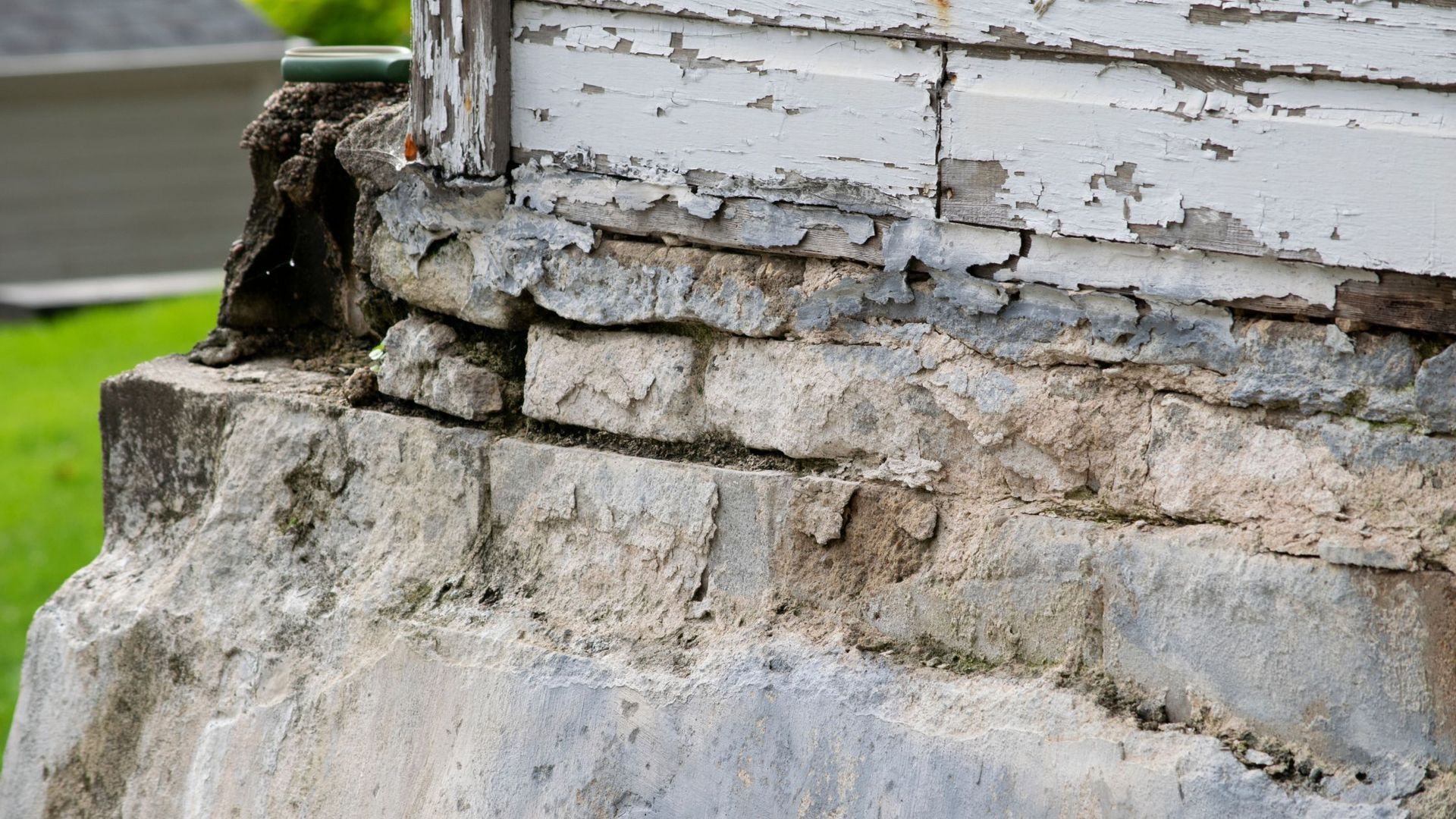
Furthermore, the Upper Midwest climate exposes foundations to deep frost lines. When moisture trapped in the soil freezes, it expands, pushing against foundation walls in a phenomenon known as frost heaving. Over decades, these environmental stresses take a toll on poured concrete, concrete block, and stone foundations common throughout the neighborhoods surrounding Michigan State University and the greater Ingham County area.
Recognizing the earliest signs of foundation distress is critical for cost-effective intervention. Homeowners should routinely inspect both the interior and exterior of their properties for warning signs:
- Stair-step cracking in brick facades or mortar joints of concrete block walls.
- Horizontal or diagonal cracks running across poured concrete basement walls, which often indicate severe lateral pressure.
- Sticking doors and windows that fail to latch properly due to shifting framing above.
- Gaps forming between walls and ceilings or between baseboards and the floor.
- Bowing or leaning walls where the center of the wall pushes inward toward the basement.
- Sinking or settling chimneys that pull away from the main roofline.
Common Foundation Problems in Mid-Michigan Homes
Different structural symptoms point to distinct underlying mechanical failures. Correctly diagnosing the root cause determines whether a project requires cosmetic crack injection, structural wall stabilization, or complete pier lifting.
Lateral Wall Movement and Bowing
When hydrostatic pressure from saturated clay soils exceeds the structural capacity of a basement wall, the wall begins to bow inward. Concrete block walls are particularly susceptible to this type of failure because horizontal pressure can crack the mortar joints and push individual blocks inward. If left unaddressed, bowed walls can eventually collapse inward, creating a catastrophic structural emergency.
Differential Settlement and Sinking
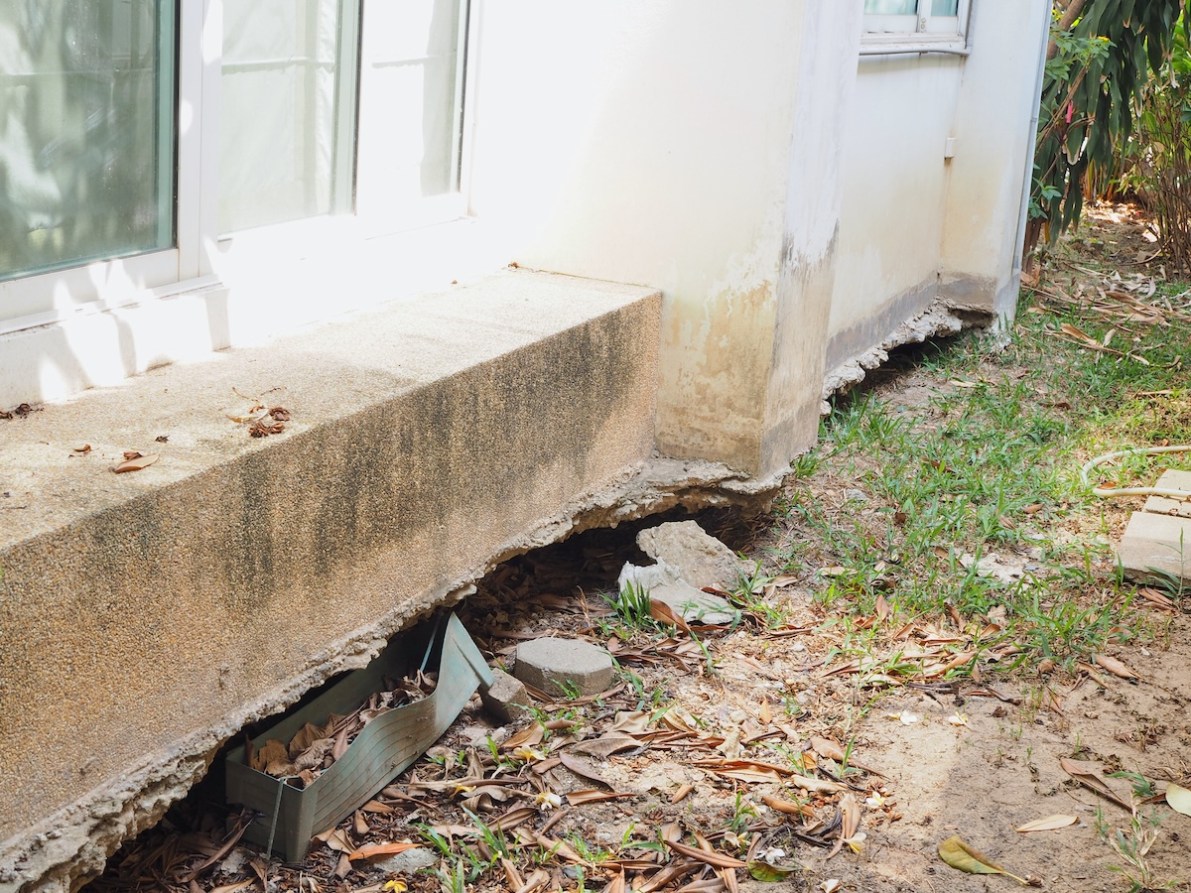
Differential settlement occurs when different parts of a home sink into the ground at unequal rates. This typically happens when the load-bearing soil beneath a specific corner or side of the house lacks adequate compaction, or when underground water currents wash away supporting sub-grade materials. Sinking foundations cause severe drywall cracking, uneven interior floors, and tilting chimneys.
Water Seepage and Hydrostatic Pressure
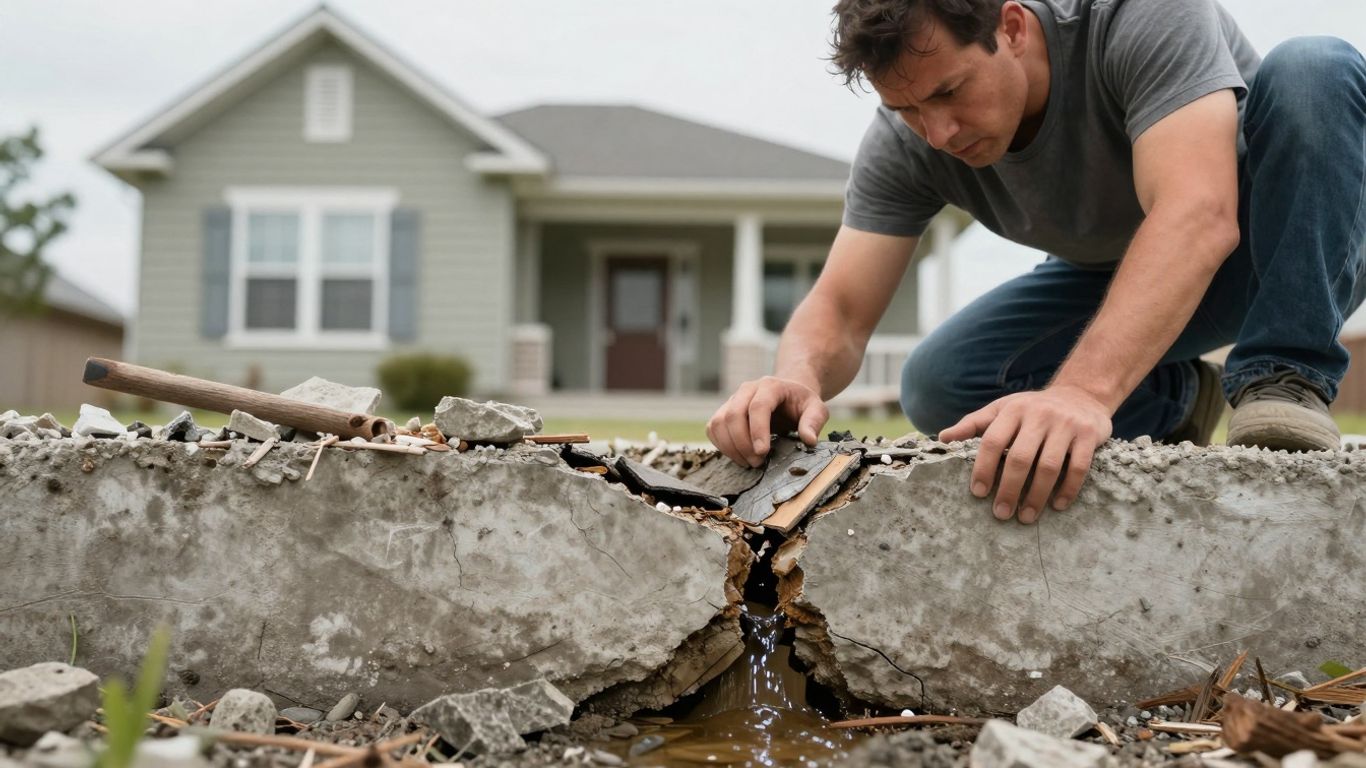
Water management and foundation integrity are deeply intertwined. As water accumulates in the soil surrounding a foundation, it creates hydrostatic pressure that forces moisture through microscopic pores in concrete, through mortared joints, and through existing structural cracks. While water infiltration does not always signify immediate structural collapse, persistent moisture leads to mold growth, ruined basement finishes, and progressive degradation of concrete reinforcement bars.
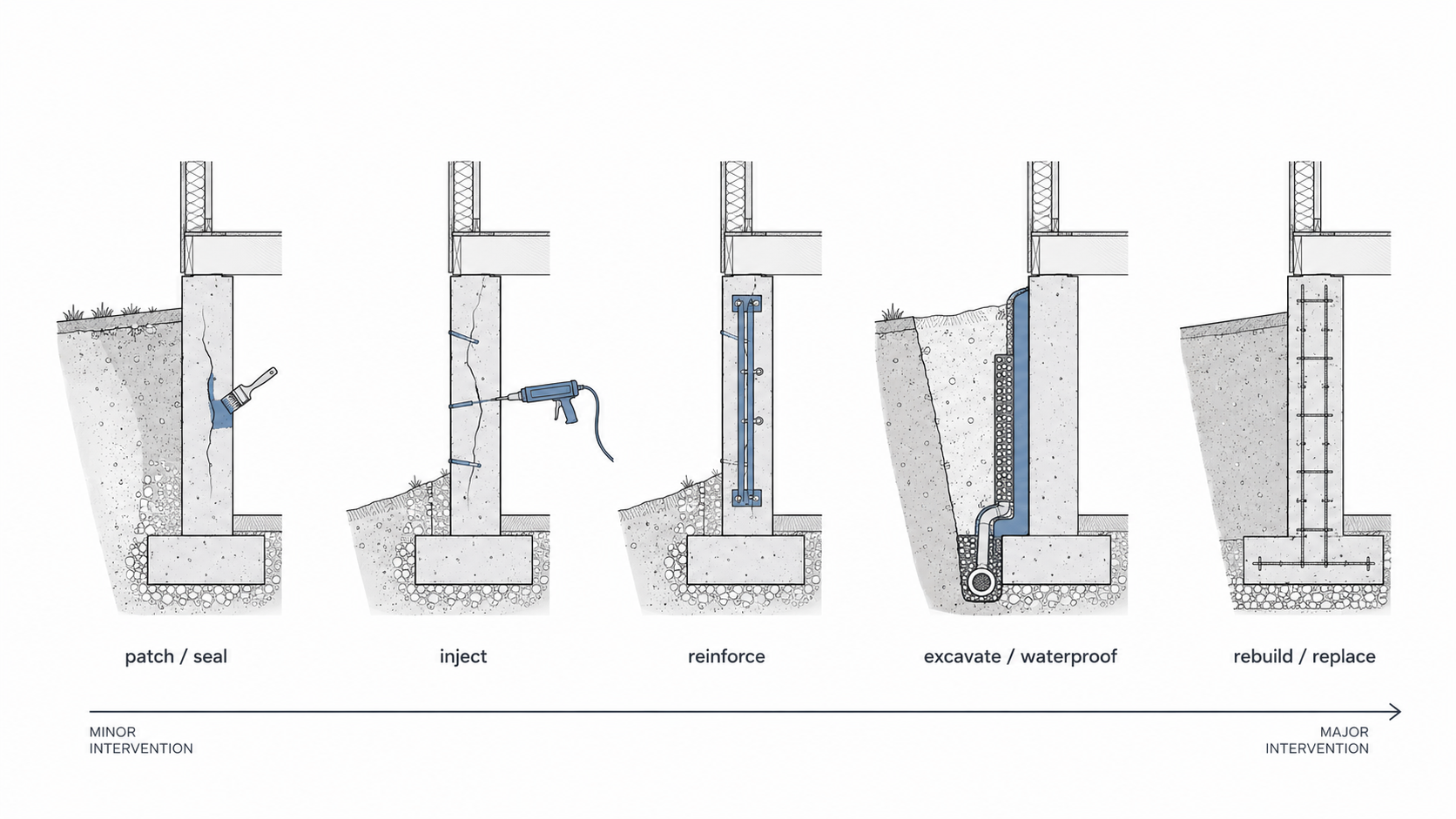
Comprehensive Comparison of Foundation Repair Methods
Selecting the appropriate repair methodology depends on the exact structural failure, the type of foundation construction, and long-term performance expectations. Contractors in the Mid-Michigan area utilize several standardized engineering solutions.
| Repair Method | Primary Application | Estimated Cost Range (East Lansing Market) | Operational Lifespan |
|---|---|---|---|
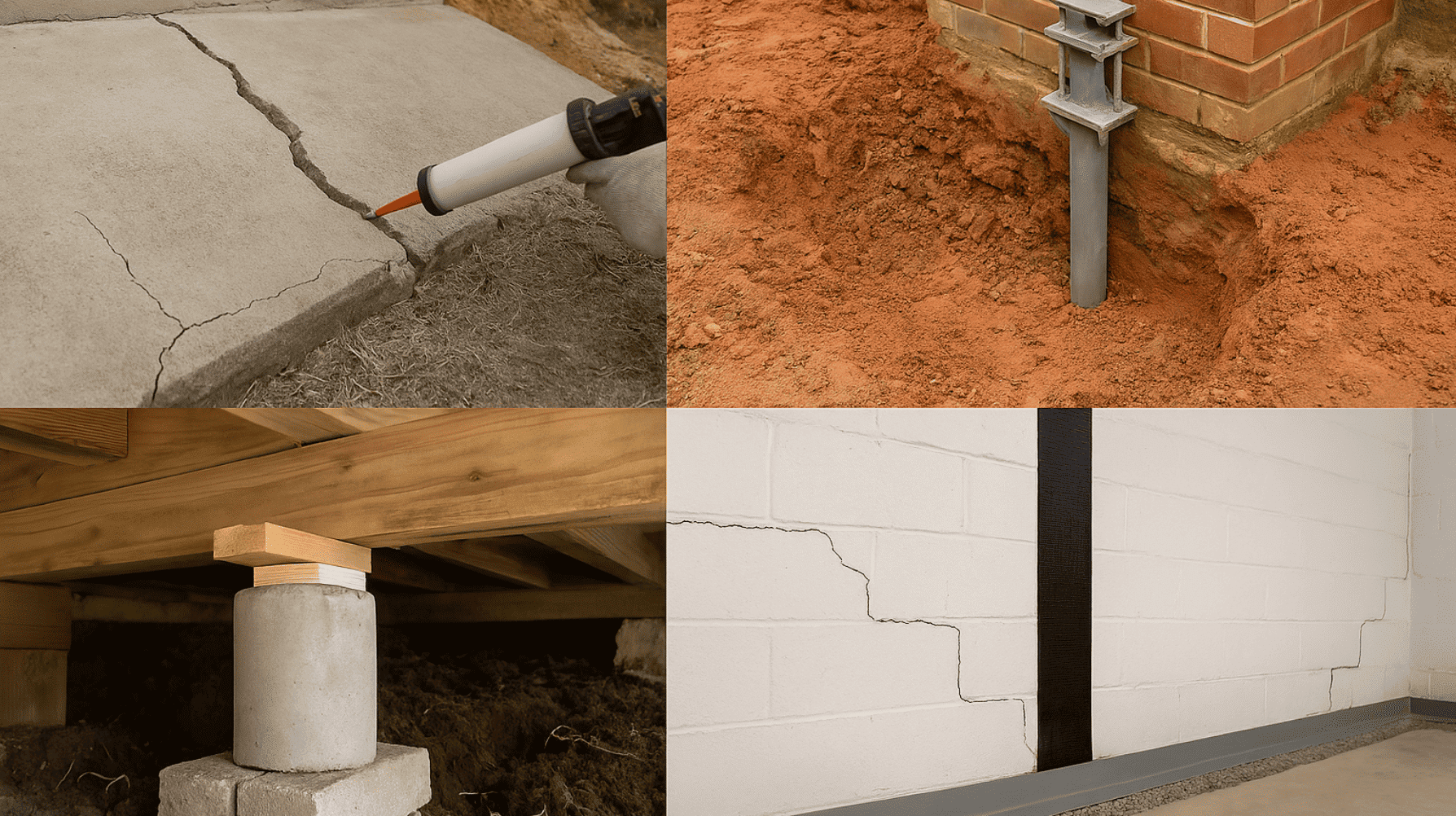
| Carbon Fiber Straps | Stabilizing mildly bowed or cracking walls | $500 – $1,000 per strap | Permanent (maintenance-free) |
| Steel Wall Plate Anchors | Correcting moderately to severely bowed walls | $3,000 – $6,000 total project | Permanent (requires tightening adjustments) |
| Helical or Steel Piers | Lifting and stabilizing sinking foundations | $1,500 – $3,000 per pier | Permanent (transfers load to load-bearing strata) |
| Epoxy/Polyurethane Injection | Sealing non-structural, leaking cracks | $400 – $800 per crack | 5 – 15 years (depending on soil movement) |
| Interior Drain Tile & Sump Pump | Managing hydrostatic water infiltration | $4,000 – $8,000 total system | Decades (requires sump pump maintenance) |
Carbon Fiber Reinforcement
For walls bowing less than two inches without severe structural shearing, carbon fiber straps offer a low-profile, highly effective stabilization method. Contractors epoxy high-strength carbon fiber grids directly to the cleaned concrete wall and anchor them to the sill plate and floor. This prevents any further inward movement without taking up usable basement space.
Steel I-Beams and Wall Anchors
When walls bow inward beyond two inches or show signs of severe structural displacement, steel I-beams or earth anchors are required. Wall anchors involve driving heavy-duty steel rods through the basement wall into stable soil outside the excavation zone, connecting them to a heavy steel plate on the interior. By tightening the bolts over time, contractors can often pull the wall back toward its original plumb position.
Helical and Resistance Piers
To lift and stabilize a sinking foundation, structural engineers rely on steel piers driven deep into load-bearing strata beneath the unstable soil. Resistance piers are hydraulically driven down using the weight of the home as resistance, while helical piers are screwed into the ground like giant screws until they reach stable bedrock or dense soil layers. Once secured, hydraulic jacks lift the structure back to level grade.
Financial Investment and Cost Breakdown in East Lansing
Foundation repair represents a significant capital investment for homeowners. In East Lansing and the surrounding Ingham County region, project pricing reflects local labor rates, material availability, and the complexity of regional soil conditions.
Minor repairs, such as sealing a single leaking wall crack with epoxy injection, typically range from $400 to $800. These are straightforward maintenance tasks that prevent minor water leaks from eroding concrete over time.
Intermediate structural stabilization projects, such as installing carbon fiber straps or steel wall plate anchors across a standard basement wall, generally range from $3,000 to $7,000. These projects stabilize the perimeter of the home and halt progressive movement.
Major structural remediation involving pier installation for a sinking corner or entire side of a house can range from $10,000 to over $25,000, depending on the number of piers required and whether excavation or interior concrete slab removal is necessary.
Factors Influencing Overall Project Cost
- Severity of Damage: Minor hairline cracking costs a fraction of multi-wall structural failure.
- Access Limitations: Finished basements require drywall and framing removal, adding labor costs for demolition and restoration.
- Soil and Excavation Requirements: Heavy clay and high water tables in certain East Lansing neighborhoods may necessitate specialized dewatering or shoring equipment during excavation.
- Engineering Fees: Complex structural issues often require an independent structural engineer's assessment and sealed blueprints, adding $500 to $1,500 to the total project cost.
Selecting a Qualified Foundation Contractor
Choosing the right contractor protects your investment and ensures the structural safety of your home. Homeowners in East Lansing should follow a rigorous vetting process before signing any service agreements.
- Verify Licensing and Insurance: Ensure the contractor holds a valid residential builder or specialty contractor license through the Michigan Department of Licensing and Regulatory Affairs (LARA). Verify that they carry comprehensive general liability insurance and worker's compensation coverage.
- Request Written Engineering Warranties: Reputable foundation repair companies stand behind their structural work with transferable lifetime warranties. Read the fine print to understand what constitutes a structural failure versus normal concrete settling.
- Check Local References and Reviews: Look for established companies with a proven track record servicing Mid-Michigan communities. Ask for recent local project references and inspect reviews on independent consumer platforms.
- Obtain Multiple Detailed Estimates: Collect at least three written bids detailing the exact methodology, materials, timelines, and cleanup procedures. Beware of contractors who pressure you to sign immediately or offer unusually low bids that omit critical engineering steps.
Frequently Asked Questions About Foundation Repair
How long does a typical foundation repair project take in East Lansing?
Most standard residential foundation repair projects, such as installing carbon fiber straps, wall anchors, or localized crack injections, take between one and three days to complete. Major structural piering or extensive basement waterproofing projects may take three to five days, depending on weather conditions and excavation requirements.
Does homeowners insurance cover foundation repair in East Lansing?
Standard homeowners insurance policies in Michigan typically do not cover foundation repair caused by normal settling, soil expansion, aging materials, or hydrostatic pressure. Insurance may only cover foundation damage if it results directly from a sudden, covered peril, such as a vehicle impact or specific plumbing leaks explicitly covered by an endorsement. Homeowners should consult their insurance provider to review policy language.
Can I sell my house with existing foundation problems?
Yes, you can sell a home with foundation issues, but disclosure laws in Michigan require sellers to reveal known material defects. Unresolved foundation problems often deter buyers or significantly lower purchase offers. Many homeowners choose to complete structural repairs and transfer the lifetime warranty to the buyer, streamlining the real estate transaction and preserving home equity.
How can I prevent foundation damage during dry summer months?
To mitigate the effects of expansive clay soils during drought conditions, homeowners should maintain consistent soil moisture levels around the perimeter of the foundation. Using soaker hoses or automated drip irrigation systems a foot or two away from the foundation wall prevents the clay soil from shrinking excessively and pulling away from the footings.
Do I need a permit for foundation repair in East Lansing?
Significant structural modifications, major excavation, and permanent pier installations typically require building permits through the City of East Lansing or Ingham County building departments. Reputable contractors will handle the permitting and inspection process as part of their service agreement, ensuring all work complies with local building codes.
Next Actions for Homeowners
If you suspect foundation distress, begin by documenting all visible cracks, moisture stains, and sticking doors with dated photographs and measurements. Schedule an evaluation with a licensed structural engineer or an established, reputable foundation repair specialist in the East Lansing area. Prompt professional diagnosis prevents minor structural shifts from developing into hazardous and expensive structural failures.
Image Gallery